量化交易

Search documents
游资的“消失”
IPO日报· 2026-03-27 03:54
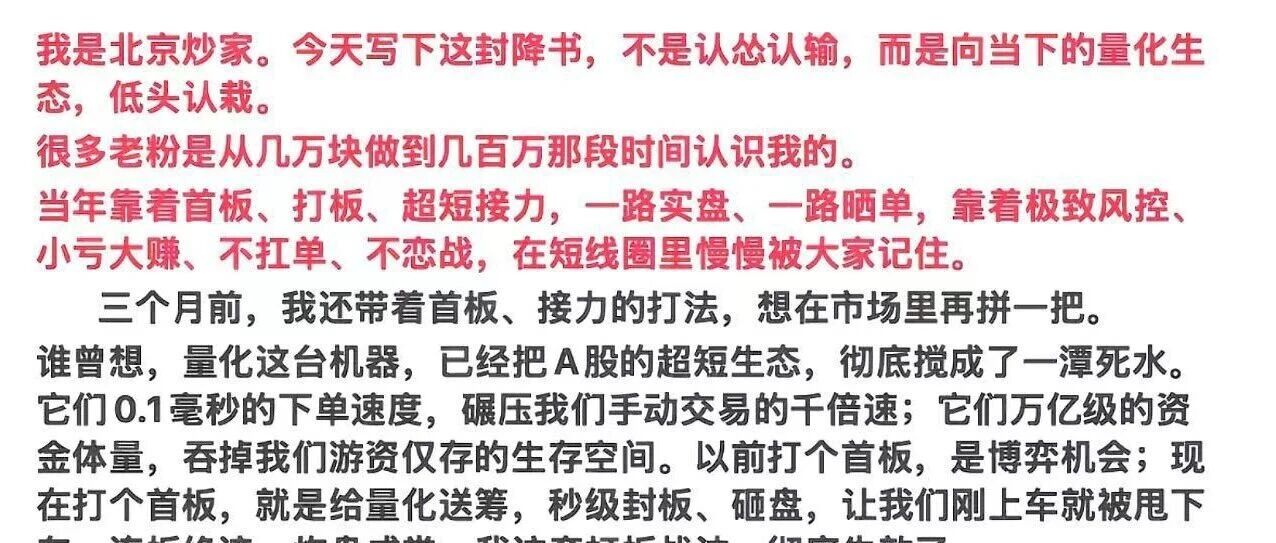
Core Viewpoint - The article discusses the significant changes in the micro trading ecology of the A-share market, highlighting the decline of traditional trading strategies in the face of rapid quantitative trading advancements [5][6]. Group 1: Changes in Trading Environment - Notable retail investors, such as Chen Xiaoqun, have seemingly disappeared from the trading scene, indicating a shift in market dynamics [2]. - The top retail investor "Liushahao" expressed a sentiment of "surrender" in a recent article, which was later clarified to reflect market conditions rather than an actual withdrawal from trading [2][3]. - The traditional "board hitting" strategy is becoming less viable as quantitative trading techniques dominate the market [5]. Group 2: Characteristics of Quantitative Trading - Quantitative trading operates with extreme speed, utilizing specialized channels to execute trades in milliseconds, often before retail investors can react [9]. - It effectively exploits human psychological weaknesses, such as triggering stop-loss orders to create panic selling, followed by opportunistic buying [10]. - The scale of quantitative trading has grown to account for 30%-40% of total market transactions, significantly impacting market structure [12]. Group 3: Strategies for Retail Investors - Retail investors are encouraged to adopt a long-term investment approach, as holding stocks for over a year can yield returns four times greater than short-term trading [14]. - Avoiding low-liquidity stocks and those without performance backing is advised, as these are more susceptible to manipulation by quantitative traders [15]. - Establishing disciplined trading rules to counter emotional decision-making is crucial, such as avoiding chasing highs or panic selling [16]. - Focusing on fundamental analysis rather than short-term price movements is recommended, as quantitative trading often dominates intraday fluctuations [17]. - Reducing trading frequency to once a week can enhance the probability of successful trades and minimize unnecessary losses [18]. Group 4: Embracing Evolution - Retail investors can leverage ETFs to mitigate volatility, as these diversified investments are less likely to be targeted by quantitative strategies [20]. - Emphasizing value investing, as advocated by prominent investors, can help in selecting stocks driven by long-term fundamentals rather than short-term algorithms [20]. - The advent of AI tools has lowered the barriers for retail investors to conduct data analysis, enabling them to better understand market dynamics [21].


LSEG跟“宗”|美国在中东的战事开支上升,市场认为美国会自发性加息来付债主更多钱?
Refinitiv路孚特· 2026-03-25 06:02
Core Viewpoint - The article discusses the current market sentiment regarding precious metals, highlighting the significant uncertainty in predictions about interest rate changes in the U.S. and the impact of geopolitical tensions on commodity prices [2][26]. Group 1: Market Sentiment and Price Movements - The market is divided on whether the U.S. will raise or lower interest rates between June 2023 and January 2024, indicating high uncertainty in future predictions [2][25]. - Gold prices have seen a dramatic increase of 171% from $2,063 per ounce at the end of 2023 to a peak of $5,595, reflecting a significant appreciation over a little more than two years [2][26]. - The GDX gold mining ETF has accumulated a return of 248% during the period from 2024 to early 2026, suggesting strong performance in gold-related investments [2][28]. Group 2: Fund Positions and Market Dynamics - As of March 17, 2023, the net long position in COMEX gold funds increased by 3.6% to 329 tons, marking the highest level in seven weeks, while the net long position in silver funds decreased by 4% to 1,446 tons [4][8]. - The article notes that the net long position in platinum funds rose by 45% to 16 tons, indicating a positive shift in sentiment towards platinum [9]. - Despite the overall decline in precious metal prices, the demand for physical gold remains strong, outpacing the futures market, which has seen a contraction in net long positions [18][19]. Group 3: Geopolitical and Economic Influences - The rise in oil prices is attributed to supply issues rather than monetary policy, suggesting that interest rate hikes may not effectively address inflation driven by supply constraints [3][29]. - The article emphasizes that geopolitical tensions, particularly in the Middle East, have led to increased military spending by the U.S., which may complicate the economic landscape and influence monetary policy decisions [29]. - The current environment reflects a shift towards strategic and military metals, supported by government backing, indicating potential investment opportunities in these sectors [30]. Group 4: Historical Context and Future Outlook - Historical analysis shows that previous gold bull markets were driven by geopolitical events and inflation, with significant price increases during crises [32]. - The article warns that if the current geopolitical tensions persist, it could lead to a broader market downturn affecting all metals, not just precious metals [30]. - The article concludes that predicting the bottom for gold and silver prices is as challenging as forecasting their peaks, given the current market uncertainties [31].

今天你恐慌了吗?
集思录· 2026-03-23 14:15
Group 1 - The market sentiment is currently characterized by a lack of panic despite a significant drop, indicating that further declines may occur until true panic sets in [8] - There is a perception that the bull market may have ended, with quantitative trading dominating the market dynamics, leading to pronounced volatility [6] - Investors are adopting a cautious approach, with some choosing to liquidate positions and others waiting for better entry points, reflecting a mix of strategies in response to market conditions [5][7] Group 2 - The negotiation conditions between the U.S. and Iran are seen as vastly different, with both sides currently holding firm, suggesting prolonged discussions ahead [2] - The overall market is described as chaotic, with a focus on speculative trading rather than value investing, indicating a potential shift in investment strategies [1]

游资“投降”——A股一周走势研判及事件提醒
Datayes· 2026-03-22 14:13
Group 1 - The core viewpoint of the article highlights the significant shift in trading strategies, with retail investors, particularly short-term traders, withdrawing from the market in favor of quantitative trading strategies, which are becoming dominant in the A-share market [1][5] - Retail trading seats have seen a decline in transaction volume, reaching a three-year low, indicating a potential shift in market dynamics as notable traders exit or pause their operations [1][5] - Quantitative private equity funds have expanded significantly, surpassing traditional subjective long-only funds for the first time, indicating a shift in market influence [5] Group 2 - The market's recent decline is attributed to absolute return-oriented funds reducing their positions, rather than institutional reallocation, with certain sectors experiencing mismatched performance [7] - Investors are advised to remain patient and calm amid market fluctuations, as the period from April to May is expected to be crucial for decision-making [7] - Certain sectors, such as energy storage and domestic AIDC chains, are recommended for investment due to their potential resilience against geopolitical tensions and high oil prices [8] Group 3 - In the Hong Kong market, the short-selling volume has reached historical highs, similar to the bear market of 2021-2022, indicating limited upward potential [11] - However, high short-selling does not necessarily predict market declines; a market recovery could trigger a short squeeze, enhancing rebound strength [11] Group 4 - The article discusses the geopolitical tensions in the Middle East, with both the U.S. and Iran signaling a willingness to negotiate, which could impact market sentiment and investment strategies [12][15] - The U.S. seeks to include specific conditions in any agreement, while Iran has outlined six demands that must be met for negotiations to proceed [15] Group 5 - The article outlines various sectors that are expected to perform well, including renewable energy, particularly in wind and solar, as well as energy storage technologies, which are anticipated to benefit from ongoing geopolitical tensions and market demands [23][24] - The semiconductor and AI sectors are also highlighted, with significant investments and developments expected in the coming years, particularly in chip manufacturing and AI infrastructure [17][19][20]

“养龙虾”炒股火爆背后,谁能真正赚到钱?
21世纪经济报道· 2026-03-14 09:31
Core Viewpoint - Openclaw, an AI agent for quantitative trading, has gained popularity in the investment community since its open-source release in November 2025, but its effectiveness for ordinary investors is questioned due to high costs and risks associated with its use [1][22][24]. Group 1: Openclaw's Popularity and Usage - Openclaw has seen a surge in content related to quantitative trading and stock selection on platforms like Xiaohongshu and Bilibili, with many creators showcasing its capabilities in generating trading signals and automated trading [1][4]. - Many users report mixed results, with some experiencing losses after following Openclaw's trading suggestions, raising concerns about its reliability [1][14][21]. - The tool's deployment often involves significant costs, with users reporting token fees that can exceed thousands of yuan monthly, making it a financial burden for casual investors [16][21]. Group 2: Risks and Limitations - The Ministry of Industry and Information Technology has issued warnings about security risks in financial trading scenarios, including potential account takeovers and erroneous trades due to malicious code or system vulnerabilities [2]. - Experts indicate that ordinary investors are unlikely to achieve profits using Openclaw due to the high technical barriers and costs involved, as well as the diminishing effectiveness of quantitative strategies over time [22][24]. - There are significant risks associated with using Openclaw, including the potential exposure of sensitive information and the possibility of account hacking, leading to warnings from financial institutions against its use on company devices [24][25]. Group 3: Marketing and Monetization - Despite the challenges in using Openclaw for profitable trading, some content creators have turned it into a business by offering paid courses and community services, leveraging the tool's capabilities for marketing purposes [25][28]. - The narrative around "AI trading" and "automated profits" has been heavily marketed, often overshadowing the actual risks and limitations of the technology [28].

大崩溃 | 谈股论金
水皮More· 2026-03-04 09:08
Market Overview - The A-share market experienced a collective decline, with the Shanghai Composite Index falling by 0.98% to close at 4082.47 points, the Shenzhen Component down 0.75% to 13917.75 points, and the ChiNext Index dropping 1.41% to 3164.37 points. The total trading volume in the Shanghai and Shenzhen markets was 238.82 billion, a decrease of 76.98 billion from the previous day [3][5]. Key Influences - The significant drop in the South Korean market, with a 12% decline in one day and an 18% drop over two days, has had a substantial negative impact on the Hang Seng Index and, consequently, the A-share market. The protective funds that previously supported the market have largely exited, indicating a need for market risk and panic to be fully released before re-entering [5][7]. Sector Performance - Traditional protective sectors such as banking, insurance, and telecommunications experienced collective declines, contributing to the overall market downturn. Notably, the performance of the "three oil giants" showed significant divergence, with Sinopec and CNOOC experiencing notable declines, while PetroChina initially rose by about 5% before hitting a trading halt and eventually closing slightly up by 0.68% [5][6]. Commodity Market Dynamics - Internationally, oil prices continued to rise, while gold prices have seen consecutive declines, with silver dropping by 10%. This reflects a market dynamic where precious metals are under pressure while oil prices remain elevated due to ongoing geopolitical tensions, particularly in the Strait of Hormuz [6]. Market Sentiment and Future Outlook - The Shanghai Composite Index has fallen below 4100 points, approaching the 4000-point value center, which may become a new support level. The potential for protective funds to re-enter the market is contingent on the reduction of panic and selling momentum [7][8]. - Key observations for the near term include developments in the Iranian situation and the performance of global markets, particularly the U.S. stock market, which could influence A-shares. The market showed signs of adjustment, with 1655 stocks rising and approximately 3500 declining, indicating a significant contraction in trading volume to 2.3 trillion [8][9].

从华尔街到杭州湾,基础软件创业十年的真相与底色
Sou Hu Cai Jing· 2026-02-27 14:56
Core Insights - DolphinDB has evolved over ten years from a startup to a recognized player in the industry, achieving breakeven and expanding its client base significantly [2][9][34] - The company emphasizes a long-term commitment to solving core business problems for clients, which has led to high customer retention rates and trust [16][12][14] Company Journey - Founded in 2016 in Hangzhou, DolphinDB started with angel funding and focused on product development and customer delivery without rushing for rapid growth [6][9] - The team maintained a small size of around 20 people for several years, prioritizing product quality over rapid expansion, which resulted in strong user loyalty [7][9] - The COVID-19 pandemic prompted a reevaluation of operational processes, leading to improved automation and standardization, which helped secure new clients [8][9] Market Adaptation - As the market faced economic downturns post-2022, clients shifted focus to practical solutions that save costs and improve efficiency, aligning with DolphinDB's offerings [9][10] - The company transitioned from a technology-centric approach to a value-centric one, focusing on how its products can address specific client pain points [11][12] Business Model - DolphinDB adopted a subscription model, which initially faced challenges but ultimately proved beneficial for fostering long-term client relationships and ensuring continuous value creation [13][16] - The company has maintained a high renewal rate of 120%, indicating strong client satisfaction and ongoing demand for its services [16] Technological Evolution - The company has shifted its focus from merely storing data to providing real-time insights and decision-making capabilities, integrating advanced analytics into its offerings [29][30] - DolphinDB's technology is designed to handle complex business scenarios, making it a critical tool for industries like finance and manufacturing [30][31] Future Outlook - The company plans to leverage AI as an opportunity to enhance its offerings, focusing on real-time data processing and intelligent decision-making [31][32] - DolphinDB aims to expand its global presence, recognizing the universal need for high-performance data solutions across various industries [33][34]


市场没有几个活人了
小熊跑的快· 2026-02-27 06:17
Group 1 - The article discusses the volatility in a specific sector, indicating that stocks tend to rise after a low opening and fall after a high opening [1] - There was a significant increase in domestic computing power before the Spring Festival, followed by a two-day decline after the holiday [1] - The article highlights the unpredictability of market movements, suggesting that the leading stocks may change frequently [1]

游资“极速外挂”被没收,多家券商叫停“抢涨停板神器”
Mei Ri Jing Ji Xin Wen· 2026-02-26 22:46
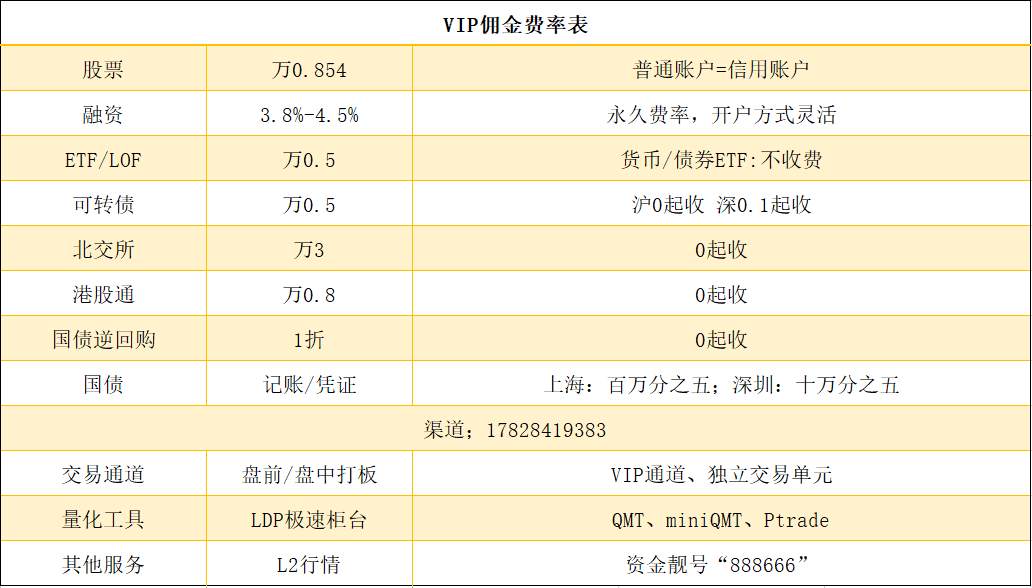
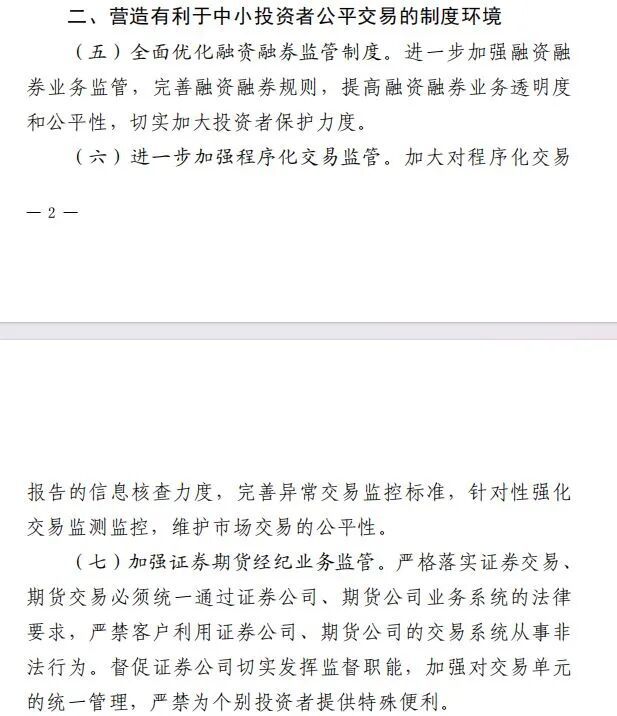
Core Viewpoint - Recent restrictions on "exclusive trading units" by brokerage firms aim to enhance fairness in trading and protect small investors, following regulatory guidelines issued in October 2022 [1][2][5] Group 1: Industry Changes - Many brokerages are ceasing to offer "exclusive trading units" to clients, which previously allowed large investors and institutions to gain advantages in trading [1][3] - The move is in response to the implementation of the "Opinions on Strengthening the Protection of Small Investors in the Capital Market," which mandates a fair trading environment for all investors [1][2][5] Group 2: Historical Context - Historically, brokerages marketed exclusive trading units as "tools for seizing涨停板" (limit-up stocks), providing a competitive edge during trading [3] - The threshold for accessing these units was high, often requiring assets of over 5 million yuan and annual fees of around 150,000 yuan [3][4] Group 3: Impact on Trading Strategies - The restriction on exclusive trading units is expected to significantly affect small institutions and large investors, particularly those relying on high-frequency trading strategies [7][9] - The popularity of "板策略" (board strategies) among quantitative private equity has been rising, with a reported average return of 10.2% in the first half of 2025, but the new regulations may limit their effectiveness [8][9] Group 4: Market Reactions - Some industry insiders believe that while the regulations promote fairness, there may still be attempts to circumvent them, such as using larger accounts to manage smaller ones [9]
量化交易使用通达信免费获取行业实时行情
Sou Hu Cai Jing· 2026-02-26 04:01
Core Viewpoint - The article discusses the use of pytdx, an open-source project, to access industry data without needing a VIP account, providing a method to retrieve stock market data through the Tongdaxin protocol. Group 1: Accessing Data - pytdx is a Python library that wraps around the Tongdaxin data protocol, allowing users to install it via pip [2][3] - Users can find available market servers using a built-in tool in pytdx that tests for the fastest IP address [3] - Industry constituent stocks cannot be directly retrieved through pytdx, but can be exported from the Tongdaxin software, which updates infrequently [4][5] Group 2: Data Export and Analysis - The process of exporting industry constituent stocks involves selecting the appropriate data and exporting it in a comma-separated format [5][6] - Once the industry data is obtained, it can be used for various analyses, such as comparing the strength of different industries, identifying leading stocks, and conducting correlation analysis between industry indices [10][11]