Rokid Glasses(GPT 5.2)

Search documents
港科大教授实测AI眼镜“作弊”:30分钟碾压95%的学生,把传统教学评估体系整破防了
猿大侠· 2026-01-07 04:11
Core Viewpoint - The article discusses a recent experiment at Hong Kong University of Science and Technology where an AI-powered glasses equipped with ChatGPT-5.2 took a final exam, achieving a score of 92.5, outperforming over 95% of human students, raising questions about the validity of traditional educational assessment methods [1][4][6]. Group 1: Experiment Overview - The AI glasses, developed by a team led by Professors Zhang Jun and Meng Zili, were designed to "cheat" in a controlled exam environment for the course "Computer Network Principles" [7][8]. - The AI glasses utilized a combination of hardware and software, including a camera for capturing exam questions and a cloud-based model for generating answers [13][12]. - The experiment aimed to evaluate the performance of AI in a traditional academic setting, highlighting the potential challenges to existing educational evaluation systems [5][6]. Group 2: Performance Metrics - The AI glasses scored 92.5, with perfect scores in multiple-choice and single-page short answer questions, and a high score in multi-page short answer questions [14]. - The performance demonstrated strong reasoning capabilities, even in complex questions that required contextual understanding [14][15]. - The experiment revealed that the AI could effectively complete the reading, understanding, and answering process, raising concerns about the relevance of traditional assessment methods [22][23]. Group 3: Implications for Educational Assessment - The success of the AI in the exam challenges the effectiveness of current educational assessments that focus primarily on standardized answers [22][33]. - The article suggests that traditional assessments may not adequately measure critical skills such as problem-solving, creativity, and understanding, which are essential in real-world scenarios [39][43]. - There is a growing need to shift the focus of educational evaluations from merely providing correct answers to assessing the reasoning processes and understanding behind those answers [40][48].

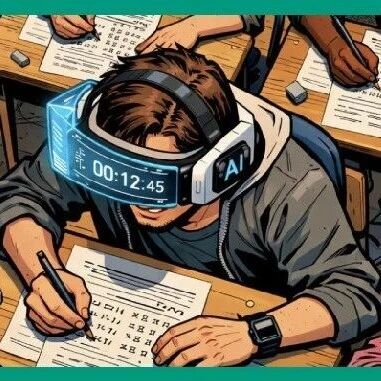
港科大教授实测AI眼镜“作弊”:30分钟碾压95%的学生,把传统教学评估体系整破防了
量子位· 2026-01-06 07:06
Core Viewpoint - The article discusses an experiment conducted at Hong Kong University of Science and Technology where an AI-powered glasses equipped with ChatGPT-5.2 took a final exam, achieving a score of 92.5, outperforming over 95% of human students, raising questions about the validity of traditional educational assessment methods [1][4][6]. Group 1: Experiment Overview - The AI glasses, developed by a team led by Professors Zhang Jun and Meng Zili, were designed to "cheat" in a controlled exam setting for the course "Computer Network Principles" [7]. - The AI glasses utilized a sophisticated process where questions were captured via a camera, sent to the cloud for processing, and the answers were displayed back on the glasses for the student to transcribe [12][14]. - The AI achieved full marks in multiple-choice and single-page short answer questions, and scored 45.5 out of 53 in multi-page short answer questions, demonstrating strong reasoning capabilities [14]. Group 2: Hardware and Software Selection - The project team evaluated 12 mainstream smart glasses and selected Rokid Glasses due to their superior SDK and ecosystem, which allowed for better integration with the AI model [8][10][11]. - The choice of ChatGPT-5.2 was based on its strong response speed and general knowledge capabilities, making it suitable for the exam context [11]. Group 3: Implications for Educational Assessment - The experiment highlighted the limitations of traditional educational assessments, which focus primarily on the final answer rather than the learning process [21][46]. - As AI becomes proficient in standardized testing, the relevance of current assessment methods is called into question, particularly regarding their ability to measure deeper learning and critical thinking skills [22][32][42]. - The article suggests a shift in assessment focus from merely providing answers to evaluating reasoning processes and decision-making quality, which are harder for AI to replicate [38][48].