
小米AI眼镜

Search documents
小米集团-W(01810):报告原因:有业绩公布需要点评:等待基本面拐点,AI战略图景显化
Shenwan Hongyuan Securities· 2026-03-26 08:19
Investment Rating - The report maintains a "Buy" rating for Xiaomi Group [1] Core Viewpoints - The report highlights the need to evaluate performance following earnings announcements, indicating a wait for a fundamental turning point and the emergence of AI strategic visions [6] - Xiaomi's revenue for Q4 2025 reached 116.9 billion RMB, a year-on-year increase of 7%, marking five consecutive quarters of revenue exceeding 100 billion RMB [8] - The report anticipates a decline in smartphone shipments to 150 million units in 2026, a 9% year-on-year decrease, while maintaining an average selling price (ASP) increase of 5% [8] - The Internet of Things (IoT) segment is expected to see revenue growth of 10% in 2026, despite a slowdown due to national subsidies and increased competition [8] - The report projects a total revenue of 504.8 billion RMB for 2026, with a net profit of 33.4 billion RMB, reflecting a 15% decrease from previous estimates [8] - The AI strategy is expected to see an investment of 60 billion RMB from 2026 to 2028, with 16 billion RMB allocated for 2026 [8] Financial Data and Profit Forecast - Revenue projections for Xiaomi Group are as follows: - 2024: 365.9 billion RMB - 2025: 457.3 billion RMB - 2026E: 504.8 billion RMB - 2027E: 593.0 billion RMB - 2028E: 698.0 billion RMB [7] - Adjusted net profit forecasts are: - 2024: 27.3 billion RMB - 2025: 39.2 billion RMB - 2026E: 33.4 billion RMB - 2027E: 41.4 billion RMB - 2028E: 51.4 billion RMB [7] - The report indicates a projected PE ratio of 31 for the main business in 2026, with a target valuation of 986.7 billion RMB, representing a 33% upside potential [8][15]

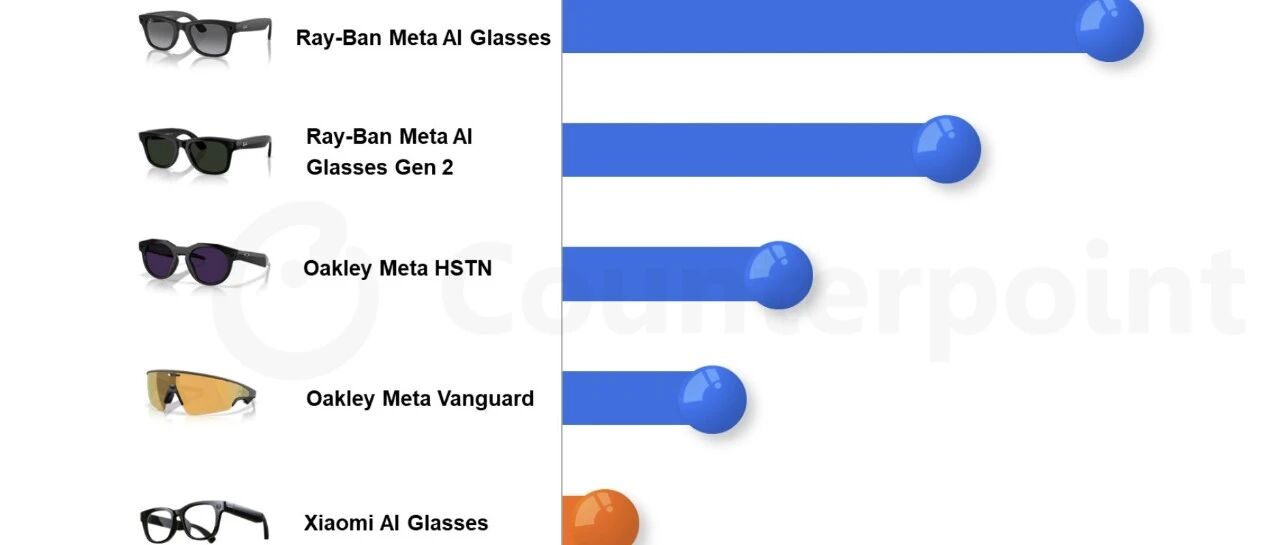
2025 年下半年全球智能眼镜出货量同比增长 139%;Meta 市场份额扩大至 82%
Counterpoint Research· 2026-03-19 04:45
Core Insights - The global smart glasses market is expected to see a year-on-year growth of 139% in the second half of 2025, driven primarily by AI smart glasses, which will account for 88% of total shipments [4][5][10] - Meta has solidified its market leadership with an 82% share in the smart glasses market, largely due to its expanded product line and new product launches [5][7][10] - The average retail selling price (ASP) of AI smart glasses is projected to rise from $347 in the first half of 2025 to approximately $360 in the second half, influenced by Meta's pricing strategies [4][5] Market Dynamics - The demand for basic smart audio glasses has weakened, leading to a significant drop in their ASP to around $63, primarily due to reduced shipments from high-end manufacturers like Huawei and Amazon [4][5] - North America leads the market with a 37% share of total shipments in the second half of 2025, while China's market share has decreased to 6% despite numerous new product launches [5][11] - The Indian market has shown remarkable growth, with a 15-fold increase in shipments after Meta's entry, although it still only accounts for 2% of the global total [11][13] Competitive Landscape - Meta's new product, Ray-Ban Meta AI Glasses (second generation), has received positive feedback for its video capabilities, indicating a successful enhancement in user experience [10] - Xiaomi has emerged as a significant player in the Chinese market, ranking second after Meta, with its AI glasses shipments increasing by over 200% following a new product launch [10][11] - The overall market for other OEM manufacturers remains relatively small compared to Meta, which dominates the best-selling smart glasses rankings [7][10] Future Outlook - The smart glasses market is expected to maintain strong growth into 2026 and beyond, driven by aggressive expansion plans from leading manufacturers and the introduction of new brands [5][13] - Rising memory prices may pose challenges, but the overall impact is expected to be limited due to the high gross margins of AI glasses [13]


AI眼镜:下一个将爆发的超级应用
泽平宏观· 2026-03-18 16:06
Core Insights - AI glasses are positioned to become the next major computing platform after smartphones, integrating AI into daily life in unprecedented ways [2][3] - The technology is expected to transition from passive responses to proactive services, enhancing user interaction and efficiency [24][23] Group 1: Applications of AI Glasses - The ultimate value of AI glasses lies in their ability to provide "first-person perspective perception, hands-free operation, and real-time enhancement," addressing deep pain points that smartphones cannot [4] - Key functionalities include cognitive enhancement for real-time translation and social interaction, productivity liberation through AR navigation and smart meeting assistance, and enhanced recording capabilities for life documentation [5][8][10] Group 2: Technical Principles and Routes - AI glasses require advancements in optics, display, chips, sensors, and storage for multi-modal interaction, with two main technical routes: AR (Augmented Reality) and MR (Mixed Reality) [11][14] - The AR route focuses on practical applications with lightweight hardware, while the MR route aims for immersive experiences but faces challenges in weight and cost [12][14] Group 3: Industry Trends and Challenges - The AI glasses industry is evolving towards lightweight designs, improved display quality, multi-modal capabilities, and smarter interactions [19][21] - Key challenges include the need for a rich application ecosystem and the complexity of AR interaction methods, which hinder consumer adoption [25][26] Group 4: Major Players in the AI Glasses Market - Meta is the leading player in the AI glasses market, focusing on AR+AI glasses with significant sales projections for 2025 [29][32] - Chinese companies like Thunder and Rokid are rapidly emerging, leveraging supply chain advantages and innovative strategies to capture market share [37][39] - Apple, while a significant player, faces challenges due to its high-end positioning and limited market penetration [41][43] - Xiaomi aims to penetrate the market with cost-effective AI glasses that serve as an ecosystem entry point, while Huawei integrates AI glasses into its broader smart life strategy [46][49]


“AI+”产品趋势洞察
炼丹炉· 2026-03-13 05:20
Investment Rating - The report does not explicitly state an investment rating for the industry Core Insights - The "AI+" product trend is gaining momentum, driven by technological breakthroughs and consumer demand for smarter products and services [18][26] - The market for AI wearable devices is expected to grow rapidly, reaching 215 billion yuan by 2030, with a CAGR of 25.8% [50][51] - The AI toy market is projected to exceed 35 billion USD globally by 2030, with China being a key growth engine [81][85] Market Overview - The report highlights a multi-departmental push in 2025 to promote "AI+ consumption," aiming to accelerate the development and application of new technologies such as autonomous driving and smart home devices [15][17] - By 2027, the initiative aims to establish three trillion-level consumption fields and ten hundred-billion-level consumption hotspots [17] AI+ Product Trends - The report identifies a shift in consumer expectations towards personalized, customized, and experiential products, moving away from standardized offerings [26][28] - The rise of experience economy is changing product value from single functionality to comprehensive experiences [28] AI Technology Evolution - The report outlines the evolution of digital consumption in China, with online retail sales reaching 15.4 trillion yuan in 2023, accounting for approximately 27.6% of total retail sales [32] - The penetration of smart IoT devices in households is increasing, with over 16 billion active devices globally in 2023 [33] AI Applications Across Industries - AI technology is being integrated into various sectors, including beauty, retail, healthcare, and education, enhancing efficiency and user experience [37][40] - In retail, AI is used for personalized marketing, inventory management, and service upgrades [37] AI Hardware Trends - The report notes a significant shift towards AI hardware, with the demand for AI inference computing power expected to grow over 60% globally by 2026 [42] - The market for edge AI is projected to exceed 1.5 trillion USD, indicating a strong trend towards localized AI processing [42] AI Wearable Devices - The AI wearable device market is expected to see explosive growth, with smartwatches leading the way, and new forms like AI glasses and rings gaining traction [50][51] - Key features of AI wearables include health monitoring, multi-modal interaction, and personalized experiences [53] AI Toys Market Dynamics - The AI toy market is characterized by rapid growth, with educational robots and smart programming toys expected to dominate sales by 2025 [86] - The competition in the AI toy market is intensifying, with traditional manufacturers, IP operators, and tech companies vying for market share [89] Consumer Insights - The report emphasizes the importance of understanding consumer needs across different demographics, including students, parents, and elderly users, to tailor AI products effectively [100][102]



把20亿参数装进胸针?高通补齐了个人AI生态的最后一块拼图
量子位· 2026-03-04 02:44
Core Viewpoint - The article discusses the trend of personalized AI agents, emphasizing the need for vast amounts of real-world data to create effective and secure AI experiences across various devices [2][3][10]. Group 1: AI Personalization and Device Integration - There is a growing demand for personalized AI agents that can adapt to individual user needs, moving beyond single-task AI [2]. - Qualcomm believes that AI must be integrated into smaller devices, termed "AI wearables," to achieve real-time, personalized AI experiences [5]. - The market for AI wearables is projected to exceed 100 million units in the coming years, with potential to reach a billion [6]. Group 2: Edge AI and Data Privacy - The necessity for local AI processing capabilities is highlighted to ensure both security and efficiency, as sensitive data should not be solely processed in the cloud [13][23]. - Qualcomm has expanded edge AI processing capabilities across various hardware, enhancing user experiences in everyday scenarios [15]. - The Snapdragon Wear Elite platform introduces significant processing power in wearable devices, enabling them to run complex AI models locally [27]. Group 3: Future of AI Wearables - The Snapdragon Wear Elite platform features a dual-brain architecture that allows for high processing capabilities in compact devices, achieving 10 TOPS of total computing power [27]. - This platform addresses battery life concerns with low-power designs and fast charging technology, ensuring continuous connectivity [29][30]. - The integration of edge AI in wearables is expected to revolutionize user interactions, making devices more responsive and capable of real-time data processing [34][36]. Group 4: User-Centric AI Ecosystem - A user-centric ecosystem is emerging where multiple devices can seamlessly share data and insights, enhancing the overall AI experience [8][39]. - Qualcomm's AI engine and low-power modules are designed to provide robust local AI performance while ensuring sensitive data remains secure [40]. - The interconnectedness of devices will redefine user interactions, allowing for a more intuitive and responsive AI experience [43][49].


明月镜片(301101):主业高增夯实基础,受益AI眼镜增长红利
Guotou Securities· 2026-02-09 11:32
Investment Rating - The investment rating for the company is "Buy-A" with a target price of 48.51 yuan, maintaining the rating [3][6]. Core Insights - The company's main business has shown remarkable growth, with PMC Ultra Bright series revenue increasing by 53.7% year-on-year. The three star products account for 56.3% of the revenue from regular lenses, and the upgraded 1.74 series lenses saw a 112.4% increase in sales year-on-year [2]. - The company has established strategic partnerships, including becoming a partner with China Aerospace and collaborating with Aier Eye Hospital, which enhances its market position [2]. - The company is also benefiting from the growth of AI glasses, with government subsidies expected to accelerate market penetration. The first batch of 625 billion yuan in subsidies will provide a 15% subsidy for AI glasses priced at or below 6000 yuan, significantly lowering the consumer price threshold [3]. Financial Performance - The company is projected to achieve revenues of 8.35 billion yuan, 9.25 billion yuan, and 10.26 billion yuan for the years 2025 to 2027, representing year-on-year growth rates of 8.43%, 10.70%, and 11.00% respectively. The net profit is expected to be 2.01 billion yuan, 2.27 billion yuan, and 2.60 billion yuan for the same period, with corresponding growth rates of 13.54%, 13.27%, and 14.53% [6][8]. - The company's earnings per share (EPS) is projected to increase from 1.00 yuan in 2025 to 1.29 yuan in 2027, with a price-to-earnings (PE) ratio of 40.2x, 35.5x, and 31.0x for the years 2025 to 2027 [8][9]. Market Position and Strategy - The company has positioned itself as the exclusive optical partner for Xiaomi's AI glasses, with cumulative revenue from this partnership reaching 6.51 million yuan. This collaboration has significantly improved the profitability of individual products [2]. - The innovative OMO (Online-Merge-Offline) model has been implemented, providing comprehensive services in over 400 selected stores nationwide, which has enhanced conversion efficiency and attracted interest from other brands seeking to replicate this model [2][6].
2月9日晚8点锁定京东年货节 潮流数码新年货清单终极放价
Sou Hu Wang· 2026-02-09 03:43
Group 1 - The core theme of the news is the launch of JD's New Year sales event, featuring significant discounts on various digital products to meet consumer demand for new year upgrades [1][13] - The event includes a wide range of products such as projectors, smart wearables, smart home devices, AI glasses, and gaming equipment, with discounts reaching up to 50% [1][13] - Promotions include cash subsidies, interest-free installment plans, and additional gifts with purchases, enhancing the appeal of the offers [1][13] Group 2 - The XGIMI Z6X projector is highlighted as an ideal choice for creating a home theater experience, priced at 1399 yuan, with added benefits like a 2-year warranty and free gifts [3] - Huawei WATCH GT 6 is available for 1222.3 yuan after a 15% subsidy, while Xiaomi Watch 6 is at a historical low of 539 yuan, both offering health and technology features [5] - Smart glasses are gaining popularity among younger consumers, with Xiaomi AI glasses priced at 1849 yuan and Thunderbird viewing glasses at 1099 yuan, both benefiting from subsidies and installment options [7] - For gamers, the Sony PS5 is available for 3149 yuan after a 10% subsidy, along with the Microsoft Xbox controller at 299 yuan, enhancing the gaming experience [9] - Smart home security products like Huawei Smart Lock 2 Pro are offered at 2549.15 yuan with a 15% subsidy, and the Huawei Smart Camera 5i 4K is priced at 189 yuan, providing enhanced home safety [11] - The overall event aims to lower the entry barrier for high-quality digital living, catering to various consumer needs for home upgrades and gifts [13]


从电商年货节榜单看消费新趋势
Jing Ji Wang· 2026-02-05 02:41
Group 1 - The core theme of consumer spending during the upcoming Spring Festival focuses on purchasing new year goods and gifts, with a notable increase in demand for smart and personalized products [1][2] - E-commerce platforms are leveraging technology and promotional activities to enhance consumer engagement and stimulate spending, indicating a robust consumer demand this year compared to previous years [1][3] Group 2 - Smart technology products are emerging as popular choices for new year gifts, with significant sales increases reported in home appliances, such as a 121% rise in sales of robotic vacuum cleaners and a 114% increase in embedded micro-steaming ovens [2] - The trend of "instant purchasing" for new year goods is gaining traction, with platforms like Meituan reporting substantial year-on-year sales growth in various categories, including a 572% increase in foot massage machines and a 503% increase in action cameras [2] Group 3 - The gifting of new year presents for elders and family members is a significant aspect of consumer behavior, with 45.6% of surveyed consumers prioritizing gifts for parents and elders, emphasizing health and safety as key considerations [3] - The e-commerce landscape is characterized by trends such as smart, personalized, and immediate consumption, driven by factors like consumption upgrades and improved infrastructure [3] Group 4 - Service consumption related to traditional activities, such as haircuts and cleaning, is experiencing a surge, with beauty services like hair dyeing seeing a 78% increase in search volume on Meituan [4] - The home cleaning service sector is also witnessing a peak in demand, particularly in major cities, with a doubling of orders for daily cleaning services [4] Group 5 - E-commerce platforms are actively developing AI applications to streamline the shopping experience, with initiatives like Meituan's AI search tool and JD's AI New Year Goods Map system aimed at enhancing consumer convenience and operational efficiency [5][6] - AI is expected to play a significant role in personalized recommendations and inventory management, potentially transforming the consumer market [6] Group 6 - New trends in gifting include creative products like blind boxes and culturally themed items, with 65.6% of consumers indicating plans to purchase themed gift boxes for the Year of the Horse [7] - The popularity of traditional clothing, such as Ming-style Hanfu, is on the rise, with sales in this category increasing by over 100% in the past month [7] Group 7 - E-commerce platforms are implementing various promotional strategies, including discount coupons and interactive live-streaming events, to further stimulate consumer spending during the New Year shopping season [7][8] - Future e-commerce operations should focus on enhancing value and building ecosystems that meet quality and cultural demands while expanding fulfillment networks in lower-tier markets [8]

新潮年货“科味”浓 服务消费重体验 从电商年货节榜单看消费新趋势
Shang Hai Zheng Quan Bao· 2026-02-04 18:12
Core Insights - The upcoming Spring Festival is expected to see a surge in consumer demand, with e-commerce platforms leveraging technology and promotional activities to stimulate spending [1][3] Group 1: Consumer Trends - Smart technology products are becoming popular choices for New Year purchases, with significant sales increases in categories like home appliances, including a 121% rise in robot vacuum sales and a 114% increase in embedded steam oven sales [2] - A survey indicates that 45.6% of consumers prioritize gifts for parents and elders during their initial New Year shopping, focusing on health and safety [3] - The trend of "instant purchasing" is emerging, with consumers opting for immediate purchases rather than stockpiling goods [2] Group 2: Service Consumption - Traditional services such as haircuts and cleaning are experiencing high demand, with beauty services seeing a 78% increase in search volume for hair dyeing packages [4] - The home cleaning service sector is also booming, with a doubling of orders for routine cleaning services in major cities [4] Group 3: Technological Integration - E-commerce platforms are actively developing AI applications to enhance the shopping experience, such as Meituan's AI search feature and JD's AI New Year goods map [5] - AI is expected to play a significant role in personalized recommendations and inventory management, potentially transforming consumer engagement and operational efficiency [6] Group 4: Innovative Products and Promotions - New trends in gift-giving include blind box toys and culturally themed products, with 65.6% of consumers planning to purchase zodiac-themed gift boxes [7] - E-commerce platforms are implementing various promotional strategies, including discount coupons and live-streaming sales, to further boost consumer spending [7][8]
理想AI眼镜真实销量曝光:首销超3万台 略低于小米
Feng Huang Wang· 2026-02-03 04:35
Group 1 - The core point of the article highlights the strong demand for Li Auto's AI glasses, which sold out within hours, indicating robust product appeal and brand strength [1][2] - Li Auto's AI glasses sold over 30,000 units in the first batch, which is slightly lower than Xiaomi's 50,000 units sold in three days, but Li Auto had limited inventory compared to Xiaomi [1][2] - 12% of the buyers of Li Auto's AI glasses are non-Li Auto vehicle owners, showcasing the product's broad market appeal beyond existing customers [1] Group 2 - The AI glasses, named Levis AI Smart Glasses, were launched on December 3 and feature first-person shooting, quick AI response, and vehicle control capabilities, weighing only 36 grams [2] - Due to high demand and production capacity issues, the first batch of orders is expected to be delivered by the end of February, with the next batch set to launch in mid-March, indicating a significant gap between the two sales [2] - Li Auto is actively seeking new production suppliers to address the capacity constraints and meet the demand for its AI glasses [2]
