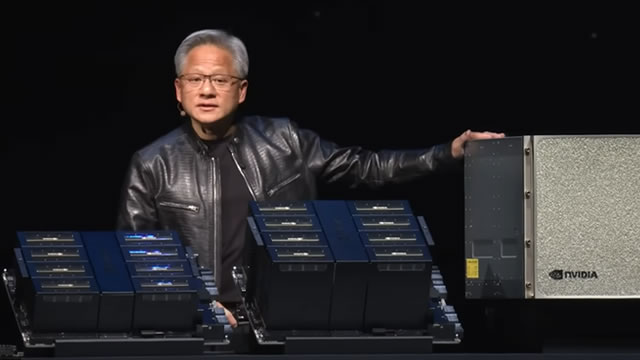
Rubin Ultra architecture

Search documents
Moving Past Geopolitical Tensions: Why Stocks Are Poised for a Strong Recovery
ZACKS· 2026-03-17 16:45
Market Overview - The S&P 500 has only declined about 3% since the escalation of the Iran conflict, indicating a relatively muted market reaction compared to past crises [1] - Historical data shows that markets often recover from geopolitical shocks within weeks or months, provided there is no sustained energy crisis [2][3] Geopolitical Impact - The current market stability is attributed to diversified global supply chains, central banks' policy flexibility, and resilient corporate earnings [4] - Recent media reports indicated successful tanker transits through the Strait of Hormuz, contributing to a decrease in oil prices [5] Seasonal Trends and Economic Indicators - Strong seasonal patterns are expected as markets enter the second half of March, with historical data suggesting favorable performance for the S&P 500 in April [6] - Tax refunds are approximately 10-11% higher than the previous year, injecting billions into the economy and potentially boosting consumer spending [6] Technology Sector Insights - Nvidia is highlighted as a key player in the technology sector, with advancements in AI infrastructure and partnerships that enhance its market position [7][8] - Nvidia's CEO projected that AI chip sales could approach $1 trillion by 2027, indicating strong demand across various sectors [8][9] Investment Opportunities - Nvidia's recent developments and strong fundamentals suggest it may lead the recovery in the technology sector [10][11] - The current geopolitical noise may create temporary valuation resets in high-quality growth stocks like Nvidia, historically rewarding patient investors [11] Conclusion - The current volatility related to the Iran conflict is viewed as part of a long-term trend where markets tend to look past geopolitical events [13] - The upcoming March-April period is expected to favor technology stocks, particularly Nvidia, as a potential setup for the next phase of the AI-driven cycle [13][14]


AI 网络 - 2027 年关键动向:英伟达扩产中引入 CPO 技术AI Networking The Key Move in 2027 to be CPO in NVIDIA’s Scale Up
2025-12-09 01:39
Summary of NVIDIA's Optical Interconnection Developments Company Overview - **Company**: NVIDIA (Ticker: NVDA US) - **Industry**: AI Networking and Optical Interconnection Key Points Industry Developments - NVIDIA is expected to incorporate CPO (Co-Packaged Optics) into its 2027 Rubin Ultra architecture, following Google's adoption of OCS (Optical Circuit Switching) for its TPU V7, which interconnects over 9,000 chips, surpassing NVIDIA's projected deployment of 576 dies in 2027 [1][2] - The transition to CPO for rack-to-rack interconnects is anticipated to enhance power consumption, latency, density, and cost efficiency compared to AOC (Active Optical Cable) [2] Product and Technology Insights - NVIDIA's scale-up optical solutions may arrive sooner than expected, with CPO being considered for the 576-die architecture starting in the second half of 2027 [2] - Compute trays and switch trays will continue to use PCB backplane connectivity, while rack-to-rack interconnects are likely to adopt CPO-based optical interconnects [2] - The scale-up CPO presents an incremental opportunity for the optical interconnect supply chain, with key beneficiaries including companies like LITE, Sumitomo, and Browave [3] Market Expectations - NVIDIA's scale-out CPO switch is projected to have deployment figures of 2,000, 20,000, and 35,000 units in 2025, 2026, and 2027 respectively [4] - The anticipated demand for NVIDIA's OIO (Optical Interconnection) solution is expected to coincide with the Feynman architecture, driving demand for CW lasers, FAUs, and optical engines [4] Risks - Potential risks include deceleration in AI demand, geopolitical uncertainties, and increased competition within the industry [5] Rating and Performance Expectations - NVIDIA is rated as a "Buy," indicating an expectation to outperform the benchmark by more than 15% [6] Additional Considerations - The report emphasizes that the CPO penetration rate may not be significant in the 1.6T generation due to factors such as maturity and technical reliability [4] - The supply chain for scale-up CPO is similar to that of scale-out CPO, indicating a consistent market structure [3] This summary encapsulates the critical insights and projections regarding NVIDIA's advancements in optical interconnection technology and its implications for the industry.
Who Is Nvidia's Biggest Rival? Jensen Huang Offered a Clue, and You May be Surprised by the Answer.
The Motley Fool· 2025-03-22 08:10
Core Insights - Nvidia has established a dominant position in the AI chip market, generating $130 billion in revenue last year and experiencing significant stock price gains over the past five years [1] - Concerns have arisen regarding potential competition from rivals, particularly as Nvidia's premium-priced chips may lead customers to consider lower-cost alternatives [2][3] - Nvidia's innovation strategy involves frequent releases of new chip architectures, with the latest being Blackwell, which offers substantial performance improvements over previous models [4][7] Competitive Landscape - Nvidia's biggest competitor may actually be itself, as the introduction of new architectures like Blackwell could cannibalize sales of older models [9][11] - Blackwell generated $11 billion in revenue in its first quarter, indicating strong demand despite the challenge of transitioning customers to newer products [9] - The risk exists that customers may delay upgrading to newer architectures, potentially impacting Nvidia's sales growth [10][11] Customer Dynamics - Major tech companies, such as Meta Platforms, are investing heavily in AI, which supports the likelihood of these customers adopting Nvidia's latest technologies [12] - The presence of competitors, including those developing their own chips, does not significantly threaten Nvidia's market dominance in the high-growth AI sector [13]