SPDR Gold MiniShares Trust (GLDM)

Search documents
Gold ETFs Gain as Advisors Seek New Diversifiers
Etftrends· 2026-03-26 21:42
Core Insights - Gold ETFs are transitioning from short-term hedges to permanent portfolio components as global debt reaches $350 trillion and traditional diversification methods fail [2][5] - Financial advisors are increasingly moving gold from tactical positions to core strategic allocations, with a price target of $6,000 per ounce within the next 12 months [3][4] Group 1: Market Trends - Gold has been the top-performing U.S. dollar-denominated macro asset class in 2024 and 2025, indicating a significant shift in investor behavior [2] - The economic uncertainty index is currently double that of the previous Trump administration, prompting investors to seek "left tail" hedges [4] Group 2: Portfolio Allocation - Experts recommend that gold should represent 3% to 7% of a portfolio, with some institutional investors allocating as much as 10% to 15% [6] - Current global gold fund holdings are below 1% of total assets, suggesting potential for increased investment flows into gold ETFs as advisors adjust their strategies [10] Group 3: Investment Vehicles - Gold ETFs provide efficient access to physical gold prices without the complexities of futures or the risks associated with mining stocks [7] - Retail investors now account for 20% of State Street's gold ETF assets, reflecting a behavioral shift in the market [9]

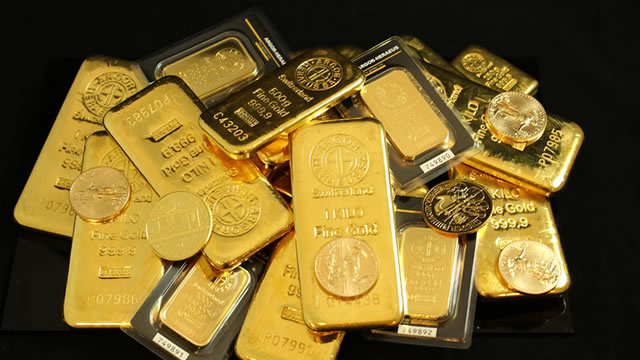
VIDEO: ETF of the Week: GLDM
Etftrends· 2026-03-23 20:24
Core Viewpoint - The SPDR Gold MiniShares Trust (GLDM) is highlighted as a cost-effective alternative to the SPDR Gold Shares (GLD), providing exposure to the gold market with a lower expense ratio, making it attractive for cost-conscious investors [2][6]. Cost Efficiency - GLDM offers exposure to the spot gold market at an expense ratio of just ten basis points, significantly lower than GLD, which has a higher expense ratio but trades more frequently [2][3]. - The difference in performance between GLDM and GLD is primarily attributed to their expense ratios, with GLDM showing better returns in various market conditions due to its lower costs [7][8]. Market Demand and Performance - There is a growing demand for gold as a safe haven asset, especially amid geopolitical tensions, with central banks globally increasing their gold reserves [9][13]. - GLDM has seen strong inflows this year, indicating a positive market sentiment towards gold investments [6]. Portfolio Construction - It is suggested that investors consider allocating around 5% of their portfolio to gold, including GLDM, to diversify and mitigate risks associated with traditional equity and fixed income investments [17]. - Gold mining ETFs can complement investments in physical gold, but they serve different purposes and risk profiles, with GLDM being considered a safer investment [15][14].

ETF of the Week: SPDR Gold MiniShares Trust (GLDM)
Etftrends· 2026-03-19 18:19
Core Insights - The SPDR Gold MiniShares Trust (GLDM) is highlighted as the ETF of the Week, indicating its significance in the current investment landscape [1] Group 1: ETF Overview - The discussion on GLDM was led by Todd Rosenbluth, Head of Research at VettaFi, during a podcast episode with Chuck Jaffe [1] - The podcast aims to provide insights into the ETF market, focusing on strategies and news relevant to investors [1] Group 2: Strategic Importance - GLDM is positioned as a strategic investment option for those looking to gain exposure to gold [1] - The ETF is part of a broader trend in the investment community towards gold as a hedge against market volatility [1]

Here's Why Gold ETFs Remain a Smart Long-Term Portfolio Bet
ZACKS· 2026-03-13 16:55
Core Insights - The ongoing Middle East conflict is driving investors towards safe-haven assets, particularly gold, which has seen significant price increases due to heightened global market volatility [1][4][9] - J.P. Morgan and Deutsche Bank have bullish forecasts for gold prices, predicting $6,300 and $6,000 per ounce respectively by year-end [2] - The CBOE Volatility Index has surged, indicating increased market turbulence, with a 22.03% rise over the past five days and 58.42% over the past month [4][5] Gold Market Dynamics - Gold prices have increased by approximately 17.70% year-to-date and 1.16% over the past month, reflecting strong demand for safe-haven assets [1][9] - Inflation concerns, particularly energy-driven inflation, are supporting continued investment in gold despite pressures from a strengthening dollar [6] - Gold has historically outperformed inflation, making it a valuable tool for portfolio diversification [7] Investment Strategies - A long-term passive investment approach in gold is recommended to navigate short-term market disruptions, with gold ETFs emerging as an attractive option [8][10] - Investors are encouraged to consider various gold ETFs, such as SPDR Gold Shares (GLD) and iShares Gold Trust (IAU), to increase their exposure to gold [11] - Gold Miner ETFs, like VanEck Gold Miners ETF (GDX), provide access to the gold mining industry and can magnify gains and losses associated with gold prices [13]

Gold ETFs Shine as Middle East Tensions Stoke Safe-Haven Demand
ZACKS· 2026-03-02 16:46
Geopolitical Tensions and Market Impact - The Middle East is experiencing heightened tensions due to U.S. and Israeli strikes on Iran, leading to increased global market volatility and a shift towards safe-haven assets like gold [1] - Iran has retaliated with attacks on U.S. allies in the Persian Gulf, further escalating the geopolitical situation [3] Gold as a Safe-Haven Asset - Gold has demonstrated strong performance amid economic and geopolitical instability, with prices rising approximately 2% in one day, 4.84% over five days, 52.41% over six months, and 87.17% over the past year [2][10] - Analysts at JPMorgan predict a near-term risk premium increase of 5% to 10% for gold prices due to the ongoing geopolitical tensions [5] Future Price Projections - Sustained demand from central banks and investors could potentially elevate gold prices to $6,300 per ounce by the end of the year, especially if geopolitical conflicts persist [6] - The CBOE Volatility Index has risen 21% since February 27, indicating increased market volatility, which may further support gold's appeal [4] Investment Strategies - Investors are encouraged to adopt a "buy-the-dip" strategy for gold exposure, particularly through gold ETFs, despite potential short-term price pullbacks [8] - Long-term passive investment strategies are recommended to navigate short-term market fluctuations, with GLD being the largest gold ETF with an asset base of $183.21 billion [11] Gold ETFs and Miners - Recommended gold ETFs for exposure include SPDR Gold Shares (GLD), iShares Gold Trust (IAU), and SPDR Gold MiniShares Trust (GLDM), with GLD being the most liquid option [9][11] - For those interested in gold mining, options include VanEck Gold Miners ETF (GDX) and Sprott Gold Miners ETF (SGDM), with GDX also being the most liquid in this category [12][13]

ETFs to Watch as Gold Breaches the $5,200 Mark
ZACKS· 2026-01-28 16:51
Core Insights - Gold prices have surged significantly, climbing 60.88% over the past six months and 93.20% over the past year, with a recent increase of 6.93% in the last five days, surpassing the $5,200 mark [1][11] - Geopolitical tensions and tariff frictions are driving market volatility and increasing demand for gold as a safe-haven asset [2][5] - Expectations of further Federal Reserve rate cuts and a declining U.S. dollar are supporting the bullish outlook for gold [4][6] Geopolitical and Economic Factors - Renewed tariff threats from President Trump against South Korea and earlier threats against Canada are escalating trade tensions, which are contributing to market unease and boosting safe-haven demand for gold [3][5] - Ongoing U.S. military actions and heightened tensions in regions like Syria, Venezuela, and the Middle East are reinforcing investor demand for gold [5] Market Dynamics - The U.S. Dollar Index (DXY) has decreased by 2.24% over the past five days and 10.75% over the past year, with an all-time decline of 19.81%, making gold more affordable for international buyers [7] - Inflows into gold and precious metals commodity funds reached $1.96 billion in the week ending January 21, marking the 10th week of net purchases in 11 weeks, indicating strong investor interest [8] Central Bank Activity - Central bank gold purchases are expected to remain robust, with Goldman Sachs projecting monthly buying to average around 60 metric tons [9] - Analysts forecast that gold prices could potentially reach $6,000 in 2026, driven by strong demand from central banks and retail investors amid escalating global tensions [10] Investment Strategies - Investors are encouraged to adopt a "buy-the-dip" strategy to increase exposure to gold, as the fundamentals supporting the rally remain strong [13] - Recommended gold ETFs for increased exposure include SPDR Gold Shares (GLD), iShares Gold Trust (IAU), and SPDR Gold MiniShares Trust (GLDM), among others [14][15] - For those interested in gold mining, options include VanEck Gold Miners ETF (GDX) and Sprott Gold Miners ETF (SGDM), which can magnify gains and losses associated with gold prices [16][17]

Gold ETFs: GLDM Offers Lower Costs, While IAU Boasts More Assets Under Management
The Motley Fool· 2026-01-24 17:57
Core Viewpoint - The comparison between SPDR Gold MiniShares Trust (GLDM) and iShares Gold Trust (IAU) highlights GLDM's lower expenses and shallower historical drawdown, making it potentially more appealing for cost-conscious and risk-averse investors [1][9]. Cost & Size - IAU has an expense ratio of 0.25%, while GLDM has a lower expense ratio of 0.10% [3][4]. - As of January 9, 2026, IAU's one-year return is 67.2%, compared to GLDM's 66.2% [3]. - IAU has assets under management (AUM) of $72.9 billion, whereas GLDM has $28.0 billion [3][10]. Performance & Risk Comparison - Both IAU and GLDM have a maximum drawdown of -20.92% over five years [5]. - The growth of a $1,000 investment over five years is $2,414 for IAU and $2,427 for GLDM, indicating slightly better performance for GLDM [5]. Fund Structure - GLDM offers pure gold exposure with 100% of its portfolio aligned to gold holdings, without equities or alternative assets [6]. - IAU follows a similar structure, providing exposure to gold bullion without sector tilt or equity exposure [7]. Investment Implications - Both IAU and GLDM provide direct access to gold, but GLDM's lower expense ratio and smaller historical drawdown may attract more cost-conscious or risk-averse investors [9][10]. - The larger AUM of IAU may appeal to some investors, but GLDM's cost advantages suggest it may be the wiser choice for long-term savings [10].

GDX vs. GLDM: Gold Miners With Leverage or Direct Gold Price Exposure
The Motley Fool· 2026-01-22 02:06
Core Insights - The VanEck Gold Miners ETF (GDX) and the SPDR Gold MiniShares Trust (GLDM) respond differently to gold prices, catering to distinct investment strategies [2][9] Cost and Size Comparison - GDX has an expense ratio of 0.51% and GLDM has a lower expense ratio of 0.10%, making GLDM more attractive for cost-conscious investors [3][4] - As of January 20, 2026, GDX has a one-year return of 181.64% compared to GLDM's 75.86% [3] - GDX has assets under management (AUM) of $25.8 billion, while GLDM has AUM of $25.29 billion [3] Performance and Risk Analysis - Over five years, GDX experienced a maximum drawdown of -46.52%, while GLDM had a maximum drawdown of -20.92% [5] - An investment of $1,000 in GDX would grow to $2,587 over five years, compared to $2,427 for GLDM [5] Portfolio Composition - GLDM is structured to reflect the price of physical gold, providing pure-play gold exposure without the volatility associated with mining companies [6] - GDX invests exclusively in gold mining companies, which introduces additional risks related to company performance and management [7] Investment Implications - GLDM is suitable for investors seeking direct exposure to gold prices with less volatility, while GDX offers potential for higher returns through mining company performance [10][12] - The performance of GDX can diverge from gold prices due to operational risks and market sentiment, making it more volatile [11]

Gold ETFs Glitter Amid Renewed Transatlantic Trade Strains
ZACKS· 2026-01-21 16:05
Market Volatility and Gold's Appeal - January has experienced significant market volatility, influenced by President Trump's tariffs on eight European nations, which may set a turbulent tone for the year ahead [1][4] - The CBOE Volatility Index has surged approximately 27% since last Monday and is up about 31% since the start of 2026, indicating heightened market uncertainty [2] Gold Price Performance - Gold prices have rallied significantly, increasing by 44.61% over the past six months and 79.93% over the past year, supported by solid fundamentals and a positive long-term outlook [3] - The demand for gold is being reinforced by increasing central bank purchases, ongoing economic uncertainty, expectations of further Federal Reserve rate cuts, and a weaker U.S. dollar [3][10] Geopolitical Tensions - Renewed transatlantic trade war rhetoric, particularly regarding President Trump's actions towards Greenland, has escalated geopolitical tensions, further driving demand for safe-haven assets like gold [4][7] - U.S. military actions in various regions and ongoing geopolitical flashpoints contribute to gold's safe-haven appeal [7] Investment Trends in Gold - In the week ending January 14, gold and precious metals commodity funds saw net inflows of $1.81 billion, marking the ninth week of net purchases in the last ten weeks [8] - A weaker U.S. dollar, which has fallen 0.75% over the past five days and 8.67% over the past year, typically increases demand for gold as it becomes more affordable for foreign buyers [9] Federal Reserve Influence - Anticipation of further Federal Reserve rate cuts in 2026 is expected to support gold prices, as a weaker dollar becomes less attractive to foreign investors [10] - Concerns over the independence of the Federal Reserve, particularly in light of President Trump's actions, may also bolster gold's appeal [11] Investment Strategies - In the current volatile market, a long-term passive investment approach is recommended for gold exposure, allowing investors to remain resilient through market disruptions [12] - Suggested funds for increasing gold exposure include SPDR Gold Shares (GLD), iShares Gold Trust (IAU), and others [13][14] - Gold miners ETFs, such as VanEck Gold Miners ETF (GDX) and Sprott Gold Miners ETF (SGDM), provide access to the gold mining industry, which can magnify gains and losses [15]
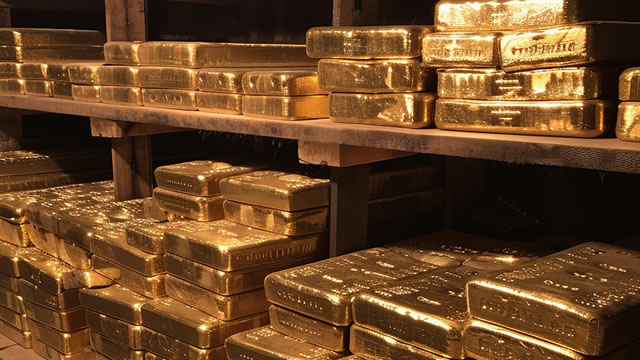
Gold ETFs: GLD is the Largest, But GLDM Provides Cheaper Gold Exposure
The Motley Fool· 2026-01-17 20:32
Core Insights - The article compares SPDR Gold Shares (GLD) and SPDR Gold MiniShares Trust (GLDM), highlighting their differences in expense ratios, fund sizes, and performance metrics to help investors determine which ETF may better suit their gold investment strategy [1][2]. Cost & Size Comparison - GLD has an expense ratio of 0.40% and assets under management (AUM) of $151.5 billion, while GLDM has a significantly lower expense ratio of 0.10% and AUM of $26.4 billion [3][4]. - Both ETFs have similar one-year returns, with GLD at 67.0% and GLDM at 66.2% [3]. Performance & Risk Metrics - Over the past five years, GLD experienced a maximum drawdown of -21.03%, while GLDM had a slightly lower drawdown of -20.92% [5]. - An investment of $1,000 would have grown to $2,396 in GLD and $2,427 in GLDM over the same period, indicating GLDM's slight edge in performance [5]. Fund Characteristics - GLDM is designed for cost-conscious investors seeking a straightforward way to invest in gold, having been available for 7.5 years and closely tracking gold's price movements [6]. - GLD, as the original gold ETF, offers 100% exposure to basic materials and is favored by institutional investors due to its large scale and liquidity [7]. Investment Implications - Both GLD and GLDM provide nearly identical performance results over the last five years, with GLDM slightly outperforming GLD [11]. - The lower expense ratio of GLDM makes it a more attractive option for cost-sensitive investors, despite GLD's larger AUM providing greater liquidity [11].