SYS6020

Search documents
巨头的in vivo CAR-T方向(下):更偏向慢病毒载体
Xin Lang Cai Jing· 2026-01-04 12:26
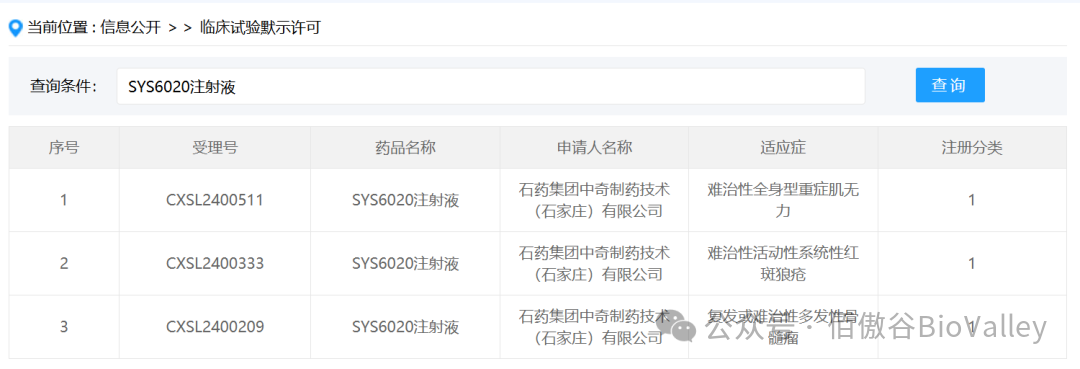
Core Insights - The article discusses recent collaborations and acquisitions among major pharmaceutical companies in the field of in vivo CAR-T cell therapy, highlighting a preference for lentiviral vector technology over LNP-RNA strategies [2][10]. Group 1: Collaborations and Acquisitions - Astellas' subsidiary Xyphos Biosciences partnered with Kelonia Therapeutics in February 2024 to develop in vivo CAR-T cell therapies, with a potential total deal value exceeding $875 million [2][11]. - Novartis entered a collaboration with Vyriad in November 2024 to discover and develop in vivo CAR-T cell therapies, utilizing Vyriad's lentiviral vector platform [4][14]. - Johnson & Johnson formed a strategic partnership with Kelonia in November 2025, marking its first foray into in vivo CAR-T, although specific financial details were not disclosed [5][15]. Group 2: Financial Details of Collaborations - The Astellas-Kelonia agreement includes an initial payment of $40 million for the first project, with an additional $35 million if a second project is pursued, alongside potential milestone payments nearing $800 million [3][12]. - Novartis and Vyriad's collaboration will involve prepayments, milestone payments, and tiered royalties based on net sales, although specific amounts were not disclosed [4][14]. - The financial terms of the Johnson & Johnson-Kelonia partnership remain undisclosed, but it emphasizes the use of Kelonia's iGPS® platform for developing next-generation CAR-T therapies [5][15]. Group 3: Technological Insights - The iGPS® platform developed by Kelonia is a lentiviral vector-based gene delivery system designed to enhance gene transfer efficiency and achieve tissue specificity [2][11]. - Vyriad's lentiviral vector platform modifies the vesicular stomatitis virus (VSV) to target T cells specifically, allowing for effective CAR payload delivery and reprogramming of T cells into CAR-T cells [4][14]. - Kelonia's KLN-1010, developed using the iGPS® platform, has shown promising clinical data, achieving minimal residual disease (MRD) negative responses in patients [5][16]. Group 4: Industry Trends - The article notes a trend among large pharmaceutical companies favoring lentiviral vector technology over LNP-RNA strategies for in vivo CAR-T therapies, reflecting a preference for established delivery methods with commercial success [10][22]. - The Chinese biopharmaceutical sector is also exploring in vivo CAR-T therapies, with companies like Stone Pharmaceutical leading the development of SYS6020, an mRNA-LNP based CAR-T product [7][19].

行业周报:体内CAR-T交易迭起,关注国内投资机会-20251012
KAIYUAN SECURITIES· 2025-10-12 09:41
Investment Rating - The industry investment rating is "Positive" (maintained) [1] Core Views - The in vivo CAR-T technology is emerging as a new hotspot in cell therapy, with significant investment opportunities in the domestic market. Major pharmaceutical companies are actively entering this field, with multiple high-value transactions occurring in 2025 [5][14] - Compared to traditional CAR-T, in vivo CAR-T offers advantages such as reduced manufacturing costs, shortened processing times, and improved accessibility for patients, making it applicable in various diseases including B-cell malignancies and autoimmune diseases [6][15] - The report highlights the performance of various sub-sectors within the pharmaceutical industry, noting that the hospital sector showed the highest increase, while the medical R&D outsourcing sector experienced the largest decline [7][24] Summary by Sections Section 1: In Vivo CAR-T Transactions - Numerous significant transactions in the in vivo CAR-T space have occurred in 2025, indicating strong interest and investment potential. Notable deals include AstraZeneca's acquisition of EsoBiotech for $1 billion and BMS's agreement to acquire Orbital Therapeutics for $1.5 billion [5][14] Section 2: Market Performance - In the second week of October 2025, the pharmaceutical sector declined by 1.20%, underperforming the CSI 300 index by 0.69 percentage points, ranking 25th among 31 sub-industries. The hospital sector saw the largest increase at 1.79% [7][18] - The report provides a detailed analysis of sub-sector performance, with the hospital sector leading gains and the medical R&D outsourcing sector facing the most significant losses [24][28] Section 3: Recommended Stocks - The report recommends several stocks for investment, including Shiyao Group, Sunshine Nuohuo, and Yuekang Pharmaceutical, among others [8][16]




体内CAR-T带火上游卖水人?
Xin Lang Cai Jing· 2025-09-12 05:49
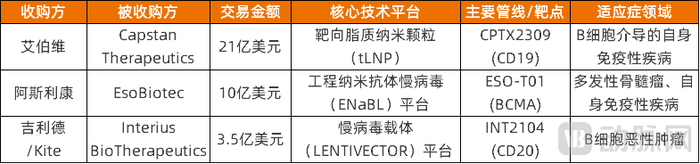
Core Insights - The in vivo CAR-T therapy market is rapidly gaining traction, with significant mergers and acquisitions by major multinational corporations (MNCs) indicating a strategic shift towards this innovative treatment approach [1][2][3] - The advancements in delivery vector technologies are driving the development of in vivo CAR-T therapies, with a focus on improving targeting efficiency and safety [3][4] Group 1: Mergers and Acquisitions - AstraZeneca acquired EsoBiotec for $1 billion to enhance its in vivo CAR-T therapy portfolio [1][2] - AbbVie announced the acquisition of Capstan Therapeutics for up to $2.1 billion, marking a significant investment in the in vivo CAR-T space [1][2] - Gilead's Kite acquired Interius for $350 million, further expanding its capabilities in cell therapy [1][2] Group 2: Technology Platforms - EsoBiotec's core technology is the engineered nanobody lentivirus (ENaBL) platform, which enhances the specificity of immune cell transfection [4] - Interius utilizes a lentiviral vector to deliver CAR genes, generating CAR-T and CAR-NK cells directly in vivo for targeting B-cell malignancies [3][4] - The mRNA-LNP (lipid nanoparticle) delivery system is gaining attention for its safety profile, allowing for transient CAR expression without permanent genetic modification [7][8] Group 3: Clinical Developments - EsoBiotec's product ESO-T01 has shown promising clinical trial results for multiple myeloma, indicating potential effectiveness in treating relapsed or refractory cases [15][17] - Capstan Therapeutics' candidate CPTX2309 is currently in Phase I trials for autoimmune diseases, showcasing the therapeutic potential of the LNP delivery approach [8][9] Group 4: Industry Trends - The shift from ex vivo to in vivo CAR-T therapies is reshaping the ecosystem, with increased collaboration among technology partners and a focus on delivery efficiency [3][6] - The reliance on upstream CXO (Contract Research Organization) services is significant, with over 65% of CGT (Cell and Gene Therapy) projects involving CXO participation [6][12] - The industry is witnessing a dual approach, with companies like AbbVie investing in both lentiviral and mRNA-LNP technologies to mitigate risks associated with single technology pathways [16][17]