SportsGPT

Search documents
AI体育教练来了!中国团队打造SportsGPT,完成从数值评估到专业指导的智能转身
量子位· 2025-12-22 01:40
Core Insights - The article discusses the current state of "intelligent" sports systems, highlighting that most remain at the "scoring + visualization" stage, lacking actionable insights for athletes and coaches [1] - It introduces the SportsGPT framework, which aims to provide a complete intelligent loop from "motion assessment" to "professional diagnosis" and "training prescription" [5][37] Group 1: Limitations of Current Models - General large models like GPT-5 struggle with specialized sports biomechanics analysis due to their lack of fine-grained visual perception, leading to generic and sometimes physically infeasible suggestions [3][9] - A comparative evaluation shows that SportsGPT outperforms other models in accuracy (3.80) and feasibility (3.77), indicating its unique advantages in generating precise, actionable training guidance [8][9] Group 2: Motion Analysis Techniques - MotionDTW is a two-stage time series alignment algorithm designed for sports motion analysis, addressing traditional DTW's limitations by constructing a high-dimensional feature space [10][21] - The algorithm employs a weighted multi-modal feature space to eliminate errors caused by athlete body differences and incorporates dynamic features like angular velocity to enhance motion phase representation [12][18] Group 3: Diagnostic Capabilities - KISMAM serves as a bridge between raw biomechanical data and interpretable diagnostics, establishing a quantitative benchmark based on data from 100 youth sprinters [25][26] - The model quantifies deviations from standard thresholds and constructs a high-dimensional mapping matrix to understand complex relationships between motion anomalies and technical issues [28][30] Group 4: Training Guidance - SportsRAG, built on a large external knowledge base, enhances the generation of training guidance by integrating domain knowledge with diagnostic results, ensuring actionable recommendations [33][34] - The absence of the RAG module significantly reduces the feasibility of the model's outputs, demonstrating its critical role in transforming diagnostic insights into professional training prescriptions [34] Group 5: Conclusion - The SportsGPT framework represents a significant advancement in intelligent sports training, moving from mere data presentation to providing executable, expert-level guidance [37] - It establishes a new standard in smart sports by effectively addressing the challenges of motion analysis, diagnosis, and training instruction [37]


大模型在体育场景“开挂”
Ke Ji Ri Bao· 2025-07-02 06:57
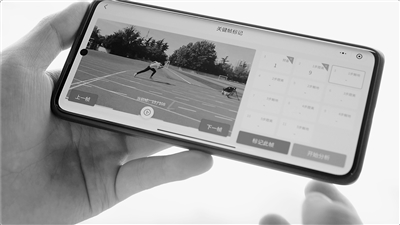
Core Insights - SportsGPT is the first large model for sports training and rehabilitation in China, providing analysis and personalized training plans based on user-uploaded videos [1][4] - The application has been recognized as a typical case in intelligent sports by the Ministry of Industry and Information Technology and the General Administration of Sport of China for 2024 [1] Sports Training Applications - SportsGPT offers real-time action guidance and personalized training plans, acting as a versatile assistant for sports training [4] - Users can upload videos to receive detailed breakdowns of their movements, identify errors, and obtain corrective suggestions along with a customized training plan [2][4] Rehabilitation Support - SportsGPT assists users with injury recovery by providing professional advice on treatment options and rehabilitation exercises [5][6] - The model can help rehabilitation specialists by collecting preliminary information and analyzing data to enhance treatment efficiency [5][6] Sports Research Efficiency - In traditional sports research, data collection and analysis are time-consuming; SportsGPT significantly improves efficiency by automating these processes [7] - The model learns from a vast dataset of elite athletes' biomechanics to quickly assess new athletes' performance and potential [7] Future Development - The next step for SportsGPT is to evolve from an efficient analyst to a predictive tool, capable of forecasting injury risks and performance fluctuations [8][9] - Achieving this requires integrating more physiological and psychological data to develop advanced algorithms [9]