Step系列基座模型

Search documents
大模型“卷王”阶跃星辰计划港股IPO?印奇刚任董事长
Sou Hu Cai Jing· 2026-02-26 02:29
Core Insights - Shanghai-based AI startup Jiyue Xingchen is considering an IPO on the Hong Kong Stock Exchange, aiming to raise approximately $500 million (around 3.4 billion RMB) [1] - The company has developed a series of foundational models known as the Step series, recognized for their rapid development and strong multimodal capabilities [1][2] - Jiyue Xingchen has recently completed a B+ round of financing exceeding 5 billion RMB, marking the highest single financing record in the Chinese large model sector over the past 12 months [2] Company Overview - Jiyue Xingchen was founded in April 2023 and is led by a team of industry experts, including CEO Jiang Daxin, a former Microsoft global vice president, and chief scientist Zhang Xiangyu, a top AI algorithm scientist [1] - The company has released three generations of foundational large models, with Step 3 achieving industry-leading inference efficiency [2] Strategic Developments - In January 2024, Jiyue Xingchen appointed Yin Qi, chairman of Qianli Technology, as its chairman to oversee strategic direction and technology development [3] - The company is focusing on the "AI + terminal" strategy, with significant investments in automotive, mobile, and IoT applications, as well as collaborations in finance, content creation, and retail [4] Market Context - Jiyue Xingchen's potential IPO follows the recent listings of other large model companies, including Zhiyu Technology and MiniMax, positioning it to become the third large model company to go public in China [4]


阶跃星辰拿到50亿新年最大融资,资本看中了什么?
Sou Hu Cai Jing· 2026-01-26 12:49
Group 1 - The core point of the article highlights a significant B+ round financing of 5 billion RMB completed by the AI foundational model company, Jumpspace, which sets a record for single-round financing in China's large model sector over the past year [2][3] - The financing occurs against a backdrop of declining financing amounts and rounds in 2025, indicating a structural transition in the Chinese large model industry, with a shift from broad investment to concentrated bets [4] - The market is witnessing a heightened focus on companies' "system capabilities," "delivery capabilities," and "scene embedding capabilities," which are becoming the core evaluation criteria for investments in the new phase [2][4][14] Group 2 - In 2025, the number of financing rounds and total amounts for Chinese large model companies decreased significantly, with only three companies securing single-round financing exceeding 1 billion RMB [4] - Major internet companies are tightening external investment and focusing on internal model development, indicating a shift in resource allocation within the industry [4] - The successful financing of Jumpspace reflects a collective confirmation from the capital market regarding its direction, path, and organizational capabilities amidst a cautious investment atmosphere [10][12] Group 3 - Jumpspace has established a "model-engine-product" closed-loop system, releasing over 30 foundational models across various modalities, demonstrating strong deployment engineering awareness [12] - The company has achieved significant market validation, with its models installed in over 42 million devices and a daily service reach of nearly 20 million users [12][13] - The focus on embedding models into terminal applications, such as smartphones and automobiles, represents a higher threshold for productization, requiring stable operation and continuous updates [16][17] Group 4 - The competitive landscape is shifting from "who can create a stronger model" to "who can effectively embed models into real-world applications and establish sustainable product and delivery systems" [15][17] - Current mainstream business models, including cloud API calls and customized projects, are facing structural limitations, necessitating a reevaluation of the role of foundational model companies [15][16] - The ability to create a positive feedback loop from data, products, and engineering is becoming a new selection mechanism for long-term value in the industry [17]
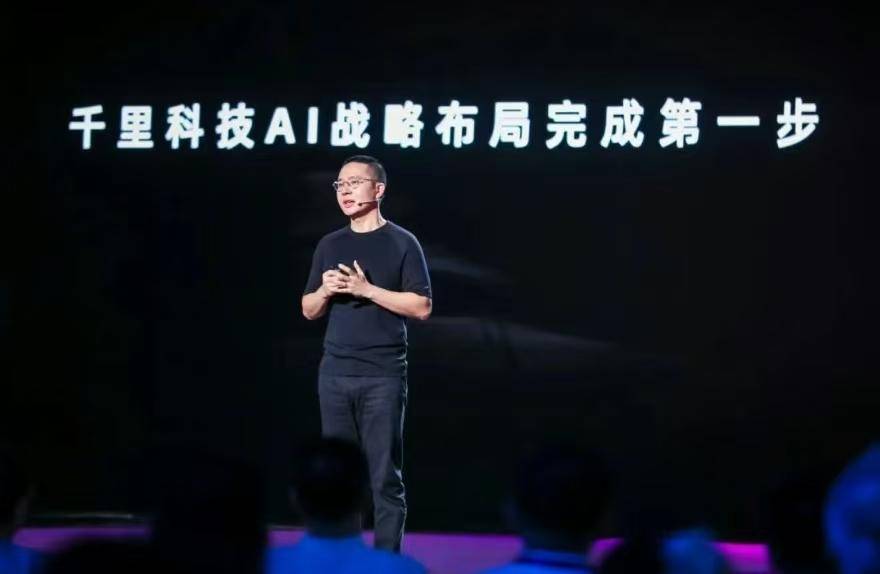
大模型小虎阶跃星辰融资50亿元,AI创业老兵印奇任董事长
Sou Hu Cai Jing· 2026-01-26 04:05
Core Insights - The large model sector in China is experiencing significant investment, with Jieyue Xingchen completing over 5 billion yuan in Series B+ financing, setting a record for single financing in the past 12 months [1] - The funding will be used for foundational model research and to accelerate the implementation of the AI + terminal strategy [1] - Jin Qi, chairman of Qianli Technology, has been appointed as chairman of Jieyue Xingchen, focusing on strategic direction and technological development [2] Investment and Financing - Jieyue Xingchen's recent financing round included participation from various institutional investors such as Shangguotou Xiandao Fund and Tencent, among others [1] - The company aims to develop a top-tier foundational model and enhance its AI + terminal strategy through this funding [1] Leadership and Strategic Direction - Jin Qi has extensive experience in AI and automotive integration, having previously led AI applications in various real-world scenarios [2][4] - His appointment is seen as a strategic move to strengthen the collaboration between Jieyue Xingchen and Qianli Technology, focusing on AI applications in automotive technology [2][4] Technological Development - Jieyue Xingchen has released three generations of foundational large models, with the latest model achieving high inference efficiency and focusing on multimodal capabilities [6][7] - The company is also targeting deployment across multiple platforms, including mobile, automotive, and IoT devices, with significant partnerships already established [7][9] Market Impact and Future Plans - Jieyue Xingchen's models have been integrated into over 42 million devices, serving nearly 20 million users daily [9] - The company anticipates that its large models will be deployed in over one million vehicles this year, indicating strong market penetration [9] - Jin Qi emphasizes the importance of integrating AI with terminals in three core scenarios: individual, transportation, and home, with a focus on vehicles as the primary entry point [9]