Threshold

Search documents
Target Stock Rises 7% After Unveiling Bold Multi-Year Growth Strategy
ZACKS· 2026-03-04 16:05
Core Insights - Target Corporation (TGT) shares increased by 6.7% following the announcement of a multi-year growth strategy aimed at enhancing performance starting in 2026 and ensuring long-term expansion [1][9]. Investment Plans - Target plans to invest an additional $2 billion in fiscal 2026, which includes over $1 billion for capital expenditures and $1 billion for new operating investments. Total capital spending is projected to be around $5 billion for the year, facilitating new store openings, remodels, supply chain improvements, and technology upgrades [2]. Store Expansion and Remodeling - The company aims to open more than 30 stores this year, with a long-term goal of adding 300 locations by fiscal 2035, alongside over 130 full-store remodels. A significant milestone will be reached with the opening of its 2,000th store in Fuquay-Varina, NC [3]. Strategic Priorities - Target's growth strategy is centered on four key priorities: enhancing merchandising authority with trend-forward assortments, improving guest experience across digital and physical channels, accelerating technology adoption including AI, and strengthening team development and community engagement [4]. Store Transformation - A substantial portion of the new operating investment will focus on store transformation, with expectations for more changes in fiscal 2026 than in any year over the past decade. This includes redesigned floor plans, refreshed displays, increased payroll, and training to enhance the in-store experience [5]. Category Focus and Digital Expansion - Target will emphasize key categories with differentiation potential, such as relaunching its flagship brand Threshold in home goods, expanding beauty offerings with Target Beauty Studio, and enhancing the baby category with premium partnerships. In food and beverage, new product introductions will increase by nearly 50% [6][7]. Digital Engagement - The retailer plans to deepen digital engagement through its loyalty programs, including the expansion of Target Circle and the paid Target Circle 360 membership. Same-day fulfillment services, which currently account for about two-thirds of digital sales, will be optimized, and next-day delivery will expand to 20 additional metro areas [8]. Stock Performance and Valuation - TGT stock has increased by 33.2% over the past three months, outperforming the industry growth of 12.2%. The forward 12-month price-to-earnings ratio for Target is 15.42, which is lower than the industry average of 33.58 [11][13].


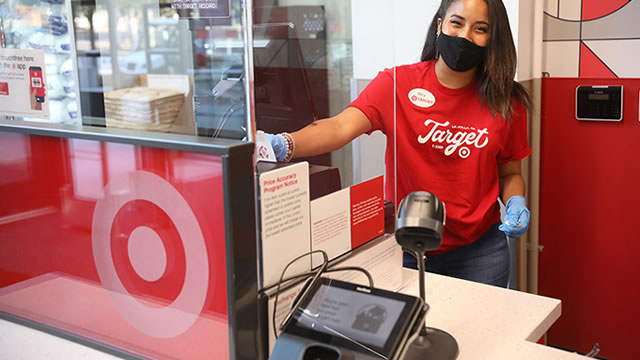
‘Target is not an everything store’: CEO
Yahoo Finance· 2026-03-04 12:40
Core Insights - Target plans to invest $1 billion in operational improvements to enhance guest experience and drive growth in 2026 [1][2] - The company aims to differentiate itself in the retail industry by focusing on a curated assortment rather than being an "everything store" [3] Investment and Financial Strategy - The $1 billion investment will fund extensive changes across all stores, including increased payroll, training, marketing, and technology spending [2] - This investment is in addition to a previously announced $5 billion capital expenditure for new stores and enhancements [2] Product and Service Enhancements - Target will relaunch its private label brand Threshold and expand its private label Cloud Island baby brand, with a 20% increase in vitamin and nutrition offerings by April [3] - A new "Baby Boutique" section will be introduced in about 200 stores, featuring premium brands and in-person expert appointments [4] - The "Target Beauty Studio" will debut in approximately 600 stores, integrating beauty-specific rewards into the loyalty program [5] Store Expansion and Remodeling - The company plans to open over 30 new locations in the U.S. in 2026 and remodel about 130 existing stores [6] - Analysts express cautious optimism regarding the company's strategy to regain merchandising authority in key categories [6]
塔吉特新任CEO临危受命:公司业绩下滑,总部所在地局势动荡
Xin Lang Cai Jing· 2026-02-02 15:14
Core Viewpoint - Target is attempting to turn around its financial performance under new CEO Michael Fiddelke, who faces significant challenges due to declining sales and increased competition in the retail sector [2][10]. Company Performance - Target's performance has been declining, with revenue stagnating over the past three years and stock prices dropping nearly 30% [4][12]. - The company has accumulated excess inventory of unsold items, such as pillows and laptops, due to high inflation that has pressured consumer budgets [3][11]. Competitive Landscape - Target is facing intensified competition from larger retailers like Amazon, Walmart, and Costco, which leverage their scale to offer lower prices [3][11]. - The company has struggled to maintain store cleanliness and product availability, leading to customer complaints about long checkout lines and insufficient staffing [3][11]. Leadership and Strategy - Michael Fiddelke, who has been with Target since 2003, aims to reshape the brand's image to provide stylish yet affordable clothing and home goods [3][11]. - The company plans to increase capital expenditures by 25% to $5 billion to improve store operations, optimize product offerings, and upgrade technology [8][17]. - A new store has been opened in New York's SoHo district to test various operational models, which may be rolled out nationwide if successful [8][17]. Political and Social Context - Target is navigating a tense political climate in Minneapolis due to federal immigration enforcement actions, which have led to protests and calls for the company to respond [5][14][16]. - The company has previously expressed support for diversity and LGBTQ+ rights, which has drawn mixed reactions from consumers [16].

Walmart vs. Target: Which Retail Titan Is the Smarter Pick?
ZACKS· 2025-11-14 13:36
Core Insights - Walmart Inc. and Target Corporation are two leading players in the U.S. retail sector, each with distinct business models and strategic focuses despite their similarities in scale and omnichannel ambitions [1] Walmart Overview - Walmart operates over 10,500 stores in 19 countries, with a market capitalization of approximately $817 billion, focusing on a value-driven "everyday low prices" model [2] - The company has developed a significant omnichannel ecosystem, utilizing its store network for pickup and same-day delivery, enhancing convenience and maintaining competitive last-mile costs [4][6] - Walmart's growth is supported by higher-margin businesses such as Walmart Connect (advertising), Walmart+ (membership), and financial services, diversifying its earnings beyond merchandise sales [5] - In Q2 of fiscal 2026, Walmart's consolidated sales increased by 5.6% at constant currency, with global e-commerce sales rising by 25% and advertising revenues soaring by 46% [7][10] - Walmart's international operations, particularly in growth markets like Mexico, China, and India, provide additional avenues for expansion and geographic diversification [6] Target Overview - Target operates nearly 2,000 stores in the U.S. with a market capitalization of $41.2 billion, focusing on a blend of style and affordability through a curated mix of products [3] - In Q2 of fiscal 2025, Target experienced a 1.9% decline in comparable sales but achieved a 4.3% growth in digital sales, driven by same-day fulfillment services [10][13] - Target's merchandising strength lies in its private-label brands, which contribute to margin stability and differentiate the brand [11] - The company is enhancing its digital fulfillment capabilities through services like Drive Up and Order Pickup, which leverage its store network to lower delivery costs [12] - Target's current fiscal-year sales and EPS estimates indicate year-over-year declines of 1.4% and 16.6%, respectively [18] Comparative Analysis - Walmart's forward P/E ratio is 35.88, above its historical median, while Target's forward P/E is 11.4, indicating relative undervaluation [24] - Over the past year, Walmart's shares have increased by 21.7%, while Target's shares have decreased by 40.4%, suggesting Walmart's stronger market performance [21] - Walmart's diversified growth drivers and operational resilience position it as the stronger contender in the retail space, while Target's brand equity and improving digital foundation provide a platform for recovery [26]