
Toys

Search documents
Iconic toy store brand closes stores, faces bankruptcy sale
Yahoo Finance· 2026-03-28 11:03
Core Insights - The toy retail industry faces significant challenges, particularly from large retailers like Walmart and Target, which can sell toys at lower margins due to their size and purchasing power [2][3] - Toys R Us Canada has entered creditor protection under the Companies' Creditors Arrangement Act, indicating a serious restructuring effort amid uncertain market conditions [4][5] Group 1: Industry Challenges - Large retailers such as Walmart and Target can leverage their size to offer lower prices, making it difficult for independent toy stores to compete [2] - The traditional brick-and-mortar retail sector is experiencing a decline due to persistent inflation, rising labor and occupancy costs, and a shift towards e-commerce [5] Group 2: Toys R Us Canada Situation - Toys R Us Canada is evaluating strategic alternatives and undergoing restructuring initiatives, including store closures, as part of its creditor protection process [4] - The company currently operates 22 stores in Canada, down from a peak of 81, highlighting the significant reduction in its retail footprint [5] - The chain has ceased online sales operations and stopped accepting gift cards, indicating a severe contraction in its business model [7]
How Five Below, Up 187% In A Year, Rode Squishy Dumplings To Defy Tariffs, Oil Prices
Investors· 2026-03-27 20:29
Core Viewpoint - Five Below has experienced significant growth, with stock prices increasing by 187% over the past year, largely attributed to the popularity of "squishy dumplings" among its target demographic of kids and teens [1][3]. Company Performance - Five Below reported a quarterly revenue growth of 24% to $1.73 billion and earnings per share of $4.28, a 26% increase, surpassing analyst expectations [6]. - For fiscal 2026, revenue rose 23% to $4.76 billion, exceeding expectations of $4.74 billion, with earnings per share at $6.47 compared to the anticipated $6.15 [6]. - The company expects same-store sales growth of 14% to 16% for the first quarter of 2026, a significant improvement from a 3% decline in 2025 [7]. Strategic Initiatives - Five Below has shifted its marketing strategy from traditional television ads to social media marketing, which has proven effective in reaching its core consumer base [9][10]. - The company plans to increase its marketing spend by 20 to 25 basis points this year to further engage with consumers [10]. - Five Below is expanding its store count, with plans to open 150 net new stores in the coming year [11]. Market Position and Challenges - The stock has shown resilience, recovering significantly from a previous drop due to tariffs, and is currently leading the discount retailer industry group [12][13]. - Analysts believe that Five Below's ability to maintain strong margins and navigate market challenges positions it favorably, despite potential risks from rising oil prices and economic downturns [16][17]. - The company has the flexibility to raise prices slightly to offset rising costs without losing its competitive edge [18]. Consumer Trends and Expectations - Five Below's management has focused on understanding customer preferences, which has led to successful product offerings like squishy dumplings [2][3]. - The company is also capturing consumer data to enhance engagement and drive repeat visits, which is expected to be a significant growth lever [10].

Ross Stores Shows Broad-Based Category Strength: Can Momentum Hold?
ZACKS· 2026-03-27 16:01
Core Insights - Ross Stores, Inc. (ROST) is experiencing strong performance across various merchandise categories, indicating healthy consumer demand and effective merchandising strategies [1][2] - The company's off-price model is appealing to value-focused shoppers amid economic uncertainty, leading to balanced growth across departments [1][2] - The sustainability of this broad-based category momentum in the upcoming quarters is a key concern [1][4] Financial Performance - In Q4, Ross Stores reported a 9% growth in comparable store sales and a 12% increase in total sales, reaching $6.6 billion [2][7] - Notable growth was observed in shoes and cosmetics, with solid results in Ladies' and Men's categories, and improvements in the home category towards year-end [2][3] - Fiscal 2025 sales are projected to grow by 8% to a record $22.8 billion, reflecting strong demand across the product assortment [2] Merchandising Strategy - A disciplined merchandising approach and strengthened vendor relationships have been crucial in supporting sales momentum [3] - The company has focused on offering branded bargains across various price points, appealing to a diverse customer base [3] - Marketing improvements and operational enhancements have contributed to a better shopping experience, leading to increased customer visits and transaction volumes [3] Future Outlook - The ability to maintain inventory flexibility and capitalize on favorable buying opportunities will be essential for sustaining category strength [4] - Continued investments in supply chain infrastructure, store operations, and merchandising capabilities are expected to support growth [4] - The company faces challenges from tougher comparisons and potential macroeconomic volatility, making consistent demand across all merchandise segments critical [4] Valuation - ROST currently trades at a forward 12-month P/E ratio of 29.36X, which is lower than the industry average of 32.27X, indicating a modest discount relative to peers [8]



Why You Might Consider an Investment in Dollar Tree Today
Yahoo Finance· 2026-03-19 13:05
Core Insights - Dollar Tree reported a 9% increase in net sales to $5.5 billion and a 5% rise in same-store sales, with diluted earnings climbing 38% to $2.56 per share in the fourth quarter [1] - The company opened 402 new Dollar Tree stores in 2025 and divested its underperforming Family Dollar chain, now operating over 9,000 locations [2] - Management projects net sales to reach approximately $20.6 billion for the full year 2026, a slight increase from $19.4 billion last year, with plans to open an additional 400 stores while closing about 75 [2] Customer Demographics - There is a notable shift in customer demographics, with higher-income shoppers increasingly frequenting Dollar Tree stores, particularly those earning $100,000 or more, making up 60% of the customer base last quarter [4] - The company is adjusting its pricing strategy to include more items in the $3-$5 range, targeting toys and party supplies to cater to this affluent customer segment [3][4] Market Trends - The trend of higher-income customers shopping at discount retailers is not exclusive to Dollar Tree, as many affluent Americans are incorporating stores like Dollar Tree, Aldi, and Walmart into their shopping routines [5] - Wage gains have aligned with inflation, which has decreased from 9% to just under 3%, yet prices still feel high to consumers, contributing to the popularity of discount retailers [6] Stock Performance - Dollar Tree's stock experienced a 13% decline earlier in the year but rebounded with a 6.4% increase following the earnings release, and it had a 64% rise in 2025, outperforming the broader market's 18% increase [3][7] - The outlook for 2026 appears positive for Dollar Tree shareholders, suggesting potential for continued growth [7]

Hasbro (HAS) Falls More Steeply Than Broader Market: What Investors Need to Know
ZACKS· 2026-03-18 23:15
Core Viewpoint - Hasbro's stock has underperformed in recent trading sessions and is facing challenges ahead of its upcoming earnings report, with expectations of a decline in earnings per share (EPS) compared to the previous year [1][2]. Financial Performance - Hasbro's stock closed at $91.63, down 1.77% from the previous session, underperforming the S&P 500's loss of 1.36% [1] - The stock has decreased by 8.75% over the past month, significantly worse than the Consumer Discretionary sector's loss of 2.08% and the S&P 500's loss of 1.76% [1] - The anticipated EPS for the upcoming earnings report is $0.97, reflecting a 6.73% decrease year-over-year [2] - Quarterly revenue is expected to be $911.59 million, which is a 2.76% increase from the same period last year [2] - For the entire fiscal year, earnings are projected at $5.66 per share and revenue at $4.92 billion, indicating increases of 2.17% and 4.73% respectively from the prior year [3] Analyst Estimates and Market Sentiment - Recent revisions to analyst estimates suggest a positive outlook, with a 1.29% upward shift in the Zacks Consensus EPS estimate over the past month [5] - Hasbro currently holds a Zacks Rank of 3 (Hold), indicating a neutral sentiment among analysts [5] Valuation Metrics - Hasbro's Forward P/E ratio stands at 16.47, which is higher than the industry average of 12.04, suggesting a premium valuation [6] - The Toys - Games - Hobbies industry, part of the Consumer Discretionary sector, ranks in the bottom 7% of all industries according to the Zacks Industry Rank [6]

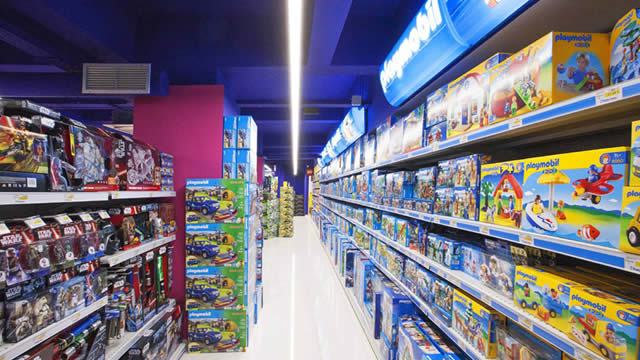
Five Below(FIVE) - 2026 Q4 - Earnings Call Transcript
2026-03-18 21:32
Financial Data and Key Metrics Changes - For the fourth quarter, net sales increased 24% to $1.7 billion, with a comparable sales increase of just over 15% driven by an 8% increase in comparable ticket and a 7% increase in comparable transactions [15][19] - For the full year, net sales increased 23% to $4.8 billion, supported by a comparable sales increase of nearly 13% [19][20] - Adjusted net income for fiscal 2025 grew 33% to $370 million, and adjusted earnings per share increased 32% to $6.67 per share [21] Business Line Data and Key Metrics Changes - The company opened 150 net new stores in 2025, growing its store count by 8.5% to a total of 1,921 stores [6][16] - Adjusted gross profit for the year increased 25% to $1.7 billion, with a gross margin of 36.1%, an increase of approximately 50 basis points compared to last year [20] Market Data and Key Metrics Changes - The company experienced broad-based growth across all merchandising worlds, with strength in all 170 districts and across all income cohorts [7][10] - The fourth quarter saw the strongest holiday performance since becoming a public company, with sales growth of 24% [6][7] Company Strategy and Development Direction - The company has defined a new strategy focused on three pillars: a maniacal focus on the target customer, delivering a connected customer journey, and cross-functional collaboration [8][9] - The marketing strategy has shifted towards social media engagement, allowing the company to dynamically engage with customers and amplify viral trends [9][12] Management's Comments on Operating Environment and Future Outlook - Management expressed confidence in the business's positioning for consistent, durable growth, despite a challenging macro environment with geopolitical uncertainties [14][23] - The outlook for fiscal 2026 anticipates sales in the range of $5.2 billion to $5.3 billion, representing a 10% increase at the midpoint [24] Other Important Information - The company ended the year with approximately $932 million in cash equivalents and investments, with inventory increasing by 28% to approximately $847 million [21][22] - Capital expenditures for fiscal 2026 are expected to be between $230 million and $250 million, reflecting continued investments in new stores and technology [25] Q&A Session Summary Question: Drivers behind the magnitude of comps - Management highlighted the crew's execution and a focus on customer engagement through social media as key drivers of success [30][31] Question: Comp momentum and guidance - Management noted broad-based growth across all assortments and emphasized the importance of direct customer engagement through social media [36][37] Question: Investments to sustain momentum - Management confirmed a commitment to reinvest in marketing and labor to support growth while balancing profitability [50][51] Question: Traffic between new and existing customers - Management reported growth in both new and existing customers, attributing success to effective marketing strategies [67][68] Question: Pricing power beyond $5 - Management explained that changes in merchandising and customer engagement have allowed for greater pricing flexibility above $5 [72][73]
Five Below(FIVE) - 2026 Q4 - Earnings Call Transcript
2026-03-18 21:30
Financial Data and Key Metrics Changes - For the fourth quarter, net sales increased by 24% to $1.7 billion, with a comparable sales increase of just over 15% driven by an 8% increase in comparable ticket and a 7% increase in comparable transactions [15][16] - For the full year, net sales increased by 23% to $4.8 billion, supported by a comparable sales increase of nearly 13% [18][19] - Adjusted net income for fiscal 2025 grew by 33% to $370 million, and adjusted earnings per share increased by 32% to $6.67 per share [20] Business Line Data and Key Metrics Changes - The company opened 150 net new stores in 2025, resulting in an 8.5% increase in store count, ending the year with 1,921 stores across 46 states [5][19] - Adjusted gross profit for the year increased by 25% to $1.7 billion, with a gross margin of 36.1%, an increase of approximately 50 basis points compared to the previous year [19] Market Data and Key Metrics Changes - The company experienced broad-based growth across all merchandising worlds, with strength seen in all 170 districts and across all income cohorts [6][9] - The fourth quarter saw the strongest holiday performance since becoming a public company, indicating a positive market response [5][6] Company Strategy and Development Direction - The company has implemented a customer-centric strategy focused on Gen Alpha, Gen Z, and millennial parents, enhancing engagement through social media and targeted marketing [7][8] - The strategy is underpinned by three pillars: a focus on the target customer, delivering a connected customer journey, and cross-functional collaboration [7][8] - The company aims to expand its brand and customer reach while maintaining a strong focus on value and customer experience [14] Management's Comments on Operating Environment and Future Outlook - Management expressed confidence in the business's positioning for consistent, durable growth despite a challenging macro environment [13][23] - The outlook for fiscal 2026 anticipates sales in the range of $5.2 billion to $5.3 billion, representing a 10% increase at the midpoint, with comparable sales growth expected between 3% and 5% [24][25] - Management acknowledged the complexities of the current macro environment, including geopolitical uncertainties and consumer spending pressures [23][41] Other Important Information - The company has redirected marketing spend towards social media to enhance customer engagement and drive traffic [11][12] - Capital expenditures for fiscal 2026 are expected to be between $230 million and $250 million, reflecting continued investment in new stores and technology [25] Q&A Session Summary Question: Drivers behind the magnitude of comps and structural changes - Management highlighted the focus on customer engagement and a connected customer journey as key drivers of recent success, emphasizing the importance of their crew in executing the strategy [31][34] Question: Comp momentum and guidance for the year - Management noted broad-based growth across all assortments and emphasized the importance of maintaining a disciplined approach to growth while being aware of the challenging macro environment [37][41] Question: Pricing strategy and customer response - Management explained that the company has evaluated products above $5 to ensure they provide compelling value, leading to customer acceptance of higher price points [72][74] Question: Factors for sustaining momentum and new sales drivers - Management indicated that the ability to react to trends and engage with customers directly will be crucial for sustaining growth, alongside improved inventory management [78][80]
More 'Fun,' Fewer Choices, and Stuff Under $10: How Kohl's Is Trying to Win Back Shoppers
Investopedia· 2026-03-12 19:30
Core Insights - Kohl's is focusing on enhancing the in-store experience by appealing to bargain hunters and simplifying product offerings to win back customers who have shifted to off-price retailers and Amazon [1] Group 1: Company Strategy - Kohl's is investing in lower price points and streamlining the in-store experience by reducing the number of styles and products available [1] - The company is prioritizing proprietary brands to fill the gap left by a lack of affordable options, which has caused credit cardholders to seek alternatives [1] - Kohl's has reportedly lost about one-third of its market share from 2013 to 2024, according to UBS estimates [1] Group 2: Product Focus - The retailer is emphasizing products priced under $10, including kids' apparel and home goods, to attract budget-conscious shoppers [1] - Kohl's is simplifying inventory management by ordering more of fewer items to prevent stockouts of popular products and enhance the shopping experience [1] Group 3: Financial Performance - Kohl's has reported its 16th consecutive quarter of comparable sales declines and anticipates flat to a 2% decrease in sales for the current fiscal year compared to fiscal year 2025 [1] - The company's shares have fallen nearly 60% over the past year, reflecting investor concerns about its turnaround strategy [1]

Ollie's Bargain Outlet (OLLI) - 2026 Q4 - Earnings Call Transcript
2026-03-12 13:32
Financial Data and Key Metrics Changes - Net sales increased by 17% to $779 million, driven by new store openings and comparable store sales growth [17] - Comparable store sales rose by 3.6%, supported by increases in both basket size and transaction counts [17] - Adjusted net income grew by 16% to $85 million, with adjusted earnings per share increasing by 17% to $1.39 [20] - Gross margin was reported at 39.9%, slightly below the previous year due to planned price investments [19] Business Line Data and Key Metrics Changes - Seasonal, consumable, hardware, stationery, and sporting goods were the top-performing categories [18] - Membership in the Ollie's Army loyalty program increased by 23%, with total customer file growth exceeding 12% [7] Market Data and Key Metrics Changes - The company opened a record 86 stores in the last year, significantly higher than the previous record of 50 stores [5] - The company plans to open 75 new stores in 2026, continuing its expansion strategy [10] Company Strategy and Development Direction - The company aims to enhance growth through a flexible off-price buying model, improving access to merchandise and expanding customer demographics [8][9] - The long-term goal is to exceed 1,300 stores, with a focus on both new store openings and improving comparable store sales [11] - The company is committed to returning approximately 50% of free cash flow to shareholders through share repurchases [25] Management's Comments on Operating Environment and Future Outlook - Management expressed confidence in achieving a sustainable comparable store sales growth target of 2% and a gross margin target of 40.5% [12][24] - The company is well-positioned to benefit from retail consolidation, which enhances its buying power and access to products [12][65] Other Important Information - The company reported a total cash and investments increase of over 31% to $563 million, with no meaningful long-term debt [21] - Capital expenditures for the quarter were $18 million, primarily for new store openings and improvements [22] Q&A Session Summary Question: Change in comp growth target - Management explained the shift from a 1%-2% comp growth target to a 2% target, citing an inflection point due to accelerated growth and improved access to merchandise [32] Question: Sales productivity and category management - Management discussed the journey of improving space productivity and the introduction of furniture as a new category, indicating a positive early response [40][42] Question: Consumer behavior amidst economic changes - Management noted that consumers are seeking value, with strong demand in consumables and a notable trade-down effect among upper-income cohorts [64] Question: Real estate environment and store growth - Management confirmed a strong real estate environment, indicating that unit growth above 10% is expected to continue due to retail consolidation [69] Question: Marketing strategy changes - Management highlighted a shift towards optimizing marketing spend through a dynamic media mix model, reducing reliance on print media [107]

Ollie's Bargain Outlet (OLLI) - 2026 Q4 - Earnings Call Transcript
2026-03-12 13:32
Financial Data and Key Metrics Changes - Net sales increased by 17% to $779 million, driven by new store openings and comparable store sales growth [17] - Comparable store sales rose by 3.6%, supported by increases in both basket size and transaction counts [17] - Adjusted net income increased by 16% to $85 million, and adjusted earnings per share rose by 17% to $1.39 [20] - Gross margin was 39.9%, slightly below the previous year due to planned price investments [19] - Total cash and investments increased by over 31% to $563 million, with no meaningful long-term debt [21] Business Line Data and Key Metrics Changes - Seasonal, consumable, hardware, stationery, and sporting goods were the top-performing categories [18] - Membership in the Ollie's Army loyalty program grew by 23%, with total customer file increasing by over 12% [7] Market Data and Key Metrics Changes - The company opened a record 86 stores in the previous year, significantly higher than the previous record of 50 [5] - The company plans to open 75 new stores in 2026, continuing its expansion into new markets [10] Company Strategy and Development Direction - The company aims to enhance growth through new store openings and improving customer experience [10][11] - A flexible off-price buying model is being utilized to leverage growing buying power and improve merchandise assortment [8] - The company is committed to a long-term goal of over 1,300 stores, with a focus on maintaining a strong balance sheet and returning cash to shareholders [11][25] Management's Comments on Operating Environment and Future Outlook - Management expressed confidence in achieving a sustainable comparable store sales growth target of 2% and a gross margin target of 40.5% [12][24] - The company is well-positioned to benefit from retail consolidation, which is expected to enhance deal flow and access to products [12][65] - Management noted that consumer behavior is shifting towards seeking value, with strong performance in consumables [64] Other Important Information - The company is increasing its share repurchase program, targeting to return approximately 50% of free cash flow to investors [25][103] - Capital expenditures for the year are expected to be in the range of $103 million to $113 million, including investments in distribution centers [27] Q&A Session Summary Question: What is the thought process behind the change in comp growth target? - Management believes they are at an inflection point, with accelerated growth and better access to merchandise allowing for a sustainable 2% comp growth target [31] Question: How is sales productivity being managed with changes in assortments? - The company is focusing on providing the best values in relevant merchandise categories and is making investments in planning and allocation to drive higher space productivity [35][40] Question: What is the state of the consumer and the impact of tariffs? - Consumers are seeking value, with strong performance in trade down among upper-income cohorts, while lower-income cohorts show some weakness [64] Question: How is the real estate environment affecting new store growth? - The real estate environment remains strong, and the company is balancing new store growth with initiatives to improve in-store shopping experiences [69] Question: Can you quantify the comp growth from Ollie's Army membership versus new store growth? - The company has not historically separated this data but is focused on growing Ollie's Army through new stores [74] Question: What was the impact of straight-line rent in 2025 and expectations for 2026? - Straight-line rent expense was $5 million for the Big Lots locations in 2025, and the company is considering higher levels of share repurchases based on cash flow generation [100][101]