Trax

Search documents
South Korea report: domestic vehicle market up 10% in January
Yahoo Finance· 2026-02-10 11:00
Group 1: Hyundai Sales Projections - Hyundai, including its Genesis brand, aims for a slight increase in global sales to 4.158 million units by 2026, with 700,000 domestic sales and 3.46 million units overseas [1] - Sales in North America are projected to rise to 1,231,000 units, while European sales are expected to remain flat at 601,000 units [1] - The company anticipates continued product mix improvement and new model launches to counteract rising competition and economic uncertainties [1] Group 2: January Sales Performance - Hyundai's global sales decreased by 1.0% to 307,699 vehicles in January 2026 compared to 310,962 a year earlier, with domestic sales rising by 9% to 50,208 units [2] - Domestic sales by South Korea's five main automakers increased by 10% to 99,790 units in January 2026 from 90,702 units a year earlier [7] - Kia reported a 2.4% rise in global sales to 245,557 vehicles in January 2026, driven by a 12% increase in domestic sales [8] Group 3: Economic Context - The South Korean economy contracted by 0.3% quarter-on-quarter in Q4 2025, reversing a previous expansion, influenced by weaker investment and exports [5] - The market remains sluggish despite more working days and new model rollouts, with Hyundai expecting a moderate sales decline for the full year [6] Group 4: Competitor Performance - GM Korea's global sales surged by 41% to 44,703 units in January 2026, primarily due to a significant increase in overseas sales [11] - Renault Korea's global sales fell by 2.2% to 3,732 units in January 2026, with domestic sales declining by 14% [16] - KG Mobility (KGM) reported a nearly 10% rise in global sales to 8,836 vehicles in January 2026, reflecting a sharp increase in domestic sales [14]
GM Korea to lift production to 500,000 units in 2026
Yahoo Finance· 2026-02-06 10:17
Core Insights - GM Korea aims to increase production by 8.5% to 500,000 vehicles in 2026, up from 461,000 units in 2025, to meet rising export demand, particularly from the US [1] - The company previously faced concerns about potentially discontinuing production in South Korea due to a 25% import tariff imposed by the US, which was later reduced to 15% after South Korea committed to a $350 billion investment in the US [2] - Over 95% of GM Korea's production last year was exported, with shipments to the US accounting for over 85% of total output [3] Production and Sales - GM Korea sold only 15,100 vehicles in South Korea last year, marking a 39% decline compared to 2024 volumes [4] - The company plans to introduce new models, including the all-electric Hummer SUV, to boost domestic sales [4] - GM Korea operates two plants in South Korea, producing the Trax and Trailblazer models, and has been requested by General Motors to run these plants at full capacity [5] Investment and Future Plans - General Motors plans to invest $300 million to enhance manufacturing operations in South Korea, including retooling assembly lines for new generation models [7] - CEO Mary Barra highlighted strong overseas demand for vehicles produced in South Korea, which positively impacts the company's earnings [6]

暴跌17%!韩国五大车企本土哑火
汽车商业评论· 2025-11-10 23:07
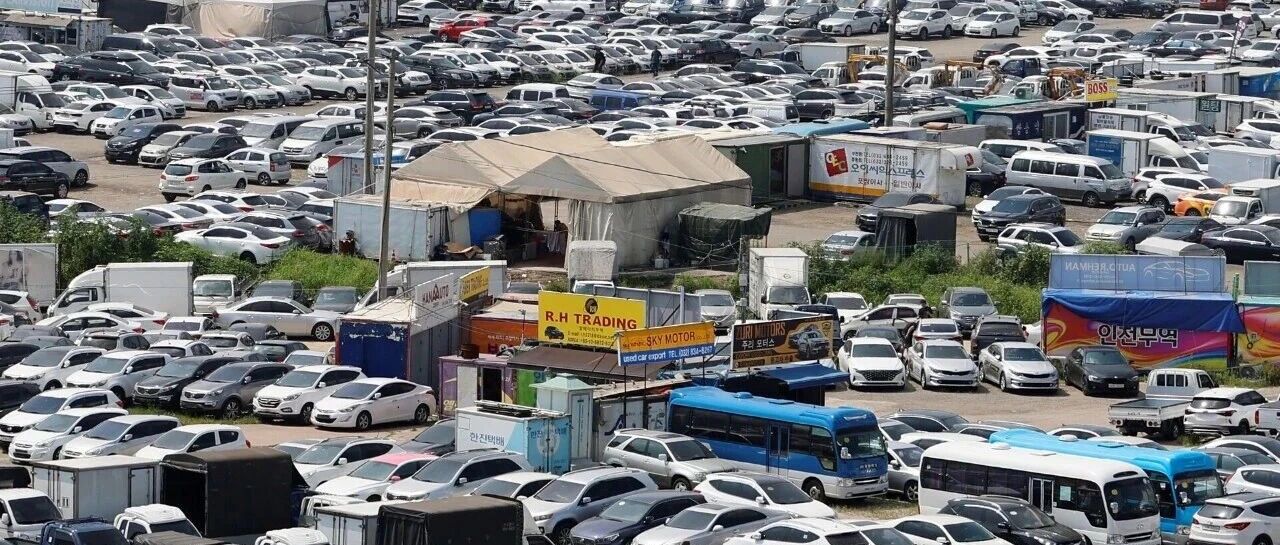
Core Insights - The article discusses the recent decline in South Korea's automotive market, highlighting a 17% drop in domestic sales for major automakers in October 2025, attributed to a combination of extended holidays and structural changes in consumer preferences [4][7][9]. Group 1: Market Performance - In October 2025, the five major South Korean automakers sold 101,475 vehicles, down from 122,880 in the same month last year, marking a 17% decline [7]. - Despite the October drop, the cumulative sales for the first ten months of 2025 showed a 4.6% increase, rising from 1,114,278 to 1,139,082 vehicles [8]. - Hyundai and Kia experienced a technical adjustment in October, with Hyundai's domestic sales falling from 64,912 to 53,822 units, a 17% decrease, while Kia's sales dropped from 45,095 to 39,112 units, a 13% decline [7][8]. Group 2: Structural Changes - The decline in domestic sales is not solely due to reduced demand; it reflects a structural shift where luxury and imported electric vehicles are gaining market share at the expense of local brands [4][10]. - General Motors Korea's domestic sales plummeted by nearly 39% in the first ten months of 2025, indicating significant challenges for local brands against the backdrop of increasing competition from imported vehicles [8][9]. - The imported vehicle market saw a 13.2% year-on-year increase in new registrations in October, with Tesla's sales tripling compared to the previous year, highlighting a shift towards high-end and electric models [12][13]. Group 3: Consumer Behavior and Economic Factors - Economic factors such as a 2.4% year-on-year inflation rate and cautious consumer behavior are influencing purchasing decisions, leading to longer replacement cycles and increased price sensitivity [15]. - The cancellation of federal electric vehicle subsidies in the U.S. is expected to impact South Korean automakers, which rely heavily on exports and overseas production [15][16]. - The surge in second-hand car exports, which increased by 72% in the first half of the year, is providing some relief to the new car market but also indicates a shift in consumer purchasing behavior towards more economical options [18]. Group 4: Future Outlook - South Korean automakers are focusing on global electric vehicle strategies, with Hyundai planning to increase production capacity in the U.S. and Kia setting ambitious global sales targets [16]. - The competitive landscape is shifting, with imported luxury and electric vehicles continuing to penetrate the market, necessitating local brands to adapt their product offerings and marketing strategies [14][18]. - The article suggests that the automotive market in South Korea is entering a phase of restructuring, where traditional growth models may no longer suffice, and companies must innovate across various dimensions to maintain market relevance [18].

AAR(AIR) - 2025 Q3 - Earnings Call Transcript
2025-03-28 02:27
Financial Data and Key Metrics Changes - The company reported third quarter sales of $678 million, a 20% increase year-over-year, setting a new record for third quarter sales [9][28] - Adjusted EBITDA rose to $81.2 million, up 39% from the same quarter last year, with EBITDA margin increasing to 12% from 10.3% [11][30] - Adjusted earnings per share grew 16% to $0.99 compared to $0.85 from the same period last year [11][33] - Net debt leverage decreased to 3.06 times from 3.17 times in the prior quarter [12][38] Business Segment Data and Key Metrics Changes - **Parts Supply**: Sales increased 12% to approximately $271 million, driven by growth in new parts distribution activities [13][34] - **Repair & Engineering**: Sales grew 53% to $216 million, with adjusted EBITDA increasing 110% to $27.9 million [18][35] - **Integrated Solutions**: Sales slightly decreased by 1.6% to $163 million, but adjusted EBITDA was 11% higher at $16.2 million [23][36] Market Data and Key Metrics Changes - Sales to commercial customers increased by 22%, while sales to government customers rose by 15% [10][29] - Total commercial sales accounted for 72% of total sales, with government sales making up the remaining 28% [29] Company Strategy and Development Direction - The company is focused on expanding its aftermarket services and improving margins, benefiting from strong demand in both commercial and government markets [8][42] - The integration of Product Support is on schedule, with expectations for further margin expansion through synergies and operational efficiencies [20][42] - The company is pursuing exclusive distribution agreements to enhance its market position, such as with Unison and Chromalloy [15][102] Management's Comments on Operating Environment and Future Outlook - Management expressed confidence in the demand environment, expecting it to continue through calendar year 2025 [8][42] - The company anticipates mid-single-digit year-over-year sales growth for Q4 FY'25, with adjusted operating margins projected between 9.7% and 9.9% [42][43] - Management noted that while USM sales were below expectations, they expect demand to rebound as maintenance deferrals are addressed [51][115] Other Important Information - The company is close to completing the divestiture of its Landing Gear business, which is expected to be accretive to margins but not significantly impactful [40][65] - The company is investing in its Trax business, which is expected to drive further operating margin expansion as it scales [66][106] Q&A Session Summary Question: Insights on USM market and future expectations - Management indicated that the decline in USM was temporary due to maintenance deferrals and expects demand to recover [51][53] Question: Impact of airline capacity growth on business - Management noted no significant decline in demand signals and remains optimistic about maintaining business despite potential capacity reductions [55][57] Question: Margin expansion from Landing Gear divestiture - Management clarified that the divestiture would be slightly positive for margins but not to the extent of 30 to 40 basis points [64][65] Question: Updates on Trax business and potential deals - Management confirmed that Trax is expected to contribute to margin expansion and has a strong pipeline of customers [66][68] Question: Efficiency improvements in MRO facilities - Management highlighted substantial gains in margins and throughput, with further improvements expected from ongoing initiatives [73][76] Question: Defense opportunities and USM sales to government - Management reported no notable increase in USM sales to the government yet but is optimistic about future opportunities [78][80] Question: Update on partnership with FTAI - Management confirmed the extension of the partnership with FTAI, expecting increased volume over time [88][89] Question: Tariff situation and its impact - Management is monitoring tariff changes but is not making bulk purchases in anticipation of tariffs [92][93]