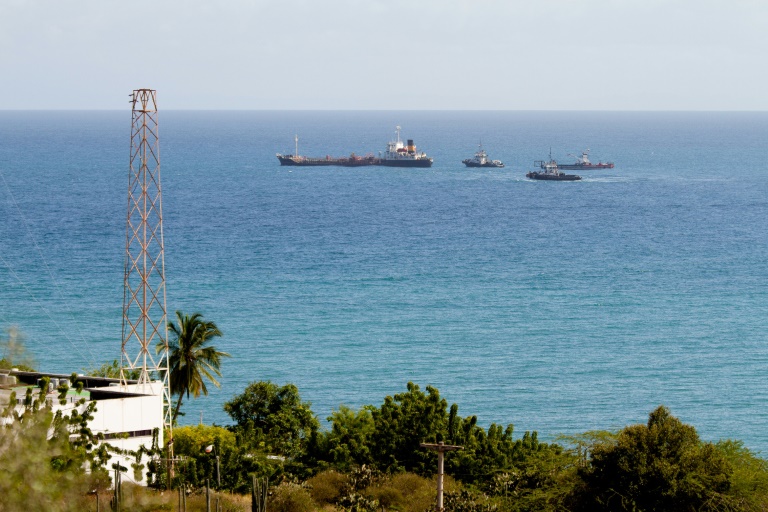
Venezuelan crude oil

Search documents
Chevron sells oil to Reliance for first time since 2023 as Venezuela readies larger cargoes for export
The Economic Times· 2026-02-25 02:59
Core Insights - The introduction of larger vessels, capable of carrying up to 2 million barrels of oil, is anticipated to lower transportation costs, address the shortage of smaller tankers, and expedite deliveries from Venezuela starting next month, potentially leading to a quicker depletion of stored oil in the country [1][12]. Group 1: Shipping and Logistics - Three Very Large Crude Carriers (VLCCs) chartered by Vitol and Trafigura have been assigned loading windows in March at Venezuela's main oil terminal, which handles up to 70% of the country's crude exports [2][13]. - The Olympic Lion supertanker is also expected to arrive in Venezuela by late March, indicating increased shipping activity [3]. - Historically, Venezuela's crude exports have utilized medium-sized tankers, such as Panamaxes and Aframaxes, which carry between 450,000 and 700,000 barrels, and Suezmax vessels, which can carry up to 1 million barrels [4][12]. Group 2: Market Dynamics - The larger cargoes are expected to alleviate cost pressures for trading houses, which have expressed concerns over the high prices of Venezuelan crude, particularly in a backwardation market where future shipments are cheaper than current supplies [7][12]. - Chevron has resumed selling Venezuelan crude to Indian refiners, marking a significant return to the market after sanctions, with exports reaching approximately 800,000 barrels per day in January, up from 500,000 bpd in December [8][12]. - The U.S. Treasury Department's issuance of a general license for oil exports is expected to broaden the buyer pool and increase the destinations for Venezuelan oil [11][12]. Group 3: Company Activities - Trading houses Vitol and Trafigura are actively exporting Venezuelan crude as part of a $2 billion deal between the U.S. and Venezuela, with recent sales to Indian refiners aimed at reducing reliance on Russian oil [8][12]. - Chevron and U.S. refiners, including Valero Energy and Phillips 66, are preparing to enhance Venezuelan oil processing at their refineries, which is likely to boost exports [10][12]. - The shift to larger tankers is expected to ease the logistical challenges faced by companies in sourcing medium-sized vessels for Caribbean departures [11][12].



Chevron taps Venezuelan oil: 150,000 BARRELS PER DAY
Youtube· 2026-02-12 14:45
Group 1 - Chevron's flagship refinery in Mississippi is processing its first shipment of Venezuelan oil since the recent political changes in Venezuela [1] - The refinery is one of six ports on the US Gulf Coast capable of processing heavy Venezuelan crude, specifically designed for this type of oil [2] - Currently, the refinery is processing 50,000 barrels of Venezuelan crude oil per day, with plans to triple that to 150,000 barrels next month [3][4] Group 2 - Chevron's CEO, Mike Worth, indicated that the company is increasing production in Venezuela, having grown from 50,000 barrels per day to 250,000 barrels over the last couple of years [5] - The White House is encouraging more investment in Venezuela, aiming to increase production from 950,000 barrels per day to 3 million barrels, which would require an investment of $180 billion and could take up to 14 years [6]
Venezuela tells China oil prices won't be set by the U.S., seeks to reassure investment after Maduro capture
CNBC· 2026-02-04 08:54
Core Viewpoint - Venezuela has assured China that its oil pricing will remain independent of U.S. influence, emphasizing the security of Chinese investments in the country [2][5]. Oil Pricing and U.S. Influence - Venezuelan ambassador to China, Remigio Ceballos, stated that Venezuela will not adhere to U.S. arrangements regarding oil pricing, asserting the right to make independent decisions based on international market prices [3][4]. - Reports indicated that the U.S. was considering exerting control over Venezuela's state-run oil company, PDVSA, potentially lowering prices to $50 per barrel [2][3]. China-Venezuela Relations - China has condemned the U.S. military actions against Venezuela and reaffirmed its commitment to the partnership with Venezuela, which is based on mutual trust [4][5]. - Ceballos emphasized that Chinese investments in Venezuela, including those in the petroleum sector, will continue unaffected by external pressures [5][6]. Chinese Investments in Venezuela - China National Petroleum Corporation has joint ventures with PDVSA, and China Concord Resources Corp. plans to invest over $1 billion in a Venezuelan oil project, aiming for a production target of 60,000 barrels per day by the end of 2026 [6]. - Despite Venezuela's significant oil reserves, its crude output has been hindered by mismanagement and U.S. sanctions [6]. U.S. Actions and Responses - The Trump administration has promoted U.S.-led reforms to boost oil production and attract foreign investment in Venezuela, which is seen as beneficial for both the country and American consumers [7]. - The U.S. has returned $500 million from an initial oil sale to Venezuela and is reportedly moving to ease sanctions to revive the energy sector [8]. Diplomatic Developments - Following the military operation against Maduro, the U.S. reportedly urged Venezuela to sever economic ties with China and other nations, although Trump later indicated that Chinese investment would be welcomed [9]. - Chinese President Xi Jinping expressed a commitment to working with Latin American countries, emphasizing the importance of sovereignty and development goals [10].

Marathon Petroleum buys Venezuelan crude for US refineries
Reuters· 2026-02-03 18:01
Group 1 - Marathon Petroleum purchased two cargoes of Venezuelan crude oil at the end of January [1] - The company expects its refineries to process more heavy grades of crude oil [1]

US refiners struggle to absorb sudden surge in Venezuelan oil imports
Reuters· 2026-02-03 17:21
Core Viewpoint - U.S. refiners are facing challenges in absorbing a sudden increase in Venezuelan oil imports, leading to price pressures and unsold volumes following a significant supply deal between Caracas and Washington [1]. Group 1: U.S. Refiners' Challenges - U.S. Gulf Coast refiners are struggling to manage a rapid surge in Venezuelan crude shipments, which have increased significantly since a $2 billion supply deal was established [1]. - The demand from U.S. refiners is soft, creating obstacles for the U.S. government's plans to increase Venezuelan oil imports following the capture of President Nicolas Maduro [1]. - Some refiners are reluctant to purchase Venezuelan crude due to high prices compared to competing Canadian heavy grades, despite a slight decline in prices [1]. Group 2: Venezuelan Oil Exports - Venezuelan oil exports to the U.S. nearly tripled in January to 284,000 barrels per day (bpd), up from a much lower figure due to previous sanctions [1]. - Total Venezuelan oil exports rose to almost 800,000 bpd in January, recovering from a low of 498,000 bpd in December [1]. - The U.S. was previously importing around 500,000 bpd of Venezuelan oil before sanctions were imposed in 2019, with exports dropping to zero by mid-2025 [1]. Group 3: Market Dynamics and Competition - Trading houses Vitol and Trafigura have been granted U.S. licenses to market Venezuelan oil, but they are finding it increasingly difficult to secure buyers among Gulf Coast refiners [1]. - Chevron has increased its Venezuelan oil exports to 220,000 bpd in January from 99,000 bpd in December, but it must store or market excess production due to limited refining capacity [1]. - The potential for increased Venezuelan oil exports may arise from a trade deal with India, which could lead to Indian companies considering imports of Venezuelan oil [1].

Chevron Corporation's Financial Outlook and Dividend Reliability
Financial Modeling Prep· 2026-01-29 10:00
Core Viewpoint - Chevron Corporation is a resilient player in the oil and gas industry, maintaining a strong dividend yield and strategic growth plans despite fluctuating oil prices [1][2][6] Financial Performance - Chevron is expected to report earnings per share of $1.47 and projected revenue of $46.66 billion for the upcoming quarterly earnings release [2] - The company has maintained a dividend yield of 4.1%, showcasing its financial resilience even with a drop in oil prices from $120 per barrel in early 2022 to $65 today [2][6] - Financial metrics indicate a low debt-to-equity ratio of 0.22 and a current ratio of 1.15, reflecting a conservative approach to debt and strong short-term liability coverage [5][6] Strategic Initiatives - Chevron plans to increase its exports of Venezuelan crude oil to the U.S., aiming to export 300,000 barrels per day by March, up from 100,000 barrels in December [3][6] Investor Sentiment - Major investment firms like BlackRock and Vanguard have increased their holdings in Chevron, with BlackRock acquiring 20.1 million shares and Vanguard adding 27.9 million shares, indicating confidence in the company's potential for recovery [4][6] - Chevron's P/E ratio stands at 23.95 and its price-to-sales ratio at 1.80, reflecting its market valuation [4][6]

Exclusive: Citgo buys first Venezuelan oil cargo since ending ties with Venezuelan parent in 2019, sources say
Reuters· 2026-01-28 21:18
Core Insights - Citgo Petroleum has purchased Venezuelan crude oil for the first time since cutting ties with its parent company, Petroleos de Venezuela SA, in early 2019 [1] Group 1 - The acquisition marks a significant shift in Citgo's operations, indicating a potential re-establishment of trade relations with Venezuelan oil [1] - This move could signal a change in the U.S. oil market dynamics, particularly regarding Venezuelan crude [1] - The purchase reflects Citgo's strategy to diversify its crude supply sources amid fluctuating market conditions [1]

Exclusive-Valero buys Venezuelan oil cargo as part of Washington's deal with Caracas
Yahoo Finance· 2026-01-22 01:11
Core Viewpoint - Valero has made its first purchase of Venezuelan crude oil as part of a U.S. agreement to buy up to 50 million barrels from Venezuela, marking a significant development in U.S.-Venezuela oil trade relations [1]. Group 1: Purchase Details - Valero acquired the crude from trading house Vitol, with the oil being delivered to the U.S. Gulf Coast at a discount of approximately $8.50 to $9.50 per barrel compared to Brent crude [2]. - This transaction represents Valero's first direct purchase from trading houses authorized to market Venezuelan crude, although the company has previously sourced Venezuelan oil through Chevron, a partner of the Venezuelan state oil company [2]. Group 2: Market Context - Offers for Venezuelan flagship Merey heavy crude to U.S. refiners began at a discount of between $6 and $7.50 per barrel to Brent [3]. - Prior to the imposition of sanctions in 2019, U.S. Gulf Coast refineries processed around 800,000 barrels per day of Venezuela's heavy oil, indicating a significant historical reliance on Venezuelan crude [3].

Exclusive: Valero buys Venezuelan oil cargo as part of Washington's deal with Caracas
Reuters· 2026-01-22 01:05
Core Insights - Valero has made a significant move by purchasing a cargo of Venezuelan crude oil, marking the first deal by a U.S. Gulf Coast refiner under the recent agreement between Washington and Caracas to buy up to 50 million barrels of oil [1] Company Actions - The acquisition of Venezuelan crude oil by Valero indicates a strategic shift in sourcing, potentially influenced by geopolitical factors and U.S. policy changes regarding oil imports from Venezuela [1] Industry Implications - This transaction could signal a broader trend in the refining industry, where U.S. refiners may increasingly engage with Venezuelan oil supplies, reflecting a potential easing of restrictions and a response to global oil market dynamics [1]

Venezuela's Oil Exports Reportedly Dropped 75% Compared To Prior Months Since Maduro's Capture
International Business Times· 2026-01-19 13:31
Core Insights - Venezuela's oil exports have decreased by 75% following the capture of President Nicolas Maduro by U.S. forces, with all oil exports now directed to the U.S. or for domestic refinery use [1] Group 1: Impact on Key Countries - China, which previously imported about 440,000 barrels of Venezuelan oil daily at discounted prices, is now facing potential supply slowdowns [2] - Cuba, heavily reliant on Venezuelan oil, is receiving significantly reduced shipments of less than 20,000 barrels a day [2] Group 2: U.S. Actions and Seizures - The U.S. has been actively seizing sanctioned tankers from a shadow fleet carrying Venezuelan crude, impacting the flow of oil from Venezuela [3] - Approximately 48 million barrels of oil are currently outside Venezuelan waters, not destined for the U.S., with six tankers already seized [4] Group 3: Corporate Involvement - Phillips 66 has refineries capable of processing Venezuelan crude, with CEO Mark Lashier expressing optimism about Venezuela's potential return to the capitalist market [5] - Vitol, a global oil trading firm, secured a $250 million deal for Venezuelan oil, with senior trader John Addison being a significant donor to Trump's re-election campaign [6][8] Group 4: Political Dynamics - The Trump administration is facilitating the sale of Venezuelan oil, with plans to sell between 30 million and 50 million barrels following Maduro's capture [9] - Proceeds from these sales will be managed by the U.S., which intends to oversee Venezuela's oil industry indefinitely [9]