Vite

Search documents
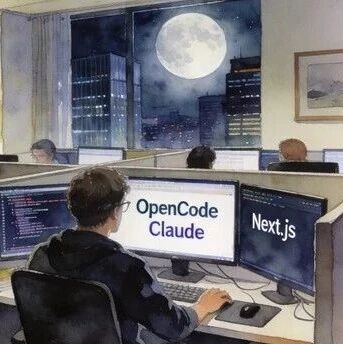
Cloudflare:我们如何用 OpenCode 和 Claude,在一周内重构 Next.js
AI前线· 2026-03-14 05:33
Core Insights - The article discusses the development of vinext, an AI-driven framework that serves as a plug-and-play alternative to Next.js, built on Vite, which significantly improves build speed and reduces client bundle size [2][4][8]. Group 1: vinext Overview - vinext was created by an engineer using AI to reconstruct popular front-end frameworks, achieving a build speed increase of up to 4 times and a client bundle size reduction of up to 57% [2][12]. - The project cost approximately $1,100 in Token fees [3]. - vinext allows for easy deployment to Cloudflare Workers with a single command, handling all aspects of application building and deployment [17]. Group 2: Next.js Challenges - Next.js, while popular, faces deployment challenges in serverless environments due to its highly customized toolchain, requiring modifications for compatibility with platforms like Cloudflare and AWS Lambda [4][5]. - OpenNext, another project aimed at addressing similar issues, has limitations and requires reverse engineering of Next.js outputs, leading to unpredictable changes [5][6]. Group 3: Performance Benchmarking - Initial benchmarks show vinext outperforming Next.js in build times, with vinext achieving a production build time of 1.67 seconds compared to Next.js's 7.38 seconds, marking a 4.4x speed improvement [14]. - The client bundle size for vinext is significantly smaller, with gzip sizes of 72.9 KB compared to Next.js's 168.9 KB, representing a 57% reduction [14]. Group 4: Features and Capabilities - vinext supports incremental static regeneration (ISR) and is designed to work seamlessly with Cloudflare's KV caching processor, allowing for flexible caching strategies [18][26]. - The framework is built to be compatible with various hosting services, not limited to Cloudflare, and aims to foster collaboration with other platforms [21]. Group 5: AI Integration in Development - The development of vinext was expedited by AI, which played a crucial role in coding and testing, achieving a high quality of code with extensive testing coverage [40][41]. - The project utilized AI to automate code reviews and testing processes, enhancing efficiency and maintaining quality standards [40][41]. Group 6: Future Directions - vinext is still in the experimental phase, with ongoing testing and user feedback indicating positive results, including successful deployment in production environments [23][24]. - The framework aims to evolve by incorporating traffic-aware pre-rendering, optimizing build times by focusing on high-traffic pages [30][31].


好家伙!尤雨溪公司融 8890 万,要终结 JS 工具碎片化。网友:早点统一吧
程序员的那些事· 2025-11-03 03:13
Core Insights - VoidZero, founded by Vue creator Evan You, has successfully raised $12.5 million (approximately ¥88.96 million) in Series A funding, indicating strong investor confidence in their vision of creating a unified JavaScript toolchain [1][3][4]. Funding and Investor Support - The Series A round was led by Accel, with participation from Peak XV Partners, Sunflower Capital, and industry leaders such as Koen Bok from Framer and Eric Simons from StackBlitz, highlighting the recognition of VoidZero's goals [3]. - Previously, VoidZero secured $4.6 million in seed funding in 2024 to validate their concept of a faster and more user-friendly JavaScript toolchain [3]. Team Expansion and Product Development - Following the funding, VoidZero has expanded its team, bringing in industry experts, including the creator of napi-rs and key contributors from various open-source projects [6]. - The company has launched its flagship product, Vite+, which integrates multiple development functions into a single command-line interface, addressing the fragmentation issues faced by over 28 million JavaScript developers [8][11]. Product Performance and Market Impact - Vite, the core tool of VoidZero, has surpassed Webpack in weekly downloads, indicating a significant shift in developer preference [9]. - Other tools like Vitest and Rolldown have also shown impressive growth, with Rolldown achieving over 1 million downloads per week [9]. - Vite+ is currently in private testing, with the recent funding aimed at accelerating its stable release, promising to enhance developer productivity by reducing the time spent on learning and tool compatibility [11]. Ecosystem and Future Outlook - VoidZero's approach of leveraging commercial products like Vite+ to support open-source projects presents a sustainable model for the ecosystem [12]. - The tools developed by VoidZero are already being utilized by major companies such as OpenAI, Shopify, and Stripe, and the company aims to significantly boost JavaScript developer productivity [14]. - With plans for further team expansion and market development in the Asia-Pacific region, VoidZero is positioned to potentially transform the future of JavaScript tooling [14].

为什么后端老是觉得前端简单?
菜鸟教程· 2025-10-27 03:30
Core Viewpoint - The article discusses the complexities and challenges faced by both front-end and back-end developers, emphasizing that each role has its own difficulties and intricacies that are often overlooked by those outside the field [2][12]. Front-end Development - Front-end development involves a wide range of technologies and frameworks such as React, Vue, Angular, and Svelte, which require continuous learning and adaptation due to rapid changes in the market [7]. - Tools like Webpack and Vite are essential for building applications, but they can be complex to configure and troubleshoot [7]. - The use of TypeScript adds a layer of complexity to JavaScript, but it can help prevent errors in the long run [7]. - CSS layout techniques like Flex and Grid, along with responsive design and animations, require attention to detail to ensure a good user experience [7][11]. - Front-end developers must ensure that applications are visually appealing and user-friendly, which involves meticulous attention to detail in design and functionality [11]. Back-end Development - Back-end development is often perceived as less complex because it lacks a visible interface, but it involves critical tasks such as managing data integrity, server performance, and application logic [11]. - Back-end developers must handle high concurrency, database design, and system architecture, which are essential for maintaining application stability and performance [11][12]. - The responsibilities include designing database structures, implementing caching strategies, and ensuring the system can handle peak loads without failure [11]. Comparison of Roles - The article highlights that perceptions of complexity in development roles are subjective and depend on one's position within the development process [9]. - Both front-end and back-end developers face unique challenges, and the article argues that neither role is inherently easier than the other [12]. - The visibility of front-end work makes it easier for outsiders to critique, while back-end work often goes unnoticed despite its importance [12].

不到 2 个月,OpenAI 火速用 Rust 重写 AI 编程工具。尤雨溪也觉得 Rust 香!
程序员的那些事· 2025-06-06 00:32
Group 1 - OpenAI has rewritten its AI command-line programming tool Codex CLI in Rust to enhance performance and security while eliminating dependency on Node.js, which may frustrate some users [1][2] - Codex CLI is an experimental programming agent that can run in the ChatGPT web browser environment and locally, featuring a chat-based user interface that operates in both interactive and silent modes [1] - The source code of Codex CLI was originally in TypeScript and required Node.js, but the team has now completed the rewrite in Rust [1][5] Group 2 - The decision to rewrite in Rust is driven by four key reasons: zero dependency installation, sandboxing requirements, performance optimization, and the ability to reuse existing Rust-based Model Context Protocol (MCP) implementations [2][4] - The current tool requires Node.js version 22 or higher, which may pose a barrier for some users [4] - Rust's lack of a runtime garbage collection mechanism leads to lower memory requirements, contributing to performance improvements [5] Group 3 - The Codex project currently has a composition of 46.7% Rust, making it the leading language, followed by TypeScript at 44.7% [5] - Codex CLI will still support code extensions in other languages such as JavaScript and Python, although specific details are yet to be disclosed [5] - Vue creator Evan You has also praised Rust for its efficiency, noting that the new version of Vite, using Rust-based Rolldown, has reduced production build times by 3 to 16 times and memory usage by up to 100 times [6]