
XLP

Search documents
Stagflation Scare? ETFs May Help Protect Your Portfolio
ZACKS· 2026-03-24 15:51
Key Takeaways Oil surges and supply shocks are fueling inflation risks, reviving 1970s-style stagflation fears.Diversification and long-term focus remain critical now.ETFs like VIG, XLP and XLV can help investors tackle stagflation risks.Oil prices are expected to remain elevated amid the ongoing Middle East conflict, heightening the risk of stagflation.Stagflation is an economic condition marked by the combination of slowing growth, rising inflation and high unemployment occurring simultaneously. According ...


Inflation Pressure Intensifying? ETFs May Help Stay Prepared
ZACKS· 2026-03-06 17:32
Core Insights - The ongoing conflict in the Middle East has led to a significant surge in oil prices, raising inflation concerns and complicating central bank policy decisions [1][10] - The probability of a Federal Reserve rate cut has decreased due to fears of energy-driven inflation, with expectations dropping from 75% to around 32% for a 25-basis-point cut in June [2] - A prolonged conflict could exert upward pressure on inflation, with Goldman Sachs estimating that a sustained 10% rise in oil prices could increase core CPI by four basis points and headline CPI by 28 basis points, potentially pushing year-over-year headline inflation back toward 3% [4][3] Oil Prices and Inflation - The duration of the Middle East conflict is critical for inflation, as rising energy prices are closely linked to overall price levels and economic output [3] - Prolonged high oil prices could lead to increased headline inflation, impacting consumer sentiment and economic stability [10] Consumer Sentiment and Economic Outlook - Consumer confidence has declined, with the University of Michigan's Index of Consumer Sentiment falling 12.5% year-over-year to 56.6 [6] - Rising national debt, currently at $38.86 trillion, poses additional economic challenges, potentially leading to higher inflation if the government increases the money supply to manage debt [7] Investment Strategies - Given the uncertain economic outlook and rising inflation risks, a defensive investment approach is recommended [8] - Various ETF categories are suggested for investors to consider, including: - **Gold ETFs**: Such as SPDR Gold Shares (GLD) and iShares Gold Trust (IAU), which can provide portfolio diversification and act as a safe haven [11][12] - **Commodity ETFs**: Like Invesco DB Commodity Index Tracking ETF (DBC), which can hedge against inflation [13] - **Consumer Staples ETFs**: Including Consumer Staples Select Sector SPDR Fund (XLP), which can offer stability during market downturns [14] - **Utility ETFs**: Such as Utilities Select Sector SPDR Fund (XLU), which are relatively shielded from market volatility [15] - **Dividend ETFs**: Including Vanguard Dividend Appreciation ETF (VIG), which provide reliable income and stability [16][17]

Stop Loss Trading Strategy – Pros And Cons (Options, Strategies, Alternatives)
Quantified Strategies· 2026-03-06 14:26
Core Insights - The article argues that stop-loss strategies may not enhance trading performance and can often be detrimental to returns, suggesting that the best strategy might be to avoid using stop-losses altogether [7][74]. Definition and Functionality - A stop-loss is defined as an order placed with a broker to automatically close a trading position at a predetermined price to limit losses [5][12]. - It serves to protect against significant losses and allows for trading without constant market monitoring [6][84]. Disadvantages of Stop-Loss Strategies - Backtesting indicates that stop-losses can lead to worse performance, as they may increase the number of losing trades and do not guarantee execution at the desired price [7][30]. - Notable traders, including Larry Connors and Curtis Faith, found that systems without stop-losses often performed better across various metrics [7][54]. - David Shaw criticized stop-losses as simplistic and ineffective for risk management, arguing they rely on outdated information [7][55]. Alternatives to Stop-Losses - The article suggests several alternatives to stop-loss strategies, including diversification across asset classes, varying position sizes, and employing different trading strategies [60][80]. - Time-based exits and trading multiple time frames are also recommended as methods to manage risk without relying on stop-loss orders [64][80]. Performance Metrics - The article presents backtested performance metrics showing that strategies without stop-losses yield higher average gains and lower maximum drawdowns compared to those with stop-losses [43][72]. - For example, a strategy without stop-losses had an average gain per trade of 0.75% and a maximum drawdown of 14%, while implementing a stop-loss reduced the average gain to 0.51% with a maximum drawdown of 12% [45][72]. Behavioral Considerations - The article highlights the behavioral biases traders face, such as the disposition effect, which can lead to holding losing positions too long and selling winning positions too early [16][19]. - It emphasizes the importance of emotional discipline in trading, suggesting that traders should adhere to their strategies without being influenced by fear or greed [90][91].


Final Trade: XLP, BABA, PSQ, WMT
CNBC Television· 2025-10-10 22:36
Market Trends & Investment Opportunities - Staples XLP is the only thing that's green today, indicating potential investment in consumer staples [1] - Walmart is favored within the staples sector [1] - PSQ (an inverse triple Q ETF) is suggested as a short-term hedge (2-3 weeks) [1] Specific Stock/ETF Mentions - Staples XLP [1] - Alibaba (potential comparison to Porsche in the Chinese tech market) [1] - PSQ (inverse triple Q ETF) [1] - Walmart [1]
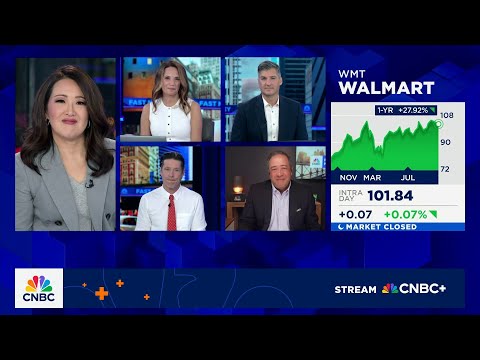
Final Trade: XLP, BABA, PSQ, WMT
Youtube· 2025-10-10 22:36
Core Viewpoint - The discussion highlights the contrasting performance of different sectors, with a focus on the resilience of staples like Walmart amidst market fluctuations [1] Group 1: Company Performance - Mike Co. noted that staples, including Walmart, are performing well, indicating a preference for defensive stocks in uncertain market conditions [1] - Alibaba is compared to high-performance brands like Porsche, suggesting its strong position in the Chinese tech market [1] Group 2: Investment Strategies - The mention of PSQ, an inverse triple Q ETF, indicates a strategy to hedge against potential downturns in the tech sector over a short time frame of a few weeks [1]


X @CoinGecko
CoinGecko· 2025-09-26 05:10
Market Trends - $XLP is the number one trending token on CoinGecko following an airdrop of approximately $10 thousand in tokens to holders [1] - Perpetual contracts $ASTER and $AVNT are also trending [1]