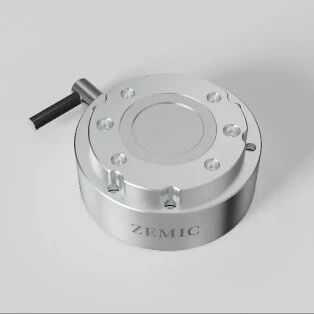
ZEMIC六轴力传感器

Search documents
柔顺与施力控制:协作机器人在复杂任务中的核心优势 赋能智能制造ZEMIC与您同行
机器人大讲堂· 2025-11-25 09:18
Core Insights - Collaborative robots are becoming essential in precision tasks such as polishing, assembly, and medical surgeries due to their advanced compliance and force control capabilities [1][2]. Group 1: Transition from Position Control to Force Control - Traditional robots operate on a position control model, suitable for structured environments, while collaborative robots excel in unstructured tasks through compliance and force control [2]. - Key advantages of compliance and force control include dynamic path adjustment based on real-time contact force and the ability to apply constant or programmable force along specified axes for stable physical interaction [2]. Group 2: Core Technology for Compliance Control - High-precision six-dimensional force sensors are crucial for achieving true force control and compliant motion in collaborative robots [4]. - ZEMIC's six-axis force sensors are highlighted for their wide measurement range and reliability, making them ideal for complex force control applications in collaborative robots [4]. Group 3: Typical Application Scenarios and Sensor Recommendations - ZEMIC's six-dimensional force sensors serve as the "perception core" for collaborative robots, enabling them to perform compliant tasks across various scenarios [7]. - Specific applications include: - Consumer Electronics: Precision debonding with high accuracy and minimal force requirements [8]. - Furniture and Automotive Manufacturing: Curved surface painting [9]. - Medical Research: Biomechanical simulations [9]. - Home Appliances and Automotive Components: Precision assembly [9]. Group 4: Empowering Intelligent Manufacturing - ZEMIC's six-dimensional force sensors enhance the precision of polishing, optimize assembly quality, and enable compliant operations in medical devices, providing reliable force perception support for collaborative robot systems [10].