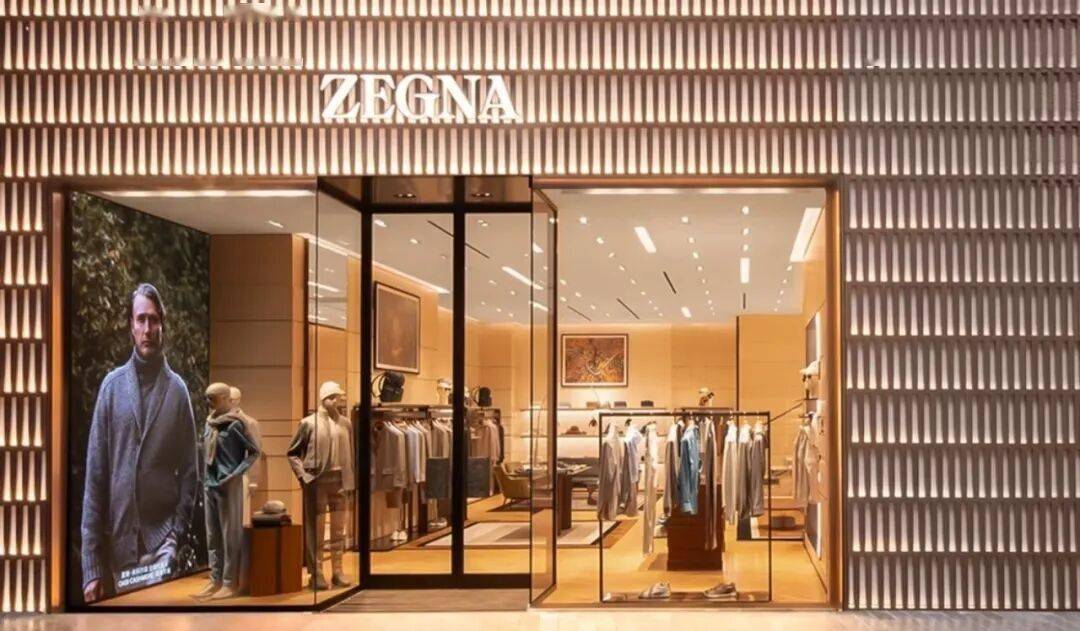
Zegna品牌产品

Search documents
杰尼亚预计在中国关闭10家门店
Sou Hu Cai Jing· 2026-02-09 13:01
Core Viewpoint - The luxury goods market in China is undergoing a significant transformation, prompting Zegna Group to strategically optimize its store network by closing underperforming locations while focusing on core markets and high-value customers [2][4][8]. Group 1: Store Optimization Strategy - Zegna Group plans to close approximately 10 underperforming stores in China over the next few years, emphasizing a long-term optimization strategy rather than a one-time contraction [2][8]. - In 2025, Zegna closed 5 stores, with 4 of them located in China, including the flagship store in Beijing, which had operated for 17 years [3][5]. - The company is shifting its focus to core business districts and strategic cities, such as opening new stores in Shenzhen, indicating a transition from scale expansion to prioritizing quality and efficiency [2][8]. Group 2: Financial Performance - Zegna's revenue from the Chinese market decreased by 14.6% to €435 million in 2025, with its share of total revenue dropping from approximately 40% at the time of its IPO to 23% [5][6]. - In the fourth quarter, revenue from China fell by 9.9%, primarily due to weak wholesale channels and underperformance of brands like Thom Browne and Tom Ford [6][7]. - In contrast, Zegna's revenue in the EMEA region grew by 1.4% to €684 million, while the Americas saw a 7.9% increase to €567 million in 2025 [6]. Group 3: Market Challenges - The luxury market in China is facing challenges, with high-net-worth consumers remaining stable, but middle-class and entry-level consumer recovery being slow, leading to pressure on store traffic and conversion rates [6][7]. - Zegna's brand positioning in China is perceived as insufficiently high-end, making it difficult to compete with luxury brands like Loro Piana and Brunello Cucinelli [7]. - The company is experiencing a disconnect between its brand positioning and market performance, necessitating a reevaluation of its channel strategy [7][8]. Group 4: Strategic Adjustments - Zegna is accelerating its transition to a direct sales model, with direct sales accounting for 82% of total revenue in 2025, and 88% for the Zegna brand [10]. - The closure of underperforming stores aims to concentrate resources on core locations, enhancing retail experience and store productivity [10]. - Other luxury brands, such as Gucci and Armani, are also closing underperforming stores in China, indicating a broader trend towards a more concentrated and efficient retail strategy in the luxury sector [10][11]. Group 5: Market Sentiment - The capital market is optimistic about Zegna's rational contraction strategy, as evidenced by a 15% increase in its stock price following the financial report release [11][12].

Ermenegildo Zegna(ZGN) - 2025 Q1 - Earnings Call Transcript
2025-04-24 13:00
Financial Data and Key Metrics Changes - In Q1 2025, the group reported revenues of €459 million, a decrease of 1% year-on-year compared to €463 million in Q1 2024, with organic performance also down 1% [7][8][9] - The Americas region showed a 9% organic growth, contributing 27% of total revenues, while EMEA was down 2% and Greater China reported a 12% decline [12][13][14] Business Line Data and Key Metrics Changes - Zegna brand revenues were €293 million, up 3% supported by direct-to-consumer (DTC) channels, particularly in EMEA and the US [9][10] - Tom Brown reported revenues of €64 million, down 9% organically due to a reduction in wholesale [10][11] - Tom Ford Fashion recorded revenues of €67 million, with a 3% organic growth driven by DTC channels [10][11] Market Data and Key Metrics Changes - EMEA accounted for 34% of total revenues but was down 2%, primarily due to declines in Tom Brown's wholesale channel [12] - Greater China generated €123 million, accounting for 27% of group revenues, with a 12% decline, although initial signs of improvement were noted for the Zegna brand [13][14] - Rest of APAC reported 8% growth, driven by strong performance in Japan and Singapore [15] Company Strategy and Development Direction - The company is focusing on a more selective distribution approach, particularly for iconic products, to enhance brand exclusivity [106] - There is a strategic shift towards DTC channels, with a noted 5% growth in DTC revenues across all brands [15][16] - The company plans to implement a mid-single-digit price increase in response to a 10% tariff increase on imported products to the US [28][29] Management's Comments on Operating Environment and Future Outlook - Management expressed a cautious outlook for Greater China, expecting continued negative performance but less severe than in Q1 [104] - The overall demand globally has not seen significant changes, with some improvements noted, particularly for the Zegna brand [28] - The company confirmed its guidance for low single-digit EBIT growth for 2025, emphasizing cost control measures [89][92] Other Important Information - The company is launching new collections and marketing campaigns to boost brand visibility and sales, including a summer drop collection for Zegna [24][25] - The company opened new stores, including a significant location in Riyadh and plans for further openings in Los Angeles [17][25] Q&A Session Summary Question: Trends in the Americas and product performance - Management noted strong performance across the US, with no specific areas of weakness identified, and highlighted double-digit growth in various regions [35][37] Question: Impact of the fashion show and pricing strategy - The fashion show has generated positive momentum, with new collections expected to launch in June, and management is confident in passing through price increases without significant volume loss [28][44][92] Question: Expectations for Greater China and wholesale outlook - Management anticipates a continued negative trend in Greater China, with wholesale channels expected to be a drag on growth, particularly for Tom Brown and Zegna [104][105] Question: Retail KPIs and pricing architecture for Tom Ford - Positive retail KPIs were noted, particularly in average selling price and conversion rates, with expectations for a balanced mix of higher ticket items in the new collections [126][127][128]