custom electric delivery vans (EDVs)

Search documents
Where Will Rivian Automotive Stock Be in 1 Year?
The Motley Fool· 2025-12-11 17:00
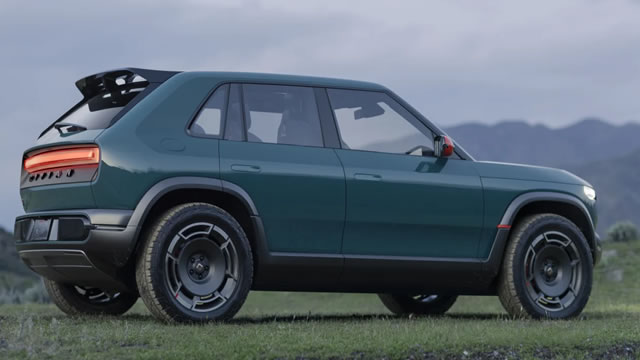
Core Insights - Rivian, once a leading electric vehicle (EV) IPO in 2021, has seen its stock price decline significantly from a peak market capitalization of $153.3 billion to approximately $21.5 billion today, reflecting a drastic reduction in valuation from 92 times its 2022 revenue to just three times its expected 2026 revenue [2][6] Production and Deliveries - Rivian produces three types of EVs: the R1T pickup truck, the R1S SUV, and custom electric delivery vans (EDVs) for Amazon and other companies [4] - In 2022, Rivian produced only 24,337 vehicles due to supply chain issues and competition, falling short of its initial goal of 50,000 vehicles [6] - In 2023, production increased to 57,232 vehicles, but the company faced another slowdown in 2024 and 2025, with expected production of 49,476 and 31,310 vehicles respectively [7] Financial Performance - Rivian's revenue grew from $1.66 billion in 2022 to $4.43 billion in 2023, with projections of $4.97 billion in 2024 and $4.10 billion in the first nine months of 2025 [7] - The company is expected to narrow its net loss from $6.75 billion in 2024 to $3.82 billion in 2025, driven by increased sales and regulatory credits [8] Future Projections - Analysts predict Rivian's revenue will rise to $6.87 billion in 2026, with a net loss of $3.66 billion, contingent on the successful launch of the R2 SUV [9] - By 2027, revenue could surge to $11.37 billion, assuming successful scaling of R2 production and increased EDV deliveries [9] Stock Outlook - Rivian has approximately $7.7 billion in liquidity, which it believes is sufficient to support the R2 production ramp-up [10] - If the R2 launch is successful and meets revenue targets, Rivian's stock could potentially rise by over 160% in the next 12 months [10]


Better EV Stock: Nio vs. Rivian
The Motley Fool· 2025-03-28 08:30
Core Insights - Nio and Rivian, once leading electric vehicle stocks, have seen significant declines in their stock prices due to lower vehicle deliveries and substantial losses [2][14] - Nio is experiencing a recovery in its business with increasing deliveries and expanding vehicle margins, while Rivian is facing challenges with production and supply chain issues [2][8] Nio Overview - Nio's vehicle deliveries have grown significantly from 20,565 in 2019 to an expected 221,970 in 2024, with a peak growth rate of 113% in 2020 [4] - The company has faced challenges in 2022 and 2023, including supply chain issues and competition, leading to a decline in vehicle margins from 20.1% in 2021 to 9.5% in 2023 [3][4] - Nio's recent product launches, including the lower-end Onvo L60 and the Firefly hatchback, are expected to drive future growth [6][4] - Analysts project Nio's revenue to increase by 38% in 2025 and 32% in 2026, despite remaining unprofitable [7] Rivian Overview - Rivian's vehicle deliveries increased from 920 in 2021 to 50,122 in 2023, but growth is expected to stall in 2024 due to production shutdowns for upgrades [10] - The company has struggled with negative gross margins, which improved from -845.5% in 2021 to -24.1% in 2024, but profitability is still not expected soon [10][12] - Rivian anticipates delivering between 46,000 to 51,000 vehicles in 2025, with the launch of the R2 SUV planned for 2026 [11] - Analysts expect Rivian's revenue growth to be modest at 8% in 2025, with a potential increase of 40% in 2026 [13] Investment Comparison - Nio is viewed as a more attractive investment due to its higher vehicle deliveries, clearer future plans, and lower valuations compared to Rivian [14] - Rivian's future performance is uncertain, particularly with the upcoming R2 launch, making it a riskier investment at this time [14]