
iPhone Air国行版手机

Search documents
三大运营商上线eSIM手机业务,国产手机将支持eSIM和SIM
Xin Lang Ke Ji· 2025-10-15 09:00
Core Viewpoint - The three major telecom operators in China have launched eSIM mobile services, marking a significant shift from traditional SIM cards to a more versatile eSIM model, enhancing user experience across various devices and scenarios [1][2][3]. Group 1: Telecom Operators' Initiatives - China Mobile has introduced a comprehensive eSIM product line that includes not only mobile phones but also smartwatches, tablets, and in-car devices, promoting seamless connectivity and collaboration across devices [1]. - China Telecom's announcement highlights the transition from physical SIM cards to a "lightweight, multi-modal" eSIM model, aiming to enhance mobile communication services [1][2]. - China Unicom has received approval to conduct commercial trials for eSIM mobile services, which is expected to drive innovation in digital economy and terminal connectivity [2]. Group 2: User Engagement and Market Response - There is a strong user interest in eSIM mobile services, with over 170,000 reservations reported for China Unicom's eSIM mobile service as of the latest update [2]. - The eSIM mobile service offers functionalities equivalent to traditional SIM cards, allowing users to access voice communication, data services, and SMS [2]. Group 3: Future Developments - More eSIM-compatible mobile phones are expected to be launched soon, with China Mobile planning to collaborate with industry partners to introduce devices that support both traditional SIM and eSIM [3]. - Currently, the eSIM mobile service is only available for the iPhone Air (Chinese version), which will be available for pre-order on October 17 and officially released on October 22 [2].




移动通信向“多模态”eSIM模式演进
Zheng Quan Ri Bao· 2025-10-15 01:28
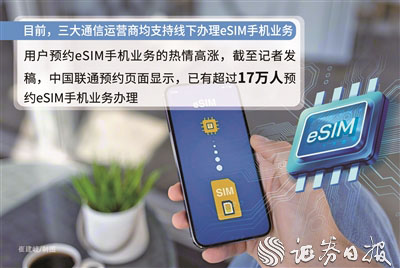
Core Points - The introduction of eSIM technology in China marks a significant shift in mobile communication, allowing users to download their phone numbers directly onto their devices without the need for a physical SIM card [2][3][5] - Major telecom operators in China, including China Mobile, China Telecom, and China Unicom, have launched eSIM services, indicating a collaborative effort to enhance user experience and expand service offerings [3][4][6] - The eSIM technology is expected to drive innovation in the mobile device industry, creating new opportunities for manufacturers and software developers within the supply chain [7][9] Telecom Operators - China Mobile has launched a comprehensive eSIM product line that includes not only smartphones but also smartwatches, tablets, and automotive devices, emphasizing seamless connectivity across various devices [3] - China Telecom has expanded its eSIM services to include smartphones, building on its previous offerings for wearables and automotive devices, thus promoting a transition from traditional SIM cards to eSIM technology [3][5] - China Unicom has received approval to operate eSIM services for smartphones, marking a significant milestone in its efforts to create a full-spectrum eSIM ecosystem [3][6] User Engagement - There is a high level of interest among users for eSIM services, with over 170,000 reservations reported for eSIM mobile services as of the latest updates [4] - The eSIM functionality provides users with the same communication services as traditional SIM cards, including voice calls, data usage, and SMS [4][5] Industry Opportunities - The launch of eSIM services is seen as a catalyst for growth in the mobile device supply chain, with companies like Unisoc and others actively developing eSIM products and technologies [8][9] - The eSIM technology is anticipated to become a standard feature in domestic smartphones and IoT devices within the next 3 to 5 years, potentially unlocking a multi-billion yuan market opportunity [9]
实探三大通信运营商营业厅:移动通信向“多模态”eSIM模式演进
Zheng Quan Ri Bao· 2025-10-14 15:48
Core Insights - The launch of eSIM services by major telecom operators in China marks a significant shift towards integrated SIM technology, enhancing user experience and device capabilities [1][2][3] Group 1: eSIM Technology Overview - eSIM technology integrates SIM card functionality into a device's internal chip, allowing users to download their phone number without a physical SIM card [1] - The introduction of eSIM is expected to reduce the physical space required for SIM cards, leading to thinner devices with improved durability against dust, water, and shocks [1] Group 2: Telecom Operators' Initiatives - All three major telecom operators in China have launched eSIM services, with China Mobile offering a comprehensive range of eSIM products across various devices, including smartwatches and tablets [2] - China Telecom has already supported eSIM for wearables and vehicles, and the new mobile eSIM service will transition traditional SIM card services to a more lightweight and versatile model [2] - China Unicom has received approval to operate eSIM services for mobile phones, marking a significant step in their eSIM ecosystem development [2] Group 3: User Engagement and Market Response - There is a high demand for eSIM services, with over 170,000 users already having made reservations for eSIM mobile services [3] - eSIM-enabled devices will provide users with the same functionalities as traditional SIM cards, including voice calls, data services, and SMS [3] Group 4: Future Developments and Industry Opportunities - More eSIM-compatible devices are expected to be launched soon, with plans for devices that support both traditional SIM and eSIM functionalities [5] - The opening of eSIM services is anticipated to create new growth opportunities for terminal manufacturers and software developers within the supply chain [6] - Companies like Unisoc and Cheng Tian Wei Ye are actively developing eSIM products and exploring partnerships to capitalize on the emerging market [7][8] - The eSIM technology is projected to become a standard feature in domestic smartphones and IoT devices within the next 3 to 5 years, potentially unlocking a trillion-yuan industry opportunity [8]