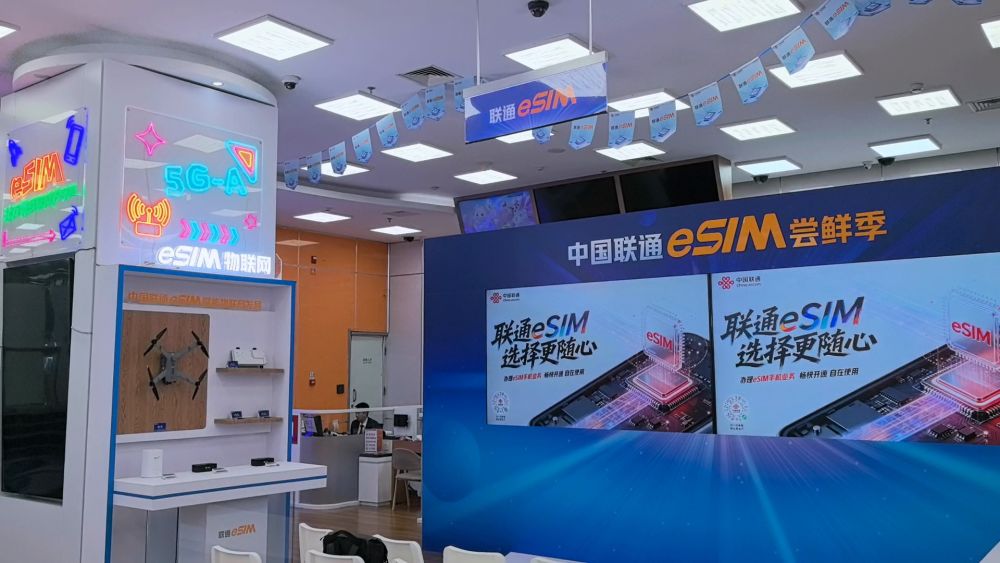
eSIM手机业务

Search documents
eSIM全面上线 通信业迈向“无卡化”时代
Zhong Guo Jing Ji Wang· 2025-11-14 09:40
Core Insights - The approval of eSIM mobile services by China's three major telecom operators marks a significant step towards the commercialization of eSIM technology in the mobile sector, transitioning the information and communication industry towards a "cardless" era [1][2][3] Group 1: Industry Developments - The eSIM technology integrates the functionality of a physical SIM card into a built-in chip within the phone, allowing users to download their number over the air without needing a physical card [1] - The eSIM industry encompasses various segments, including chip design and manufacturing, platform operation, network services, terminal integration, and application scenarios, presenting opportunities for restructuring the industry ecosystem [1][3] Group 2: Market Adoption - China Unicom has reported over 170,000 pre-orders for eSIM cards since the launch of its reservation system, indicating strong consumer interest [2] - China Telecom and China Mobile have also launched eSIM services nationwide, with China Mobile planning to support a full range of eSIM products across various devices, including smartwatches and tablets, facilitating seamless connectivity [2] Group 3: Future Projections - According to GSMA Intelligence, global eSIM smartphone connections are expected to reach 1 billion by the end of 2025 and grow to 6.9 billion by 2030, representing 76% of total smartphone connections worldwide [2] Group 4: Technological Advancements - The introduction of eSIM services is anticipated to lead to richer terminal forms and enhanced user experiences, as well as increased business opportunities for industry partners [3] - Companies are focusing on developing eSIM products that support both traditional physical SIM cards and eSIM technology, alongside efforts to innovate in eSIM chip and operating system technologies [3]
iPhone Air开售,中国联通上线“购机+补贴+eSIM号码开通”一条龙服务!
Da Zhong Ri Bao· 2025-10-22 01:46
Core Points - The iPhone Air is officially launched on October 22, priced between 7999 to 11999 yuan, marking a new chapter in the industry with the introduction of eSIM mobile services in China [1] - China Unicom is the first operator to obtain a trial operation license for eSIM mobile services, offering a unified pricing and after-sales service for the iPhone Air, with subsidies ranging from 2000 to over 5000 yuan [3] Group 1: eSIM Mobile Services - eSIM mobile services are now available nationwide in China (excluding Hong Kong, Macau, and Taiwan), allowing users to activate eSIM services at designated China Unicom stores with valid identification [7] - Each eSIM device can support up to 2 domestic phone numbers, and users can switch between eSIM and physical SIM cards easily [17] - eSIM technology is already in use in over 100 countries and by more than 400 operators globally, providing a more secure and flexible communication option [18] Group 2: Purchase and Activation Process - Users can purchase the iPhone Air directly from China Unicom stores, which also provide a one-stop service for device purchase, subsidies, and eSIM activation [3][5] - Users can also buy the device from other channels and activate the eSIM at China Unicom stores [5] - To activate eSIM services, users must visit a China Unicom store with their eSIM device and identification, and the activation process must be completed in-store [19] Group 3: Additional Information - The eSIM service supports voice calls, SMS, data services, and international roaming, and users can convert existing SIM cards to eSIM [19] - Users are advised to complete device activation and data migration before visiting the store for eSIM activation to ensure a smooth experience [19] - China Unicom provides a list of authorized stores for purchasing Apple devices and activating eSIM services, with specific contact information available for customer inquiries [18]


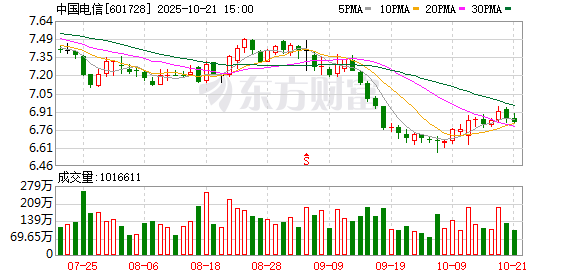
中国电信前三季度持续拓展战略新兴业务规模
Zheng Quan Ri Bao· 2025-10-21 16:37
Core Insights - China Telecom reported a revenue of 394.27 billion yuan for the first three quarters of 2025, a year-on-year increase of 0.59%, and a net profit attributable to shareholders of 30.773 billion yuan, up 5.03% year-on-year [2] - In Q3 2025, the company achieved a revenue of 124.848 billion yuan, a decrease of 0.91% year-on-year, while the net profit was 7.756 billion yuan, an increase of 3.6% year-on-year [2] Financial Performance - For the first three quarters of 2025, China Telecom's operating costs were 274.8 billion yuan, an increase of 0.1% year-on-year [3] - Sales expenses were 38.9 billion yuan, down 1.4% year-on-year, while management expenses were 27.1 billion yuan, up 0.7% year-on-year [3] - R&D expenses reached 9.1 billion yuan, a year-on-year increase of 4.4%, focusing on core technologies in network, cloud, AI, quantum, and security [3] Business Development - As of the report date, China Telecom had 290 million 5G network users, with a penetration rate of 66.9% [2] - Mobile internet traffic grew by 16.9% year-on-year, with a data usage per user (DOU) of 22.3 GB, up 11.4% year-on-year [2] - The penetration rate of gigabit broadband users was approximately 31.0% [2] Strategic Emerging Businesses - Revenue from IDC reached 27.5 billion yuan, a year-on-year increase of 9.1% [2] - Security revenue was 12.6 billion yuan, up 12.4% year-on-year [2] - Intelligent revenue grew by 62.3%, video internet revenue increased by 34.2%, satellite communication revenue rose by 23.5%, and quantum revenue surged by 134.6% [2] New Business Initiatives - China Telecom has officially launched eSIM mobile services, previously supporting smartwatches and in-car devices [3] - The company reported a rapid increase in reservations for the eSIM mobile service, indicating strong market interest [3]

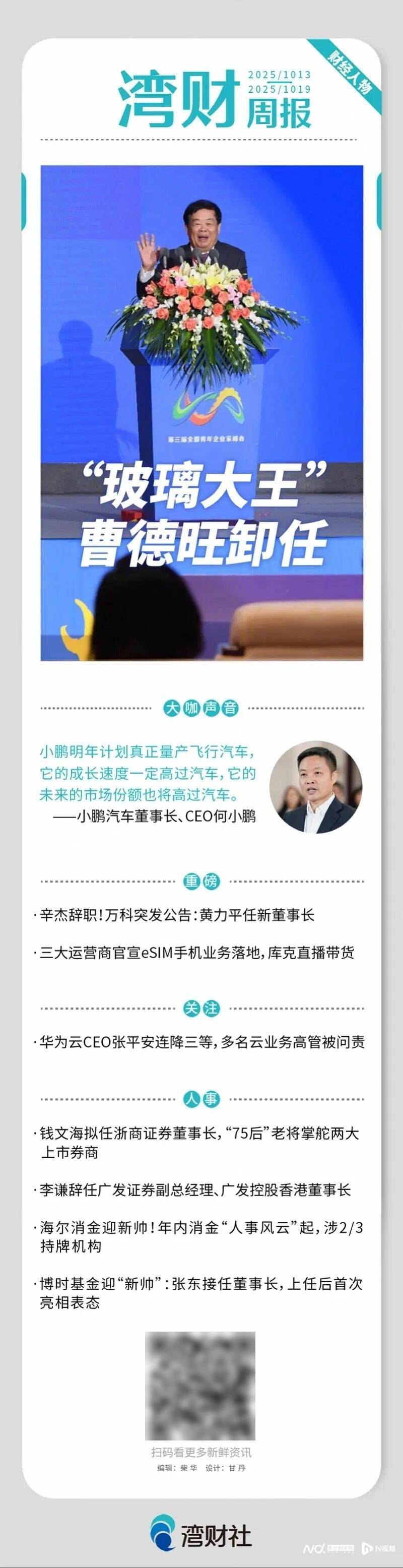
湾财周报 | 人物 79岁曹德旺卸任,长子接管福耀玻璃;辛杰辞任万科董事长;库克直播带货苹果新机
Sou Hu Cai Jing· 2025-10-19 14:22
Group 1 - Cao Dewang, known as the "Glass King," has announced his early resignation as chairman of Fuyao Glass, with his son, Cao Hui, set to take over the role, marking a new era for the company that holds a one-third share of the global automotive glass market [5] - He Xiaopeng, CEO of Xpeng Motors, stated at the 2025 Sustainable Global Leaders Conference that the market share of flying cars is expected to surpass that of traditional cars, with plans for mass production of flying cars next year [5] Group 2 - Vanke announced the resignation of Xin Jie as non-executive director and chairman, with Huang Liping elected as the new chairman, ensuring the board's normal operation will not be affected [6] - The three major telecom operators in China have officially launched eSIM mobile services, with over 70,000 online reservations reported for China Unicom's eSIM service [7] Group 3 - Qian Wenhai is proposed to be appointed as the chairman of Zheshang Securities, with the company set to follow legal procedures for the election [8] - Li Qian has resigned from his position as deputy general manager of GF Securities due to personal work changes, and will no longer hold any positions within the company [9] Group 4 - Haier Consumer Finance has appointed Zhou Wenlong as the new general manager, following a year-long vacancy, amidst a wave of personnel changes in the consumer finance industry [10] - Bosera Funds announced the appointment of Zhang Dong as chairman, who will also serve as the acting general manager, focusing on high-quality development and investor services [11]





湾财周报 | 人物 79岁曹德旺卸任,长子接管福耀玻璃;辛杰辞任万科董事长;库克直播带货苹果新机;华为云CEO张平安连降三等
Sou Hu Cai Jing· 2025-10-19 11:22
Group 1 - Fuyao Glass's founder, Cao Dewang, has announced his early retirement, with his son, Cao Hui, taking over as the new chairman, marking a new era for the company, which holds a one-third share of the global automotive glass market [6] - He Xiaopeng, CEO of Xiaopeng Motors, stated that the company plans to mass-produce flying cars next year, predicting that the growth rate and future market share of flying cars will surpass that of traditional automobiles [7] Group 2 - Vanke announced the resignation of its chairman, Xin Jie, due to personal reasons, with Huang Liping elected as the new chairman, ensuring that the board's operations remain unaffected [8] - Major Chinese telecom operators, including China Mobile, China Unicom, and China Telecom, have received approval to launch eSIM mobile services, with over 70,000 online reservations reported for China Unicom's eSIM service [9] - Huawei Cloud CEO Zhang Pingan has been demoted due to internal disciplinary actions related to issues of fraud and economic misconduct within the cloud business unit [10] Group 3 - Qian Wenhai is proposed to be appointed as the chairman of Zheshang Securities, with the company set to follow legal procedures for the election [11] - Li Qian has resigned from his position as deputy general manager of GF Securities and chairman of GF Holdings Hong Kong due to personal work changes [12] - Haier Consumer Finance has appointed new leadership, with Zhou Wenlong as the new general manager, amidst a wave of personnel changes in the consumer finance industry [13] - Bosera Funds has announced the appointment of Zhang Dong as the new chairman, who will also serve as the acting general manager [14][15]
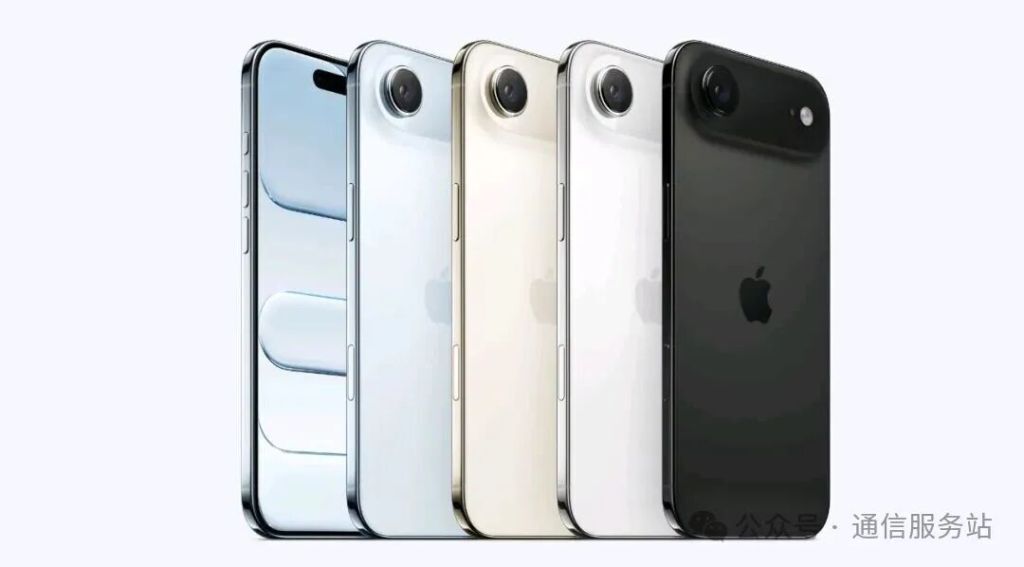
iPhone Air预售5分钟售罄!无实体SIM卡槽,被称“史上最薄”…
Bei Jing Shang Bao· 2025-10-17 05:48
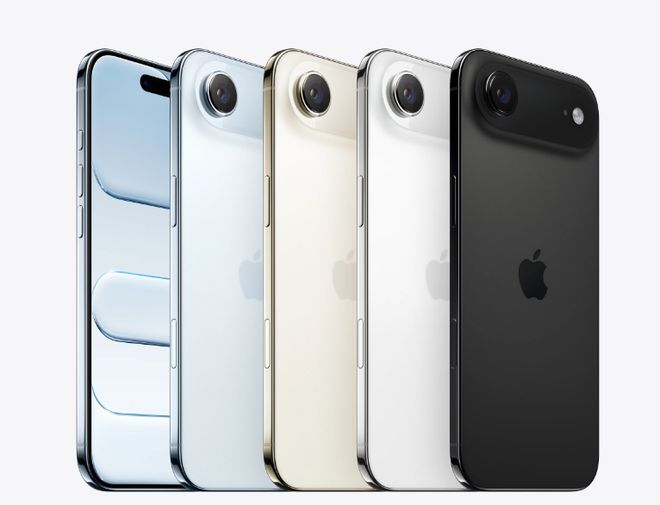
Core Insights - The approval of eSIM mobile services by major Chinese telecom operators, including China Mobile, China Unicom, and China Telecom, marks a significant development in the telecommunications industry in China [2][8] - The launch of the iPhone Air, which is the thinnest iPhone ever at 5.6mm and features a pure eSIM design, has generated high consumer interest, leading to its immediate sell-out upon pre-sale [4][2] - OPPO has also entered the eSIM market with the release of its flagship OPPO Find X9 series, achieving record pre-order numbers shortly after its announcement [6] Telecom Industry Developments - China Mobile, China Unicom, and China Telecom have received approval for eSIM mobile service trials, allowing them to offer eSIM services across all 31 provinces in China [8][11] - China Unicom highlighted the advantages of eSIM technology, including high security, stability, and the ability for users to activate services without a physical SIM card [11] - China Mobile reported that its eSIM reservation system saw over 150,000 users in just four hours after launch, indicating strong demand for eSIM services [11] Product Launches - The iPhone Air, priced from RMB 7999, officially began pre-sale on October 17 and sold out within five minutes, with delivery times pushed back by a week due to high demand [2][4] - The OPPO Find X9 series was launched with a starting price of RMB 4399, setting a new record for pre-orders in the Find series [6]
eSIM来了!手机“无卡时代”已近
Qi Lu Wan Bao· 2025-10-16 23:04
Core Viewpoint - The introduction of eSIM technology marks a significant shift in mobile telecommunications, allowing consumers to forgo traditional SIM cards in favor of integrated solutions [1] Group 1: Industry Overview - Major Chinese telecom operators, including China Telecom, China Mobile, and China Unicom, have received approval from the Ministry of Industry and Information Technology to launch eSIM mobile services nationwide [1] - eSIM technology integrates the functionality of a physical SIM card into a built-in chip within the phone, enabling users to download their phone numbers over the air without the need for a physical card [1] Group 2: Consumer Impact - Consumers purchasing eSIM-enabled devices will experience the same functionalities as traditional mobile services, but with enhanced convenience and flexibility [1]

eSIM将给日常通信带来哪些新变化?
Xin Lang Cai Jing· 2025-10-16 02:44
Core Insights - The launch of eSIM mobile services in China marks a significant shift from traditional SIM cards, allowing users to download their phone numbers directly to a built-in chip without needing a physical SIM card [1][2][3] Group 1: eSIM Technology Overview - eSIM technology integrates the functionality of a physical SIM card into a chip within the device, enabling users to access communication services such as voice calls, data, and messaging without a physical card [1] - The adoption of eSIM is expected to lead to thinner and lighter smartphone designs, as the eSIM chip can be directly soldered onto the motherboard, enhancing durability against dust, water, and shocks [1] Group 2: Consumer Benefits - Users will benefit from simplified processes for activating and changing phone numbers without the need for a physical card, reducing the inconvenience of lost SIM cards and the hassle of swapping cards during international travel [1][2] - The eSIM rollout is anticipated to enhance the overall consumer experience and satisfaction, making connectivity more seamless and user-friendly [3] Group 3: Industry Impact - The introduction of eSIM services is expected to stimulate investment across the entire supply chain, driving demand for eSIM-enabled devices such as smartphones, tablets, wearables, and connected vehicles [2] - eSIM technology is projected to extend into various smart applications, including the Internet of Things (IoT), smart cities, and consumer electronics, facilitating digital and intelligent upgrades across industries [2] Group 4: Operator Initiatives - Chinese telecom operators are actively innovating and enhancing eSIM-related technologies and services, with China Unicom having launched eSIM for wearables and China Mobile focusing on domestic chip and operating system development [3] - China Telecom aims to provide a seamless experience for users with features like card-free activation, cross-device collaboration, and global roaming capabilities [3]


新华每日电讯:eSIM来了!手机“无卡时代”已近
Xin Lang Cai Jing· 2025-10-15 23:29
Core Viewpoint - The launch of eSIM mobile services by major Chinese telecom operators marks a significant shift towards eliminating physical SIM cards, enhancing user convenience and driving industry upgrades [1][2]. Group 1: eSIM Technology Overview - eSIM technology integrates the functionality of a physical SIM card into a built-in chip within the phone, allowing users to download their phone numbers over the air without needing a physical card [2]. - The introduction of eSIM will lead to lighter and thinner smartphone designs, as the eSIM chip can be directly soldered onto the motherboard, improving durability against dust, water, and shocks [2]. Group 2: User Benefits - Users will experience simplified processes for activating and changing phone numbers without the need for a physical SIM card, reducing the hassle of lost cards and the need for card eject tools [2]. - Frequent travelers will benefit from not having to change SIM cards when moving between countries, enhancing the overall user experience [2]. Group 3: Industry Impact - The rollout of eSIM services is expected to stimulate investment across the entire industry chain, leading to increased demand for eSIM-enabled devices such as smartphones, tablets, wearables, and connected vehicles [2][3]. - Telecom operators are actively innovating and upgrading eSIM-related technologies and services, with China Unicom already having adapted 75 devices for eSIM wearables and serving millions of users [4]. Group 4: Future Prospects - eSIM technology is anticipated to extend into various smart scenarios, including vehicle networking, smart cities, and consumer electronics, driving digital and intelligent upgrades across industries [3]. - The ongoing development of eSIM services aims to provide seamless experiences for users, such as card-free activation and global roaming capabilities [4].
新华鲜报|eSIM来了!手机“无卡时代”已近
Xin Hua She· 2025-10-15 14:12
Core Insights - The launch of eSIM mobile services by major Chinese telecom operators marks a significant shift towards eliminating physical SIM cards, enhancing user convenience and device design [1][3][4] Group 1: eSIM Technology Overview - eSIM technology integrates the functionality of a physical SIM card into a chip embedded within the phone, allowing users to download their phone number over the air without needing a physical card [3] - eSIM-enabled devices will maintain traditional communication services such as voice calls, data usage, and SMS [3] Group 2: Impact on Consumer Experience - The introduction of eSIM will simplify processes such as activating new lines and changing numbers, eliminating the need for physical SIM cards and reducing the risk of loss [3][4] - Users who travel frequently will benefit from not having to swap SIM cards, enhancing their overall experience [3][4] Group 3: Industry Implications - The rollout of eSIM services is expected to stimulate investment across the entire supply chain, leading to increased demand for eSIM-compatible devices like smartphones, tablets, wearables, and connected vehicles [4] - eSIM technology is anticipated to extend into various sectors, including vehicle networking, smart cities, and consumer electronics, driving digital and intelligent upgrades across industries [4] Group 4: Operator Initiatives - Chinese telecom operators are actively innovating and enhancing eSIM-related technologies and services, with China Unicom having launched eSIM for wearables in 2018, supporting 75 devices and millions of users [4] - China Mobile is focusing on domestic technology development for eSIM chips and operating systems, while China Telecom aims to provide seamless activation and global roaming experiences [4]