
iShares Gold Trust

Search documents
Gold price today, Wednesday, March 25: Gold rises after reports of talks to end Iran war
Yahoo Finance· 2026-03-23 10:49
Core Viewpoint - Gold prices have shown volatility, with a recent increase attributed to geopolitical tensions and potential peace negotiations between the U.S. and Iran, despite a significant decline over the past month due to high oil prices and inflation concerns [2][3]. Current Gold Prices - Gold futures opened at $4,473.50 per troy ounce, reflecting a 1.6% increase from the previous day's closing price of $4,401, and briefly surpassed $4,500 during early trading [1][4]. - Over the past month, gold prices have decreased by 13.4%, while the one-year gain stands at 95.6% [2][4][9]. Market Influences - The ongoing conflict in Iran is a significant factor affecting gold prices, with traders concerned about inflation and the Federal Reserve's potential interest rate hikes, which could increase the opportunity cost of holding gold [2][3]. Investment Options in Gold - Various methods to invest in gold include physical gold, gold mining stocks, gold ETFs, and gold futures, each with distinct advantages and disadvantages [10][16][20]. - Physical gold is tangible and easily accessible but comes with risks such as theft and lower liquidity [17]. - Gold mining stocks can be volatile due to their dependence on gold prices and geopolitical risks, leading many investors to prefer diversified funds [12][18]. - Gold ETFs offer liquidity and ease of storage but may incur fund fees that dilute returns [22][19]. - Gold futures allow for leverage and convenience but carry high risks and complexity [23][20].
Gold prices surge amid global risks, but experts warn long-term investors to be careful
The Economic Times· 2026-03-21 20:34
Core Insights - Gold has shown strong returns since early 2024, but experienced investors caution that it can also underperform [1] - Historically, gold performs well during global crises, but its long-term performance is often inferior to stocks [1][2] Performance Over Time - From 1985 to 2025, the S&P 500 returned 11.9% annually before inflation and 8.9% after inflation, while gold returned 6.7% annually before inflation and 3.8% after inflation [2] - From 1995 to 2025, stocks again outperformed gold, returning 11.1% annually before inflation and 8.4% after inflation, compared to gold's 8.1% and 5.4% respectively [5] - From 2005 to 2025, gold returned 11.6% annually before inflation and 8.8% after inflation, while stocks returned 10.7% annually or 7.9% after inflation [6] Gold and Inflation - Gold prices do not closely track inflation; between 1987 and 2001, inflation averaged around 3% while gold prices fell [7] - In 2022, despite high inflation, gold prices remained mostly flat, rising 13% early in the year but later dropping 10% [7][1] Gold During Crises - Gold typically rises during periods of investor fear, such as during the COVID-19 crash in 2020 when stocks fell over 30% but gold remained stable [8] - Gold prices surged during significant events like the 2008 financial crisis and the aftermath of 9/11 [8] Volatility of Gold - Gold prices are highly volatile; for instance, it rose 6% in 2012 but fell 28% in 2013 [9] - Over a five-year period ending in 2016, gold dropped 16.5%, but it has risen about 50% in recent years [9][16] Investment Vehicles - Gold ETFs are more convenient than physical gold, avoiding storage and insurance issues; SPDR Gold Shares ETF has about $105 billion in assets [10][16] - iShares Gold Trust offers lower fees compared to SPDR Gold Shares, and investors can also consider gold mining company funds [10]


Gold has been on a run all year. Here's how to avoid a tax hit.
Yahoo Finance· 2026-03-03 13:30
Group 1: Gold Market Overview - Gold prices have surged significantly, reaching $5,300 per ounce as of March 2, 2026, driven by geopolitical tensions and economic factors [1] - Over the past five years, gold prices have increased by 200%, and since 2006, the gains exceed 830% [2] Group 2: Tax Implications of Gold Sales - The IRS treats gold as a capital asset, meaning profits from selling gold are considered taxable income [3] - Selling gold within one year of purchase incurs ordinary income tax on profits, while holding it for over a year subjects gains to collectible tax rates, capped at 28% for higher income brackets [4][7] - Gold ETFs are treated similarly to physical gold for tax purposes, with the same collectible tax rules applying [6][8] Group 3: Reporting and Compliance - Significant gold sales may require dealers to file Form 1099-B with the IRS, but reporting is not automatic and relies on self-reporting by the seller [12][13] - Any cash transaction over $10,000 must be reported by the dealer on Form 8300, and structuring sales to avoid reporting can raise red flags [15][16] Group 4: Strategies to Manage Tax Liabilities - Utilizing a gold IRA can defer capital gains taxes, but withdrawals are taxed as ordinary income [18][22] - Tax-loss harvesting can offset gains from gold sales by selling other assets at a loss [23][24] - Documenting expenses related to buying, holding, and selling gold can reduce taxable gains by increasing the cost basis [26][27]
GLD Holds More Gold While IAU Is More Affordable
The Motley Fool· 2026-02-06 01:25
Core Insights - The article compares two gold ETFs, iShares Gold Trust (IAU) and SPDR Gold Shares (GLD), highlighting their differences in expense ratios, assets under management, and historical performance [1][2]. Cost Comparison - IAU has a lower expense ratio of 0.25% compared to GLD's 0.40%, making it more affordable for long-term investors [3][4]. - GLD manages significantly more assets, with $173.3 billion in AUM versus IAU's $80.2 billion [3][12]. Performance Metrics - Over the past year, IAU has returned 73.1% while GLD has returned 72.9% [3]. - The maximum drawdown over five years for IAU is 20.93%, slightly better than GLD's 21.03% [5]. - A $1,000 investment in IAU would have grown to $2,719 over five years, compared to $2,700 for GLD [5]. Fund Structure - Both IAU and GLD are physically backed by gold and are designed to mirror gold bullion prices, appealing to investors seeking direct exposure to gold [2][6]. - IAU is classified under real estate due to sector mapping conventions, while GLD is classified under basic materials, but both function similarly as gold proxies [7]. Investor Considerations - Investors may find it challenging to identify significant differences between the two funds at a surface level, as both have similar performance and longevity [8]. - The primary focus for investors may be IAU's lower expense ratio when comparing the two ETFs [12].

IAU Offers Lower Cost Gold Exposure Than SIL
Yahoo Finance· 2026-02-03 13:20
Core Insights - The Global X - Silver Miners ETF (SIL) and iShares Gold Trust (IAU) differ significantly in asset focus, volatility, and cost, with SIL targeting silver mining stocks and IAU providing direct gold exposure [1][2] Cost and Size Comparison - SIL has an expense ratio of 0.65% and assets under management (AUM) of $6.3 billion, while IAU has a lower expense ratio of 0.25% and AUM of $79.7 billion [3][4] - The one-year return for SIL is 167.4%, compared to 72.9% for IAU, indicating higher short-term performance for SIL [3] Performance and Risk Comparison - Over five years, SIL has a maximum drawdown of -55.63%, while IAU has a slightly lower drawdown of -54.73% [5] - An investment of $1,000 would grow to $2,154 in SIL and $2,598 in IAU over the same period, showing IAU's superior long-term growth [5] Portfolio Composition - IAU is designed to track the price of physical gold, providing a pure-play on gold's spot price without equity risk, and has been operational for 21 years [6] - SIL invests exclusively in silver mining companies, with top holdings including Wheaton Precious Metals Corp, Pan American Silver Corp, and Coeur Mining Inc, which introduces company-specific risks [7] - SIL holds 41 companies, offering some diversification within the silver mining sector but lacks broader diversification [7]
Gold ETFs Hit Elite Momentum Tier: These 5 Funds Lead The Charge As Bullion Eyes $5,600 - Goldman Sachs Physical Gold ETF Shares (BATS:AAAU), SPDR Gold Shares (ARCA:GLD)
Benzinga· 2026-01-29 12:11
Core Viewpoint - Gold prices are experiencing a significant rally, nearing the $5,600 per ounce mark, driven by geopolitical tensions and the Federal Reserve's decision to maintain interest rates [1][2][3]. Group 1: Gold Price Movement - Gold has gained over 10% in just four sessions, reaching an all-time high of $5,595.44 [1][5]. - As of the latest check, gold spot is trading at $5,506.47, with technical resistance identified between $5,525 and $5,600 [5]. Group 2: ETF Performance - Five key gold ETFs have entered the top 10th percentile of momentum scores, indicating strong relative price strength and volatility [1][2]. - The ETFs include Goldman Sachs Physical Gold ETF, SPDR Gold Trust, SPDR Gold MiniShares Trust, iShares Gold Trust, and VanEck Merk Gold ETF, all showing positive momentum across three critical timeframes [2]. Group 3: Market Dynamics - The Federal Reserve's decision to keep interest rates unchanged at 3.50%–3.75% has lowered the opportunity cost for holding gold, reinforcing prolonged monetary support [2][3]. - Investors are increasingly moving towards tangible assets like gold due to rising geopolitical uncertainties, particularly tensions between the U.S. and Iran [3][4]. Group 4: Investor Outlook - The short-term outlook for gold is positive, with an upward trend observed over the last couple of months [5]. - The medium-term trend has also been sustained positively over the last couple of quarters, while the long-term outlook shows a sustained upward movement over the past year [5].
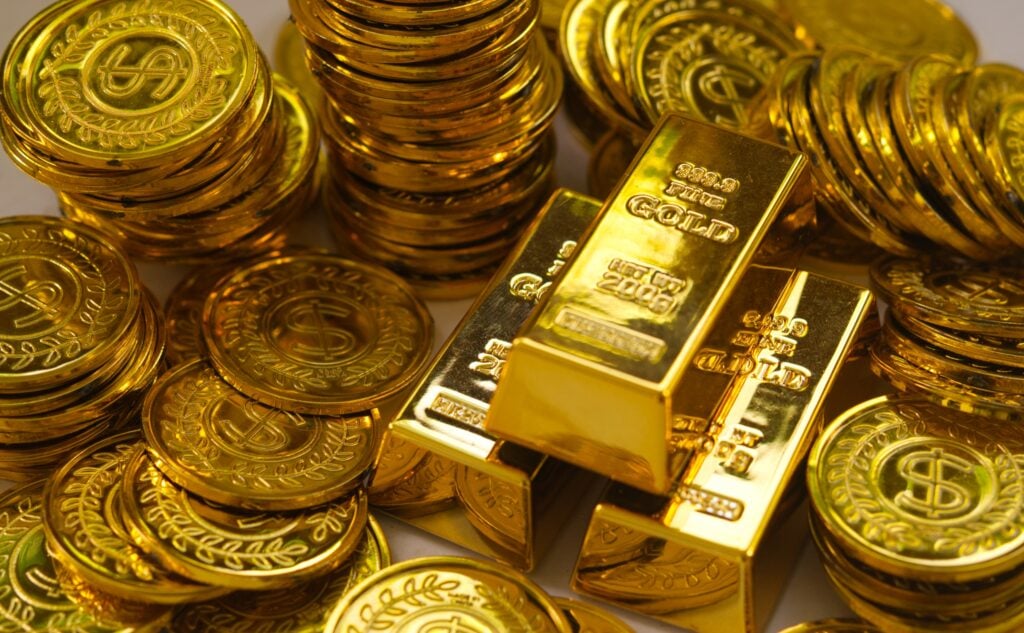
Gold ETFs Hit Elite Momentum Tier: These 5 Funds Lead The Charge As Bullion Eyes $5,600
Benzinga· 2026-01-29 12:11
Core Viewpoint - Gold prices are experiencing a significant rally, nearing the $5,600 per ounce mark, driven by geopolitical tensions and the Federal Reserve's decision to maintain interest rates [1][2][3]. Group 1: Gold Price Movement - Gold has gained over 10% in just four sessions, reaching an all-time high of $5,595.44 [1][5]. - As of the latest check, gold spot is trading at $5,506.47, with technical resistance identified between $5,525 and $5,600 [5]. Group 2: ETF Performance - Five key gold ETFs have entered the top 10th percentile of momentum scores, indicating strong relative price strength and volatility [1][2]. - The ETFs include Goldman Sachs Physical Gold ETF, SPDR Gold Trust, SPDR Gold MiniShares Trust, iShares Gold Trust, and VanEck Merk Gold ETF, all showing positive momentum across three critical timeframes [2]. Group 3: Market Dynamics - The Federal Reserve's decision to keep interest rates unchanged at 3.50%–3.75% is interpreted as a sign of prolonged monetary support, reducing the opportunity cost of holding gold [2][3]. - Investors are increasingly moving towards tangible assets like gold due to rising geopolitical uncertainties, particularly tensions between the U.S. and Iran [3][4]. Group 4: Investor Outlook - The short-term outlook for gold is positive, with an upward trend observed over the last couple of months [5]. - The medium-term trend remains positive, sustained over the last couple of quarters, while the long-term outlook shows a sustained upward movement over the past year [5].

Gold Has A New Buyer In Town — And The Old Price Rules No Longer Apply
Yahoo Finance· 2026-01-24 11:46
Core Viewpoint - Gold has entered a new phase where private-sector buyers are becoming a significant force in price formation, shifting away from the traditional influence of central banks [1][3]. Group 1: Price Forecast and Market Dynamics - Goldman Sachs has raised its December 2026 gold price forecast from $4,900 to $5,400 per ounce, indicating a potential upside of approximately 15% despite a 64% surge in 2025 [2]. - The report suggests that private sector diversification into gold is now a reality, with these buyers not liquidating their holdings in 2026, which raises the starting point for price forecasts [4]. Group 2: Demand Sources and Market Behavior - Demand for gold is increasingly coming from private capital, which is treating gold as a long-term hedge against global policy risks rather than a cyclical investment [3][4]. - Significant inflows into Western gold ETFs, such as SPDR Gold Shares and iShares Gold Trust, have been observed since the onset of rate cuts, surpassing predictions based on rate models [4]. - Growing demand is also noted through less measurable channels, including physical purchases by high-net-worth families and increased activity in gold-linked structures and call-option buying [5]. Group 3: Structural Changes in Demand - The flows into gold are characterized as persistent and tied to broader concerns about fiscal sustainability, monetary credibility, currency debasement, and geopolitical fragmentation, making them structurally different from short-term speculative positions [6].
7 ETF Themes To Watch As Fear & Greed Index Slips Toward Caution - SPDR Gold Shares (ARCA:GLD), iShares Gold Trust Shares (ARCA:IAU)
Benzinga· 2026-01-21 15:21
Core Viewpoint - U.S. equities experienced a significant decline as investor sentiment weakened due to renewed trade tensions between the U.S. and Europe, with the CNN Business Fear & Greed Index dropping to 48.3 from 55.3, indicating a shift to a "Neutral" zone [1]. Group 1: Market Reaction to Trade Tensions - President Trump threatened additional tariffs of up to 10% on several European countries starting February 1, potentially increasing to 25% by June if negotiations over Greenland control fail [2]. - European officials warned of possible retaliation that could affect up to 25% of U.S. exports, including services, and mentioned the possibility of reducing U.S. Treasury holdings [2]. Group 2: Sector Performance and Investment Strategies - Most S&P 500 sectors closed lower, prompting investors to rotate into defensive sectors, particularly consumer staples, which were among the few to close higher [3][4]. - ETFs focused on consumer staples are gaining attention as they provide exposure to companies with stable demand during economic and geopolitical uncertainties [4]. - Minimum volatility ETFs are attracting interest as investors seek to reduce risk while remaining in equities, focusing on stocks with historically lower price fluctuations [5]. - Quality factor ETFs are in demand as concerns over tariffs and earnings sustainability rise, with investors prioritizing companies with strong balance sheets [6]. - Gold ETFs are seeing renewed interest due to escalating trade tensions and discussions about reducing U.S. Treasury exposure [7]. - Volatility ETFs are becoming popular among short-term traders due to choppy markets and sharp intraday swings [11]. - Dividend ETFs are gaining appeal as investors seek stability and income during risk-off phases, particularly as growth-oriented sectors underperform [12]. - Healthcare ETFs are drawing attention ahead of key earnings reports from major players, as the sector is viewed as a safe haven during market stress [13]. Group 3: Notable ETFs - Key ETFs in focus include: - Consumer Staples Select Sector SPDR Fund (NYSE:XLP) and Vanguard Consumer Staples ETF (NYSE:VDC) for consumer staples [7]. - iShares MSCI USA Min Vol Factor ETF (BATS:USMV) and Invesco S&P 500 Low Volatility ETF (NYSE:SPLV) for minimum volatility [8]. - iShares MSCI USA Quality Factor ETF (BATS:QUAL) and Invesco S&P 500 Quality ETF (NYSE:SPHQ) for quality factors [9]. - SPDR Gold Shares (NYSE:GLD) and iShares Gold Trust (NYSE:IAU) for gold investments [14]. - Schwab U.S. Dividend Equity ETF (NYSE:SCHD) and Vanguard High Dividend Yield ETF (NYSE:VYM) for dividend strategies [16]. - Health Care Select Sector SPDR Fund (NYSE:XLV) and Vanguard Health Care ETF (NYSE:VHT) for healthcare exposure [17].

The Best Cryptocurrency to Buy With $500 Right Now (Hint: It's Not Bitcoin)
Yahoo Finance· 2025-12-31 20:27
Core Insights - Bitcoin has been the top-performing cryptocurrency over the past decade, but Pax Gold (PAXG) is currently considered a better investment option due to its 1-to-1 peg with gold and a 74% increase in value this year [1][8] Group 1: Gold-Backed Stablecoins - Gold-backed stablecoins, such as Pax Gold and Tether Gold, are gaining traction, with both having market caps exceeding $1.6 billion [3] - Pax Gold is preferred over Tether Gold due to its availability on more U.S.-based cryptocurrency trading platforms [3] - Pax Gold trades at the price of gold, currently valued at $4,563, rather than the typical $1 peg of traditional stablecoins [4] Group 2: Investment Advantages - Pax Gold offers a more cost-effective and simpler way to gain exposure to gold compared to traditional gold ETFs [8] - Each Pax Gold token is backed by 1 fine troy ounce of gold stored in a London vault, providing a direct link to physical gold [5][6] - The ability to exchange Pax Gold for physical gold at any time adds to its appeal as a digital gold alternative [6]