scSiameseClu

Search documents
7个数据集验证:scSiameseClu在无监督单细胞聚类任务中达到SOTA性能
3 6 Ke· 2025-09-15 07:33
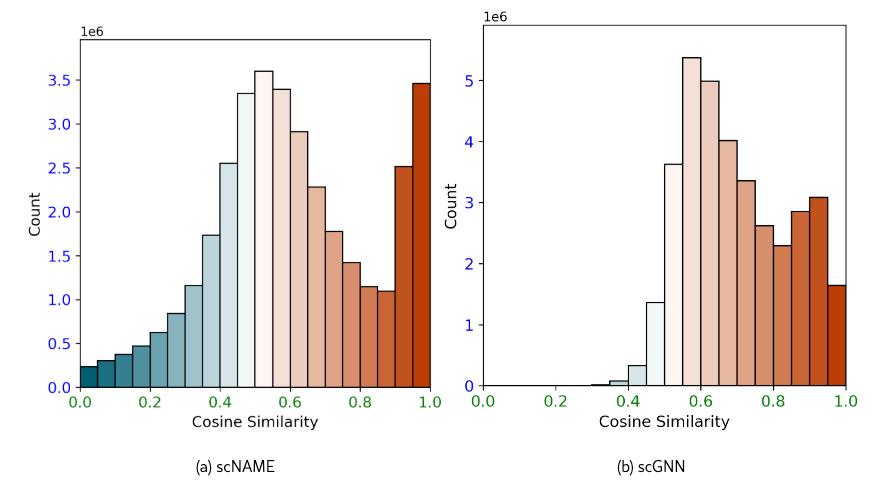
Core Insights - A new Siamese clustering framework named scSiameseClu has been proposed by a research team from institutions including the Chinese Academy of Sciences and Northeast Agricultural University, aimed at interpreting single-cell RNA sequencing (scRNA-seq) data effectively [1][4][5] - The framework addresses challenges in scRNA-seq data analysis, particularly the issues of representation collapse and the need for clearer cell population classification [1][4][5] Summary by Sections Introduction to scRNA-seq - Traditional bulk RNA sequencing focuses on average gene expression at the population level, potentially masking the characteristics of rare cells [1] - Single-cell RNA sequencing (scRNA-seq) captures comprehensive genetic information from individual cells, revealing hidden complexities [1] Challenges in scRNA-seq Data - scRNA-seq data is characterized by high noise, sparsity, and dimensionality, leading to issues such as "insufficient graph construction" and "representation collapse" even in advanced methods like graph neural networks (GNNs) [2][4] scSiameseClu Framework - The scSiameseClu framework integrates three key modules: Dual Augmentation, Siamese Fusion, and Optimal Transport Clustering, designed to capture and refine complex intercellular information [4][5][9] - The framework has shown superior performance in clustering and other biological tasks compared to state-of-the-art methods [5] Performance Evaluation - The performance of scSiameseClu was evaluated on seven real scRNA-seq datasets, which included samples from both mice and humans, covering various cell types [7][8] - The framework demonstrated significant advantages in clustering metrics such as Accuracy (ACC), Normalized Mutual Information (NMI), and Adjusted Rand Index (ARI) [14][15] Key Modules of scSiameseClu - **Dual Augmentation Module**: Enhances robustness against noise by simulating natural fluctuations in gene expression and generating augmented adjacency matrices for cell graphs [11] - **Siamese Fusion Module**: Integrates refined gene expression and cell graph matrices to learn robust and meaningful representations, improving clustering performance [12] - **Optimal Transport Clustering**: Aligns and corrects predicted distributions to ensure balanced clustering and avoid collapse [13] Experimental Results - The framework's performance was validated through extensive experiments, including comparisons with nine advanced benchmark models, showing consistent superiority across various datasets [14][15] - In downstream tasks, scSiameseClu accurately identified cell types and their marker genes, achieving over 90% similarity with gold standard references [15][17] Conclusion - The introduction of scSiameseClu represents a significant advancement in computational biology, effectively addressing long-standing challenges in cell heterogeneity analysis [20] - The framework exemplifies the integration of computer science methodologies with life sciences, paving the way for future innovations in the field [20]