The Motley Fool

Search documents
Is GameStop the Next Berkshire Hathaway?
The Motley Fool· 2026-02-01 11:12
Core Insights - Ryan Cohen has redefined GameStop's business model and invested company funds beyond traditional retailing [1] - Michael Burry's recent investment in GameStop stock is based on his belief in CEO Ryan Cohen rather than the company's underlying business [2][3] Company Strategy - Cohen has introduced digital commerce to GameStop's previously declining retail video game business and has diversified investments into collectibles and Bitcoin [4] - Cohen owns approximately 42.1 million shares of GameStop, representing about 9% of outstanding shares, and has the potential to acquire options on over 171.5 million shares based on performance [5] Market Performance - Since Cohen joined GameStop's board in January 2021, the company has outperformed the S&P 500 [5] - GameStop's current market capitalization is $11 billion, with a stock price of $23.88, reflecting a 4.69% increase on the day [9] Comparisons to Berkshire Hathaway - Burry compares Cohen to Warren Buffett, suggesting that GameStop could evolve into a business similar to Berkshire Hathaway, although this comparison may be premature [3][7] - Cohen's investment strategy has yet to include significant outside investments comparable to Buffett's historical purchases, such as American Express or Coca-Cola [8] Future Outlook - While Cohen has successfully transformed GameStop into a market leader, the long-term potential for the company to become a conglomerate remains uncertain [10][11] - Investors may need to adopt a speculative approach until Cohen makes further outside investments that could enhance GameStop's stock value [11]



Here's Why Pfizer Stock Is Still a Buy
The Motley Fool· 2026-02-01 11:00
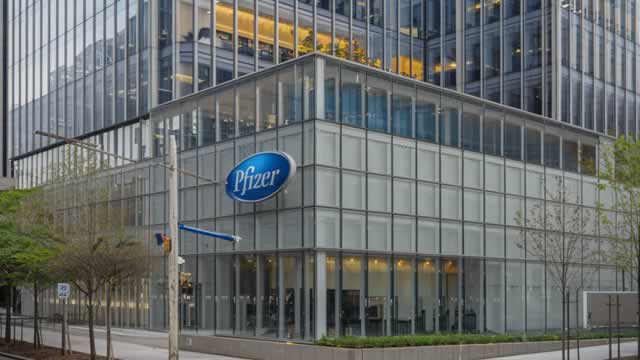
Company Overview - Pfizer is one of the world's largest pharmaceutical companies with a long history of innovation, operating in a capital-intensive industry that requires significant research and development spending [2] - The company faces a heavy regulatory burden as new drugs must prove both effective and safe before being sold [2] Competitive Landscape - Pfizer operates in a highly competitive environment with many industry giants striving to develop new drugs within the same treatment niches [3] - The costs associated with developing new drugs are prohibitive, leading to a limited period of exclusivity for new drugs once they are approved [3] Patent Challenges - Patent protections can lead to significant profits from blockbuster drugs, but the expiration of these patents can result in rapid declines in revenue as generic versions enter the market, known as a patent cliff [4] - Pfizer is currently facing approaching patent cliffs, which have contributed to a decline in stock value following the pandemic [5][6] Recent Developments - The company abandoned its internally developed GLP-1 weight loss drug, signaling potential weaknesses in its development pipeline and raising concerns about the lack of new blockbuster drugs to offset impending patent cliffs [6] - Despite these challenges, Pfizer has acquired a company with a promising GLP-1 drug pipeline and has agreed to distribute a GLP-1 therapy for a Chinese company pending approval [7] Financial Metrics - Pfizer's current market capitalization is $150 billion, with a current stock price of $26.44 and a gross margin of 69.12% [7] - The company offers a dividend yield of 6.51%, which is a result of a 100% dividend payout ratio, indicating that all profits are devoted to dividend payments [8] Investment Perspective - Pfizer is viewed as a turnaround story, potentially appealing to aggressive investors willing to adopt a long-term perspective [9] - The stock has risen nearly 20% since its 52-week low in early April, indicating growing investor interest in Pfizer's turnaround potential [10]

2 No-Brainer Dividend Stocks to Buy Hand Over Fist
The Motley Fool· 2026-02-01 10:53
Group 1: AbbVie - AbbVie is recognized as a Dividend King, having increased its payouts for at least 50 consecutive years, indicating strong business stability [2] - The company has a diverse portfolio of medicines and a robust pipeline, which positions it well to maintain consistent revenue and earnings despite patent expirations [3] - AbbVie is expected to benefit from long-term trends such as the aging global population, which will increase demand for pharmaceutical products [6] Group 2: Mastercard - Mastercard has increased its dividend payouts by nearly 358% over the past decade, showcasing its strong business fundamentals [7] - The company processes credit and debit card transactions and is insulated from credit risk, allowing it to perform well even during economic downturns [8] - Mastercard has a significant addressable market, estimated at approximately $12.5 trillion, and is well-positioned to capitalize on the ongoing shift from cash to digital payments [10][11]



1 Reason Now is a Great Time to Buy Berkshire Hathaway [BRK.B] Stock
The Motley Fool· 2026-02-01 10:41
Core Viewpoint - Berkshire Hathaway remains a strong investment option despite concerns over leadership changes, primarily due to its substantial cash reserves and flexibility in capital deployment [1][2]. Group 1: Financial Position - As of the end of Q3 2025, Berkshire's cash position reached an all-time high of nearly $382 billion, with expectations for further increases in Q4 [4]. - The company has a market capitalization of $1.0 trillion, with shares currently priced at $480.62, reflecting a decline of over 10% from its peak in early 2025 [8][14]. Group 2: Leadership Transition - Warren Buffett has stepped down as CEO, passing leadership to Greg Abel, who is expected to manage the company's capital similarly to Buffett but may also pursue more international and tech investments [9][10]. - Buffett expressed confidence in Abel's leadership, stating that Berkshire's prospects would improve under Abel's management [9]. Group 3: Investment Strategy - Berkshire's cash reserves serve as a significant insurance policy, allowing the company to capitalize on market downturns by acquiring stocks or businesses [7]. - The company is viewed as a diversified conglomerate, akin to an ETF, with operations across various sectors, reducing dependency on any single individual [13].
I Predicted That Carnival Stock Would Beat the Market in 2025. Can It Repeat in 2026?
The Motley Fool· 2026-02-01 10:35
Core Viewpoint - Carnival Corp. has shown strong performance in 2025, outperforming the S&P 500, and is well-positioned for continued growth in 2026 despite high debt levels [1][2][3] Financial Performance - Carnival set new records in 2025, achieving record revenue, net yields, operating income, customer deposits, and adjusted EBITDA [2][3] - The company reported a strong fourth fiscal quarter, exceeding guidance across various metrics, and is guiding for increased profitability in 2026 [3] Debt Management - Carnival has a significant debt burden from the pandemic, but has been responsibly paying it down, with $19 billion refinanced in 2025, reducing debt by $10 billion from its 2023 peak [4][5] - Continued lower interest rates could further enhance Carnival's ability to save on interest and expedite debt repayment [5] Market Position and Valuation - Carnival's stock trades at a forward one-year P/E ratio of less than 11, indicating it is undervalued, especially given its leadership in the cruise industry and record profits [6] - The recent restart of dividends signals management's confidence in the company's future prospects [6] Future Outlook - If interest rates continue to decline, Carnival is expected to potentially outperform the market again in 2026, adding value to a diversified portfolio [7]


One of Under Armour's 10% Owners Buys 2.6M Shares as Legal Setbacks Come to A Close
The Motley Fool· 2026-02-01 10:33
Core Insights - A 10% owner of Under Armour purchased 2,641,105 shares for approximately $16.4 million, indicating potential confidence in the stock despite its recent performance [1][2]. Transaction Summary - The transaction involved 2,641,105 shares traded at a total value of $16.4 million, with a weighted average purchase price of $6.23 per share [2]. - Post-transaction, the insider holds a total of 65,000,000 shares indirectly, with this purchase accounting for 4.2% of their total indirect holdings [2][7]. Company Overview - Under Armour reported a trailing twelve months (TTM) revenue of $5.05 billion and a net income of -$87.65 million, indicating ongoing financial struggles [3]. - The company has 14,163 employees and has experienced a 1-year price change of -18.98% as of January 31, 2026 [3]. Company Snapshot - Under Armour is a global manufacturer of athletic apparel, footwear, and accessories, utilizing a multi-channel distribution strategy to reach consumers [4]. Current Challenges - The company has faced poor stock performance for four consecutive years, with negative net income reported in FY 2025 and continuing into FY 2026 [5]. - A legal setback occurred in January 2026 when an appeals court ruled against Under Armour regarding a $100 million Director & Officers insurance claim [6]. - The departure of the Chief Product Officer on February 2, 2026, adds to the company's executive turnover issues [6]. - A significant loss was noted when Under Armour failed to re-sign NBA star Steph Curry to a new brand deal in November 2025, highlighting ongoing challenges [8].


Could This Tech-Heavy Vanguard Fund Be Due for a Significant Decline in 2026?
The Motley Fool· 2026-02-01 10:23
Core Insights - The Vanguard Information Technology ETF (VGT) has shown significant growth, up 120% over the past three years, outperforming the S&P 500, which has risen approximately 73% during the same period [2][3]. Performance Overview - The S&P 500 index has experienced an average annual growth rate of about 20% over the last three years, significantly exceeding its long-term average of 10% [2]. - The Vanguard Information Technology ETF is currently priced at $747.92, with a daily change of -1.69% [6]. Valuation Concerns - Valuations for tech stocks are considered high, with major holdings in the ETF, such as Nvidia, Apple, and Microsoft, each accounting for over 12% of the fund, collectively making up around 45% of the entire portfolio [4][5]. - The market caps of these tech giants exceed $3 trillion, and their price-to-earnings multiples are over 30, indicating they are not cheap investments [5]. Investment Strategy - The performance of the Vanguard Information Technology ETF is heavily influenced by its largest holdings, suggesting that the overall success of the fund is tied to the performance of these leading tech companies [5]. - Companies are expected to continue investing heavily in AI, which could drive stock prices higher in the near future, despite the current high valuations [7]. Risk Assessment - The ETF's concentration in a few large tech stocks raises concerns for risk-averse investors, as a market correction could significantly impact the fund's performance [4][5]. - Individual risk tolerance is crucial in determining whether the ETF is a suitable investment, with long-term investors potentially finding it a good fit, while retirees may consider less volatile options [8][9].




All It Takes Is $13,000 Invested in Each of These 2 Dividend Kings to Help Generate $1,000 in Passive Income in 2026
The Motley Fool· 2026-02-01 10:15
Core Viewpoint - Consumer staples stocks, particularly those that are currently undervalued, present a significant buying opportunity for value investors, especially in light of their underperformance compared to the broader market [1][2]. Group 1: Procter & Gamble (P&G) - P&G experienced a challenging 2025, with a stock value decline of 14.5%, reaching a near three-year low [4]. - The company reported a 1% decline in sales volume and flat organic sales growth, leading to a 5% drop in diluted net earnings per share (EPS) [5]. - P&G has adjusted its fiscal 2026 diluted net EPS growth forecast to a range of 1% to 6%, down from a previous estimate of 3% to 9% [5]. - The company is under new leadership and aims to enhance its value proposition by focusing on volume growth rather than price increases [8]. - P&G boasts a strong dividend yield of 2.9% and has increased its dividend for 69 consecutive years, making it an attractive option for income investors [9][11]. Group 2: Kimberly-Clark - Kimberly-Clark reported a modest 3.2% growth in adjusted EPS and flat adjusted operating profit, with a 1.7% increase in organic sales [12]. - The company is in a downturn but plans to acquire Kenvue to diversify its product offerings, which is expected to enhance its market position [13]. - Kimberly-Clark anticipates achieving $2.1 billion in annual cost synergies from the acquisition within three years [15]. - The company has a dividend yield of 5% and has increased its dividend for 54 consecutive years, making it appealing for value investors [17][19]. Group 3: Comparative Analysis - P&G is considered a higher quality company with a strong brand portfolio and better diversification, while Kimberly-Clark offers a cheaper valuation and higher yield, making it a potential turnaround play [20]. - Both companies are currently facing growth challenges due to a slowdown in consumer spending but continue to generate substantial free cash flow and earnings to support their dividends [20]. - A balanced investment strategy could involve a 50/50 split between both stocks, yielding an average of 4% [21].



Meta Platforms' $135 Billion Bet Makes Complete Sense
The Motley Fool· 2026-02-01 10:12
The market keeps rewarding this business, as shares benefit from positive momentum.Meta Platforms (META 2.95%) is off to a fast start this year. Shares climbed 9% in January, building off two straight years of double-digit gains and a triple-digit return in 2023. The momentum continues.Nonetheless, investors have a lot to digest when thinking about the future of this business. Meta just reported its latest financial results, and it revealed its spending outlook for 2026. Capital expenditures (capex) are exp ...


Prediction: These Will Be the Best-Performing AI Stocks in 2026
The Motley Fool· 2026-02-01 09:44
Core Viewpoint - The article discusses the potential for three AI stocks to perform exceptionally well in 2026, driven by ongoing demand for AI technologies and specific company advancements. Group 1: Nvidia - Nvidia is predicted to be the safest and potentially the biggest winner among AI stocks due to the rise of agentic AI adoption, which is expected to significantly boost demand for its products [3][4]. - The launch of the Rubin GPU platform, which could reduce inference costs by 10x and require four times fewer GPUs for training, is anticipated to create substantial demand [6][7]. - Nvidia's growth bottleneck is expected to ease as Taiwan Semiconductor Manufacturing Company ramps up its advanced packaging capacity, with Nvidia securing approximately 60% of this capacity [7]. Group 2: Broadcom - Broadcom is identified as the second-best positioned AI chipmaker, benefiting from the trend of hyperscalers seeking to build custom AI chips, holding an estimated 60% market share in the AI server ASIC market [8][10]. - The transition of data centers to million-GPU clusters is expected to drive significant sales growth for Broadcom's networking products, particularly the Tomahawk 6 switches [10]. - Broadcom has a substantial $73 billion AI-related backlog, which is projected to translate into strong revenue and earnings growth in 2026 [11]. Group 3: Meta Platforms - Meta Platforms has shown robust advertising revenue growth, with a 24% year-over-year increase in Q4, driven by improvements in ad ranking models [12][13]. - The company is focusing on the AI smart glasses market, where sales have more than tripled in 2025, positioning itself as a leader in this growing segment [15]. - Although the shift in investment focus towards AI glasses may not yield immediate bottom-line improvements in 2026, it is expected to provide a catalyst for stock performance in the future [16].