The Motley Fool

Search documents
5 Reasons Why Nvidia Will Be an Incredible Stock to Own in 2026
The Motley Fool· 2026-02-01 16:00
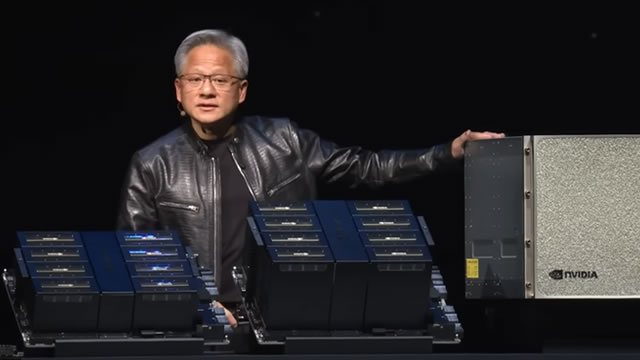
Core Viewpoint - Nvidia is expected to outperform the market in 2026, driven by strong demand for AI computing capacity and new product launches [2]. Group 1: Demand and Production Capacity - Nvidia has sold out its production capacity for cloud GPUs, indicating massive demand, with $51.2 billion in data center product sales during Q3 [4][5]. - The supply constraint allows Nvidia to charge a premium for its products, maintaining high margins and accelerating earnings growth [5]. Group 2: New Technology - The upcoming launch of the Rubin architecture in 2026 will significantly enhance performance, requiring fewer GPUs for AI model training and inference [6][8]. Group 3: Market Opportunities - Nvidia is set to resume GPU shipments to China in 2026, potentially generating $60 billion to $80 billion in revenue from orders for around 2 million H200 GPU chips [9][10]. - The return to the Chinese market is crucial, as it represents a significant revenue opportunity compared to the projected $213 billion in revenue for the current fiscal year [10]. Group 4: Valuation - Nvidia's stock is considered reasonably priced at 24 times fiscal-year 2027 earnings, cheaper than many big tech peers trading at 25 to 30 times forward earnings [11][13]. Group 5: Track Record - Nvidia has a strong history of success and momentum, making it a compelling investment choice for 2026 [14].


Afraid the AI Boom Is Overheated? This Infrastructure Play Is Your Safety Net.
The Motley Fool· 2026-02-01 15:45
Core Viewpoint - The current AI boom represents a significant technological turning point, comparable to the introduction of the internet, but skepticism exists regarding current valuations in the market [1][2]. Company Overview - Taiwan Semiconductor Manufacturing Company (TSMC) is a crucial player in the AI supply chain, manufacturing chips for various tech companies that rely on its efficiency and scale [2][4]. - TSMC holds a virtual monopoly on advanced AI chip manufacturing, making it the most trusted partner for tech companies [4]. Financial Performance - TSMC achieved its best year ever in 2025, generating $122 billion in revenue, which reflects a nearly 36% year-over-year increase [7]. - The company has a market capitalization of $1.7 trillion, with a gross margin of 59.02% and a dividend yield of 0.93% [6]. Industry Context - The demand for AI-related revenue has positively impacted TSMC's earnings, but the company is positioned to thrive even if the AI boom slows down or turns out to be a bubble [6][9]. - Major companies such as Apple, Nvidia, Tesla, and Broadcom depend on TSMC for their chip manufacturing needs, indicating a strong reliance on TSMC within the tech hardware sector [6][9].


Why I Can't Stop Buying These 3 High-Yielding Dividend Stocks
The Motley Fool· 2026-02-01 15:30
Group 1: PepsiCo - PepsiCo has a strong portfolio of iconic brands such as Pepsi, Gatorade, and Doritos, generating durable cash flow to support a dividend yield of 3.8%, significantly higher than the S&P 500's yield of 1.1% [2] - The company has a remarkable record of increasing its dividend, having raised it by 5% last year, marking 53 consecutive years of growth, qualifying it as a Dividend King [3] - PepsiCo's long-term targets include 4% to 6% annual organic revenue growth and high-single-digit earnings per share growth, supported by strategic investments like the $1.7 billion acquisition of Poppi and increasing its stake in Celsius to 11% [5] Group 2: Main Street Capital - Main Street Capital operates as a business development company (BDC), providing debt and equity capital to lower middle market companies, generating interest and dividend income to support its dividend payments [6] - The company has a unique dividend policy, paying a monthly dividend that has never been reduced or suspended, with a 4% increase over the past year and a total increase of 136% since its IPO in 2007, resulting in a current yield of 4.8% [8] - Main Street Capital also pays a supplemental quarterly dividend, leading to an overall annualized yield of 6.7% based on its share price, making it an attractive investment for passive income [9] Group 3: Verizon - Verizon provides mobile and broadband services to over 146 million customers, generating substantial recurring revenue that supports a dividend yield of 6.9% [10] - The company generates approximately $20 billion in free cash flow annually after capital expenditures, easily covering its annual dividend payments of about $11.5 billion [12] - Verizon's recent $20 billion acquisition of Frontier Communications aims to enhance its fiber network, increasing its ability to cross-sell services and improve revenue and margins, supporting continued dividend growth for 19 consecutive years [13]




Is It Time to Buy ASML as Orders Surge?
The Motley Fool· 2026-02-01 15:15
Core Viewpoint - ASML Holding has experienced significant stock performance, with over 30% increase in January and more than doubling in value over the past year, driven by strong order momentum and demand for semiconductor equipment [1] Group 1: Company Performance - ASML's revenue for the fourth quarter rose by 5% to 9.7 billion euros ($11.6 billion), aligning with the high end of its guidance range [3] - Equipment sales increased by 7% year over year to 7.6 billion euros ($9.1 billion), while service revenue decreased by 1% to 2.1 billion euros ($2.5 billion) [3] - The company sold 94 new lithography systems and eight used systems during the quarter, compared to 119 new and 13 used systems a year earlier [5] Group 2: Order Outlook - ASML's net bookings surged from 5.4 billion euros ($6.4 billion) in Q3 to 13.2 billion euros ($15.8 billion), significantly exceeding analyst expectations of 6.2 billion euros ($7.4 billion) [6] - Approximately 48% of sales came from higher-priced EUV technology, an increase from 42% a year ago, while sales to China rose to 36% from 27% [5] Group 3: Future Projections - The company forecasts Q1 revenue between 8.2 billion euros ($9.8 billion) and 8.9 billion euros ($10.6 billion), and 2026 revenue between 34 billion euros ($40.6 billion) and 39 billion euros ($46.5 billion), indicating growth of 4% to 19% [7] Group 4: Market Position - ASML holds a monopoly on extreme ultraviolet (EUV) lithography technology, crucial for manufacturing advanced chips, positioning the company favorably amid the AI infrastructure boom [2] - Despite strong demand, revenue growth has been moderate, partly due to restrictions on selling EUV technology to China and a pull-forward in demand for older machines [8]


This Low-Cost Dividend ETF Can Be a Surprisingly Good Fit for AI Investors
The Motley Fool· 2026-02-01 15:11
Core Insights - The Vanguard Dividend Appreciation ETF (VIG) is highlighted as a compelling option for investors seeking exposure to growth-oriented dividend stocks, despite not being the highest-paying dividend ETF [2][3] - The ETF focuses on companies with a strong history of increasing dividends, rather than high current yields, allowing it to include stocks from the technology sector, which is its largest allocation [3][4] Group 1: ETF Characteristics - The Vanguard Dividend Appreciation ETF tracks an index of over 300 dividend stocks, emphasizing those with a consistent record of increasing dividends [3] - The ETF has a low expense ratio of 0.05%, making it cost-effective for investors [3] Group 2: Top Holdings - Broadcom is the ETF's top holding, with a current dividend yield of 0.8%, which is below the threshold for many dividend ETFs, but it has increased its dividend for 15 consecutive years [5] - Other notable holdings include Microsoft, Apple, and Mastercard, all of which have dividend yields under 1% but have shown strong growth in payouts and cash flow [6] Group 3: Target Investor Profile - The Vanguard Dividend Appreciation ETF is suitable for working-age investors who may not need immediate income but are looking for long-term growth and future income potential [7] - The ETF's portfolio boasts an average annual earnings growth rate of 13%, indicating strong growth prospects [7]

Is It Too Late to Buy This Surging Silver ETF?
The Motley Fool· 2026-02-01 15:00
Core Viewpoint - The iShares Silver Trust has reached an all-time high, driven by a significant increase in silver prices, but concerns about the sustainability of this rally exist due to its speculative nature [2][4]. Price Movement - Silver prices have surged to record highs of over $120 per ounce, tripling from approximately $40 in September [2]. - The iShares Silver Trust has returned gains of around 220% over the past 12 months, significantly outperforming the S&P 500, which is up only 15% in the same period [2]. Investment Sentiment - Investors are shifting from stocks to safer investments like silver and gold due to concerns over rising stock valuations, which is traditionally associated with portfolio diversification [3]. - The current rally in silver is perceived by some analysts as driven more by hype than by fundamental value, likening it to a meme investment [4]. Recent Market Reactions - A recent announcement regarding the Federal Reserve Chair by President Donald Trump led to a crash in both silver and the iShares Silver Trust prices [5]. - The iShares Silver Trust's price has shown significant volatility, with a current price of $75.44 and a day's range between $69.12 and $92.14 [7]. Risk Assessment - The speculative nature of the current silver market raises concerns about potential risks, as investments may be made at unsustainable valuation levels [4][7]. - Given the recent parabolic price movements, investing in the iShares Silver Trust may add more risk to a portfolio rather than providing the intended diversification benefits [8][9].

Alphabet vs. Amazon: Which One Will Make You Richer?
The Motley Fool· 2026-02-01 14:18
Group 1: Alphabet's Growth Strategy - Alphabet has integrated its Gemini family of large language models into core offerings like Google Search, Google Workspace, Android, and Google Cloud [2] - A multiyear agreement with Apple will see Apple using Gemini models to enhance Siri, providing Alphabet access to over 2 billion active devices [2] - Google Cloud has a $155 billion backlog, indicating strong revenue visibility, and Alphabet plans to acquire cloud security firm Wiz for $32 billion [4] Group 2: Amazon's Growth Strategy - Amazon's growth will focus on expanding and improving the profitability of Amazon Web Services (AWS), which had a backlog of nearly $200 billion [5] - AWS revenue growth reaccelerated to 20.2% year over year, marking its strongest pace in almost three years [5] - Amazon has entered a $38 billion, seven-year deal to supply cloud capacity to OpenAI, further validating its AI capabilities [5] Group 3: Financial Metrics - Alphabet's current market cap is $4.1 trillion, with a gross margin of 59.18% and a dividend yield of 0.25% [3][4] - Amazon's current market cap is $2.6 trillion, with a gross margin of 50.05% [6][7] Group 4: Investment Considerations - Alphabet may be more suitable for investors seeking faster upside from AI-driven valuation expansion [8] - Amazon may appeal to those preferring balanced growth from multiple profitable businesses [8]



Worried About an AI Bubble? This Stock Gives You Exposure Without the Risk.
The Motley Fool· 2026-02-01 14:05
Core Viewpoint - The rise of artificial intelligence (AI) has significantly impacted technology valuations, with Microsoft positioned as a strong player in the AI ecosystem through its cloud platform, Azure [1][2]. Group 1: Microsoft's Role in AI - Microsoft is the second-largest cloud platform globally, behind Amazon Web Services (AWS), and plays a crucial role in supporting AI development through Azure [3]. - Azure's revenue has shown impressive growth, with a 40% year-over-year increase in the first quarter of fiscal year 2026 [4]. Group 2: Financial Performance and Market Position - Microsoft has a market capitalization of $3.2 trillion, with a current stock price of $429.91 and a gross margin of 68.59% [5][6]. - The company maintains a diversified portfolio, including enterprise software, Windows, Xbox, hardware, and LinkedIn, which mitigates risks associated with AI dependency [7][8]. Group 3: Investment Considerations - While some companies may be overly reliant on AI for growth, Microsoft's established business model ensures stability regardless of AI market fluctuations [7]. - The primary concern for Microsoft is whether its significant investments in AI will yield tangible profits, but its financial strength allows for strategic spending in the competitive AI landscape [9].

Could This Beaten-Down AI Stock Stage the Comeback of 2026?
The Motley Fool· 2026-02-01 14:00
Core Insights - Samsara operates in a rapidly growing logistics industry, projected to grow at an 8.36% CAGR through 2034, yet its stock has declined by 33% over the past year despite strong fundamentals [1][3]. Company Performance - Samsara's annual recurring revenue (ARR) for Q3 reached $1.75 billion, reflecting a 29% increase compared to Q3 2025 [8]. - The company's net revenue for Q3 was $416 million, up 20% from Q3 2025, with net new ARR of $105 million, a 24% increase [9]. - Samsara has nearly 3,000 customers paying over $100,000 in ARR, and 164 customers paying over $1 million [8]. - The company maintains net cash reserves of $275.1 million against total debt of $75.6 million, indicating strong financial management [9]. - Operating margin stands at 19%, up 9% year over year, and free cash flow margin is at 13%, up 4% from Q3 2025 [10]. Industry Context - The logistics sector faces inefficiencies leading to driver burnout and wasted resources, which AI can help address [2]. - Samsara's software aids various sectors, including logistics and construction, in optimizing fleet management and safety [5][6]. - Notable results from clients include a 50% reduction in driver turnover for DHL and an 81% reduction in collision risk for the city of New Orleans after adopting Samsara [7].


If You'd Put $100 into McDonald's 1965 IPO, Here's What It Would Be Worth Today
The Motley Fool· 2026-02-01 13:53
Core Insights - McDonald's stock has experienced significant growth since its IPO in 1965, with a capital appreciation of 1,051,600% as of January 30 [2] - Despite consistent growth, the company has faced skepticism from investors and analysts throughout its history [3][4][5] - Long-term investors have benefited greatly from both capital appreciation and dividend income, with substantial returns from initial investments [6][7][8] Historical Performance - McDonald's shares surged by 35% within 24 hours of its IPO, raising questions among investors about future growth potential [1] - The company reported $113.6 million in earnings and $3.17 billion in sales in Q4 1986, with both metrics up over 10% year over year [3] - As of the most recent quarterly report, McDonald's earnings reached $2.02 billion and sales totaled $6.39 billion, marking a 1,900% increase in earnings and a 123% increase in sales since 1978 [3] Investor Sentiment - Notable investors like Warren Buffett and Bill Ackman have expressed doubts about McDonald's performance at various points, with Ackman citing significant losses from company-owned stores in 2006 [4] - A bearish report from Janney Capital Management in 2014 highlighted declining same-store sales and predicted a slow recovery, yet the stock has risen 360% since then [5] Dividend and Investment Returns - An initial investment of $100 at the IPO price would have grown to approximately $1,021,306 today, assuming no dividends were reinvested [6] - The shares would yield $24,081 annually in dividends for current holders, reflecting the company's long history of dividend increases [7] - McDonald's is expected to announce a significant dividend milestone later this year, a rare achievement among publicly traded companies [7]