The Motley Fool

Search documents
Artificial Intelligence (AI) Infrastructure Spending Is Rising. This Stock Could Benefit.
The Motley Fool· 2026-01-18 21:45
Core Insights - Rolls-Royce is positioning itself as a key player in providing electricity for AI data centers, particularly through its small modular reactors (SMR) business segment [1][5][11] Industry Overview - The global electricity consumption by data centers is projected to double by 2030, highlighting the increasing demand for power infrastructure in AI development [2] - Europe is emerging as a significant area for data center construction, facing similar power challenges as the United States [2][3] Company Developments - Rolls-Royce's SMR can generate up to 470 megawatts of power, equivalent to 150 onshore wind turbines, and has a lifespan of up to 60 years [6] - The company has secured partnerships with CEZ Group in the Czech Republic and Siemens for the development and deployment of SMRs [6][7] Financial Performance - In the first half of 2025, Rolls-Royce reported a 13% increase in total revenue compared to the same period in 2024, with gross profit and operating profit growing by 33% and 50% respectively [8] - The power systems business, particularly the SMR segment, saw a revenue increase of 23%, with the power generation subset growing by 26% [9][10]



Bloom Energy Stock Is Up 72% So Far in 2026. Does It Still Have Room to Run?
The Motley Fool· 2026-01-18 21:00
Core Viewpoint - Bloom Energy has experienced a remarkable stock increase of over 550% in the past year, raising questions about its potential for continued growth in 2026 [1][2] Company Overview - Bloom Energy specializes in clean energy solutions, specifically through the production of solid oxide fuel cells that convert fuel into electricity without combustion [1] - The company’s technology allows businesses to generate electricity on-site, reducing reliance on traditional power grids [1][3] Market Opportunity - The growth of data centers, which saw over $60 billion in investment in 2025, presents a significant opportunity for Bloom Energy as these facilities require substantial power [2][3] - Bloom's on-site power generation addresses the urgent need for reliable energy sources, especially as traditional grids struggle to meet modern demands [3] Customer Base and Partnerships - Bloom Energy has established a strong customer base, including Fortune 100 companies such as Walmart, AT&T, and Verizon, as well as data center operators like Equinix and Oracle [4] - The company has formed a strategic partnership worth $5 billion with Brookfield to deploy its fuel cells for AI-related projects [4] Financial Performance - In 2025, Bloom Energy reported significant revenue growth, with Q3 revenue increasing by over 57.1% year-over-year, marking four consecutive quarters of record revenue [4] - The company achieved a gross margin of approximately 29% and an operating income of $7.8 million in Q3 [4] Valuation Concerns - Bloom Energy currently has a market capitalization of about $31.5 billion, trading at approximately 153 times forward earnings and 48 times book value, which is significantly higher than the energy sector averages [6] - Investors appear to be valuing Bloom based on future potential rather than current performance [6] Future Growth Potential - Consensus revenue estimates suggest that Bloom could nearly double its revenue by the next fiscal year, indicating strong growth prospects if data center construction remains robust [7] - The company’s ability to install servers in under 50 days provides a competitive advantage over other emerging energy solutions [10] Long-term Perspective - For investors focused on future electricity demand and innovative solutions, a small investment in Bloom Energy could yield long-term benefits [11]


My Top Dividend Stock to Buy in January
The Motley Fool· 2026-01-18 20:15
Core Viewpoint - Dividend stocks provide a reliable source of passive income and are essential for diversifying investment strategies, especially in volatile market conditions [1]. Company Summary - Procter & Gamble (PG) is highlighted as a top dividend stock with a trailing-12-month dividend yield of approximately 2.9% [2]. - The company is classified as a Dividend King, having paid and increased its annual dividend for 69 consecutive years, indicating strong reliability in dividend payments [3]. - Procter & Gamble's free-cash-flow yield exceeds its dividend yield, with a payout ratio of about 60%, demonstrating its capacity to sustain and potentially increase dividends [5]. - The company is characterized as a mature blue-chip stock, providing essential household products that are likely to maintain demand even during economic downturns [6]. - The current market conditions favor the inclusion of stable dividend stocks like Procter & Gamble in investment portfolios, especially as interest rates may decline, enhancing the attractiveness of its nearly 3% dividend yield [7].


Do You Qualify for Spousal Social Security Benefits?
The Motley Fool· 2026-01-18 19:45
Core Insights - The Social Security program is viewed as a crucial retirement account for Americans, with individuals paying payroll taxes throughout their careers to receive benefits in retirement [1] - Many individuals may not have a sufficient work history to qualify for adequate retirement benefits, but spousal benefits provide a viable alternative [2][3] Eligibility for Spousal Benefits - To qualify for spousal benefits, individuals must meet three criteria: the primary claiming spouse must be receiving benefits, the couple must be married for at least one year, and the claimant must be at least 62 years old or caring for a qualifying child [4][6] - Divorced individuals married for at least 10 years can still claim spousal benefits unless they remarry [4] - If a spouse suspends their benefits, the spousal benefits will also be suspended [5] Benefit Amounts - Spousal benefits can provide up to 50% of the spouse's primary insurance amount (PIA); for example, if the spouse's PIA is $2,000, the claimant could receive up to $1,000 [6] - Claiming spousal benefits before reaching full retirement age results in a greater reduction in monthly benefits compared to standard benefits [8][9] Reduction in Benefits - Monthly benefits for spousal claims are reduced by 25/36 of 1% monthly, up to 36 months, and by 5/12 of 1% for each additional month [8] - The reduction percentages for claiming spousal benefits at various ages are as follows: 35% at age 62, 30% at age 63, 25% at age 64, 16.7% at age 65, and 8.3% at age 66 [9] - Unlike standard benefits, delaying spousal benefits past full retirement age does not increase the monthly benefit amount [9]

4 Retirement Moves to Make Before 2026 Ends
The Motley Fool· 2026-01-18 19:30
Core Insights - The article emphasizes the importance of proactive retirement planning and financial management to ensure a comfortable retirement in the future [1][2]. Group 1: Retirement Planning - Developing a solid retirement plan is crucial, which includes estimating required income and establishing multiple income streams such as Social Security, dividends, and withdrawals from retirement accounts [3][4]. - The article suggests considering the implications of early retirement, as it may require income to last for a longer period, potentially up to 40 years if retiring at 55 and living until 95 [4]. - Healthcare costs are highlighted as a significant factor in retirement planning, necessitating early consideration of coverage options before Medicare eligibility at age 65 [5]. Group 2: Saving and Investing - Aggressive saving is recommended, with an emphasis on starting as early as possible to maximize the growth potential of investments over time [6][7]. - The article provides a table illustrating the potential growth of investments at an 8% annual return, showing significant increases in savings over 40 years with consistent annual contributions [7]. - Effective investment strategies are discussed, advocating for a balanced approach that avoids excessive risk while still aiming for growth, such as investing in the stock market through low-fee index funds [8][9]. Group 3: Social Security Planning - Planning for Social Security benefits is essential, with options to start collecting as early as age 62 or delaying until age 70 for increased benefits [11]. - The article stresses the importance of carefully considering the timing of Social Security claims, as it can significantly impact total benefits received [12].
Prediction: This Growth ETF Will Crush the S&P 500 Over the Next 10 Years
The Motley Fool· 2026-01-18 19:15
Core Insights - The Schwab U.S. Large-Cap Growth ETF (SCHG) is positioned for substantial growth over the next decade, potentially outperforming the S&P 500 [1][8] - The ETF has a strong track record, with total returns of approximately 441% over the last 10 years, significantly higher than the S&P 500's 270% [5][8] - The fund has a low expense ratio of 0.04%, which can lead to significant savings over time compared to other growth funds [7] Performance Metrics - Current price of SCHG is $32.36, with a day's range of $32.30 to $32.58 [3] - The 52-week range for the ETF is between $21.37 and $33.74, with a trading volume of 10 million [4] - Since January 2022, the fund has achieved total returns of over 58%, again surpassing the S&P 500 [14] Investment Characteristics - The ETF consists of nearly 200 large-cap stocks, primarily in the technology sector, which constitutes about half of its holdings [2][8] - Major holdings include industry leaders such as Nvidia, Apple, and Microsoft, which are expected to drive future growth [8] - The ETF's focus on growth stocks, particularly in technology and AI, positions it well for long-term gains [9] Investment Strategy - A long-term investment perspective is crucial for maximizing earnings with growth ETFs, as they can be more volatile during economic downturns [10][12] - Staying invested for at least five to ten years can help mitigate the impact of short-term market fluctuations [12][13]

VTI vs ITOT: What's the Better Total Market ETF Buy?
The Motley Fool· 2026-01-18 18:55
Core Insights - Investing in total U.S. stock market funds is a sound strategy for building a diversified long-term portfolio [1] - The two leading ETFs, Vanguard Total Stock Market ETF (VTI) and iShares Core S&P Total U.S. Stock Market ETF (ITOT), appear similar but have key differences [2] ETF Comparison - Vanguard Total Stock Market ETF tracks the CRSP US Total Market Index, representing nearly 100% of the investable U.S. stock market, including large-, mid-, and small-cap stocks [3] - iShares Core S&P Total U.S. Stock Market ETF tracks the S&P Total Market Index, combining the S&P 500 and the S&P Completion Index, also aiming to capture the entire U.S. stock market [3] - The Vanguard ETF holds approximately 3,500 stocks, while the iShares ETF holds around 2,500 stocks, with the difference primarily consisting of micro-cap stocks [4] Performance and Cost - The majority of the portfolios for both ETFs are nearly identical, leading to similar performance and historical track records [7] - Both ETFs charge a 0.03% expense ratio, making neither fund more cost-effective than the other [8] Investment Recommendation - The Vanguard Total Stock Market ETF is preferred by a narrow margin due to its inclusion of additional micro-cap stocks, although their impact on overall performance is minimal [9]

Why Micron Stock Skyrocketed 239.1% Last Year and Has Kept Rallying in 2026
The Motley Fool· 2026-01-18 18:35
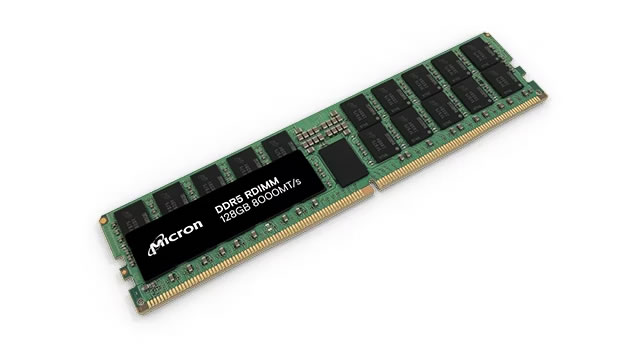
Core Insights - Micron has experienced significant stock gains, with a 239.1% increase in share price in 2025, continuing its momentum into 2026 with an additional 27.1% rise [1][7] - The surge in demand for memory chips, particularly high-bandwidth-memory (HBM) chips used in AI processors, has been a key driver of Micron's growth [2][3] Financial Performance - In fiscal year 2025, Micron reported revenue of $37.38 billion, a substantial increase from $25.11 billion in fiscal 2024 [4] - Non-GAAP earnings per share for fiscal 2025 reached $8.29, a dramatic rise from $1.30 in fiscal 2024 [4] - For the first quarter of the current fiscal year, revenue rose 56.6% year over year to $13.64 billion, with adjusted earnings per share increasing 167% to $4.78 [6] Market Position and Strategy - Micron is the leading supplier of HBM chips for AI processors, with major clients including Nvidia and Advanced Micro Devices [3] - The company has sold out of HBM chips through 2026 and is shifting focus from consumer chips to the enterprise market [6][8] - Recent investments include the construction of a new chip fabrication facility in New York and the acquisition of a facility from Powerchip Semiconductor Manufacturing Corporation, aimed at scaling production capacity [9]

Why Aerovironment Stock Jumped 57% in 2025
The Motley Fool· 2026-01-18 18:30
Core Insights - Aerovironment experienced significant growth due to the acquisition of BlueHalo, increased interest in drones, and government spending promises [1][4] - The company's stock rose 57% over the year, despite volatility [2] - The acquisition of BlueHalo nearly doubled Aerovironment's revenue, impacting results significantly [4] - BlueHalo's strengths in space, cyber, and directed energy complement Aerovironment's unmanned systems, broadening its market scope [5] Financial Performance - In Q2 2025, revenue surged 151% to $472.5 million, primarily driven by BlueHalo, with organic revenue growth of 21% [6] - Bookings reached $1.4 billion, indicating strong future revenue potential, with a backlog of $1.1 billion [6] - The company is expected to generate adjusted earnings per share of $3.40-$3.55 [7] Market Outlook - Aerovironment's stock is up 52.6% as of mid-January 2026, fueled by rising interest in defense stocks and potential increases in the defense budget [8] - The outlook for 2026 appears strong, with expectations of continued growth [8]


Is Redwire Stock Yesterday's News?
The Motley Fool· 2026-01-18 18:05
Core Viewpoint - Redwire's stock has experienced significant volatility, but the potential for growth exists, particularly in light of the upcoming SpaceX IPO and increasing defense spending globally [1][7]. Company Overview - Redwire is a space-tech company specializing in advanced hardware such as docking systems, UAS technologies, solar-power systems, and sensors, with a strong focus on the defense sector while also catering to research and commercial needs [2]. Financial Performance - In Q3 of the previous year, Redwire's revenue rose approximately 51% year over year to $103.4 million, although this growth fell short of market expectations, leading to a valuation decline post-report [3]. - The company's non-GAAP gross margin improved to 27.1%, up 9.6 percentage points from 17.5% in the same quarter the previous year, but the company still reported a wider-than-expected loss due to rising operating expenses [4]. Market Position - Redwire has a market capitalization of about $1.9 billion and trades at approximately 3.5 times the expected revenue for 2026, suggesting it may be undervalued based on recent sales momentum [5]. - The stock has surged roughly 40% over the last month, influenced by SpaceX's IPO news and increasing global defense spending [7]. Future Prospects - Redwire has secured significant contracts, including a $44 million deal with DARPA and a contract for docking systems for a new spacecraft, indicating promising growth opportunities [6]. - The growth cycle for space-based defense technology is still in its early stages, suggesting potential for further expansion in the sector [7].