
Equinor(EQNR)

Search documents
Norway strikes oil in North Sea near British waters
Yahoo Finance· 2025-12-24 06:30
Group 1: Norway's Oil and Gas Discoveries - Norway has drilled approximately 45 exploratory wells in 2025, with 12 yielding commercial quantities of oil and gas, including 30 in the North Sea where six were deemed economic [3] - Recent discoveries in the Norwegian North Sea include a successful wildcat well by Equinor, which found seven million barrels of oil, and additional finds by Harbour Energy and Aker BP [2][7] - The Norwegian Offshore Directorate describes the North Sea as a significant contributor to the Norwegian petroleum industry, with 69 fields currently in production [2] Group 2: UK Oil and Gas Industry Challenges - The UK oil and gas sector is facing a recession, contracting at around 15% annually and losing approximately 1,000 jobs per month due to high taxation and a ban on new exploration [4] - In October, UK production of oil and gas was equivalent to 33 million barrels, significantly lower than the production levels in 2000 and only a quarter of Norway's current monthly output of 126 million barrels [4] - Ed Miliband, the Energy Secretary, claims the UK's North Sea is in decline, while some industry experts argue that oil and gas will remain necessary for decades, with North Sea reserves capable of meeting much of the country's needs [5] Group 3: Economic Implications and Policy Differences - Claire Coutinho, the shadow energy secretary, criticized the UK for missing out on job creation, investment, and tax revenue that Norway is benefiting from, suggesting that the current policy could be seen as economic self-harm [6] - Norway's oil and gas policy aims to create a framework for the long-term profitable production of oil and gas, contrasting with the UK's restrictive approach [6]

Equinor discovers oil and gas near Tyrihans field offshore Norway
Yahoo Finance· 2025-12-22 13:33
Core Insights - Equinor, along with its partners, has discovered oil, condensate, and gas in the Tyrihans Øst prospect located in the Norwegian Sea, approximately 250km southwest of Brønnøysund [1] - The exploration well 6407/1-B-2 H reached a measured depth of 4,590m and encountered significant hydrocarbon columns in two geological formations [2] Discovery Details - The well found around 6m of condensate and light oil in the Garn Formation, and a 63m gas and condensate column in the Ile Formation, with varying reservoir characteristics [2] - Preliminary estimates suggest the discovery contains between 0.2 and 1.3 million standard cubic metres of recoverable oil equivalent, translating to one to eight million barrels [3] Future Plans - Equinor and its partners plan to evaluate the discovery for potential production, aiming to route production from Tyrihans to the Kristin installation [4] - The company will assess the commercial viability and development options for the Tyrihans Øst discovery within existing infrastructure and future field developments [4]
Equinor extends IMR services agreement with Subsea7
Yahoo Finance· 2025-12-22 09:38
Core Points - Equinor has extended its agreement with Subsea7 for subsea inspection, maintenance, and repair (IMR) services for the Seven Viking vessel, which supports operations at oil and gas wells across the Norwegian Continental Shelf [1][2] - The contract extension allows the Seven Viking vessel to operate in the region until the end of 2027, with a value between $50 million and $150 million [2] - Equinor has finalized a contract with Odfjell Drilling for the use of the Deepsea Aberdeen rig, covering drilling operations on the Norwegian Continental Shelf [3][4] - The Odfjell contract is expected to add approximately $373 million to the company's firm order backlog, excluding additional services and bonuses [5] - Equinor has also extended its contract with DeepOcean for subsea IMR services, maintaining support through 2026 and into 2027 [6]
Equinor Taps Deepsea Aberdeen for Drilling Operations Offshore Norway
ZACKS· 2025-12-19 18:20
Core Insights - Equinor ASA has awarded a contract to Odfjell Drilling for the Deepsea Aberdeen drillship to operate on the Norwegian Continental Shelf [2][10] - The contract is expected to add approximately $373 million to Odfjell Drilling's firm order backlog, enhancing revenue visibility for the company [4][10] - The drilling work is anticipated to commence in the fourth quarter of 2026 and continue through the first quarter of 2029 [3][10] Company and Industry Summary - Odfjell Drilling's contract with Equinor follows a letter of intent signed in November, indicating a strong partnership between the two companies [3][10] - The Deepsea Aberdeen rig is designed for harsh weather conditions, featuring an enhanced GVA7500 design and capable of operating in water depths of 3,000 meters [5][10] - Odfjell Drilling currently has three rigs from its fleet working with Equinor, showcasing its ongoing collaboration in the energy sector [5]

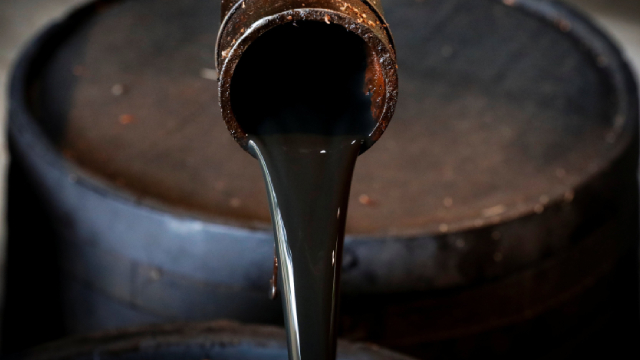
挪国油拟开发巴伦支海油气
Zhong Guo Hua Gong Bao· 2025-12-19 03:17
Core Viewpoint - Equinor and its partners are investing over 4 billion Norwegian Krone to develop the Isfjellet oil and gas discovery in the Barents Sea, with production expected to start in Q4 2028 [1] Group 1: Investment and Development - The Isfjellet project is a subsea development with estimated recoverable oil reserves of 46 million barrels [1] - The project benefits from its proximity to the Johan Castberg oil field, allowing for the reuse of standardized equipment and drilling designs [1] - Equinor has applied to the Norwegian Ministry of Energy for confirmation of environmental impact assessment obligations and is seeking an exemption from submitting a complete development and operation plan [1] Group 2: Production and Potential - The Johan Castberg field currently produces approximately 220,000 barrels per day, with total recoverable reserves estimated between 450 million and 650 million barrels [1] - There is additional potential of 250 million to 550 million barrels through new wells and satellite tie-backs [1]
国际石油公司低碳投资“踩刹车”,有何启示?
Xin Lang Cai Jing· 2025-12-19 02:33
Core Viewpoint - Global low-carbon energy investment continues to grow, with the International Energy Agency (IEA) predicting that total clean energy investment will exceed $2.2 trillion by 2025. However, the oil and gas industry's low-carbon investment remains above $30 billion, but its share is declining [1]. Group 1: Investment Trends - International oil companies have been rapidly investing in low-carbon and renewable energy sectors due to government policies, market trends, and shareholder interests. However, they are now facing internal and external pressures that are affecting their low-carbon strategies [2]. - Companies that have diversified quickly over the past five years are experiencing dual pressures of value growth and cash flow stability, leading some to adjust their carbon reduction targets and prioritize short-cycle, high cash flow projects [2][6]. - Despite some companies lowering their carbon reduction goals, overall low-carbon investment by international oil companies has steadily increased since 2020, with European firms leading in investment scale and growth compared to their American counterparts [6][10]. Group 2: Key Investment Areas - The three main focus areas for low-carbon investments by international oil companies are renewable electricity (wind and solar), biofuels, and Carbon Capture, Utilization, and Storage (CCUS), with a total investment of $86.4 billion in these areas over the past decade [7]. - European companies are diversifying their investments across various sectors, while American companies are more focused on CCUS and biofuels. CCUS is viewed as a "certain strategic pillar" for the industry, with many projects underway in Europe and North America [8][9]. - Hydrogen is also a strategic focus, with European companies favoring green hydrogen and American companies leaning towards blue hydrogen, although recent uncertainties have led to a more cautious approach to hydrogen investments [9]. Group 3: Resource Dependency - The transition to green energy is increasing the demand for key mineral resources, with lithium demand expected to grow more than threefold by 2023. This trend highlights the oil and gas industry's growing reliance on mineral resources to support green transitions [10]. - Companies like ExxonMobil are entering the lithium market, with plans to produce lithium materials for over 1 million electric vehicles by 2030, indicating a strategic shift towards securing essential resources for future energy needs [10].


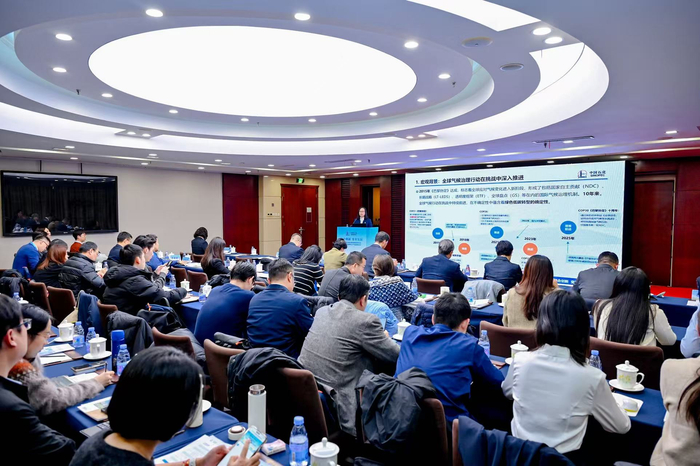
Norway police fine Equinor over pollution at Mongstad refinery
Reuters· 2025-12-16 07:13
Core Viewpoint - Norwegian police have fined Equinor for pollution at its Mongstad refinery, indicating regulatory scrutiny on environmental practices in the oil and gas sector [1] Company Summary - Equinor, a Norwegian oil and gas company, has faced penalties due to pollution issues at its Mongstad refinery located on Norway's west coast [1]
Equinor Approves $395M Investment to Boost Johan Castberg Production
ZACKS· 2025-12-15 15:45
Core Insights - Equinor ASA, in partnership with Vår Energi and Petoro, has committed approximately $395 million (NOK 4 billion) for a new subsea project linked to the Johan Castberg field, expected to yield around 46 million barrels of recoverable oil [1][9] Investment and Development - The new subsea project is set to commence production in Q4 2028, following the Johan Castberg field's production start in March 2025, which currently outputs nearly 220,000 barrels per day [2][9] - Equinor plans to leverage standardized solutions from the Johan Castberg field to expedite the development of the new subsea project, as the new reservoir shares similar properties with previously developed discoveries [3][9] Strategic Positioning - The Johan Castberg field is positioned as a future production hub in the Barents Sea, with the Isflak discovery in 2021 marking the beginning of a series of developments aimed at resource extraction in the region [4] - The development plan for the Isflak discovery includes drilling two new wells that will connect to existing subsea production facilities, enhancing the overall infrastructure within the Johan Castberg license [4] Regulatory and Environmental Considerations - Equinor has submitted an application to Norway's Ministry of Energy to confirm compliance with impact assessment obligations for the new developments and seeks an exemption from outlining a development and operation plan [5] Exploration and Future Potential - A recent discovery, Drivis Tubåen, made in 2025, enhances the potential for further development within the Johan Castberg license, with partners aiming to expedite its production [6] - The current recoverable volumes in the Johan Castberg license are estimated between 450 million and 650 million barrels, with significant upside potential of an additional 250 million to 550 million barrels from new finds in the region [7] Ownership Structure - Equinor operates the Johan Castberg field with a 46.3% interest, while Vår Energi holds 30% and Petoro has 23.7% [8]
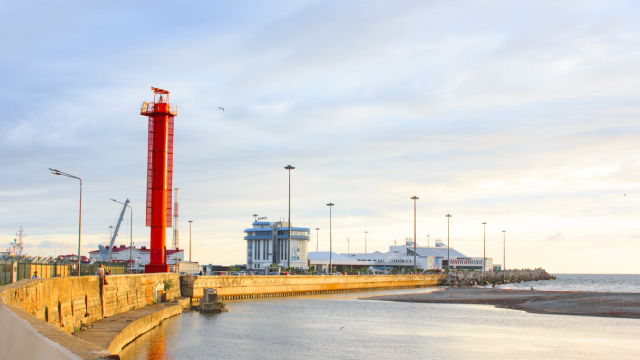
壳牌与Equinor成立合资公司
Zhong Guo Hua Gong Bao· 2025-12-12 03:56
Core Insights - The joint venture Adura has been established by Shell and Equinor, integrating 12 core oil and gas assets in the UK North Sea, making it the largest independent producer in the region, with an expected production exceeding 140,000 barrels of oil equivalent per day by 2026 [1] Group 1: Joint Venture Formation - The formation of Adura aims to enhance operational efficiency, extend the lifespan of oil fields, and ensure the security of energy supply in the UK [1] - The asset portfolio of Adura includes producing oil fields and development projects such as Mariner, Rosebank, Buzzard, and Shearwater, along with some exploration licenses [1] Group 2: Asset Retention and Strategic Focus - Equinor retains its interests in cross-border oil fields, offshore wind projects, and new energy assets like hydrogen and carbon capture and storage [1] - Shell retains its interests in the UK SEGL gas processing system, Bacton terminal, and some decommissioned oil fields [1] Group 3: Industry Implications - The establishment of Adura signifies a shift towards specialized operations in traditional oil and gas assets in the North Sea, focusing on enhancing the value and sustainability of existing assets amid the energy transition [1]
挪威国家石油公司刚刚发现数亿桶新增储量
Xin Lang Cai Jing· 2025-12-11 20:55
Core Insights - Equinor, the Norwegian energy giant, experienced a 0.9% decline in stock price on Thursday [1] - The company recently discovered two new natural gas and condensate reservoirs in the North Sea, marking its largest find of the year [1] - Preliminary estimates suggest that the Lofn and Langemann wells may contain between 30 million to 110 million barrels of recoverable oil equivalent [1] - These discoveries are located in the Sleipner area of western Norway and can utilize existing infrastructure for development aimed at the European market [1]