Equinor(EQNR)

Search documents
What's Going On With Equinor Stock Tuesday? - Equinor (NYSE:EQNR)
Benzinga· 2026-01-13 18:34
Core Insights - Equinor ASA has secured 35 new production licenses in Norway's continental shelf, enhancing its exploration and production capabilities [1][2] Exploration Opportunity - Of the 35 licenses, 21 are located in the North Sea, 10 in the Norwegian Sea, and 4 in the Barents Sea [2] - Equinor will operate in 17 of the new areas, leading key drilling and development plans [2] - The company made 14 discoveries in 2025, with half directly operated by Equinor, representing approximately 125 million barrels of potential recoverable oil equivalent [2] Infrastructure and Geological Understanding - Many awarded licenses are near established infrastructure, while others are in less explored geological areas, supporting both immediate development and long-term geological insights [3] Exploration Plans - Equinor plans to drill between 20 and 30 exploration wells annually, primarily near existing infrastructure, while also testing new prospects [4] - The company aims to advance six to eight subsea developments each year through 2035, indicating a significant increase in development activity [4] European Energy Role - As a major energy supplier in Europe, Equinor emphasizes that access to new acreage is vital for maintaining production levels and stable deliveries through 2035 [5] - New discoveries are expected to help counterbalance anticipated declines in existing fields [5] - Equinor shares increased by 2.76% to $24.55 at the time of the announcement [5]

Equinor Awards $10B in Maintenance Contracts to Supplier Companies
ZACKS· 2026-01-12 19:20
Group 1 - Equinor ASA (EQNR) has awarded a contract valued at approximately NOK 100 billion ($9.9 billion) for maintenance and modification of its offshore installations and onshore plants, effective in the first half of 2026 [2][9] - The Norwegian Continental Shelf (NCS) will continue to be EQNR's primary energy production source, requiring maintenance and upgrades to reduce costs due to its aging infrastructure, with a goal of maintaining daily production of 1.2 million barrels of oil and gas until at least 2035 [3][9] - EQNR plans to invest around NOK 60-70 billion annually, drill 250 exploration wells, and enhance production from 600 active wells to support its production goals [4] Group 2 - The contract is expected to generate 4,000 man-years of work, with a focus on long-term partnerships with Norwegian suppliers to improve efficiency [4][5] - EQNR will conduct annual repairs and maintenance on 300 wells, modify 2,500 projects, and develop over 75 subsea projects connected to existing platforms and pipelines [5] - The maintenance and upgrade work will enhance cash flow predictability for EQNR, although the upstream business faces pressure due to low crude prices, with predictions of further declines [6]

特朗普对伊强硬表态 能源板块借势开启“补涨”行情
Ge Long Hui A P P· 2026-01-09 10:00
Group 1 - European energy stocks strengthened due to geopolitical risks driving up oil prices, with Shell and BP rising by 1.7% and 1.55% respectively [1] - TotalEnergies increased by 1.7%, Equinor rose by 2.3%, while Repsol had a smaller gain of 0.7%, and Galp Energia went up by 1.4% [1] - The benchmark crude oil closed with a gain of over 3% following President Trump's renewed warnings to Iran and progress on a bill for further sanctions on Russian oil [1] Group 2 - Citi analyst Alastair Syme indicated that the merger talks between Galp and Spain's Moeve signal positive value release for Iberian energy companies [1]


深耕挪威、拒绝委内瑞拉:Equinor(EQNR.US)砸千亿重金守护欧洲“能源生命线”
智通财经网· 2026-01-08 11:50
Core Viewpoint - Equinor has signed a contract worth approximately 100 billion Norwegian Krone (equivalent to 9.9 billion USD) to maintain its oil and gas production levels in Norway for at least the next decade, emphasizing the importance of the Norwegian continental shelf for European energy security [1]. Group 1: Contract and Production Goals - The contract with Aker Solutions ASA and Aibel AS includes maintenance, repair, and modification work for onshore and offshore facilities, with a duration of five years and the possibility of renewal [1]. - Equinor aims to maintain high production levels, targeting approximately 1.2 million barrels of oil equivalent per day by 2035, consistent with production levels over the past five years [2]. - The company plans to invest up to 70 billion Norwegian Krone annually, with plans to drill 250 exploration wells and 600 wells to enhance recovery rates [2]. Group 2: Market Strategy and Venezuela - Equinor has no intention of returning to the Venezuelan market, from which it exited years ago, citing a strategic reallocation of funds [3]. - The company previously invested billions in Venezuela but shifted its focus to core international regions where it can leverage its competitive advantages [4]. - Despite Equinor's stance, other Western companies may still be attracted back to Venezuela if the security situation and legal framework allow [4].
Norway's Equinor awards $10 billion five-year supplier contracts
Reuters· 2026-01-08 09:17
Core Insights - Equinor has signed framework agreements totaling 100 billion Norwegian crowns (approximately $9.93 billion) with a group of suppliers for maintenance and modifications of its offshore and onshore installations [1] Group 1 - The agreements are aimed at enhancing the operational efficiency and reliability of Equinor's assets [1] - This strategic move reflects Equinor's commitment to maintaining its infrastructure and ensuring long-term sustainability [1] - The partnerships with suppliers are expected to foster innovation and improve service delivery in the energy sector [1]
Equinor Challenges Government Order Against Empire Wind Construction
ZACKS· 2026-01-07 14:20
Core Insights - Equinor ASA has initiated a civil lawsuit against the U.S. Department of the Interior to challenge an order halting the construction of its Empire Wind offshore wind project [2][10] - The Empire Wind project is over 60% complete, and Equinor is seeking a preliminary injunction to allow construction to continue during the litigation process [4][10] - The suspension of the project is a significant setback for offshore wind developers in the U.S., attributed to national security concerns by the Department of the Interior [3][5] Company Specifics - The Empire Wind project represents a substantial investment in U.S. energy infrastructure, developed in collaboration with the New York State Energy Research and Development Authority (NYSERDA) [5][10] - Equinor emphasizes that pausing the project at its current stage could lead to material financial impacts and disrupt the project timeline [4][5] Industry Context - The recent suspension of offshore wind projects under the Trump administration has created challenges for developers, leading to potential delays and cost overruns that could adversely affect project returns [3][5] - The offshore wind industry is facing mounting pressures due to regulatory changes and national security concerns, impacting the viability of large-scale projects [3][5]
Norway's Equinor does not plan return to Venezuela, CEO says
Reuters· 2026-01-07 10:13
Core Viewpoint - Equinor has no plans to return to Venezuela, a country it exited in the early part of this decade, as stated by the company's CEO [1] Company Summary - Equinor is a Norwegian oil and gas company that previously operated in Venezuela but has decided against re-entering the market [1]
mF International, Theravance Biopharma And Other Big Stocks Moving Lower In Monday's Pre-Market Session - Aimei Health Technology (NASDAQ:AFJK), Comcast (NASDAQ:CMCSA)



Benzinga· 2026-01-05 13:01
Market Overview - U.S. stock futures showed positive movement, with Nasdaq 100 futures increasing by over 150 points on Monday [1] Company-Specific Movements - mF International Limited (NASDAQ:MFI) experienced a significant decline, falling 4.6% to $17.61 in pre-market trading after filing for a mixed shelf [1] - SBC Medical Group Holdings Inc (NASDAQ:SBC) dropped 18.9% to $3.51 in pre-market trading [2] - Aimei Health Technology Co Ltd (NASDAQ:AFJK) decreased by 7.7% to $70.00 in pre-market trading [2] - Theravance Biopharma Inc (NASDAQ:TBPH) fell 6% to $17.07 in pre-market trading, following a 3% decline on Friday [2] - Comcast Corp (NASDAQ:CMCSA) tumbled 4.6% to $28.18 in pre-market trading [2] - Equinor ASA (NYSE:EQNR) decreased by 3.6% to $23.66 in pre-market trading after a 4% gain on Friday [2] - Canadian Natural Resources Ltd (NYSE:CNQ) fell 3.4% to $33.15 in pre-market trading [2] - Xpeng Inc – ADR (NYSE:XPEV) slipped 3.3% to $19.75 in pre-market trading [2] - Two Harbors Investment Corp (NYSE:TWO) declined 3.2% to $10.24 in pre-market trading [2] - NetEase Inc (NASDAQ:NTES) fell 2.9% to $143.29 in pre-market trading, following the announcement of Yingfeng Ding's retirement from his position as executive vice president and head of the Interactive Entertainment Group [2]

Equinor challenges US order to suspend Empire Wind project
Reuters· 2026-01-02 20:01
Core Viewpoint - Norwegian energy group Equinor has filed a civil suit in the U.S. District Court for the District of Columbia to challenge a U.S. Department of the Interior order that suspends its operations related to the Empirical project [1] Group 1 - The lawsuit aims to contest the legality of the suspension order issued by the U.S. Department of the Interior [1] - Equinor's action reflects its commitment to continue its operations and investments in the U.S. energy sector despite regulatory challenges [1]
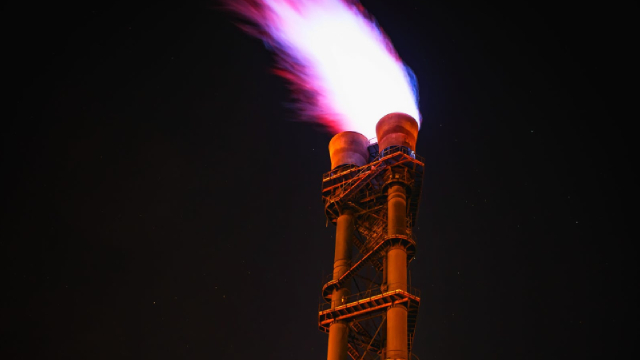
Equinor: Share Price Pullback Makes It A High Dividend-Yielding Investment Opportunity
Seeking Alpha· 2025-12-25 13:32
Core Insights - Europe's natural gas inventories are currently about 10% below the five-year average for the entire year [1] Group 1: Industry Overview - The trend of natural gas inventories in Europe has been consistently below the five-year average throughout the year [1]