J&J(JNJ)

Search documents
Johnson & Johnson highlights new data that showcase the strength of nipocalimab, demonstrating long-term sustained disease control in adults living with generalized myasthenia gravis (gMG)
Prnewswire· 2025-04-08 07:00
Core Insights - Johnson & Johnson announced positive results from the Phase 3 Vivacity-MG3 study and its open-label extension, demonstrating long-term efficacy and safety of nipocalimab in treating generalized myasthenia gravis (gMG) [1][2][5] Efficacy and Safety - Nipocalimab showed sustained reductions in immunoglobulin G (IgG) antibodies and improvements in gMG symptoms over 84 weeks, with follow-up data extending to 128 weeks confirming a consistent safety profile [1][4] - Patients receiving nipocalimab plus standard of care (SOC) achieved a mean change in MG-ADL score of -5.64 (p<0.001) after 60 weeks, indicating significant symptom improvement [2][5] - The treatment group had four times greater odds of improving muscle strength and function compared to the placebo group, with a statistically significant QMG score improvement of -4.9 (p<0.001) [1][2] Patient Outcomes - 45% of patients on steroids at the open-label extension baseline were able to reduce or discontinue steroid use, with the mean prednisone dose decreasing from 23 mg to 10 mg per day [2][4] - A significant proportion of patients (36.4%) in the nipocalimab group demonstrated improvements in QMG scores for over 75% of the study duration compared to 10.5% in the placebo group [2][5] Disease Context - Generalized myasthenia gravis affects approximately 700,000 people globally, characterized by severe muscle weakness and difficulties in daily activities [4][5] - The disease primarily impacts young women and older men, with a notable prevalence in pediatric populations [4][5] Regulatory Designations - Nipocalimab has received multiple designations from the U.S. FDA, including Fast Track and Orphan Drug status for various conditions, highlighting its potential as a therapeutic option in the autoantibody disease space [6][8]



European Commission approves Johnson & Johnson's subcutaneous DARZALEX® (daratumumab)-based quadruplet regimen for the treatment of patients with newly diagnosed multiple myeloma, regardless of transplant eligibility
GlobeNewswire News Room· 2025-04-07 09:32
Core Insights - The European Commission has approved an indication extension for DARZALEX® (daratumumab) subcutaneous formulation in combination with bortezomib, lenalidomide, and dexamethasone for newly diagnosed multiple myeloma patients [1][3] - The Phase 3 CEPHEUS study demonstrated significant improvements in minimal residual disease (MRD)-negativity rate, progression-free survival, and complete response rates compared to standard care [1][4] Company Overview - Janssen-Cilag International NV, a subsidiary of Johnson & Johnson, has been a leader in multiple myeloma treatment for over 20 years, with daratumumab becoming a foundational therapy used in over 618,000 patients globally [6][7] - The company aims to provide access to daratumumab-based regimens for all patient populations, regardless of age or fitness, marking a critical step towards achieving a functional cure for multiple myeloma [3][6] Clinical Study Findings - The CEPHEUS study involved 395 patients with newly diagnosed multiple myeloma who were ineligible for stem cell transplantation, comparing daratumumab-VRd to standard VRd [4][5] - At a median follow-up of 59 months, the MRD-negativity rate was 60.9% for daratumumab-VRd versus 39.4% for VRd, with a significant odds ratio of 2.37 [1][4] - The study also reported a 43% reduction in the risk of progression or death with daratumumab-VRd compared to VRd, with median progression-free survival not reached for daratumumab-VRd [1][4] Safety Profile - The safety profile of daratumumab-VRd aligns with known safety profiles for daratumumab SC and VRd, with common Grade 3/4 adverse events including neutropenia (44.2% vs 29.7% for VRd) and thrombocytopenia (28.4% vs 20.0% for VRd) [2][4]

TREMFYA® (guselkumab) is the first and only IL-23 inhibitor to significantly reduce both the signs and symptoms and the progression of structural damage in adults living with active psoriatic arthritis
Prnewswire· 2025-04-04 12:05
Core Insights - TREMFYA® (guselkumab) has shown clinically meaningful and statistically significant efficacy in treating active psoriatic arthritis (PsA) in a Phase 3b study, achieving its primary endpoint of ACR20 and a major secondary endpoint related to structural damage progression at 24 weeks [1][2] - The drug is the first fully-human, dual-acting monoclonal antibody approved for PsA, targeting IL-23 and binding to CD64, which is crucial in the pathogenesis of immune-mediated diseases [1][4] - The APEX study will continue to assess the long-term efficacy of TREMFYA® over three years, with results expected to be presented at medical congresses [1][2] Company Overview - Johnson & Johnson maintains exclusive worldwide marketing rights for TREMFYA®, which is approved in multiple regions including the U.S., Europe, Canada, and Japan for treating moderate-to-severe plaque psoriasis and active PsA [5] - The company emphasizes the importance of early treatment to prevent irreversible joint damage in PsA patients, highlighting TREMFYA®'s unique ability to inhibit structural damage [1][3] Industry Context - Psoriatic arthritis is a chronic, inflammatory disease that can lead to significant joint damage and comorbidities, affecting patients typically between the ages of 30 and 50 [3][4] - The prevalence of PsA among individuals with plaque psoriasis is notable, with studies indicating that up to 30% may develop the condition [4]

JNJ vs. PFE: Which Drug Giant is a Better Buy Now?
ZACKS· 2025-04-03 15:00
Core Viewpoint - Johnson & Johnson (J&J) and Pfizer (PFE) are two leading pharmaceutical companies with diverse healthcare portfolios, each facing unique growth prospects and challenges in the current market environment [1][2]. Group 1: Johnson & Johnson (J&J) - J&J's diversified business model, operating through over 275 subsidiaries, allows it to better withstand economic cycles [3]. - The Innovative Medicine unit reported a 5.8% organic sales growth in 2024, with expectations for continued growth in 2025 despite challenges such as the loss of exclusivity for Stelara, which generated $10.36 billion in sales in 2024 [4][7]. - J&J is actively enhancing its pipeline through acquisitions and has made significant progress in this area [5]. - The MedTech business is experiencing headwinds, particularly in China, due to the volume-based procurement program and anti-corruption campaigns, with no expected improvement in 2025 [6]. - J&J is facing over 62,000 lawsuits related to its talc-based products, with a recent bankruptcy court ruling rejecting its proposed settlement plan [8]. - As of the end of 2024, J&J had cash and cash equivalents of $24.5 billion against long-term debt of $30.65 billion, resulting in a debt-to-capital ratio of 0.3, lower than the industry average of 0.41 [9]. Group 2: Pfizer (PFE) - Pfizer is a major player in oncology, bolstered by the acquisition of Seagen in 2023, and is transitioning from a period of revenue volatility due to COVID-related uncertainties [10]. - Non-COVID product revenues increased by 12% operationally in 2024, surpassing the guidance range of 9-11% [11]. - Pfizer anticipates continued growth in its diversified drug portfolio, particularly in oncology, and expects to achieve cost savings of at least $6.0 billion through restructuring [12]. - The company faces challenges, including declining sales of COVID-19 products and anticipated patent expirations from 2026 to 2030, which may impact key products [13]. - As of December 31, 2024, Pfizer had cash and cash equivalents of $20.48 billion and long-term debt of $57.4 billion, resulting in a debt-to-capital ratio of 0.42, in line with the industry average [14]. Group 3: Financial Estimates and Performance - The Zacks Consensus Estimate for J&J's 2025 sales and EPS indicates a year-over-year increase of 1.4% and 6.0%, respectively, with stable EPS estimates of $10.58 for 2025 and $11.07 for 2026 [15]. - In contrast, Pfizer's 2025 sales and EPS estimates imply a year-over-year decline of 0.7% and 4.5%, respectively, although EPS estimates have been trending upward [17]. - Year-to-date, J&J's stock has risen by 8.3%, while Pfizer's stock has declined by 5.4%, compared to the industry's increase of 1.6% [20]. - From a valuation perspective, Pfizer's shares trade at a forward P/E ratio of 8.30, significantly lower than the industry average of 15.78, while J&J's shares trade at 14.51 [22][23]. - J&J offers a dividend yield of 3.2%, while Pfizer's yield is around 7%, with J&J's return on equity at 34.2%, higher than Pfizer's 19.6% [24]. Group 4: Investment Considerations - Both companies hold a Zacks Rank of 3 (Hold), indicating a challenging decision for investors [25]. - J&J has demonstrated steady revenue and EPS growth, but concerns exist regarding its MedTech unit and ongoing legal issues [26]. - Pfizer, with improving growth prospects, rising estimates, and a higher dividend yield, may present a more attractive option for near-term investors seeking growth in the drug/biotech sector [27].


Stock Of The Day: Will Johnson & Johnson Rally? The Sell-Off May Have Ended
Benzinga· 2025-04-02 16:26
Core Viewpoint - Johnson & Johnson's shares experienced a significant drop of over 7.5% due to the announcement of a pending acquisition that is expected to dilute earnings, but the sell-off appears to have ended, and there is potential for a rally in the stock price [1]. Price Movement and Support Levels - The sell-off halted when shares reached the $153 level, which previously acted as a resistance point in November, indicating a common market behavior where resistance levels can turn into support [2]. - Investors who sold shares around the $153 mark may have second-guessed their decision after the price trend, leading to a psychological shift among traders [4][5]. Buyer Behavior and Market Dynamics - Former sellers who believed they made a mistake began to re-enter the market as buyers when the price fell back to $153, creating a support level at this price point [5]. - The presence of these buyers may lead to increased bidding activity, as concerns about being outbid could prompt them to raise their bid prices, potentially resulting in a bidding war that drives the stock price upward [6].
PFE, MRK, LLY & Other Drug Stocks Down Amid Tariff Jitters
ZACKS· 2025-04-02 14:46
Group 1 - Pharmaceutical stocks declined due to uncertainty surrounding proposed tariffs on imported pharmaceutical products, with a potential tariff of 25% expected to be implemented from April 2 [1][2] - Companies heavily reliant on overseas manufacturing, such as Pfizer (PFE), Merck (MRK), Eli Lilly (LLY), and AbbVie (ABBV), experienced significant stock declines of 3.2%, 2.9%, 2.5%, and 1.6% respectively [2] - Johnson & Johnson (JNJ) saw a notable drop of 7.6% after a Texas district court rejected its bankruptcy plan related to talc lawsuits [2] Group 2 - Drugmakers are increasing investments in U.S. manufacturing to counteract the shift to lower-cost markets abroad [3] - Johnson & Johnson announced plans to invest over $55 billion in the U.S. over the next four years, while Eli Lilly plans to invest $27 billion in new manufacturing sites by 2025, totaling over $50 billion in commitments since 2020 [4] - Pfizer is also considering moving some overseas manufacturing back to the U.S. in light of tariff threats [4] Group 3 - The cost of drug production in the U.S. is high, which may lead to increased drug prices for consumers and affect profit margins for drugmakers, particularly those producing generic and biosimilar products [5] - Some countries exporting drugs or active pharmaceutical ingredients (APIs) to the U.S. may withdraw from the market, potentially causing supply shortages and disrupting the global supply chain [5] Group 4 - Biotech stocks are under pressure following the resignation of a key FDA official, Dr. Peter Marks, amid concerns regarding potential tariffs on pharmaceutical imports [6] - Companies like PFE, MRK, ABBV, LLY, and JNJ currently hold a Zacks Rank of 3 (Hold) [7]



Why Johnson & Johnson Stock Is Sinking Today
The Motley Fool· 2025-04-01 18:38
Core Viewpoint - Johnson & Johnson's stock has experienced a significant decline of 6.3% following a judge's rejection of its $10 billion talc settlement proposal, amidst broader market downturns [1][2]. Group 1: Legal Challenges - A Texas bankruptcy judge dismissed Johnson & Johnson's latest attempt to settle thousands of lawsuits related to its talc-based products, which are alleged to cause ovarian cancer [2]. - The judge criticized the company for providing an "unreasonably short voting time" for claimants, leading to concerns that at least half of the votes could not be counted [3]. - This ruling marks the third failure of Johnson & Johnson's bankruptcy strategy in court [3]. Group 2: Company Response - Following the ruling, Johnson & Johnson announced plans to return to court to fight the lawsuits individually, asserting its intention to "defeat merciless talc claims" [4]. - The company continues to maintain that its products do not cause cancer and claims ignorance regarding the presence of asbestos in its baby powder, despite allegations suggesting otherwise [4].
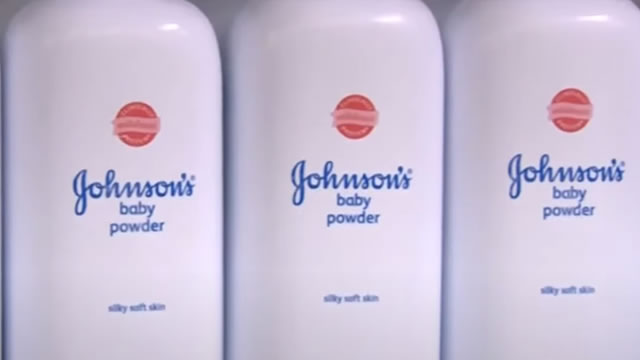
Johnson & Johnson shares fall as US judge rejects $10B talc settlement plan
Proactiveinvestors NA· 2025-04-01 15:24
Group 1 - Proactive provides fast, accessible, informative, and actionable business and finance news content to a global investment audience [2] - The news team covers medium and small-cap markets, as well as blue-chip companies, commodities, and broader investment stories [3] - Proactive's content includes insights across various sectors such as biotech, pharma, mining, natural resources, battery metals, oil and gas, crypto, and emerging technologies [3] Group 2 - Proactive is committed to adopting technology to enhance workflows and content production [4] - The company utilizes automation and software tools, including generative AI, while ensuring all content is edited and authored by humans [5]
Judge rejects Johnson & Johnson's $10B settlement to end baby powder lawsuits
New York Post· 2025-04-01 14:47
Core Viewpoint - Johnson & Johnson's $10 billion proposal to settle lawsuits related to its talc products has been rejected by a US bankruptcy judge, marking the third failure of the company's bankruptcy strategy in court [1][2][3]. Group 1: Bankruptcy Court Decision - US Bankruptcy Judge Christopher Lopez stated that Johnson & Johnson did not belong in bankruptcy and criticized the proposed settlement for lacking sufficient support from women alleging cancer caused by J&J products [2][3]. - The judge noted that the proposal improperly sought to release legal claims against entities that had not filed for bankruptcy, including retailers and Kenvue, a consumer health business spun off by J&J [3][10]. - Lopez highlighted serious flaws in the voting process conducted by J&J, indicating that many votes collected from plaintiffs' attorneys should not be counted [6][7][9]. Group 2: Company Response and Future Actions - Johnson & Johnson announced it would not appeal the ruling but intends to litigate the claims in court, asserting that the talc claims are meritless [4][11]. - The company faces lawsuits from over 60,000 claimants alleging that its talc products contained asbestos and caused ovarian cancer, with the proposed settlement aimed at resolving these lawsuits [11][12]. - J&J had previously estimated that ovarian cancer patients would receive between $75,000 and $150,000 under the settlement, depending on injury severity and the number of claims [13]. Group 3: Historical Context - Johnson & Johnson has been attempting to resolve these lawsuits through bankruptcy since its first attempt, which has now failed three times [1][5]. - The company stopped selling talc-based baby powder in the US in 2020, switching to a cornstarch product, amid ongoing litigation and safety concerns [11][14].
J&J's Third Bankruptcy Attempt to End Talc Suits Rejected
ZACKS· 2025-04-01 14:30
Core Viewpoint - Johnson & Johnson (J&J) faces significant legal challenges as a Texas bankruptcy court has rejected its third attempt to resolve talc-related lawsuits, which number over 62,000, primarily concerning its baby powder products [1][2][4]. Group 1: Legal Challenges - J&J is currently dealing with more than 62,000 lawsuits alleging that its talc products contain asbestos, leading to ovarian and other cancers [2]. - The company has permanently discontinued the sale of its talc-based Johnson's Baby Powder globally [2]. - J&J's subsidiary, Red River Talc, had filed for voluntary bankruptcy in Texas with support from approximately 83% of claimants, exceeding the 75% threshold required by U.S. bankruptcy law [3]. Group 2: Bankruptcy Proceedings - The U.S. Bankruptcy Court for the Southern District of Texas rejected J&J's proposed bankruptcy plan after a two-week trial, citing flaws in the claimant voting process [4]. - Prior bankruptcy attempts by J&J's subsidiary, LTL Management, in New Jersey were also rejected, with courts stating that J&J did not demonstrate sufficient financial distress to qualify for bankruptcy [5]. Group 3: Financial Implications - Following the court's decision, J&J plans to revert to the traditional tort system to address the lawsuits individually and will reverse approximately $7 billion previously set aside for settlements [6]. - J&J's stock declined by 2.4% in after-hours trading following the court's ruling, although the stock has risen 14.7% year-to-date compared to the industry average increase of 3.4% [5]. Group 4: Historical Context - J&J has faced several adverse rulings in talc lawsuits, including a 2018 Missouri court order to pay $4.7 billion in damages to 22 women, which was later reduced to $2.1 billion on appeal [7][9]. - In April 2023, J&J proposed an $8.9 billion settlement over 25 years to resolve its cosmetic talc litigation, and in May 2024, a new plan was proposed to pay approximately $6.5 billion over 25 years, potentially resolving 99.75% of pending lawsuits [9]. Group 5: Current Status - J&J has successfully resolved 95% of mesothelioma claims and other disputes related to talc products [10].