Northrop Grumman(NOC)

Search documents
特朗普创纪录1.5万亿军费要打“世界大战”?军工股大反弹,无人机厂商两位数高涨
Hua Er Jie Jian Wen· 2026-01-08 19:04
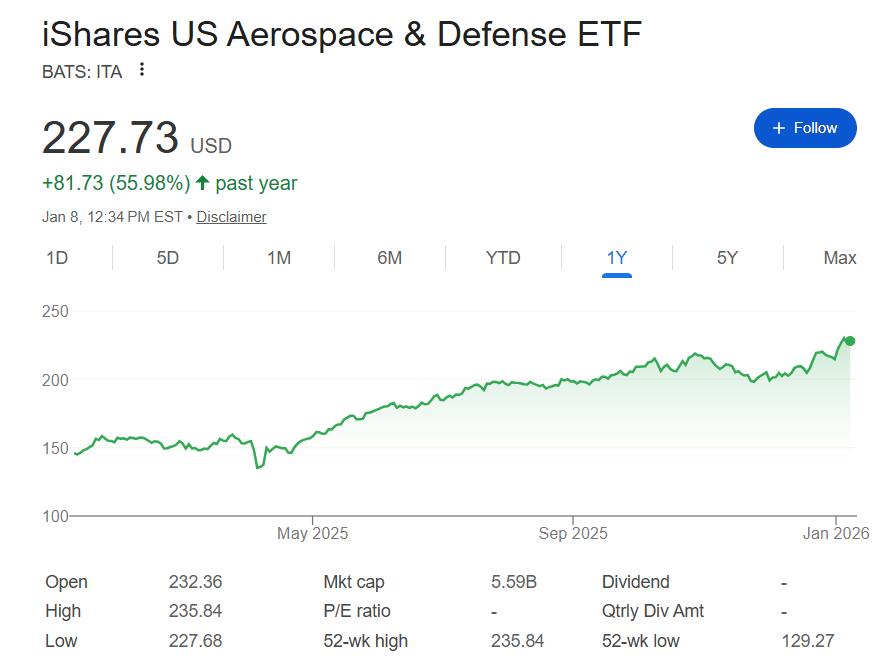
Core Viewpoint - President Trump's recent statements have caused significant volatility in the defense sector, with threats to limit dividends and stock buybacks for defense contractors leading to a sharp decline in military stocks, followed by a strong rebound after his proposal to increase military spending to $1.5 trillion for fiscal year 2027, a 50% increase from the current budget of $901 billion [1][2][10]. Group 1: Market Reactions - Following Trump's statements, defense stocks experienced a dramatic rebound, with major companies like Lockheed Martin (LMT) rising over 9%, Northrop Grumman (NOC) nearly 11%, and Raytheon Technologies (RTX) up nearly 6% [5][9]. - The iShares U.S. Aerospace & Defense ETF (ITA) has seen a cumulative increase of over 50% in the past 12 months, reflecting strong performance in the defense sector [2]. - Global defense stocks also rose, with European defense stocks increasing by up to 3.8% on the same day, and notable gains in companies like BAE Systems and Rheinmetall [9]. Group 2: Budget Proposal and Challenges - Trump's proposal to increase the defense budget by 50% is historically rare, with the last similar increase occurring during the Korean War in 1951 [10]. - The feasibility of this budget increase faces challenges, as the Congressional Budget Office (CBO) estimates a budget deficit of 5.5% of GDP for the current year, with projected tax revenues falling short of the anticipated defense spending growth [10][11]. - Political hurdles exist, as the proposed budget would require significant support in the Senate, and there are concerns about whether defense contractors can absorb such a large increase in spending [11]. Group 3: Analyst Perspectives - Analysts generally express cautious optimism regarding the direction of U.S. defense spending, with expectations for higher expenditures amid stricter scrutiny of companies [12][13]. - Some analysts suggest that limiting capital returns could free up billions for capacity expansion or acquisitions, indicating a potential shift in investment strategies within the defense sector [13]. - The geopolitical landscape is driving increased defense spending, with analysts noting that the world is becoming a more dangerous place, further justifying the proposed budget increase [13][14].





Factbox-Billions at stake as Trump targets US defense sector dividends, buybacks
Yahoo Finance· 2026-01-08 18:31
Core Viewpoint - U.S. defense companies face pressure from President Trump to halt dividends and share buybacks until production is accelerated, highlighting a shift in priorities towards national defense over investor returns [1] Group 1: Defense Companies' Financial Activities - Lockheed Martin paid dividends of $3.30 per share for Q1 to Q3 2025, with a slight decrease to $3.45 in Q4 2025, and cumulative dividend payments reached $2.3 billion by September 2024, alongside $2.3 billion in share repurchases [2] - RTX's dividends were $0.68 per share for Q1 to Q3 2025, decreasing to an estimated $0.66 in Q4 2025, with cumulative dividend payments of $2.7 billion by Q3 2024 and $50 million in share repurchases [2] - Northrop Grumman's dividends were $2.31 per share for Q1 to Q3 2025, decreasing to an estimated $2.30 in Q4 2025, with cumulative dividend payments of $964 million by Q3 2024 and $1.17 billion in share repurchases [3] - L3Harris Technologies paid dividends of $1.20 per share for Q1 to Q3 2025, increasing to an estimated $1.25 in Q4 2025, with cumulative dividend payments of $678 million by Q3 2024 and $998 million in share repurchases [4] - General Dynamics paid dividends of $1.50 per share for Q1 to Q3 2025, decreasing to an estimated $1.48 in Q4 2025, with cumulative dividend payments of $1.19 billion by Q3 2024 and $600 million in share repurchases [4] Group 2: Boeing's Financial Status - Boeing suspended dividends and share buybacks in March 2020, and these remain on hold despite the lifting of the flight ban on its 737 MAX in November 2020 [3]


突发!特朗普宣布,暴涨!
Zhong Guo Ji Jin Bao· 2026-01-08 16:20
Group 1: Market Overview - The U.S. stock market showed mixed performance, with the Dow Jones rising over 100 points, while the tech-heavy Nasdaq index declined [2] - Chinese assets experienced a significant rally, with the Chinese concept stock index rising over 1% and both major Hong Kong indices increasing [3] Group 2: Defense Sector Performance - Defense stocks surged, with notable increases in companies like Lockheed Martin, Northrop Grumman, and Kratos Defense & Security Solutions [4] - Lockheed Martin's stock rose by 7.44%, closing at $533.84, with a trading volume of 1.87 million shares [5][6] - Northrop Grumman's stock increased by 6.49%, reaching $614.43, with a trading volume of 1.11 million shares [7][8] Group 3: Political Influence on Defense Spending - Former President Trump proposed increasing the defense budget to $1.5 trillion by 2027, emphasizing the need for a strong military in a volatile global environment [10] - The Stoxx Europe Aerospace and Defense Index rose by 1.1%, with companies like Renk and Leonardo leading the gains, each rising over 4% [10] Group 4: Technology Sector Decline - The Nasdaq index faced pressure primarily due to declines in major tech stocks, including Nvidia and Apple, following a strong rebound in AI-related trading [11] - The semiconductor sector experienced significant drops, with companies like Sandisk and Micron Technologies seeing declines of 11.75% and 5.12%, respectively [12] Group 5: Investor Sentiment and Economic Indicators - Investors are awaiting the upcoming U.S. non-farm payroll data to gauge the future interest rate path, with expectations of at least two rate cuts of 25 basis points each [13] - Geopolitical concerns, including developments related to Greenland and Venezuela, are influencing market caution [13]


Lockheed Martin Leads Defense Stock Rally as Trump Calls For Military Spending Surge
Investopedia· 2026-01-08 16:15
Core Insights - Defense contractors' shares surged following President Trump's proposal to significantly increase the military budget to $1.5 trillion for 2027, up from $1 trillion [1][6] Group 1: Stock Performance - Shares of Lockheed Martin (LMT), Huntington Ingalls (HII), and L3 Harris (LHX) rose over 7%, leading gains in the S&P 500 index [2] - General Dynamics (GD) and Northrop Grumman (NOC) saw increases of more than 4%, while RTX Corp. (RTX) gained 2% [2] Group 2: Budget Details - The Department of Defense had a budget of $850 billion in fiscal 2025, which was an increase of $34 billion from the previous year [3] - The White House proposed an increase of over $113 billion for the fiscal 2026 defense budget [3] - Trump's proposed budget represents a roughly 50% increase from the current budget levels [3] Group 3: Market Reactions - The gains in defense stocks on Thursday reversed losses from the previous day, when Trump criticized companies for spending on stock buybacks and dividends instead of enhancing manufacturing processes [4]

突发!特朗普宣布,暴涨!
中国基金报· 2026-01-08 16:09
Group 1 - The core viewpoint of the article highlights the contrasting performance of U.S. markets, with tech stocks declining while defense stocks surged significantly [2][5][15]. - The U.S. stock market showed mixed results on January 8, with the Dow Jones rising over 100 points, while the Nasdaq index, heavily weighted with tech stocks, experienced a decline [2][15]. - Chinese assets saw a broad increase, with the Chinese concept stock index rising over 1% and both major Hong Kong indices gaining [3]. Group 2 - Defense stocks experienced a notable surge, with companies like Lockheed Martin, Northrop Grumman, and Kratos Defense & Security Solutions seeing significant price increases [5]. - Lockheed Martin's stock rose by 7.44%, closing at $533.84, with a trading volume of 1.87 million shares and a market capitalization of $123.7 billion [6][7]. - Trump's proposal to increase the defense budget to $1.5 trillion by 2027 has contributed to the bullish sentiment in the defense sector, emphasizing the need for a strong military amid geopolitical tensions [14]. Group 3 - The Nasdaq index faced pressure primarily due to declines in major tech stocks, with Nvidia and Apple among those experiencing significant drops [16]. - The semiconductor sector, including companies like Micron Technology and Intel, also saw substantial declines, with Micron down 5.12% and Intel down 3.70% [17]. - Market analysts suggest that profit-taking and geopolitical risks are influencing the current market dynamics, as investors await upcoming earnings reports and employment data [18].


Defense Stocks Rally as Trump Calls for Higher Military Budget
Schaeffers Investment Research· 2026-01-08 16:07
Last night, President Donald Trump called on Truth Social for the U.S. military budget to increase to $1.5 trillion in 2027, citing "very troubled and dangerous times." As a result, defense stocks are higher today, after a rough day across the board on Wednesday in response to comments from Trump noting he would not allow defense companies to issue dividends and stock buybacks.Northrop Grumman Corp (NYSE:NOC) was last seen up 8.1% to trade at $623.21, pacing for its best day since July. The equity earlier c ...

Why Northrop Grumman Stock Soared Today
Yahoo Finance· 2026-01-08 16:07
Group 1 - President Trump proposed a $1.5 trillion defense budget for 2027, emphasizing the need for a robust military to ensure national security [1][7] - The President's plan aims to direct funds towards increasing weapons production and maintenance rather than executive compensation or shareholder returns [3][4] - Northrop Grumman's stock has seen a 6.5% increase following the announcement, indicating positive market sentiment towards defense stocks [1] Group 2 - The President criticized defense companies for high executive pay and mandated that funds should not be used for dividends or stock buybacks until improvements in production and maintenance are made [4] - If Congress approves the proposed budget, Northrop Grumman could see a significant increase in annual revenue, but this may come at the cost of profit margins due to necessary capital investments [5] - Northrop Grumman's revenue growth has averaged 3% annually over the past five years, while profit margins have reached nearly 10%, both of which are expected to change under the new budget proposal [5]
深夜中概股拉升,虎牙飙涨22%,美股军工股大涨,脑再生跳水30%
2 1 Shi Ji Jing Ji Bao Dao· 2026-01-08 15:55
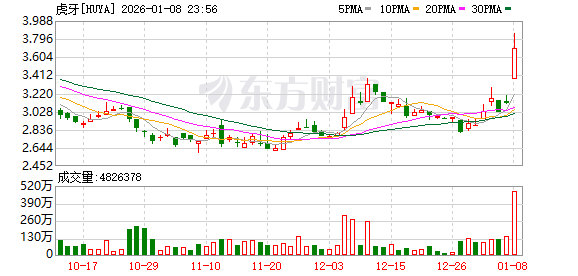
Market Overview - The U.S. stock market opened lower on January 8, with the Dow Jones up 0.34%, S&P 500 up 0.01%, and Nasdaq down 0.51% [2] - Major tech stocks mostly declined, with Nvidia and Intel dropping over 2%, and Apple and Facebook down over 1% [4] - Defense stocks surged, with Northrop Grumman rising over 9% and Lockheed Martin up over 7%, following President Trump's proposal to increase U.S. military spending from $1 trillion to $1.5 trillion for fiscal year 2027 [4] Chinese Stocks - The Nasdaq Golden Dragon China Index saw a short-term rise of over 1.14%, with notable gains from Huya (up over 22%), Bilibili (up over 7%), and Alibaba (up over 4%) [5] - However, Canadian Solar fell over 8%, and Dingdong Maicai dropped over 4% [5] Commodity Prices - Silver prices fell significantly, with spot silver down over 5% and COMEX silver down over 4% [5] - The gold-silver ratio has dropped below 60, currently around 59, with the ratio hitting a ten-year low of 57.22 on January 6 [5] Oil Prices - International oil prices increased, with Brent crude rising nearly 2% to $61 per barrel and WTI crude up 1.95% to $57 per barrel [7] Cryptocurrency Market - Major cryptocurrencies experienced a collective decline, with Bitcoin dropping over 2% to below $90,000 [7][8] - Other cryptocurrencies also saw significant losses, including Ethereum down 3.81% and XRP down 6.66% [8] Employment Data - The number of initial jobless claims in the U.S. was recorded at 208,000, slightly below the forecast of 212,000, with the previous value revised to 200,000 [9] - Federal Reserve Governor Milan indicated a potential interest rate cut of about 150 basis points by 2026, which could create approximately one million jobs without triggering inflation [9] Federal Reserve Outlook - Market expectations suggest the Federal Reserve may enter a rate-cutting cycle, with predictions varying from one to two rate cuts this year [10] - The overall sentiment among Fed officials is cautious, with a focus on balancing employment and inflation data [9][10]




深夜中概股拉升,虎牙飙涨22%,美股军工股大涨,脑再生跳水30%
21世纪经济报道· 2026-01-08 15:43
Market Overview - The U.S. stock market opened lower on January 8, with the Dow Jones up 0.34%, S&P 500 up 0.01%, and Nasdaq down 0.51% [1] - Major tech stocks mostly declined, with Nvidia and Intel dropping over 2%, and Apple and Facebook down over 1% [3] - Military stocks surged, with Northrop Grumman rising over 9% and Lockheed Martin up over 7%, following President Trump's proposal to increase U.S. military spending from $1 trillion to $1.5 trillion for FY2027 [3] Commodity Market - Silver prices fell significantly, with spot silver down over 5% and COMEX silver down over 4%. The gold-silver ratio has dropped below 60, currently around 59, marking a ten-year low [3] - International oil prices saw an increase, with Brent crude rising nearly 2% to $61 per barrel and WTI crude up 1.95% to $57 per barrel [3] Employment and Economic Indicators - The number of initial jobless claims in the U.S. was recorded at 208,000, slightly below the forecast of 212,000, with the previous value revised from 199,000 to 200,000 [4] - Analysts expect the Federal Reserve to potentially lower interest rates by about 150 basis points by 2026, with a focus on balancing employment and inflation [4] Federal Reserve Outlook - Various institutions have differing views on the Fed's interest rate decisions for the year, with JPMorgan and UBS predicting only one rate cut, while Goldman Sachs and Wells Fargo expect two cuts. Some banks believe there will be no cuts at all [5]


US stocks open lower on Thursday: Dow slips 100 points, Nasdaq down 0.3%
Invezz· 2026-01-08 15:00
Market Overview - US equities opened lower, with the S&P 500 down 0.1% and the Dow Jones Industrial Average falling 108 points or 0.2%, as major technology stocks weakened despite a rally in defence stocks [1] - The Nasdaq Composite underperformed, sliding 0.3% due to pressure on large-cap technology stocks that have driven recent market gains [1][3] Technology Sector - Technology stocks, including Meta Platforms, Apple, and Netflix, experienced declines, which limited market upside even as other sectors showed strength [3] - The pullback in tech stocks followed a cautious tone from the previous session, where both the S&P 500 and the Dow finished in the red after reaching all-time highs [3] Defence Sector - Defence stocks surged following President Trump's proposal for a $1.5 trillion defence budget for 2027, a significant increase from the $901 billion budget approved for 2026 [5] - Northrop Grumman rose over 8%, Lockheed Martin climbed 6%, RTX advanced more than 3%, and Kratos Defence jumped nearly 13%, making defence one of the strongest-performing segments [5][6] Economic Indicators - Initial jobless claims for the week ended Jan. 3 were reported at 208,000, up from 200,000 the previous week, but below economists' expectations of 210,000, indicating resilience in the US labour market [7][8] - Claims data has shown volatility recently, but initial claims remain near the lower end of the range seen over the past year, suggesting employers are retaining their workforces [8][9]