
Pfizer(PFE)

Search documents
Should You Forget Pfizer and Buy This Magnificent Dividend Stock Instead?
The Motley Fool· 2025-07-20 13:25
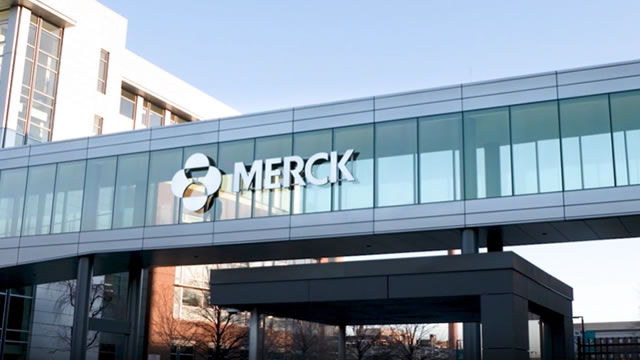
Core Viewpoint - Pfizer offers a high dividend yield of 7.1%, significantly above the S&P 500's 1.3% and the average healthcare stock's 1.7%, but Merck may be a better choice for dividend investors due to its more stable dividend history [1][6][12] Group 1: Company Comparison - Pfizer and Merck have similar business models, focusing on research and development to create new blockbuster drugs, supported by strong marketing and distribution systems [2][4] - Both companies have a history of making large acquisitions to enhance their drug portfolios, but their current positioning may vary based on their respective drug pipelines [5][11] Group 2: Dividend History - Pfizer has a history of 15 consecutive dividend increases, but it previously cut its dividend during the Great Recession, while Merck maintained its dividend during the same period [6][8][9] - Merck's more consistent dividend growth, despite periods of stagnation, provides a level of trust for income investors that Pfizer's past cut does not [9][12] Group 3: Investment Considerations - Both Pfizer and Merck offer portfolios of already approved drugs, allowing investors to engage in the pharmaceutical sector without needing deep industry knowledge [10][11] - For dividend investors, the historical performance of dividends is crucial, making Merck a potentially safer investment compared to Pfizer [12]


Our Top 10 High Growth Dividend Stocks - July 2025
Seeking Alpha· 2025-07-19 12:00
Group 1 - The primary goal of the "High Income DIY Portfolios" Marketplace service is to provide high income with low risk and capital preservation for DIY investors [1] - The service offers seven portfolios designed for income investors, including retirees or near-retirees, featuring three buy-and-hold portfolios, three rotational portfolios, and a conservative NPP strategy portfolio [1] - The portfolios include two high-income portfolios, two dividend growth investment (DGI) portfolios, and a conservative NPP strategy portfolio aimed at low drawdowns and high growth [1] Group 2 - The stocks highlighted in the article are candidates for further research rather than direct buy recommendations, emphasizing the need for due diligence based on personal goals and risk tolerance [2] - The author has disclosed beneficial long positions in a wide range of companies, indicating a vested interest in the stocks mentioned [2]



2 Reliable Dividend Stocks With Yields Above 6% That You Can Buy With $100 Right Now
The Motley Fool· 2025-07-19 08:27
Group 1: Investment Opportunities - Discount brokerages have eliminated trading fees, making it easier for small investors to participate in the market and achieve similar returns as wealthier investors [1] - Healthpeak Properties and Pfizer are highlighted as attractive investment options, both offering dividend yields above 6% [2] Group 2: Healthpeak Properties - Healthpeak Properties is a healthcare-related real estate investment trust (REIT) that expanded through a merger with Physicians Realty Trust, focusing on laboratories rented to drugmakers [4] - The REIT's portfolio includes medical office buildings, with health systems and physician groups contributing 55% of annualized base rent, while drugmakers account for 34% [5] - HCA Healthcare is the largest tenant, responsible for 10.1% of annualized rent, followed by CommonSpirit Health at 2.9% [6] - Management expects funds from operations (FFO) to be between $1.81 and $1.87 per share, supporting a potential increase in the current annualized dividend payout of $1.22 per share [7] - Most properties are under net leases, allowing for predictable rent increases and steady dividend growth over the long term [8] Group 3: Pfizer - Pfizer's stock has decreased by approximately 60% from its peak in 2021, but it continues to provide a strong dividend yield of 6.9% [10] - Concerns about future cash flows arise from expected revenue losses of $17 billion to $18 billion due to patent expirations starting in 2026 [11] - Total sales reached $62.5 billion in the 12 months ending March, making it challenging to offset revenue losses from patent cliffs [12] - The company has received nine FDA approvals in 2023 and anticipates generating $20 billion in annual revenue from new products by 2030 [13] - Pfizer's $43 billion acquisition of Seagen in 2023 enhances its portfolio with cancer therapies, and in-house manufacturing could improve profit margins [14] - While rapid dividend increases are not expected, steady growth in payouts is likely, making it a smart addition to a diversified portfolio [15]


Trade Tracker: Josh Brown Sells Pfizer
CNBC Television· 2025-07-17 17:11
All right, Josh, one of the 20-y year moves as well. This one in the pharma space. It's Fizer. You've been a longtime holder of Fizer. You decided to change your position there. What's the motivation? Do you know how hard it is to find a stock as bad as Fizer like in the last couple of years? I I managed the impossible. Um I haven't really lost a lot of money here. I think my initial purchase was like 28. Uh but it's a it's a loss nonetheless. But the way I think about these types of things, it's a loss rel ...

Bristol Myers Squibb, Pfizer to sell blockbuster blood thinner Eliquis at 40% discount
CNBC· 2025-07-17 15:47
Core Insights - Bristol Myers Squibb and Pfizer will sell their blood thinner Eliquis directly to patients at a discount of over 40% due to pressure from the Trump administration to lower drug prices [1][2] - The new pricing strategy aims to reduce the monthly cost from approximately $606 to $346, effective September 8, targeting uninsured, underinsured, and self-pay patients [2] - The discounted price remains significantly higher than the average out-of-pocket cost for commercially insured patients and the negotiated Medicare price set to take effect next year [3][4] Pricing Strategy - The new program bypasses traditional intermediaries like pharmacy benefit managers and insurers, allowing for direct sales to patients [2] - The initiative is designed to expand access to Eliquis, reduce out-of-pocket costs, and provide transparent pricing for patients [4][5] Market Context - The move is seen as a response to the Trump administration's executive order aimed at linking U.S. drug prices to those in other developed countries [6] - Analysts do not expect this program to negatively impact the net pricing for Bristol Myers Squibb and Pfizer, as they already provide substantial rebates to pharmacy benefit managers [6]


X @Bloomberg
Bloomberg· 2025-07-17 11:55
Pharmaceutical Industry Dynamics - Pfizer and Bristol-Myers Squibb will directly sell blood thinner Eliquis to patients [1] - The cash-pay price for Eliquis will be $346 per month [1]
X @The Wall Street Journal
The Wall Street Journal· 2025-07-17 10:32
Company Strategy - Bristol-Myers Squibb and Pfizer plan to sell blood thinner Eliquis directly to patients [1] - The sale will be at a discounted cash price [1]
This Once-Dominant Healthcare Stock Down 50% Is Finally Ready for a Comeback
The Motley Fool· 2025-07-16 08:12
Core Viewpoint - Pfizer, once a leading player in the pharmaceutical industry, is experiencing a decline in revenue due to waning demand for its coronavirus products and approaching loss of exclusivity on other key products, but it is positioned for a potential comeback through strategic initiatives and cost-saving measures [2][10]. Group 1: Revenue Performance - Pfizer achieved record sales of $100 billion in 2022, driven largely by its coronavirus vaccine and treatment, which generated $37 billion and $18 billion in revenue respectively [4]. - The company has seen its shares decline by 50% over the past three years as demand for its pandemic-related products decreased [2]. - Recent quarterly revenue is approximately $13 billion, indicating a significant drop from previous highs [10]. Group 2: Strategic Initiatives - Pfizer is implementing a cost realignment plan in response to declining revenue, aiming for $4.5 billion in net cost savings by the end of this year and $7.2 billion by the end of 2027 [5][10]. - The company is focusing on refining its internal pipeline, prioritizing the advancement of high-potential candidates rather than spreading resources too thinly across many projects [6]. - Pfizer's acquisition of Seagen has bolstered its oncology portfolio, providing access to four growing oncology drugs and potential expansion opportunities [7]. Group 3: Future Catalysts - Pfizer anticipates up to nine phase 3 readouts and several pivotal trial starts in the second half of the year, along with at least four regulatory decisions expected in 2025 [9]. - The company plans to reinvest $500 million into research and development, which could enhance its product pipeline and attract investor interest [10][11]. - Current stock valuation is at 8x forward earnings estimates, presenting a potentially attractive entry point for investors, especially with upcoming catalysts [12].

辉瑞制药20250430
2025-07-16 06:13
Summary of Pfizer's Q1 2025 Earnings Call Company Overview - **Company**: Pfizer - **Date**: Q1 2025 Earnings Call Key Industry Insights - **Pharmaceutical Industry**: Pfizer is navigating a complex global landscape influenced by evolving trade and tariff policies, impacting operational strategies and financial performance. Core Strategic Priorities 1. **R&D Productivity**: - Focus on improving R&D productivity and advancing the pipeline with a disciplined approach to portfolio management [2][3][4] - Commitment to building a cardiometabolic pipeline, particularly in obesity, with potential partnerships or acquisitions [2][3] - New leadership in R&D with experienced professionals to enhance capabilities in oncology, vaccines, and inflammation immunology [3] 2. **Commercial Excellence**: - Separation of U.S. and international operations to enhance focus and strategic prioritization [6] - Strong performance in key products, with notable growth in the Vintakel family and Nurtec [6][7] - Continued emphasis on addressing unmet patient needs and improving access to treatments [7] 3. **Cost Management and Financial Performance**: - Q1 2025 revenues of $13.7 billion, a decline of 6% operationally, primarily due to lower Paxlovid revenues [8][9] - Adjusted diluted EPS of $0.92, benefiting from strong gross margin and cost management [8][9] - Ongoing productivity improvement programs expected to yield significant cost savings by 2027 [11] Financial Highlights - **Revenue**: $13.7 billion, down 6% operationally [8] - **Adjusted EPS**: $0.92, ahead of expectations [8] - **Gross Margin**: Expanded to approximately 81% [9] - **Operating Expenses**: Adjusted operating expenses decreased by 12% operationally [9] Pipeline and Product Development - Anticipated key milestones in 2025, including multiple regulatory decisions and phase three readouts [3][4] - Focus on innovative therapies for non-muscle-invasive bladder cancer and multiple myeloma [4] - Development of fourth and fifth generation PCV candidates to enhance vaccine offerings [5] Capital Allocation Strategy - Commitment to maintaining and growing dividends while investing in R&D and business development [10][22] - $2.4 billion returned to shareholders via dividends in Q1 [10] - Focus on improving cash flows and reducing debt leverage [10] Market Challenges and Responses - Impact of IRA Medicare Part D redesign and tariffs on U.S. revenues, with an estimated $650 million dampening effect in Q1 [8][30] - Ongoing assessment of tariff impacts, with potential costs anticipated to be around $150 million for 2025 [30] - Strategic focus on navigating macroeconomic uncertainties while maintaining operational efficiency [12][28] Future Outlook - Full year 2025 revenue guidance remains unchanged at $61 to $64 billion, with adjusted diluted EPS expected between $2.80 to $3.00 [12] - Continued emphasis on executing commercial strategies and enhancing shareholder value through disciplined cost management and innovation [13][22] Additional Considerations - The company is actively monitoring the evolving regulatory environment and potential impacts on operations and profitability [12][19] - Emphasis on leveraging digital capabilities and automation to drive operational efficiency and cost savings [11][22] This summary encapsulates the key points from Pfizer's Q1 2025 earnings call, highlighting the company's strategic priorities, financial performance, and outlook amidst a challenging market environment.
X @Bloomberg
Bloomberg· 2025-07-16 01:15
New York City mayoral candidate Zohran Mamdani told business leaders that he would begin to discourage the use of the phrase "globalize the intifada" after being pressed on his views by Pfizer CEO Albert Bourla https://t.co/oIMpA1inzs ...