
Pfizer(PFE)

Search documents
FDA’s Prasad Cites Alleged Child COVID Shot Deaths in Push for Stricter Rules FDA’s Prasad Cites Alleged Child COVID Shot Deaths in Push for Stricter Rules - Moderna (NASDAQ:MRNA), Pfizer (NYSE:PFE)
Benzinga· 2025-11-29 19:52
Core Viewpoint - The FDA is implementing stricter approval standards for vaccines, which may negatively impact vaccine manufacturers and investor confidence in the healthcare and biotech sectors [1][9]. Regulatory Changes - The FDA's Center for Biologics Evaluation and Research Director, Vinay Prasad, has proposed a comprehensive plan to enhance vaccine approval criteria following safety concerns raised about COVID-19 vaccines [1][4]. - The new framework requires larger clinical trials that demonstrate real-world efficacy rather than just immune response, particularly for pneumonia vaccines [4]. Safety Concerns - Prasad's memo indicates that at least 10 child deaths have been linked to COVID-19 vaccinations, marking a significant acknowledgment from the FDA regarding vaccine safety [2][3]. - The analysis of 96 reported deaths from 2021 to 2024 concluded that "no fewer" than 10 were vaccine-related, prompting a commitment to address these safety concerns swiftly [7][8]. Impact on Vaccine Development - Current and former FDA officials warn that the new regulations could extend the timeline for vaccine development and deter new projects, as larger trials may be required for each indication [5]. - The proposed changes could lead to significant revisions in routine childhood vaccination schedules and annual flu vaccination strategies [5]. Market Implications - Stricter approval standards are expected to adversely affect major vaccine manufacturers such as Pfizer Inc. and Moderna Inc., potentially impacting their market performance [9].


8 Dividend Stocks Every Investor Should Consider
The Motley Fool· 2025-11-28 10:30
Core Viewpoint - The article highlights eight dividend stocks that cater to various investment styles, emphasizing the importance of balancing current income with long-term growth in a diversified dividend strategy [1][2]. Group 1: Stock Summaries - **American Express (AXP)**: Operates a closed-loop payments network with a yield of 0.87% and a payout ratio of 16%, indicating significant potential for dividend growth due to its affluent customer base and strong pricing power [3][4]. - **JPMorgan Chase (JPM)**: The largest U.S. bank by assets, offering a 2% yield and a 28% payout ratio, making it a solid choice for investors seeking both income and capital appreciation [5]. - **Costco (COST)**: Generates profit primarily from membership fees, with a low yield of 0.5% but a 27% payout ratio and a history of substantial special dividends, showcasing its commitment to shareholder returns [6][7]. - **S&P Global (SPGI)**: Provides essential financial market services with a yield of 0.8% and a 28% payout ratio, boasting a 52-year history of dividend increases, reflecting its strong market position [9]. - **AbbVie (ABBV)**: A biopharmaceutical company with a 3% yield and a remarkable 53 consecutive years of dividend increases, supported by a robust pipeline and strategic acquisitions [10]. - **Pfizer (PFE)**: A major pharmaceutical company with a high yield of 6.7% but a payout ratio near 98%, appealing to income-focused investors despite earnings volatility risks [11]. - **Philip Morris International (PM)**: Offers a 3.8% yield with a payout ratio of nearly 78%, focusing on smoke-free products to differentiate itself and provide growth opportunities [12][13]. - **Nvidia (NVDA)**: A technology company with a minimal yield of 0.02% but a low payout ratio of 1%, indicating strong potential for future dividend growth driven by substantial free cash flow [15].



Is Pfizer Stock Underperforming the Dow?
Yahoo Finance· 2025-11-28 07:34
Core Insights - Pfizer Inc. is a global biopharmaceutical company with a market capitalization of approximately $146 billion, focusing on a diverse range of medicines and vaccines [2][3]. Company Overview - Founded 170 years ago, Pfizer is headquartered in New York and operates in over 125 countries, specializing in research, development, manufacturing, and marketing of pharmaceuticals [1]. - The company has faced challenges due to a decline in COVID-19 product demand but is committed to innovating and expanding its pipeline of treatments [2][3]. Stock Performance - Over the past three months, Pfizer's stock has increased by about 3.2%, underperforming compared to the Dow Jones Industrial Average, which returned 4.4% [4]. - The stock reached a 52-week high of $27.69 in October but has since decreased by approximately 7.2% from that peak [4]. - In the last 12 months, Pfizer's shares have seen a slight decline, with a 3.1% drop in 2025 alone, while the Dow Jones has gained 5.7% over the past year and 11.5% in 2025 [5]. Technical Indicators - Pfizer's shares have maintained levels above their 50-day and 200-day moving averages, indicating a potential shift in momentum [6]. Recent Developments - Concerns about upcoming patent expirations for key medications like Eliquis and Ibrance, along with declining COVID-19 product sales, have pressured the stock [7]. - A positive development occurred on November 21 when the FDA approved the combination of PADCEV and Keytruda for treating certain bladder cancer patients, leading to a nearly 2.6% increase in stock price [7].
三强争霸:PD-(L)1VEGF双抗的“速度与激情”
Ge Long Hui· 2025-11-28 04:09
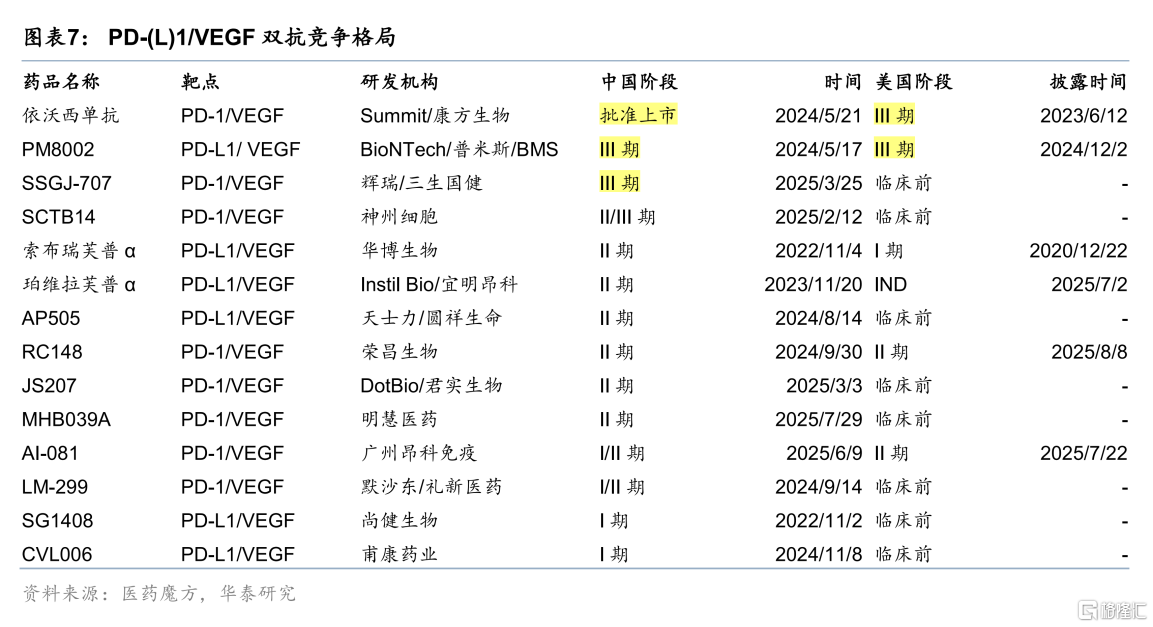
Core Insights - The focus in the PD-(L)1/VEGF bispecific antibody market has shifted from business development amounts to development efficiency and indication differentiation [1] - The competition is intensifying as multiple PD-(L)1/VEGF bispecific antibodies are entering Phase III clinical trials, emphasizing the importance of research speed and strategic indication planning [1] Domestic Indication Layout - The PD-(L)1/VEGF bispecific antibody market in China is characterized by rapid development and strategic positioning, with 康方生物/Summit’s Ivonescimab leading the way [2] - Ivonescimab has received approval for two indications in China, with projected sales of approximately 9 billion CNY in 2024 and 7.2 billion CNY in the first half of 2025, and a forecasted total sales exceeding 15 billion CNY in 2025 [2][3] Clinical Development and Market Potential - The first indication for Ivonescimab was approved in May 2024 for treating advanced non-squamous non-small cell lung cancer (nsq-NSCLC) after progression on EGFR-TKI therapy [3] - The second indication was approved in April 2025 for first-line treatment of PD-L1 positive (TPS≥1%) EGFR mutation negative and ALK negative advanced NSCLC [3] - The third indication for Ivonescimab is under review for first-line treatment of advanced squamous NSCLC [3] - The potential of the advanced lung cancer market is significant, with non-small cell lung cancer accounting for approximately 85% of all lung cancer cases [3] Competitive Landscape - The competitive landscape includes other key players such as BioNTech/BMS with PM8002 and Pfizer with SSGJ-707, both of which are also in late-stage clinical trials [5][6] - PM8002 is focusing on triple-negative breast cancer (TNBC) and small cell lung cancer (SCLC), while SSGJ-707 has initiated a head-to-head comparison with Keytruda for treating PD-L1 positive NSCLC [6][8] Global Market Dynamics - The global PD-(L)1/VEGF bispecific antibody market is dominated by three main players: 康方生物/Summit, BioNTech/BMS, and Pfizer, all of which are conducting Phase III clinical trials [8] - The strategies of these companies vary, with 康方生物 focusing on building a strong clinical barrier in the lung cancer market, BioNTech/BMS creating differentiation in TNBC and SCLC, and Pfizer leveraging its ADC advantages in colorectal cancer [18]


美国FDA批准备思复联合帕博利珠单抗用于特定膀胱癌患者
Cai Fu Zai Xian· 2025-11-28 02:48
Core Insights - The approval of the combination therapy of Bemarituzumab and Pembrolizumab marks the first and currently only perioperative treatment option for muscle-invasive bladder cancer (MIBC) patients who are not suitable for cisplatin-based chemotherapy, significantly improving survival outcomes compared to standard surgery [1][2] Group 1: Treatment Approval and Efficacy - The FDA has approved the combination of Bemarituzumab (an antibody-drug conjugate targeting Nectin-4) and Pembrolizumab (a PD-1 inhibitor) for neoadjuvant treatment in adult patients with muscle-invasive bladder cancer [1] - The approval is based on the pivotal Phase III EV-303 study, which demonstrated a 60% reduction in the risk of recurrence, progression, or death compared to surgery alone, and a 50% reduction in mortality risk [1][2] - The combination therapy is expected to redefine treatment standards for cisplatin-ineligible MIBC patients, addressing a long-standing unmet medical need [2][3] Group 2: Clinical Study Results - In the EV-303 study, the event-free survival (EFS) rate for the combination therapy group was 74.7%, compared to 39.4% for the surgery-only group, with a median EFS not yet reached for the combination group versus 15.7 months for the surgery group [2] - The overall survival (OS) data indicated a two-year survival probability of 79.7% for the combination group, compared to 63.1% for the surgery group, with a median OS not yet reached for the combination group versus 41.7 months for the surgery group [2] Group 3: Safety Profile - The safety profile of the combination therapy aligns with previous reports, with no new safety signals identified [3] - Common adverse reactions (≥20%) included laboratory abnormalities such as elevated blood glucose and hemoglobin levels, as well as fatigue and rash [3] - The incidence of grade 3 or higher adverse events was 71.3% in the combination therapy group compared to 45.9% in the surgery group [3] Group 4: Ongoing Research - The ongoing Phase III EV-304 study is evaluating the combination of Bemarituzumab and Pembrolizumab in the perioperative setting for cisplatin-eligible MIBC patients [4]
Novo Nordisk or Pfizer: Which Healthcare Giant Is the Better Bet?
ZACKS· 2025-11-27 17:55
Core Insights - Novo Nordisk (NVO) and Pfizer (PFE) are leading pharmaceutical companies in distinct therapeutic areas, with NVO dominating the GLP-1 market and PFE traditionally strong in oncology [1][2] - Pfizer's recent acquisition of Metsera marks its re-entry into the obesity market, intensifying competition with Novo Nordisk [2][3] Novo Nordisk (NVO) - NVO holds a 59% global market share in the GLP-1 space, driven by its semaglutide products: Ozempic, Rybelsus, and Wegovy [5] - The company is expanding its manufacturing capacity and pursuing new indications for semaglutide, including cardiovascular benefits [6][7] - NVO is facing challenges with weaker sales of Ozempic and Wegovy, leading to a guidance cut and a restructuring program aimed at saving DKK 8 billion annually by 2026 [12][30] Pfizer (PFE) - PFE's oncology revenues have increased by 7% year-to-date, bolstered by the acquisition of Seagen and strong performance from key products [13][14] - The Metsera acquisition adds four clinical obesity programs to PFE's pipeline, enhancing its position in the obesity treatment market [16] - PFE is implementing cost reduction initiatives expected to save $7.7 billion by 2027, alongside a strong late-stage pipeline and a dividend yield of around 7% [15][32] Financial Estimates - The Zacks Consensus Estimate for NVO's 2025 sales and EPS indicates a year-over-year increase of approximately 14% and 9%, respectively [20] - In contrast, PFE's 2025 sales are expected to decrease by 1.1%, while EPS is projected to increase by 1% [23] Stock Performance and Valuation - Year-to-date, NVO shares have declined by 43.4%, while PFE shares have lost 3.1%, against an industry gain of 19% [26] - NVO trades at a higher price/earnings ratio of 13.36 compared to PFE's 8.2, indicating a more expensive valuation for NVO [28]


Have $2,000 to Invest? Here Are 4 of My Favorite Dividend Stocks for the Next 5 Years
The Motley Fool· 2025-11-27 09:01
Core Insights - Dividend stocks are attractive for long-term investors seeking reliable cash flow, especially for retirees needing passive income [1][2] - Reinvested dividends can significantly enhance total returns and provide stability during market downturns [2] - The article highlights four top dividend stocks for investment over the next five years [3] Company Summaries Pfizer - Pfizer has maintained 348 consecutive quarterly dividend payments and increased payouts for 16 years, offering a forward yield of around 7% [4][5] - The company is targeting over $7 billion in savings by 2027 to improve operating margins and free cash flow, ensuring it can cover dividend payments while reinvesting [5] - Pfizer reported $9.4 billion in net income on $45 billion in revenue for the first nine months of 2025, with net income up 24% year-over-year [9] Johnson & Johnson - Johnson & Johnson has increased its dividends for 63 consecutive years, yielding around 2.6%, which is more than double the S&P 500 average [10] - The company has a strong balance sheet with an AAA credit rating and over $20 billion in annual free cash flow, supporting continued dividend payouts [10] - In Q3 2025, sales grew by approximately 7% to $24 billion, with adjusted EPS increasing by 16% year-over-year [13] Home Depot - Home Depot has increased its dividend annually for 16 years, currently yielding 2.7% [15] - The company’s recent $5.5 billion acquisition of GMS is expected to enhance its specialty building products business [16] - In Q3, Home Depot's sales rose 2.8% year-over-year to $41.4 billion, with net earnings totaling $3.6 billion [18] Realty Income - Realty Income has a flawless record of paying monthly dividends, with a current yield of approximately 5.7% [20] - The company’s properties are primarily single-tenant, freestanding commercial properties, with over 90% of rental income from resilient businesses [21] - Realty Income's Q3 revenue was $1.47 billion, up about 11% year-over-year, with a strong occupancy rate of 98.7% [23][24]




Valneva Posts Positive Lyme Vaccine Booster Results — Pfizer Targeting 2026 Regulatory Filings
Benzinga· 2025-11-26 17:30
Core Insights - Valneva SE has released final immunogenicity and safety data from the Phase 2 study of its Lyme disease vaccine candidate, VLA15, indicating a strong immune response and favorable safety profile six months after a third booster dose [1][2][4] Vaccine Efficacy and Safety - The study demonstrated a robust anamnestic immune response across all age groups, confirming the vaccine's compatibility with the expected benefits of annual vaccination before Lyme season [2][4] - Antibody levels remained significantly higher with a three-dose primary vaccination schedule compared to a two-dose schedule, with geometric mean fold rises (GMFRs) ranging from 9.5-fold for Serotype 1 (ST1) to 15.6-fold for Serotype 2 (ST2) [5][6] - The highest GMFRs were observed in the 5 to 11-year-old age group, with levels ranging from 15.5-fold (ST1) to 28.5-fold (ST2), further validating the three-dose schedule and yearly booster [6] Regulatory Pathway - Pfizer aims to submit a Biologics License Application to the U.S. FDA and a Marketing Authorization Application to the European Medicines Agency in 2026, contingent on positive Phase 3 data [4] Operational Strategy - Valneva announced a strategic initiative to optimize its organizational footprint in France, planning to consolidate operations at its Lyon location and close the Nantes site [7] Market Reaction - Following the announcement, Valneva shares increased by 7.65%, reaching $9.19 [8]


AbbVie and Pfizer: A Closer Look at Two Pharma Heavyweights
ZACKS· 2025-11-26 16:45
Core Insights - Pfizer and AbbVie are both leading U.S. pharmaceutical companies with strong positions in various therapeutic areas, with Pfizer's oncology sales accounting for approximately 28% of its total revenues and AbbVie’s immunology drugs contributing around 50% of its net revenues [1][2]. Pfizer (PFE) Overview - Pfizer has strengthened its oncology position with the acquisition of Seagen in 2023, leading to a 7% increase in oncology revenues year-to-date, driven by key drugs [4]. - Non-COVID operational revenues are improving, with a 9% operational increase in recently launched and acquired products in the first nine months of 2025, supporting growth expectations for 2026 [5]. - Pfizer anticipates cost savings of $7.7 billion by the end of 2027 through restructuring and cost reduction efforts, with a dividend yield of around 7% [6]. - The company is expanding its pipeline through acquisitions, including a $10 billion deal for Metsera, which adds significant potential in the obesity market [7]. - Pfizer faces challenges with declining sales of COVID products and expects a significant impact from patent expirations between 2026-2030, estimating a $1 billion unfavorable impact from the Inflation Reduction Act [8][10]. AbbVie (ABBV) Overview - AbbVie has successfully navigated the loss of exclusivity for Humira by launching new immunology drugs, Skyrizi and Rinvoq, which generated combined sales of $18.5 billion in the first nine months of 2025 [11][12]. - The oncology segment contributed $5.0 billion in revenues, while neuroscience drugs saw a 20.3% increase in sales, totaling almost $7.8 billion [13]. - AbbVie has pursued inorganic growth through over 30 M&A transactions since early 2024, particularly in immunology, while facing near-term challenges from Humira's biosimilars and competitive pressures [14]. - The aesthetics portfolio has seen a 7.4% decline in global sales, impacted by macroeconomic challenges and low consumer sentiment [15]. Financial Estimates and Performance - The Zacks Consensus Estimate for Pfizer's 2025 sales implies a 1.1% decrease, while AbbVie's estimates indicate an 8.1% increase in sales [16]. - Year-to-date, Pfizer's stock has declined by 3.0%, whereas AbbVie's stock has risen by 30.5%, outperforming the industry average of 15.9% [20]. - AbbVie’s dividend yield is 2.8%, compared to Pfizer’s 6.7% [26]. Investment Outlook - Both companies hold a Zacks Rank 3 (Hold), but AbbVie is favored due to its robust growth prospects and lack of significant upcoming loss of exclusivity events [28]. - AbbVie expects to achieve mid-single-digit revenue growth in 2025, driven by the strong performance of Skyrizi and Rinvoq, with a high single-digit CAGR projected through 2029 [29].

Backdoor AI Beneficiary Yields 8.8%, Trades at 13% Discount
Investing· 2025-11-26 10:20
Core Insights - The article discusses the transformative impact of AI on the pharmaceutical industry, particularly in drug development timelines and profitability [1][3][12] - It highlights the potential for significant returns from investments in companies benefiting from accelerated drug development cycles, specifically mentioning an 8.8% dividend yield from BlackRock Health Sciences Term Trust (BMEZ) [5][4] Industry Overview - AI is expected to reduce drug development time from the traditional 10-15 years to approximately 3-6 years, enhancing monopoly pricing periods for pharmaceutical companies [2][3] - The faster drug discovery process will lead to an increase in viable drug candidates entering trials, resulting in more approved medications and improved cash flow for these companies [4][12] Company Focus - BMEZ is a closed-end fund that invests in companies directly benefiting from advancements in pharmaceutical research and development, particularly those utilizing AI [5][8] - Alnylam Pharmaceuticals, a top holding of BMEZ, specializes in RNA interference therapies and is positioned to leverage AI for faster and more effective research outcomes [8][9] Market Dynamics - BMEZ currently trades at a 13% discount to its net asset value (NAV), presenting a buying opportunity given the strong fundamentals of the sector [5][7] - The article notes that despite recent regulatory challenges and market sentiment against drug developers, the political landscape is shifting favorably for pharmaceutical companies, allowing for longer patents and expedited review processes [10][11][12]

