
P&G(PG)

Search documents
TD Cowen下调宝洁评级至“持有”
Ge Long Hui· 2026-01-27 13:48
TD Cowen将宝洁公司的目标价从150美元上调至156美元,评级则从"买入"下调至"持有"。(格隆汇) ...

UBS Sees a Challenging Backdrop for Procter & Gamble (PG) Despite 2026 Improvement Hopes
Yahoo Finance· 2026-01-27 07:05
Group 1 - Procter & Gamble (PG) is recognized as one of the 15 Best S&P 500 Dividend Stocks to Buy in 2026, indicating its strong position in the dividend-paying category [1] - UBS analyst Peter Grom has reduced PG's price target from $176 to $161 while maintaining a Buy rating, citing a challenging operating environment for Consumer Staples, although improvements are anticipated in 2026 [2] - The company's payout ratio is approximately 60%, reflecting a sustainable dividend supported by earnings, allowing for potential annual dividend increases over time [3] Group 2 - Procter & Gamble is characterized as a mature blue-chip company, providing stability as a defensive holding due to its essential household products, which remain in demand even during economic downturns [4] - The growth potential for PG is limited, with typical revenue growth in the single digits, which may be acceptable for investors seeking stability, especially with a forward dividend yield around 2.9% [5]
Tech Stocks Rebound Soothing Greenland-Induced Shivers as Earnings Season Hits Stride
See It Market· 2026-01-26 19:55
Market Overview - US equity markets experienced volatility last week, with the Cboe Volatility Index (VIX) rising above 20 due to geopolitical tensions, including President Trump's tariff threats and Greenland annexation push [1] - By mid-week, the market sentiment shifted positively as NATO leadership discussions emerged and tariff threats were retracted, leading to a recovery in the S&P 500 and Nasdaq [2] Technology Sector Performance - The Information Technology sector was pivotal in the market recovery, despite Intel's 16% decline following a disappointing Q4 2025 outlook [3] - Nvidia's stock rose due to reports of Chinese tech firms preparing to order H200 chips, while Netflix's strong earnings and an analyst upgrade for Meta Platforms contributed to the sector's momentum [4] - Analysts at J.P. Morgan project double-digit earnings growth (13-15%) for the tech sector over the next two years, driven by an AI supercycle [4] Earnings Reports and Trends - Approximately 13% of S&P 500 companies have reported Q4 2025 earnings, with a blended growth rate of 8.2%, indicating a positive outlook despite geopolitical concerns [5][9] - Netflix reported a significant Q4, surpassing $325 million in paid memberships and forecasting over $50 billion in revenue for 2026 [5] - GE Aerospace's results were disappointing, leading to a 7% drop in shares, while Procter & Gamble saw a 2.5% increase due to strong consumer demand [5] Upcoming Earnings and Market Expectations - The peak earnings season is underway, with major companies like Microsoft, Apple, and Alphabet set to report, which could influence the S&P 500's performance [7][13] - Six S&P 500 companies have confirmed outlier earnings dates, with five indicating potential negative news, while Regeneron Pharmaceuticals is the only one with a positive outlook [11][12] Sector Analysis - The tech sector continues to lead the market, while the Energy sector is projected to report a year-over-year revenue decline, contrasting with the growth in Tech and Materials [9]



Fewer Babies, Higher Sales: P&G's Contrarian Bet in China Is Working
Yahoo Finance· 2026-01-26 14:45
Group 1: Market Overview - China's birth rate was 5.6 births per 1,000 people in 2025, down nearly 13% from 2023, with only 7.9 million babies born last year, indicating a worsening fertility crisis [1] - The U.S. birth rate was 10.7 babies per 1,000 people in 2023, highlighting a significant disparity in birth rates between the two countries [1] Group 2: Company Strategy - Procter & Gamble has managed to grow its China baby care business by a double-digit percentage over the past 18 months despite the declining birth rate by focusing on premium products that align with Chinese cultural values [2][4] - The Pampers Prestige line, which uses silk as a key material, exemplifies the company's strategy to cater to Chinese parents' desire for high-quality products [4] - Premium disposable diapers account for 35% of the Chinese diaper market, with sales growing at nearly four times the rate of standard disposable diapers, indicating a strong market for premium products [5] Group 3: Innovation and Future Outlook - Procter & Gamble is undergoing a long-term reinvention, emphasizing innovation and productivity gains to fund new product development while managing cost pressures from tariffs and inflation [7] - The success of the Pampers Prestige line serves as a blueprint for the company's other businesses as it seeks to adapt to changing market conditions [8]
宝洁一个季度销售222亿美元;名士表被历峰卖了 |看时尚
2 1 Shi Ji Jing Ji Bao Dao· 2026-01-26 06:16
Group 1: Luxury Goods Industry Trends - Companies in the luxury goods sector are focusing on mergers and acquisitions to optimize brand portfolios and enhance core business operations, as seen with China Duty Free Group's acquisition of DFS's Hong Kong and Macau operations and LVMH's investment [1] - The luxury watch market is witnessing consolidation, exemplified by the Swiss Watches of Switzerland Group's acquisition of Deutsch & Deutsch, reinforcing its position in the U.S. high-end watch market [4][5] - Richemont's sale of Baume & Mercier to Damiani reflects a strategic move to streamline its brand matrix and concentrate on higher-end watch brands [6][7] Group 2: Consumer Goods Performance - Procter & Gamble reported Q2 net sales of $22.208 billion, a slight increase of 1% year-over-year, with a net profit of $4.331 billion, down 7% [2] - The beauty segment of Procter & Gamble is a growth driver, with sales reaching $4.039 billion, up 5% year-over-year, supported by strong performance in markets outside the U.S. [3] Group 3: Market Adjustments and Leadership Changes - Nike is undergoing leadership changes in its Greater China region, appointing Cathy Sparks as the new General Manager to address declining sales, which fell 17% year-over-year in Q2 [8][9] - L'Occitane is considering an IPO in the U.S. after completing its privatization, aiming to align its market strategy with its business layout [10][11] Group 4: Regional Market Insights - Burberry's retail revenue reached £665 million, with a 1% year-over-year increase, driven by a 6% growth in the Greater China region [12][13] - The appointment of Daniele Zito as Chief Commercial Officer at Kering aims to enhance operational efficiency and retail value across its brands [14][15] Group 5: Strategic Investments - L Catterton's acquisition of a minority stake in EX NIHILO aims to bolster the brand's presence in the high-end perfume market, capitalizing on the growing demand for luxury fragrances [19][20]

Procter & Gamble Confirms a Bottom—Time to Start Compounding?
Yahoo Finance· 2026-01-25 14:32
Core Viewpoint - Procter & Gamble (NYSE: PG) is expected to see significant stock price advancement following a bottoming out in early 2026, with the market having priced in worst-case scenarios of tepid growth, which is still sufficient to maintain financial health and dividend payments [3][4]. Financial Performance - Procter & Gamble's stock is trading at long-term lows, near the lower end of its historical valuation range, with an above-average dividend yield of approximately 2.9% [3][4]. - The company has a strong history as a Dividend King, having increased its dividend for nearly 70 years, supported by a healthy balance sheet and a low payout ratio [5][6]. Earnings and Growth Segments - In the Q2 fiscal year 2026 earnings release, Procter & Gamble reported a 1% revenue growth, influenced by foreign exchange, with a 1% decline in volume offset by a 1% increase in pricing [6]. - The Beauty and Healthcare segments were standout performers, each growing by 5%, while the Baby, Feminine, and Family care segment experienced a decline of 3% due to challenging comparisons from the previous year [6]. Investment Strategy - Investors are encouraged to build positions over time, using recent price floors near $140 and technical indicators such as moving averages as triggers for investment decisions [5].
净销售额增长1%,宝洁又打“涨价”牌
Bei Jing Shang Bao· 2026-01-25 13:33
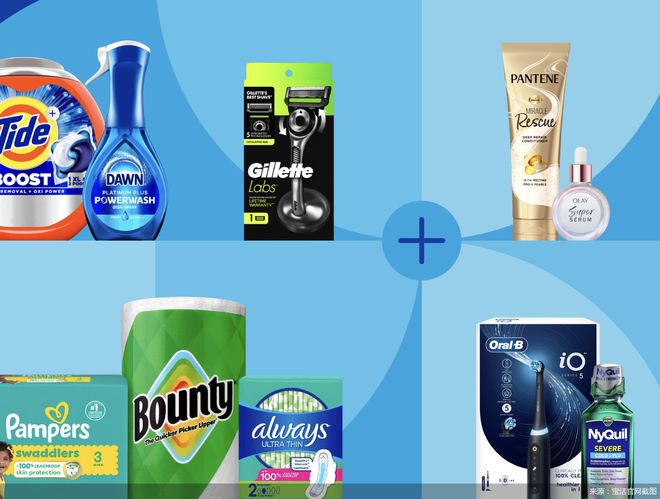
Core Viewpoint - Procter & Gamble (P&G) needs new strategies to drive genuine growth beyond price increases, as recent financial results show revenue growth without profit growth, indicating challenges in maintaining sales volume [1][3] Financial Performance - In Q2 of FY2026, P&G reported net sales of 154.96 billion yuan, a 1% year-over-year increase, while net profit fell by 7% to 30.22 billion yuan [3][5] - Organic sales, excluding foreign exchange and acquisitions, remained unchanged compared to the previous year [3] - The beauty and health care segments saw a 5% increase in net sales, the highest among P&G's five business units, while the baby, feminine, and family care segment experienced a decline [3][5] Market Trends and Challenges - P&G's performance decline is attributed to changing market trends and evolving consumer demands for higher-end, eco-friendly, and health-conscious products [4] - The company faces increased competition from emerging brands that offer high-quality products at competitive prices, leading to a loss of market share in both high-end and mass markets [4][9] Pricing Strategy - Price increases have been a key factor in supporting P&G's revenue growth, with the company implementing multiple price hikes across its product lines in recent years [6][8] - For instance, P&G raised prices by 6% to 9% across all departments in 2023, and specific brands like SK-II have seen significant price increases [6][7] Strategic Adjustments - P&G is focusing on strategic contraction by divesting underperforming brands and enhancing core brand development, particularly in the high-end market [9] - The company has initiated a two-year plan to optimize its business portfolio and improve productivity, aiming to enhance competitiveness [9] Leadership and Future Outlook - P&G's new CEO, Shailesh Jejurikar, is leading a comprehensive reform to drive growth, expressing confidence in achieving stronger performance in the latter half of FY2026 [10] - The company aims to focus on consumer needs and innovation to navigate external challenges and reshape its future in the consumer goods sector [10]
I am really confused about the consumer
Yahoo Finance· 2026-01-25 13:30
Group 1 - The market experienced volatility due to tariff fears related to Greenland, but recovered by the end of the week following positive speeches from President Trump and Nvidia CEO Jensen Huang at the World Economic Forum [2] - President Trump expressed optimism about the stock market potentially doubling this year, which is a notable statement from a sitting US president [3] - There are several catalysts that could positively impact the market, including a significant tax refund season and advancements in AI, but the US consumer's financial health is crucial for sustained growth [4] Group 2 - Procter & Gamble (P&G) reported mixed earnings results, with second fiscal quarter sales missing estimates in grooming, fabric care, and baby categories as consumers opted for cheaper private-label products [5] - Despite the sales miss, P&G beat earnings estimates and maintained its full-year outlook, indicating some resilience in its business [6] - The CFO of P&G noted that sales growth is occurring in the US and Europe, albeit at a slower pace [6]
耐用消费周报:关注潮玩节日催化,新型烟草日本上新,AI消费多款新品上市-20260125
SINOLINK SECURITIES· 2026-01-25 11:02
Investment Ratings - The report provides a positive outlook on the new tobacco industry, indicating a steady upward trend, while the home furnishing and packaging sectors are stabilizing at the bottom [6][11][15]. Core Insights - The report highlights the marketing strategies around the Spring Festival and Valentine's Day for trendy toys, with companies like Pop Mart and Blok launching limited series to enhance IP value and collectability [7][8]. - In the new tobacco sector, the necessity for domestic development is emphasized, with major players increasing investments in heated tobacco products (HNB) and innovative marketing strategies [11][12]. - The home furnishing market is experiencing a contraction in sales, with significant declines in both new and second-hand property transactions, but there are signs of potential recovery driven by policy support [13][14]. - The packaging industry is expected to benefit from a steady recovery in downstream demand, supported by growth in consumer goods sectors [15][16]. - The pet food industry is facing increased competition, leading to higher sales expense ratios, but listed companies are leveraging their financial advantages for mergers and acquisitions [21]. Summary by Sections Trendy Toys - Focus on marketing strategies for key holidays, with companies like Pop Mart and Blok launching special editions to enhance brand value [7]. - The integration of AI in toys is gaining traction, with companies like Kid King and JD.com developing AI products to meet family needs [8][9]. New Tobacco - The report notes a projected decline in electronic cigarette exports, with a focus on the need for innovation in the domestic market [11]. - Major tobacco companies are increasing their investments in HNB products, indicating a significant growth potential in this segment [12]. Home Furnishing - The report indicates a significant drop in property transactions, with new home sales down 29.23% year-on-year and second-hand home sales down 8.94% [13]. - Despite current challenges, there is optimism for recovery in the home furnishing sector due to supportive policies [14]. Packaging - The packaging sector is expected to see a recovery in demand, with growth in consumer goods contributing positively to the industry [15][16]. - The report highlights price fluctuations in raw materials, particularly in the paper and aluminum sectors, which could impact packaging costs [15]. Pet Food - Increased competition in the pet food industry is leading to higher sales expenses, but established companies are positioned to benefit from consolidation opportunities [21]. - The report suggests focusing on companies with strong brand recognition and those actively pursuing mergers and acquisitions [21].






美股市场速览:整体市场平静,能源变数较大
Guoxin Securities· 2026-01-24 15:19
Market Performance - The S&P 500 decreased by 0.4% this week, while the Nasdaq fell by 0.1%[1] - Small-cap value (Russell 2000 Value) outperformed with a gain of 0.2%, compared to large-cap value (Russell 1000 Value) which declined by 0.2%[1] - The energy sector saw a notable increase of 3.1%, while the banking sector experienced a decline of 2.8%[1] Fund Flows - Estimated fund flow for S&P 500 constituents was +$5.6 billion this week, up from -$1.7 billion last week[2] - Key sectors with inflows included automotive and auto parts (+$9.2 million) and semiconductor products (+$9.2 million)[2] - Significant outflows were observed in the financial sector, particularly in diversified financials (-$13.6 million) and capital goods (-$7.4 million)[2] Earnings Forecast - The forward 12-month EPS expectation for S&P 500 constituents increased by 0.2% this week, slightly down from 0.3% last week[3] - Notable upward revisions were seen in real estate (+2.0%) and semiconductor products (+0.7%), while the energy sector was revised down by 2.0%[3] - Risks include uncertainties in economic fundamentals, international political situations, U.S. fiscal policies, and Federal Reserve monetary policies[3]



