Workflow
P&G(PG)
icon
Search documents
March of Dimes and Pampers® Award Scholarships to Nursing Students
Prnewswire· 2025-05-14 14:50
Core Points - March of Dimes is awarding six nursing scholarships to students dedicated to improving maternal and infant health, with each scholarship valued at $10,000 [1][3] - The partnership with Pampers, which has lasted over 25 years, supports the initiative to strengthen the maternal and infant health workforce in the U.S. [1][4] - The U.S. has the highest maternal mortality rate among high-income countries, with over 80% of pregnancy-related deaths deemed preventable according to the CDC [3] Scholarship Details - The 2025 March of Dimes Nursing Scholarships include Graduate Nursing Scholarships for registered nurses in graduate programs focused on maternal and infant health [5] - Nurse Midwifery Scholarships are aimed at students in accredited nurse-midwifery programs, promoting access to midwifery care and postpartum support [6] - Undergraduate Nursing Scholarships support students pursuing careers in maternal and infant health [8] Recipient Highlights - Recipients include students from various universities, each committed to addressing maternal and infant health disparities through their respective programs [2][7][8] - Notable recipients include Hana Hamdi, who focuses on midwifery-led primary care, and Katie Page, who aims to influence healthcare systems through research and policy [6][7] - Other recipients, like Michael Lopez and Bethany Cooper, emphasize their dedication to improving maternal health and addressing healthcare disparities [8]
未来十年,中国零售渠道会有哪些变化?
Hu Xiu· 2025-05-12 03:31
Group 1 - The core viewpoint of the article emphasizes the transition of the Chinese retail market from an incremental growth phase to a stock-based market, leading to significant changes in consumer behavior and retail strategies [5][6][10] - The company, Qicheng Capital, has focused on investing in the consumer sector since its establishment in 2016, targeting "new generation national brands" and "new generation national chains" [1][3] - The investments made by Qicheng Capital have collectively served 100 million families in China, indicating a substantial market impact [2] Group 2 - The article discusses the emergence of a "buyer solution" in the retail landscape, where the power dynamics shift from brands to retailers and consumers, reflecting a change in the value chain [11][12][14] - The current market features approximately 6 million stores in China, with a significant number being non-chain enterprises, suggesting a long way to go for the consolidation of retail chains [13] - Predictions indicate that in ten years, the market may evolve to include over 2000 large stores and 300,000 small stores centered around buyer solutions [15] Group 3 - The article highlights the importance of category management and the need for retailers to adapt to consumer demands, moving away from brand-centric strategies to a focus on category performance [17][24] - It notes that the consumer decision-making process is becoming increasingly complex, with various factors influencing purchasing behavior across different channels [30][32] - The blending of food and retail sectors is creating new opportunities for innovation, as seen in the emergence of hybrid business models [36][38] Group 4 - The article emphasizes the significance of understanding consumer segmentation and the need for retailers to tailor their offerings to specific consumer profiles [42][44] - It discusses the evolving relationships between brands and retailers, advocating for long-term partnerships based on mutual understanding and shared goals [43][45] - The future of the market is expected to be characterized by continuous innovation and the reconfiguration of product categories to meet diverse consumer needs [39][41]
汇丰:美国股票策略_为不确定、波动环境挑选的十只股票
汇丰· 2025-05-12 01:48
Investment Rating - The report highlights ten stock picks rated as "Buy" that are expected to be resilient in the current uncertain economic environment [11][23]. Core Insights - The initial sell-off in the market was broad-based, with 99% of S&P 500 stocks declining, but the recovery has been uneven, primarily driven by technology stocks [3][11]. - A bottom-up approach is recommended to understand how policies impact individual companies, especially in light of ongoing macroeconomic and policy uncertainties [4][11]. - The report anticipates continued volatility in equity markets as macro and micro data worsen, with a focus on defensive sectors [4][11]. Summary by Relevant Sections Market Overview - The S&P 500 has outperformed the equal-weighted index, with a significant contribution from technology stocks, while many sectors, particularly recession-resilient ones like healthcare, remain below pre-sell-off levels [3][22][19]. - Only 35% of S&P 500 stocks have recovered to pre-Liberation Day levels, indicating a challenging recovery landscape [3][11]. Stock Picks - **AIG (AIG US)**: Rated "Buy" with a target price of USD 93.00, expected to benefit from its solid risk management and low leverage [6][23]. - **American Tower (AMT US)**: Rated "Buy" with a target price of USD 245.00, noted for its geographical diversification and resilience in a high-tariff environment [6][24]. - **Coca-Cola (KO US)**: Rated "Buy" with a target price of USD 82.00, positioned to leverage its brand strength and local sourcing to mitigate tariff impacts [6][29]. - **Johnson & Johnson (JNJ US)**: Rated "Buy" with a target price of USD 184.00, recognized for its diversified portfolio and strong R&D pipeline [6][30]. - **McDonald's (MCD US)**: Rated "Buy" with a target price of USD 343.00, expected to benefit from its franchise model and focus on affordability [6][34]. - **Oracle (ORCL US)**: Rated "Buy" with a target price of USD 246.00, anticipated to capitalize on AI demand and improve revenue growth [6][37]. - **Procter & Gamble (PG US)**: Rated "Buy" with a target price of USD 185.00, noted for its strong brand equity and global supply chain [6][40]. - **TechnipFMC (FTI US)**: Rated "Buy" with a target price of USD 36.00, positioned to benefit from its operational efficiencies [6][43]. - **Walmart (WMT US)**: Rated "Buy" with a target price of USD 108.00, expected to maintain its market position amid economic challenges [6]. - **Waste Management (WM US)**: Rated "Buy" with a target price of USD 265.00, recognized for its stable revenue model [6].
渠道品牌的边界
Jing Ji Guan Cha Bao· 2025-05-09 14:00
Core Insights - The rise of private label brands, referred to as "channel brands," is reshaping the retail landscape in China, with retailers increasingly developing their own products to compete with traditional brands [2][4][9] - The average number of new private label products developed by retailers is projected to increase significantly from 83 in 2022 to 142 by 2024, indicating a strong trend towards self-branding in retail [2] - The emergence of channel brands is expected to lead to a transformation in retail operations and ecosystems, as retailers seek to differentiate themselves and improve profit margins [4][6] Retail Dynamics - Retail giants like Costco and Walmart have successfully leveraged their private label brands, with Costco's Kirkland accounting for one-third of its sales and Walmart deriving over 30% of its sales and more than 50% of its profits from private labels [4] - The competitive pressure from channel brands is forcing traditional brand manufacturers to lower their prices, creating a challenging environment for them [5] - The relationship between channel brands and traditional brands is complex, as retailers must balance their own products with third-party brands to maintain market viability [6][8] Market Trends - The trend of channel brands is not just a local phenomenon but reflects a broader shift in retail strategies globally, with significant implications for brand positioning and consumer perception [9][10] - The need for regulatory measures, such as a "shelf space fairness ratio," is being discussed to ensure a balanced representation of private labels and third-party brands on retail shelves [6][7] - Ultimately, the ability to capture consumer attention and loyalty will remain a critical challenge for both channel brands and traditional brands in the evolving retail landscape [8]
下调全年增长预期!宝洁:调整价格、弹性采购等抵消关税影响
Nan Fang Du Shi Bao· 2025-05-05 07:28
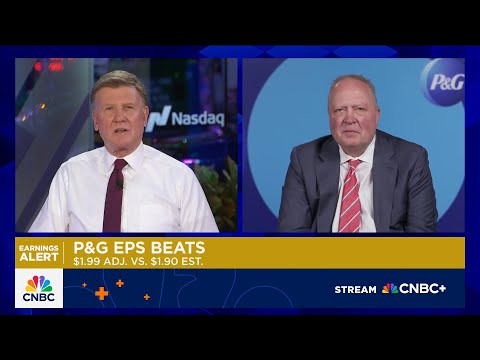
Core Viewpoint - Procter & Gamble (P&G) has lowered its organic sales growth forecast for fiscal year 2025 from 3%-5% to 2% due to uncertainties surrounding U.S. tariffs, particularly affecting raw materials and packaging from China [1][6]. Financial Performance - For Q3 of fiscal year 2025, P&G reported a net sales decline of 2% year-over-year to $19.776 billion, with organic sales growth of 1% [2][3]. - The company's net profit slightly decreased from $3.754 billion to $3.769 billion [2]. - Product price increased by 1%, while sales volume decreased by 1% during the reporting period [3]. Business Segment Performance - Fabric & Home Care segment saw a 3% decline in net sales to $6.948 billion, with a 1% drop in net profit [2][3]. - Baby, Feminine & Family Care segment's net sales fell by 4% to $4.755 billion, with net profit down 12% [2][3]. - Beauty segment's net sales decreased by 2% to $3.490 billion, with an 8% decline in net profit [2][3]. - Health Care segment's net sales remained flat at $2.880 billion, while net profit increased by 8% [2][3]. - Grooming segment's net sales declined by 2% to $1.505 billion, with a 6% increase in net profit [2][3]. Regional Performance - In the Greater China region, organic sales fell by 2%, although SK-II experienced double-digit growth of 11% [4][5]. - The company noted that the Chinese market remains volatile, with a gradual recovery expected [5]. Tariff Impact and Strategic Response - The estimated annual cost impact of U.S. tariffs is between $1 billion to $1.5 billion, affecting profit margins by approximately 140 to 180 basis points [6]. - P&G plans to adopt more flexible procurement strategies, improve productivity, and consider innovative pricing methods to mitigate tariff impacts [6].
The Best Dividend Stocks to Buy in May
The Motley Fool· 2025-05-04 08:10
Group 1: Coca-Cola - Coca-Cola is a 139-year-old brand with annual sales of $47 billion and a year-to-date stock increase of over 14% [2][4] - The company recently raised its quarterly dividend by 5% to $0.51, marking 63 consecutive years of dividend increases, with a forward dividend yield of 2.8% [3][7] - Coca-Cola maintains a payout ratio around 75% of annual earnings, allowing for continued dividend payments even during economic downturns [4][11] - In Q1, Coca-Cola's adjusted revenue grew by 6% year over year, with unit case volume increasing by 2%, indicating stable demand [4][5] - The company sees growth opportunities in emerging markets, which represent about 80% of the global population, with only North America showing a decline in unit case volume [6] Group 2: Procter & Gamble - Procter & Gamble has a strong track record of increasing dividends for 69 consecutive years, supported by a portfolio of leading brands [8] - The company reported $15.5 billion in net income on approximately $84 billion in sales over the last four quarters, demonstrating effective marketing and supply chain efficiency [9] - In fiscal 2025 Q3, P&G's adjusted sales and earnings per share rose by 1% year over year, with management expecting adjusted earnings to increase by 6% to 8% for the fiscal year [10] - P&G increased its quarterly dividend by 5% to $1.0568, resulting in a payout ratio of about two-thirds of annualized earnings, providing flexibility for future increases [11] - Investors purchasing shares at around $160 can expect a forward yield of 2.6%, with the company having paid dividends every year since 1890 [12]
Procter & Gamble Vs Colgate: Which is a Smarter Stock to Own Now?
ZACKS· 2025-05-01 17:10
Core Insights - The article compares Procter & Gamble (PG) and Colgate-Palmolive (CL), highlighting their market positions, financial performance, and strategic priorities within the consumer-packaged goods (CPG) industry [1][2]. Procter & Gamble (PG) - PG operates in over 180 countries with a market capitalization close to $400 billion, offering a diverse product lineup including Tide, Pampers, Gillette, and Olay, which provides a competitive advantage [3]. - In Q3 fiscal 2025, PG reported earnings per share (EPS) of $1.54, meeting analyst expectations, while maintaining or growing market share in seven of its ten core categories [4]. - The company focuses on premiumization and innovation, launching high-performance products and investing in advertising rather than discount promotions, which supports long-term brand strength [5]. - PG anticipates approximately $200 million in after-tax headwinds from commodity costs and foreign exchange in fiscal 2025, alongside projected tariff-related costs of $1-$1.5 billion annually [6]. - The company plans to return $16-17 billion to shareholders through dividends and buybacks, demonstrating a commitment to long-term value creation [7]. Colgate-Palmolive (CL) - CL is a leader in oral care with a 41% share of the global toothpaste market and a 32% share in manual toothbrushes, while also expanding into pet nutrition and skincare [9][10]. - In Q1 2025, CL reported sales exceeding $4.91 billion, beating estimates despite a 3% year-over-year decline, with an EPS of 91 cents also surpassing expectations [11]. - The company expects $200 million in incremental tariff impacts in 2025 but is mitigating these through supply-chain flexibility and productivity gains, having invested $2 billion in U.S. supply-chain upgrades over the past five years [12]. - CL maintains a focus on advertising ROI and AI-driven analytics to optimize spending while continuing to innovate and premiumize its offerings [13]. - The company is positioned to deliver sustainable shareholder value through its strong balance sheet and disciplined execution, despite short-term pressures [14][26]. Financial Estimates - For fiscal 2025, PG's sales and EPS are expected to grow by 0.4% and 3%, respectively, with EPS estimates down by 1.2% in the past week [15]. - CL's sales and EPS estimates suggest year-over-year growth of 0.6% and 1.4%, with EPS estimates down by 0.5% recently [18]. - Both companies have experienced downward estimate revisions, but CL's revisions are less severe compared to PG [20]. Price Performance & Valuation - Year-to-date, PG shares have declined by 3.1%, while CL stock has gained 1.4% [21]. - PG is trading at a forward P/E multiple of 23.06X, below its five-year median of 23.65X, indicating a potentially undervalued position [23]. - CL's forward P/E multiple is at 24.47X, above its five-year median of 24.1X, reflecting its solid fundamentals and growth strategy [24]. Conclusion - PG's extensive global presence and diversified brand portfolio provide a foundation for long-term revenue stability, though it faces geopolitical and market-specific challenges [25]. - CL's strong brand equity and adaptability position it as an attractive investment option, particularly with lower tariff risks and solid fundamentals [27].
突然!日本宣布“救市”!出台紧急方案应对美国关税政策
Group 1: Japan's Emergency Measures - The Japanese government announced an emergency plan on April 25 to mitigate the negative impacts of U.S. tariff policies on Japanese businesses and consumers [1][3] - The plan includes improving corporate consultation systems, enhancing financing support for businesses, maintaining employment, stimulating domestic consumption, transforming industrial structures, and increasing competitiveness [1][3] - Specific measures involve lowering gasoline prices, providing subsidies for electricity and gas, and easing conditions for companies to receive employment adjustment subsidies without layoffs [3] Group 2: Impact on Japanese Economy and Monetary Policy - Bank of Japan Governor Kazuo Ueda indicated that if Japan's core inflation approaches the 2% target, the central bank will continue to raise interest rates [2][5] - Analysts warn that the impact of U.S. tariff policies will be a significant factor in the Bank of Japan's future policy decisions [2][6] - The Bank of Japan is expected to maintain interest rates at 0.5% during the upcoming policy meeting, with a potential downward revision of growth forecasts due to the complexities introduced by U.S. tariffs [6] Group 3: U.S. Corporate Earnings Warnings - Major U.S. companies, including Procter & Gamble, PepsiCo, Delta Air Lines, AT&T, and NextEra Energy, have issued profit warnings due to the impact of tariffs [7][8] - Over 90% of S&P 500 companies mentioned tariff impacts during their Q1 earnings calls, with mentions of "recession" rising from under 3% to 44% [7] - Procter & Gamble attributed its lowered guidance to tighter consumer spending and the impact of tariffs on its cost structure [8] Group 4: Sector-Specific Concerns - In the airline industry, executives from American Airlines and Delta Air Lines expressed concerns over rising aircraft costs due to tariffs, leading to the withdrawal of financial guidance [8][9] - Telecommunications companies AT&T and Verizon warned that tariffs could increase prices for mobile phones and routers, with Verizon stating it would not absorb the high costs [9] - Medical device manufacturer Boston Scientific projected a $200 million loss this year due to tariffs, while Johnson & Johnson highlighted a $400 million cost impact from medical device tariffs [9]
National Advertising Division Finds Certain Lysol Air Sanitizer Claims Supported; Recommends Reckitt Discontinue Certain Odor Elimination Claims
GlobeNewswire News Room· 2025-04-29 15:51
Core Viewpoint - The National Advertising Division (NAD) has found that certain claims made by Reckitt Benckiser regarding its Lysol Air Sanitizer are supported, while others, particularly unqualified "eliminates odor" claims, should be discontinued [1][2][7]. Odor Elimination Claims - P&G challenged various "eliminates odor" claims made by Reckitt for Lysol Air Sanitizer across multiple platforms, including product labels, websites, and social media [3][4]. - NAD determined that the evidence provided by Reckitt did not support the claim that Lysol Air Sanitizer eliminates all odors at a molecular level [5][6]. - NAD recommended discontinuing claims that suggest Lysol Air Sanitizer eliminates all household malodors and the perception of odor at a sensory level [6]. Comparison to Air Fresheners - P&G contested claims comparing Lysol Air Sanitizer to air fresheners, asserting that only Lysol can remove viruses and bacteria from the air [8][9]. - NAD found that the advertising did not convey a broad message of superiority over air fresheners like Febreze, but supported claims regarding odor reduction [9]. Social Media Advertising - P&G challenged TikTok posts by a Lysol influencer, but NAD found the product was used according to label instructions [10]. - NAD determined that certain claims in website videos and commercials implied that Lysol Air Sanitizer eliminates all malodors, which was unsupported [11]. - Reckitt voluntarily discontinued certain TikTok videos that misrepresented product use, which NAD treated as compliance with its recommendations [13]. Advertiser Response - Reckitt expressed disagreement with NAD's conclusions regarding its sensory testing but accepted the findings related to the reviewed advertising [14].
Even This Elite Dividend King Stock Is Feeling the Effects of Tariff Turmoil. Is It a Buy Anyway?
The Motley Fool· 2025-04-29 11:05
Core Insights - Procter & Gamble (P&G) has a strong reputation for consistent results and dividend growth, having raised its dividend for 69 consecutive years, placing it among the elite "Dividend Kings" [1] - Following the release of its third-quarter fiscal 2025 earnings report, P&G's stock fell by 3.7%, prompting a review of whether this decline is justified or presents a buying opportunity [2] Financial Performance - P&G's second-quarter fiscal 2025 guidance included expectations for full-year sales growth of 2% to 4%, diluted EPS growth of 10% to 12%, core EPS growth of 5% to 7%, $10 billion in dividend payments, and $6 billion to $7 billion in stock buybacks [4] - The latest quarterly results showed a 1% decline in volumes, a 1% increase in price, and a 2% overall decline in net sales, leading to a downward revision in EPS guidance to 6% to 8% for diluted EPS and 2% to 4% for core EPS [5] Consumer Demand and Market Conditions - Consumer demand is under pressure due to various economic factors, including market volatility, job market uncertainty, and rising mortgage rates, leading to decreased retail traffic [7] - P&G's management noted a decline in value consumption in both the U.S. and Europe, with tariffs expected to impact the business by $1 billion to $1.5 billion annually, approximately 3% of the cost of goods sold [8] Competitive Positioning - P&G is better positioned than its competitors to handle tariff pressures due to superior operating margins and a diverse brand portfolio, which helps retain customers even during spending pullbacks [10] - The company continues to innovate with new products across its brands, such as the launch of OxyBoost Power Pods and Gain Odor Defense, allowing it to maintain customer loyalty [11][12] Dividend and Capital Return - Despite the challenges, P&G's dividend remains secure, with a yield of 2.6% and plans to return $6 billion to $7 billion to shareholders in fiscal 2025, reflecting the strength of its capital return program [14] - The stock is currently trading just 3.3% above its 52-week low, resulting in a price-to-earnings (P/E) ratio of 25.6, which is close to its 10-year median P/E of 25.7, presenting a potentially better value for investors [15] Long-term Outlook - While P&G's stock may face near-term pressure due to tariff uncertainties, the long-term investment thesis remains intact, making it a solid option for risk-averse investors seeking reliable passive income [16][17]