
出行

Search documents
曹操出行2025年营收增38%:首次调整后Q4盈利,Robotaxi转型全面提速
IPO早知道· 2026-03-27 12:23
Core Viewpoint - Cao Cao Mobility has entered a high-growth profitability track, achieving significant milestones in its financial performance and operational capabilities in 2025 [3]. Financial Performance - In 2025, Cao Cao Mobility reported a revenue of 20.2 billion RMB, representing a year-on-year growth of 38% [9]. - The gross profit reached 1.89 billion RMB, with a strong year-on-year increase of 59.3% [4][5]. - The gross margin improved to 9.4%, up by 1.3 percentage points from 8.1% in 2024 [6][9]. - The net loss was significantly reduced by 50.8% year-on-year, indicating improved profitability [9]. - The net cash flow from operating activities was 380 million RMB, reflecting a 60.3% year-on-year increase, showcasing enhanced cash-generating ability [8][9]. - In Q4 2025, the company achieved a milestone by turning positive in adjusted net profit [7]. User and Driver Metrics - As of December 31, 2025, Cao Cao Mobility's services covered 195 cities nationwide [10]. - The average monthly active users reached 41.3 million, a year-on-year increase of 43.9% [10]. - The average monthly active drivers reached 631,000, up by 35.4% year-on-year [10]. Technological Advancements - AI has become a key driver for operational efficiency, with the "Cao Cao Brain" system optimizing algorithms to enhance dispatch efficiency [11]. - The company has developed a comprehensive Robotaxi platform, launching the Robotaxi 1.0 solution in February 2025 and the Robotaxi 2.0 solution in December 2025 [11]. - Over 100 Robotaxi vehicles have been deployed as part of the pilot program [11]. Infrastructure Development - The world's first "Green Intelligent Passage Island" was inaugurated in Hangzhou, integrating various automated functions and setting standards for future developments [12]. - The company has established over 38,000 customized vehicles across 31 cities, reinforcing its asset management and fleet operation barriers [12]. Future Outlook - For 2026, Cao Cao Mobility plans to accelerate the deployment of Robotaxi services domestically and internationally, including exploring opportunities in Hong Kong [13]. - The company aims to leverage its operational capabilities and strategic partnerships to replicate its successful model in international markets [13]. - A total of 100,000 customized Robotaxi vehicles are planned for deployment by 2030, with a focus on commercial operations globally [13].


行业比较周跟踪(20260316-20260322):A股估值及行业中观景气跟踪周报-20260322
Shenwan Hongyuan Securities· 2026-03-22 14:00
Valuation Summary - The overall valuation of A-shares as of March 20, 2026, shows the CSI All Share (excluding ST) PE at 21.7x and PB at 1.8x, positioned at the historical 81st and 43rd percentiles respectively [2] - The Shanghai Stock Exchange 50 PE is at 11.4x and PB at 1.3x, at the historical 57th and 34th percentiles [2] - The CSI 300 PE is at 14.0x and PB at 1.5x, at the historical 62nd and 36th percentiles [2] - The CSI 500 PE is at 35.1x and PB at 2.4x, at the historical 67th and 56th percentiles [2] - The ChiNext Index PE is at 41.2x and PB at 5.6x, at the historical 36th and 64th percentiles [2] Industry Valuation Comparison - Industries with PE valuations above the historical 85th percentile include Real Estate, Automation Equipment, Retail, IT Services, and Communication [2] - Industries with PB valuations above the historical 85th percentile include Electronics (Semiconductors) and Communication [2] - Industries with both PE and PB valuations below the historical 15th percentile include Securities, Food and Beverage, Medical Services, and White Goods [2] Industry Sentiment Tracking New Energy - In the photovoltaic sector, the price of polysilicon futures dropped by 11.8%, and the spot price fell by 3.2%, indicating cautious demand from downstream [2] - Battery material prices, including lithium, have seen significant declines, with lithium carbonate down by 3.9% [2] Technology TMT - The Philadelphia Semiconductor Index rose by 0.3%, while the Taiwan Semiconductor Index fell by 0.4% [2] - The DRAM price index increased by 4.1%, indicating a positive trend in semiconductor pricing [2] Real Estate Chain - The national average price of rebar fell by 0.4%, while cement prices increased by 1.3% as construction activity picks up [3] - Real estate sales area decreased by 13.5% year-on-year in January-February 2026, indicating ongoing challenges in the sector [3] Consumer Sector - The average price of live pigs fell by 1.8%, prompting government intervention to stabilize prices [3] - Retail sales grew by 2.8% year-on-year in January-February 2026, showing signs of recovery in consumer confidence [3] Midstream Manufacturing - Manufacturing investment grew by 3.1% year-on-year in January-February 2026, supported by improved cash flow and external demand [3] - Industrial electricity consumption increased by 6.1%, reflecting a recovery in manufacturing and export activities [3] Cyclical Industries - Concerns over global economic stagnation have led to significant declines in metal prices, with COMEX gold down by 10.6% [3] - Brent crude oil prices rose by 0.5% to $104.41 per barrel, driven by geopolitical tensions affecting supply [3]
行业比较周跟踪:A股估值及行业中观景气跟踪周报-20260322
Shenwan Hongyuan Securities· 2026-03-22 13:56
Valuation Summary - The overall valuation of A-shares as of March 20, 2026, shows the CSI All Share (excluding ST) PE at 21.7x and PB at 1.8x, positioned at the historical 81st and 43rd percentiles respectively [2] - The Shanghai Stock Exchange 50 PE is at 11.4x and PB at 1.3x, at the historical 57th and 34th percentiles [2] - The CSI 300 PE is at 14.0x and PB at 1.5x, at the historical 62nd and 36th percentiles [2] - The CSI 500 PE is at 35.1x and PB at 2.4x, at the historical 67th and 56th percentiles [2] - The ChiNext Index PE is at 41.2x and PB at 5.6x, at the historical 36th and 64th percentiles [2] Industry Valuation Comparison - Industries with PE valuations above the historical 85th percentile include Real Estate, Automation Equipment, Retail, IT Services, and Communication [2] - Industries with PB valuations above the historical 85th percentile include Electronics (Semiconductors) and Communication [2] - Industries with both PE and PB valuations below the historical 15th percentile include Securities, Food and Beverage, Medical Services, and White Goods [2] Industry Midstream Sentiment Tracking New Energy - In the photovoltaic sector, polysilicon futures prices fell by 11.8%, and spot prices dropped by 3.2%, indicating cautious demand from downstream [3] - Battery material prices, including lithium, have seen significant declines, with lithium carbonate down 3.9% [3] Technology TMT - The Philadelphia Semiconductor Index rose by 0.3%, while the Taiwan Semiconductor Index fell by 0.4% [3] - The DRAM price index increased by 4.1%, indicating a positive trend in semiconductor pricing [3] Real Estate Chain - The national average price of rebar fell by 0.4%, while cement prices increased by 1.3% as construction activity picks up [3] - Real estate sales area decreased by 13.5% year-on-year in January-February 2026, indicating ongoing challenges in the sector [3] Consumer Sector - The average price of live pigs fell by 1.8%, prompting government intervention to stabilize prices [3] - Retail sales grew by 2.8% year-on-year in January-February 2026, showing signs of recovery in consumer confidence [3] Midstream Manufacturing - Manufacturing investment grew by 3.1% year-on-year in January-February 2026, reflecting improved cash flow and external demand [3] - Industrial electricity consumption increased by 6.1% year-on-year, driven by higher manufacturing output [3] Cyclical Industries - Concerns over global economic stagnation have led to significant declines in metal prices, with COMEX gold down 10.6% and copper down 7.1% [3] - Brent crude oil prices rose by 0.5% to $104.41 per barrel, influenced by geopolitical tensions affecting supply [3]
全球大公司要闻 | 315曝光企业密集回应,茅台高管涉违纪被查
Wind万得· 2026-03-16 01:04
Group 1 - Haier and other companies have responded to being named in the CCTV "3.15" gala, with Haier expressing apologies and confirming compliance with national standards by limiting electric vehicle speeds to 25 km/h [3] - Apple announced a reduction in the commission rate for its App Store in China, lowering the standard rate from 30% to 25% and for eligible small developers from 15% to 12% [3] - Meta plans to conduct large-scale layoffs involving 20% or more of its workforce to offset high AI infrastructure costs and has delayed the release of its AI model "Avocado" due to performance issues compared to competitors [4] Group 2 - Tencent Cloud will provide free installation and deployment services for its products across 17 cities in China over the next 40 days [7] - Didi's core platform is projected to see a 13.5% year-on-year increase in order volume by Q4 2025, reaching 4.844 billion orders, with a total transaction value of 123.8 billion yuan [8] - China Power Construction signed a contract for a nickel mining project in Indonesia worth approximately 54.56 billion yuan, with a contract duration of 60 months [8] Group 3 - Amazon has partnered with AI chip startup Cerebras Systems to enhance AI computing efficiency and accelerate the development of various AI applications [11] - Nvidia's GTC 2026 technology conference will focus on AI factories and the next-generation M10 chip, with supply chain implications for related industries [11] - Tesla's CEO announced the launch of the AI chip super factory Terafab, aiming for an annual production capacity of 100 to 200 billion chips [11] Group 4 - Samsung has raised foundry fees and is developing new HBM4E memory using a 2nm process, which is ahead of the industry standard [14] - Toyota's new RAV4 model has been launched, but market feedback is cautious regarding its sales without price incentives [15] - Japan Post has agreed to acquire a Norwegian shipping company to strengthen its global network and expand its participation in niche markets [15]







智元机器人租赁服务将登陆新加坡;阿里云助力AKOOL“商品即视频”方案加速落地全球|36氪出海·要闻回顾
36氪· 2026-03-15 13:59
Group 1 - The core viewpoint of the article highlights the rapid expansion of companies in the international market, showcasing significant growth in various sectors such as robotics, AI-driven services, and e-commerce [4][5][12] Group 2 - AGIBOT has established its first overseas operator-level strategic cooperation with Singtel Enterprise in Singapore, planning to launch a robot leasing service by 2026, which will lower usage barriers for businesses and individuals [4] - Alibaba Cloud is accelerating the global rollout of AKOOL's "product-as-video" solution, enhancing video creation efficiency by 600% and reducing production costs by 70%, with over 300 million creative materials generated [4] - Didi's international business saw a 24.5% year-on-year increase in order volume in Q4, with a total of 1.375 million daily orders, contributing to a GTV growth of 47.1% [5] - WeRide and Geely have deepened their cooperation, planning to deliver 2,000 Robotaxi GXR units by 2026, expanding their fleet to over 2,600 units [5] - Kimi's paid orders surged 80 times in two months, ranking ninth in Stripe's global payment list, driven by the K2.5 model and Kimi Claw feature [7] - Bawang Tea has announced its entry into the South Korean market, with plans to open its first store in Gangnam in Q2 2026, marking its eighth overseas market [7] - Cainiao plans to deploy a large-scale robotic warehouse network in key markets like Hong Kong, the US, and Europe to support local delivery for cross-border e-commerce [8] - SF Airlines has opened a new route from Ezhou to Derby, enhancing its logistics capabilities for Sino-British cross-border trade [8] - Mercedes-Benz is negotiating with Great Wall Motors to share production capacity at its South African plant to address challenges posed by US tariffs [8] - Geely's overseas sales have exceeded 60,000 units for two consecutive months, marking a 134.7% year-on-year increase [9] - GAC Group's overseas sales in February reached 11,125 units, a 114% increase year-on-year, driven by market expansion in Southeast Asia, the Middle East, and Latin America [10] - Oka Intelligent Shipping has completed nearly 200 million yuan in financing, with its unmanned boats deployed in nearly 1,000 units globally [10] - Aishi Technology has raised $300 million in Series C funding, with its AI video generation platform PixVerse surpassing 100 million global users [10] - Global e-commerce sales are projected to reach $8.1 trillion by 2026, indicating ongoing expansion in online consumption and increased competition for cross-border sellers [12]

西部消费品牌出海专题一(美国篇):短看政策刺激地产周期,长看生意模型修复估值
Western Securities· 2026-03-11 08:24
Investment Rating - The report suggests a long-term focus on companies exporting to the U.S., particularly those with proprietary brands, indicating a potential for valuation premium under similar conditions [7]. Core Insights - The U.S. market offers significant opportunities due to its large capacity, high prices, and stable business models across various sectors, making it attractive for companies looking to expand internationally [5][6]. - The report highlights the impact of U.S. monetary policy, particularly interest rate cuts, which are expected to improve the economic outlook for related industries such as home appliances and tools [9]. - The report emphasizes the importance of companies adapting their business models from "manufacturing export" to "brand export," focusing on operational and technological advantages to enhance brand value [15]. Summary by Sections Short-term Outlook - Companies are currently facing challenges due to tariff impacts but are expected to see gradual improvement post-Q2 2026 [8]. - The anticipated rise in U.S. real estate market conditions is expected to benefit related sectors [9]. - After the currency depreciation effects are fully realized, valuations are expected to become more attractive [10]. Long-term Outlook - Companies with high dividend yields and potential for pricing power in overseas markets are recommended for long-term investment [16]. - Focus on companies leading in product/technology innovation and market share consolidation is advised [16]. Company Profiles - The report identifies several types of companies that are well-positioned for success in the U.S. market, including those with supply chain delivery barriers, channel innovation, and product/technology-driven advantages [14]. - Specific companies highlighted include: - 泉峰控股 (Qianfeng Holdings) with a projected CAGR of 21.11% from 2024 to 2027 [15]. - 创科实业 (Techtronic Industries) with a projected CAGR of 12.20% [15]. - 巨星科技 (Giant Star Technology) with a projected CAGR of 17.63% [15]. Market Opportunities - The U.S. economy's size and the openness of younger generations to Chinese brands present significant opportunities for growth [19]. - The report notes a dual opportunity in the K-shaped economy, where both inflation-sensitive and high-experience consumption segments are thriving [24]. Challenges - Tariffs imposed by the U.S. pose challenges for Chinese companies in terms of global capacity layout and cost management [34]. - The retail channel structure in the U.S. is highly concentrated, making it difficult for new entrants to penetrate mainstream channels [41][42]. - Regulatory scrutiny and political trends are increasingly affecting market access for foreign companies [49][52].



阿里大模型品牌统一为千问,互联网龙头估值低位建议关注
CMS· 2026-03-09 09:37
Investment Rating - The report maintains a "strongly recommend" rating for Alibaba, Pinduoduo, JD Group, and Vipshop in the e-commerce sector, indicating a favorable outlook for these companies [18][21]. Core Insights - The report highlights the low valuation of leading e-commerce companies, suggesting that investors should pay attention to Alibaba's accelerating revenue growth from cloud services and AI cloud business potential [5][18]. - The local life sector remains resilient despite competition, with Meituan's long-term competitiveness and investment value intact [18]. - The travel sector is expected to maintain high prosperity, with recommendations for focusing on OTA and scenic spots related to leisure and outbound travel [5][18]. Industry Overview - The restaurant and tourism sector index fell by 3.93% this week, underperforming the CSI 300 index (down 1.07%) and the ChiNext index (down 2.45%) [5][6]. - The retail sector index decreased by 3.61%, also underperforming compared to the broader market indices [5][6]. - The report notes that the e-commerce sector is seeing a shift in pricing strategies, with major cloud service providers like AWS and Google Cloud announcing price increases, which may benefit domestic cloud companies like Alibaba [18]. Company-Specific Recommendations - **Alibaba**: Expected to benefit from the pricing power in the cloud market, with projected non-GAAP net profits of 924 billion, 1344 billion, and 1809 billion for FY2026-2028 [18]. - **Pinduoduo**: Anticipated to achieve non-GAAP net profits of 1158 billion, 1323 billion, and 1625 billion from 2025 to 2027, with a target price of 139-174 USD per share [21]. - **JD Group**: Projected to maintain steady growth in revenue, with a focus on improving profitability in its delivery business [21]. - **Vipshop**: Expected to maintain high-quality revenue growth, with plans to return 75% of non-GAAP net profits to shareholders in 2025 [21]. Market Performance - The report indicates that the restaurant and tourism sector has seen a 6.6% decline since the beginning of 2026, while the retail sector has decreased by 2.55% [6]. - The report provides a detailed performance overview of key companies in the restaurant and tourism sector, highlighting both top gainers and losers for the week [11][12].



华创张瑜:关税、美元与中国复苏验证
Xin Lang Cai Jing· 2026-02-27 23:44
Group 1: Major Power Relations - The upcoming visit of the US to China in April is a highly certain event, indicating a likely low-level stability in Sino-US relations for the first half of the year [2][24] - Historical experience suggests that bilateral relations can maintain a low-level stable state for about 3-6 months following a meeting between major leaders [2][24] Group 2: Global Tariffs - The recent ruling by the US Supreme Court declaring reciprocal tariffs unconstitutional is expected to lead to their cancellation, benefiting China's export relative advantage [3][25] - If the proposed 10% tariff is implemented, the tariff differential between the US and China will narrow, reducing China's relative tariff disadvantage by 6.5 percentage points [3][26] - Industries most likely to benefit from the tariff changes include semiconductors, electronics, automotive, and pharmaceuticals [4][26] Group 3: US Dollar Index - The strength of the US dollar can be analyzed through short-term interest rate differentials and long-term debt issues, with current market conditions being chaotic [5][27] - Two scenarios are presented: one where economic growth leads to inflation and delays in interest rate cuts, and another where AI-driven growth allows for rate cuts without inflation [5][28] - The core variable influencing the long-term strength of the dollar is the successful implementation of AI technology and improvements in supply [6][29] Group 4: China's Economic Recovery - The economic recovery in China will be validated through three stages, with the first stage showing positive signals from January CPI and PPI data [7][31] - The second stage involves analyzing January financial data, which shows positive trends but requires further validation from February data [10][33] - The third stage will assess combined economic data from January and February, focusing on supply-demand gaps and consumer behavior during the Spring Festival [12][36] Group 5: Structural Economic Trends - The midstream manufacturing sector is identified as the most certain area of economic growth for the year, supported by favorable tariff policies and stable Sino-US relations [13][38] - The economic structure is showing a divergence, with new economy sectors like exports and midstream manufacturing performing well, while traditional sectors like real estate remain weak [21][46] - Current economic dynamics suggest that the combination of strong export and travel data may be sufficient to support a weak recovery, with potential for improvement in traditional sectors [21][46]
张瑜:关税、美元与中国复苏验证——张瑜旬度会议纪要No.133
一瑜中的· 2026-02-27 16:04
Group 1: Major Country Relations - The US-China relationship is expected to maintain a low-level stable state in the first half of the year, with a high likelihood of positive developments following the scheduled visit of US officials to China in April [5] Group 2: Global Tariffs - The recent ruling by the US Supreme Court declaring certain tariffs unconstitutional is likely to lead to the cancellation of those tariffs, which will benefit China's export relative advantage [6] - If the proposed 10% tariffs are implemented, the tariff differential between the US and China will decrease, benefiting Chinese exports significantly [7] Group 3: US Dollar Index - The strength of the US dollar is influenced by short-term interest rate differentials and long-term debt issues, creating a complex market environment [8] - Two scenarios are analyzed regarding the US economy's performance and its impact on the dollar: one where demand drives growth leading to inflation and another where AI-driven supply improvements occur without inflation [9] Group 4: China's Economic Recovery Validation - The economic recovery in China will be validated through three key indicators, with the first indicator being the January CPI and PPI data, which showed positive signals [11] - The second indicator involves January financial data, which, while showing improvement, still requires further validation from February data [14] - The third indicator will be the combined economic data from January and February, which will determine the sustainability of the recovery [16] Group 5: Structural Economic Trends - The midstream manufacturing sector is identified as the most certain area of economic growth for the year, supported by favorable tariff policies and stable US-China relations [19] - The economic landscape is characterized by a divergence between new economic sectors, such as exports and midstream manufacturing, which are performing well, and traditional sectors, which are lagging [26]

宏观-关税-美元与中国复苏验证
2026-02-24 14:16
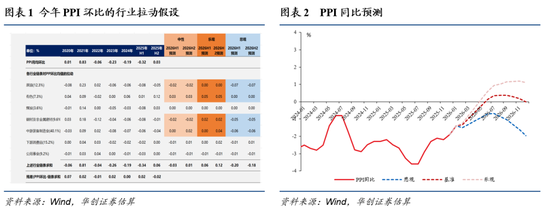
Summary of Key Points from Conference Call Industry or Company Involved - The discussion primarily revolves around the macroeconomic environment, U.S.-China relations, and the impact of tariff policies on various industries, particularly focusing on China's export sectors such as semiconductors and machinery. Core Insights and Arguments - **U.S.-China Relations Stability**: The market anticipates that U.S.-China relations will remain stable in the first half of 2026, supported by planned high-level meetings and positive attitudes from both sides [3] - **Tariff Policy Changes**: The U.S. Supreme Court's ruling on tariffs has led to a reduction in China's effective tariff rate from 29.8% to 22%, narrowing the gap with global rates by 6.5%. This is expected to benefit China's export sectors, especially semiconductors and machinery [4][22] - **Economic Recovery Indicators**: China's economic recovery is being validated through a three-step process, including positive CPI and PPI data, with expectations for PPI to turn positive by the end of Q2 2026 [7][8] - **Strong Consumer Demand**: During the Spring Festival, retail and catering sales increased by 8.6% year-on-year, indicating robust consumer demand. Port throughput also grew by 13.2%, reflecting active economic activity [8][9][10] - **Financial Data Insights**: January financial data showed strong corporate deposit growth, indicating potential for production investment and improved economic circulation. However, consumer loan growth remains weak [13][14] - **PPI Trends**: January 2026 PPI rose by 0.4%, marking the highest monthly increase since mid-2021. The forecast for PPI indicates a potential positive shift by mid-2026, driven by improved supply-demand dynamics in the manufacturing sector [16] Other Important but Possibly Overlooked Content - **AI and Economic Growth**: The development of AI is seen as a crucial factor in addressing U.S. debt issues and enhancing the long-term credibility of the dollar. AI-driven growth could lead to a scenario where inflation remains low, allowing for potential interest rate cuts [6] - **Old vs. New Economy Performance**: While traditional sectors like real estate and durable goods are underperforming, new economy sectors, particularly exports and midstream manufacturing, are thriving, contributing to overall economic growth [12] - **Global Monetary Policy Trends**: The global monetary policy landscape is characterized by continued easing, with expectations that the aggressive phase of monetary expansion will taper off by 2026 [18][19] - **Liquidity in Financial Markets**: Despite volatility, global liquidity remains healthy, with improvements in dollar liquidity and stable credit spreads, indicating a resilient financial environment [21] This summary encapsulates the key points discussed in the conference call, highlighting the macroeconomic context, industry-specific insights, and broader financial trends.