Quantum(QMCO)

Search documents
Quantum Enablers Poised for 40% Plus Growth in 2026: INTC, AVGO & TER
ZACKS· 2025-12-23 21:01
Core Insights - The quantum hardware sector, including companies like IonQ and D-Wave, is seen as a long-term growth opportunity but lacks guaranteed near-term earnings for 2026 [2] - Quantum enablers, which provide necessary infrastructure and services for quantum adoption, present more immediate investment opportunities [3][4] Quantum Enablers - Companies such as Intel, Broadcom, and Teradyne are identified as quantum enablers with projected earnings growth exceeding 40% in 2026 [4] - Advanced Micro Devices (AMD) is collaborating with IBM on quantum workloads, with an estimated earnings growth of 58% in 2026, primarily driven by data center demand [6] Post-Quantum Cryptography - There is a growing demand for post-quantum cryptography as governments and enterprises seek to secure data against future quantum threats [7] - SEALSQ Corp. has commercialized secure chips with post-quantum cryptography, projecting earnings growth of 66.7% in 2026 [8] Company-Specific Insights - Lockheed Martin (LMT) is advancing quantum technologies for defense applications, with a projected earnings growth of 34.8% in 2026 [9] - Intel is expected to achieve 83.4% earnings growth in 2026, leveraging its CMOS manufacturing for quantum advancements [14] - Broadcom is positioned for 42.5% earnings growth in 2026, driven by demand for quantum-resilient infrastructure [16] - Teradyne is projected to report nearly 45% earnings growth in 2026, supported by its expansion in photonics and semiconductor testing [19]




Which Tech Titan Will Win the Quantum Race (and Net You 100% Returns)?
The Motley Fool· 2025-12-23 20:23
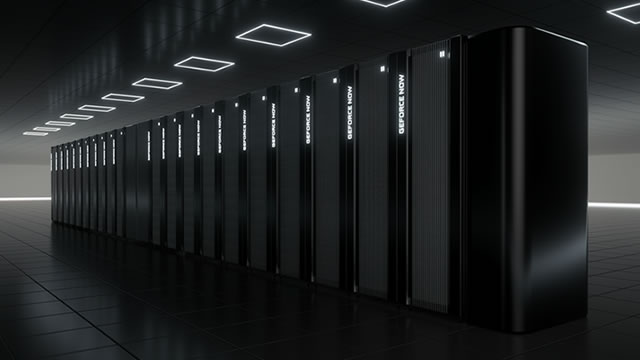
Core Insights - The quantum computing sector is expected to experience significant growth following the AI boom, with potential economic value reaching up to $850 billion by 2040 according to the Boston Consulting Group [1][2] Industry Overview - Quantum computing is anticipated to revolutionize complex calculations and problem-solving capabilities, leading to breakthroughs in drug discovery, encryption, and business optimization [2] - The transition to quantum computing will necessitate new chips and data centers, distinct from those used for AI workloads, indicating that current AI leaders may also emerge as leaders in quantum computing [3] Company Focus: Nvidia - Nvidia is positioning itself as a key player in the quantum computing space, leveraging its established reputation in AI chip manufacturing to enter the quantum market [5][7] - The company has introduced NVQLink, a technology that connects AI chips to quantum computers, and has formed partnerships with 17 quantum builders and nine scientific labs to support this initiative [6] - Nvidia is actively investing in quantum computing companies through its venture capital arm, NVentures, having invested in three quantum firms in the first half of 2025 [8] Financial Performance - Nvidia reported $57 billion in revenue for the third quarter of fiscal 2026, marking a 62% year-over-year increase, with net income rising by 59% to $31.8 billion [12] - The company holds $116.5 billion in total current assets, providing a strong financial foundation to support further investments in quantum technology [13] Market Position - Nvidia's business model focuses on providing essential infrastructure and chips for quantum computing, allowing it to benefit regardless of which specific quantum companies succeed [11] - The potential for Nvidia to double its value is supported by the rapid growth seen in quantum computing stocks, which have increased by over 1,000% in the past three years [10]

Does Rigetti's Vertical Integration Offer a Quantum Scaling Edge?
ZACKS· 2025-12-23 17:50
Core Insights - Rigetti Computing (RGTI) is leveraging a vertically integrated superconducting quantum computing stack, which includes in-house chip design, fabrication, packaging, and full-system deployment through Quantum Cloud Services, allowing for faster iterations and reduced reliance on third-party foundries [1][7] - The company's roadmap emphasizes modular scaling and integration with government labs, universities, and early enterprise customers, enhancing the relevance of its systems as use cases mature [2][7] - Rigetti's strategy indicates improved survivability and adaptability in the pre-scale phase of quantum computing, suggesting that vertical integration can provide a tangible scaling advantage over time [3] Peers Updates - Quantum Computing Inc. (QUBT) reported a significant third-quarter 2025 performance with revenue increasing approximately 280% year over year, indicating early commercial traction for its photonics-based quantum machines [4] - Arqit Quantum (ARQQ) focuses on quantum cybersecurity through its QuantumCloud platform, recently expanding customer contracts and updating revenue guidance to indicate meaningful growth [5] Financial Performance - Rigetti's shares have increased by 133.7% over the past six months, contrasting with a 5.1% decline in the industry [6] - The company has a price-to-book ratio of 23.52, which is above the industry average, and carries a Value Score of F [9] - The Zacks Consensus Estimate for Rigetti's 2025 earnings suggests an 88.9% decline from the previous year, with current estimates indicating a loss of $0.68 per share for the current year [10][11]


01 Quantum Inc. Announces Grant of Stock Options
TMX Newsfile· 2025-12-23 13:00
Core Viewpoint - 01 Quantum Inc. has announced the approval of 100,000 stock options for one of its Directors, with an exercise price of $0.89 per share, as part of its stock option plan [1]. Company Overview - 01 Quantum Inc., previously known as 01 Communique Laboratory Inc., specializes in post-quantum cybersecurity and remote access solutions [2]. - The company focuses on developing its IronCAP™ product line, which is patent-protected in the U.S. under patents 11,271,715 and 11,669,833 [2]. - Its remote access business unit offers secure services and products under the I'm InTouch and I'm OnCall brands, protected by various patents in the U.S., Canada, and Japan [2].

SuperQ to Launch ChatQLM at CES 2026: The First Consumer App Bridging Generative AI and Quantum Optimization
TMX Newsfile· 2025-12-23 12:00
Core Perspective - SuperQ Quantum Computing Inc. is set to launch ChatQLM, the first consumer application powered by quantum and supercomputing technology, at CES 2026, marking a significant advancement in accessible technology [1][2]. Product Overview - ChatQLM is designed to bridge conversational AI and quantum computing, transforming smartphones into decision engines for professionals, investors, and students [2][3]. - The application utilizes a proprietary Quantum Leveraged Model (QLM) to address the limitations of traditional Large Language Models (LLMs) in complex decision-making and optimization [2][3]. Target Audience - The app targets analytical users, including business professionals, investors, consultants, entrepreneurs, tech enthusiasts, students, and analysts, providing decision support for personal and professional challenges [3][4]. Market Positioning - ChatQLM aims to democratize quantum computing, offering a commercial-ready utility for a vast majority of users who have been excluded from the quantum revolution [4][6]. - The app will be showcased at CES with live demonstrations, emphasizing its role as the world's first mobile quantum computing application [4]. Technical Features - ChatQLM employs a Hybrid Intelligence Architecture that routes natural language queries to the optimal compute engine, delivering actionable outcomes and interactive visualizations [11]. - The app will be available on multiple platforms, including web, Google Play Store, and Apple App Store, and will feature a freemium model with various subscription tiers [11].

My Top 3 Quantum Computing Stocks to Buy in December
The Motley Fool· 2025-12-23 07:55
Core Insights - Quantum computing is expected to significantly transform the technological landscape in the coming years, presenting substantial investment opportunities [2] Company Summaries Alphabet - Alphabet, the parent company of Google, has been advancing quantum computing through Google Quantum AI since 2012, focusing on superconducting quantum computing [4] - Google Quantum AI has achieved two milestones: quantum supremacy in 2019 and the unveiling of the first logical qubit prototype in 2023 [6] - Current market cap is $3.7 trillion, with a gross margin of 59.18% and a current stock price of $309.80 [5][6] Amazon - Amazon is a major player in quantum computing, offering Amazon Braket, a quantum cloud computing service that aids in developing quantum algorithms and software [8] - The company is developing its own quantum technology, including a new chip called Ocelet, which can reduce quantum error correction costs by up to 90% [11] - Amazon's market cap is $2.4 trillion, with a gross margin of 50.05% and a current stock price of $228.43 [9][10] Microsoft - Microsoft is investing heavily in quantum computing through its Azure cloud platform, which includes a "Quantum Ready" program to help organizations adapt to quantum technologies [12][13] - The company has developed the Majorana 1 chip, utilizing topological superconductors, which is a significant step towards integrating a million qubits on a single chip [15][16] - Microsoft's market cap is $3.6 trillion, with a gross margin of 68.76% and a current stock price of $484.92 [14][15] Common Characteristics - All three companies—Alphabet, Amazon, and Microsoft—are part of the "Magnificent Seven" stocks, operate widely used cloud platforms, and are leaders in artificial intelligence [17] - None of these companies are pure-play quantum computing firms, which mitigates investment risk associated with uncertain quantum technologies [18] - These companies possess the financial flexibility to acquire promising smaller rivals in the quantum computing space [19]




Stock Market Today, Dec. 22: D-Wave Quantum Jumps After Announcing CES 2026 Commercial Technology Showcase
The Motley Fool· 2025-12-22 22:52
Core Insights - Investors are evaluating the potential of quantum computing stocks, particularly D-Wave Quantum, in light of upcoming CES 2026 plans and increasing momentum in the quantum sector [1][3] Company Overview - D-Wave Quantum, a developer of quantum computing systems and services, saw its stock price rise by 20.02% to $32.19, with a market capitalization of $9.4 billion [2] - The company has experienced a significant growth of 216% since its IPO in 2020, with trading volume reaching 63 million shares, which is 28% above its three-month average [2] Market Performance - The S&P 500 and Nasdaq Composite indices increased by 0.64% and 0.52%, respectively, while other quantum computing companies like IonQ and Rigetti Computing also saw notable gains of 11.10% and 13.13% [4] - The overall market sentiment in the quantum sector is optimistic, driven by expectations of commercialization and new system launches [4] Investor Sentiment - Investors are particularly focused on D-Wave's Advantage2 quantum annealing system, which is available through cloud services or on-site installation, anticipating promising use-case scenarios to be presented at CES 2026 [5] - Analysts from Jefferies and Wedbush have initiated coverage on D-Wave, recommending it as a buy, which has contributed to positive investor sentiment ahead of the CES event [6]


Quantum Stocks 2026: Can IONQ & QBTS Follow NVDA's Playbook?
ZACKS· 2025-12-22 21:01
Industry Overview - The global quantum computing market is in its early stages but is experiencing rapid growth, with revenues projected to reach approximately $1.08 billion in 2026, up from around $0.8 billion in 2025, and long-term forecasts suggest it could reach $16.3 billion by 2030 [1] - Sentiment among technology leaders regarding quantum computing is shifting, with NVIDIA CEO Jensen Huang noting that the sector is approaching an "inflection point," indicating meaningful advancements, albeit on a different adoption curve compared to generative AI [2] Government and Corporate Investment - Significant public and private capital is being directed towards quantum computing, with billions committed by governments in the US, EU, China, and India for research, infrastructure, and workforce development, indicating a strategic long-term focus [4] - The US Department of Energy proposed $2.5 billion in funding for quantum initiatives from 2026 to 2030, while China has allocated around $15 billion for quantum projects [4] - Major corporations like IBM, Google, Microsoft, NVIDIA, and JPMorgan are actively investing in quantum research, with hyperscale cloud providers positioned to monetize quantum services ahead of full fault-tolerant machines [5] Company Performance - IonQ reported a remarkable 222% year-over-year revenue growth and achieved a world-record two-qubit gate performance, indicating strong technological advancement [9] - D-Wave Quantum experienced a 235% year-to-date revenue increase, with significant bookings for its Advantage2 annealing system, reflecting growing commercial demand [9] Future Projections - IonQ is expected to see earnings growth of 65.8% and sales growth of 83.3% in 2026, with a current stock price target suggesting a potential increase of 55.7% [12] - D-Wave is projected to achieve earnings growth of 7% and sales growth of 61.1% in 2026, with a stock price target indicating a possible 44.3% increase [16] Investment Considerations - Investors are advised to differentiate between the long-term potential of quantum technology and the current market hype, favoring diversified exposure through larger technology firms alongside pure-play quantum stocks [10] - Pure-play quantum companies like IonQ and D-Wave may present asymmetric upside but come with higher volatility and execution risks, necessitating a long-term investment mindset [10]


WiMi Releases Next-Generation Hybrid Quantum Neural Network Structure Technology, Breaking Through the Bottleneck of Image Multi-Classification
Prnewswire· 2025-12-22 15:45
Core Viewpoint - WiMi Hologram Cloud Inc. has launched a hybrid quantum neural network structure (H-QNN) that integrates classical convolutional neural networks (CNN) with quantum neural networks (QNN) to enhance image multi-classification capabilities, achieving superior classification accuracy and stability compared to existing algorithms [1][13]. Group 1: Technology Overview - The H-QNN design combines classical abstraction with quantum discrimination, consisting of three main modules: feature dimensionality reduction and encoding, quantum state transformation, and hybrid decision and transfer learning [2]. - The feature dimensionality reduction module utilizes CNN to extract low-dimensional features, employing an improved angle encoding method to efficiently map features to quantum states [3]. - The quantum state transformation module performs high-dimensional feature mapping and nonlinear discrimination, using parameterized rotation gates and controlled entanglement gates to maintain gradient balance during training [4]. - The hybrid decision and transfer learning module integrates quantum computing results with classical decision layers, enhancing generalization performance through a transfer learning mechanism [5]. Group 2: Innovation Points - The architectural design achieves deep integration of CNN and QNN, moving beyond traditional models by adopting a three-stage structure for feature extraction, quantum mapping, and decision-making [8]. - The encoding strategy employs a joint dimensionality reduction scheme of angle encoding and PCA, addressing quantum encoding dimension limitations and maximizing information fidelity [9][10]. - The training strategy introduces a transfer learning mechanism and parameter sharing to mitigate risks of gradient vanishing and overfitting, along with an early stopping strategy based on quantum fidelity metrics [11]. Group 3: System Implementation - The system utilizes a heterogeneous computing architecture, running classical components on CPU/GPU platforms while executing quantum parts in FPGA-based quantum simulation modules, significantly improving training speed [12]. - This hybrid computing architecture demonstrates performance advantages over pure CPU or GPU simulations, marking a significant advancement in practical applications of quantum artificial intelligence [13]. Group 4: Company Background - WiMi Hologram Cloud Inc. specializes in holographic cloud services, focusing on areas such as in-vehicle AR holographic HUD, 3D holographic pulse LiDAR, and metaverse holographic technologies, positioning itself as a comprehensive solution provider in the holographic AR technology sector [14].

Quantum eMotion Becomes Top Holding in Defiance Quantum ETF
TMX Newsfile· 2025-12-22 15:44
Core Insights - Quantum eMotion Corp. has become the largest single holding of the Defiance Quantum ETF, indicating significant institutional adoption of quantum security technologies [1][3]. Group 1: Company Overview - Quantum eMotion is a Canadian leader in quantum-safe cybersecurity, focusing on Quantum Random Number Generation (QRNG), post-quantum cryptography, and Entropy-as-a-Service solutions [1][6]. - The company aims to meet the increasing demand for affordable security solutions for connected devices, positioning itself as a pioneer in both classical and quantum cybersecurity [6]. Group 2: ETF and Market Position - Following the December 2025 semi-annual rebalancing of the BlueStar Quantum Computing and Machine Learning Index, Quantum eMotion's position in the Defiance Quantum ETF (QTUM) increased to approximately 2.18% of the ETF's portfolio, equating to 18.48 million shares [2]. - QTUM, with over $3 billion in assets under management, is recognized as the world's leading pure-play quantum computing ETF, holding a diversified portfolio of global technology and quantum innovators [2][5]. Group 3: Strategic Implications - The inclusion as the largest holding in QTUM validates Quantum eMotion's strategy and technology, highlighting the growing institutional recognition of quantum cybersecurity as essential for future technologies such as AI, cloud, healthcare, and blockchain [3][4]. - This milestone enhances Quantum eMotion's visibility among U.S. institutional investors and supports its strategic goals, including commercialization acceleration and expanded partnerships [4].