Seek .(SKLTY)

Search documents
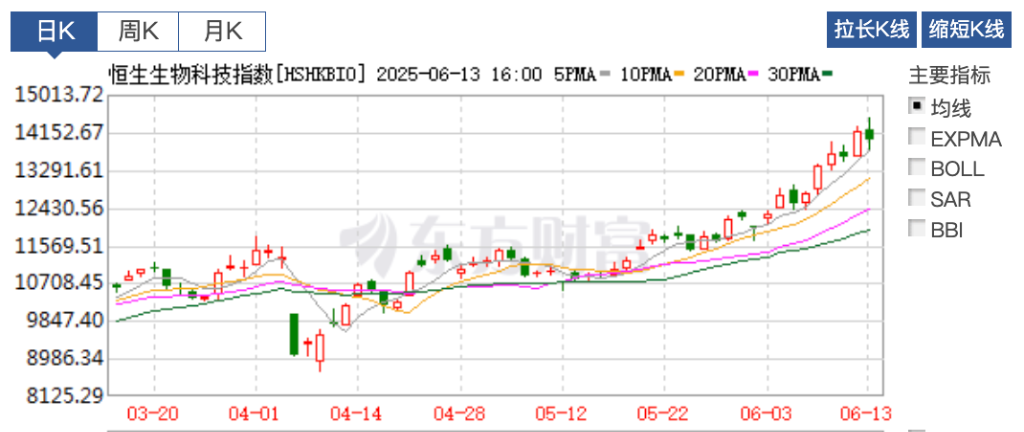
恒生生科指数1月以来涨超60%,中国创新药的“DeepSeek时刻”超过了AI
Hua Er Jie Jian Wen· 2025-06-15 11:44
Core Insights - The Chinese innovative pharmaceutical industry is experiencing a significant surge, with the Hang Seng Biotechnology Index rising over 60% this year, surpassing the 17% increase in the AI sector [1][3] - The surge is driven by a series of billion-dollar licensing deals, successful IPOs, and strong R&D pipelines, igniting investor enthusiasm [1][3] Licensing and IPO Trends - In Q1 2025, the total value of mergers and licensing transactions involving Chinese pharmaceutical companies doubled to $36.9 billion, accounting for over half of the global total of $67.5 billion [3] - Notable licensing deals include Pfizer's $1.25 billion upfront payment to 3SBio Inc. for an experimental cancer drug and Bristol-Myers Squibb's announcement of a licensing deal with BioNTech SE worth up to $11.5 billion [3][4] - The IPO market is also thriving, with companies like Duality Biotherapeutics Inc. and Jiangsu Hengrui Medicine seeing significant stock price increases post-IPO [4][5] Market Confidence and Financial Performance - The series of licensing deals and IPOs has boosted market confidence in the innovative drug sector, making the Hang Seng Biotechnology Index a standout performer in Asia [5] - Chinese innovative pharmaceutical companies are moving towards profitability, breaking the stereotype of continuous cash burn. For instance, BeiGene achieved profitability in Q1 2025, with revenue guidance of $4.9 to $5.3 billion [7][9] BD (Business Development) Growth - The increase in profitability is attributed to the normalization of BD licensing income, with Chinese companies seeing substantial upfront payments from licensing deals [9][11] - As of June 8, 2025, Chinese companies' upfront payments for licensing transactions exceeded $2.5 billion, reflecting a fundamental shift in the global value chain for Chinese innovative drugs [11] Technological Innovations and Market Dynamics - Technological innovations, particularly in areas like ADC (Antibody-Drug Conjugates) and dual antibodies, are driving the growth of the Chinese innovative drug sector [15][17] - The global demand for innovative drugs is increasing, with significant opportunities arising from the expiration of patents for blockbuster drugs, creating a strong need for new products from Chinese companies [11][23] Talent and Policy Support - The return of overseas talent and favorable policies are providing long-term momentum for the industry, enhancing domestic R&D capabilities [23] - Collaborations between Chinese pharmaceutical companies and U.S. firms are becoming more common, positioning these companies as service providers rather than mere exporters [23]



周末重点速递丨中金称全年阶段性底部可能已经出现;券商热议中国军贸的“DeepSeek时刻”来临
Mei Ri Jing Ji Xin Wen· 2025-06-15 02:11
Group 1: Automotive Data Regulations - The Ministry of Industry and Information Technology (MIIT) of China has solicited opinions on the "Automotive Data Export Security Guidelines (2025 Edition)" [1] - Automotive data processors must declare data export security assessments under specific conditions, including providing important data or personal information to overseas entities [1] Group 2: Market Outlook and Investment Strategies - The Chinese stock market is expected to experience continued divergence from the U.S. market, with a focus on a barbell strategy and opportunities in overseas expansion [2] - The AI sector is anticipated to drive valuation recovery in the internet industry, while external geopolitical factors remain a significant influence on market sentiment [2] - The Chinese new energy vehicle (NEV) market is projected to grow by 24% year-on-year, with a penetration rate of 53.3% [2] - The pharmaceutical sector is optimistic about domestic innovative drugs achieving overseas authorization, supported by national policies [3] Group 3: A-Share Market Analysis - Historical "bottoms" in the A-share market may have already occurred, with resilience observed despite external uncertainties [4] - The market is expected to continue narrow fluctuations, with potential upward movement dependent on macroeconomic policies, particularly fiscal measures [4] Group 4: Industry Opportunities - Investment opportunities are identified in three main areas: capacity cycle opportunities (industrial metals, lithium batteries, innovative drugs), high-growth sectors less correlated with economic cycles (AI industry), and dividend-paying sectors (consumer leaders, public utilities) [5] Group 5: Military Trade and Defense Industry - China's military trade is evolving, with the country transitioning from a "follower" to a "leader" in the global military trade landscape [6] - Investment opportunities in the defense sector include radar systems, guided equipment, drones, military aircraft, armored vehicles, and naval vessels [6] Group 6: Stablecoin Market Dynamics - The stablecoin market is gaining attention, with implications for financial technology and international currency dynamics [7] - USDT, a widely used stablecoin, has an issuance scale exceeding $150 billion, representing a new generation of payment technology [7] - Future focus on the listing of Circle and related companies in the stablecoin space is recommended [8]
ESG信披观察 | DeepSeek概念股普遍加大绿电使用并升级算力 专家提醒:注意碳排放数据真实性
Mei Ri Jing Ji Xin Wen· 2025-06-14 07:00
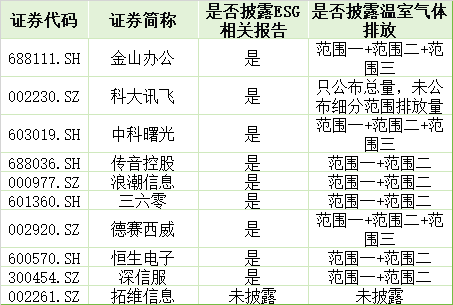
Group 1 - The core idea of the articles revolves around the development of AI and its implications for ESG (Environmental, Social, and Governance) disclosures among companies in the DeepSeek concept stock category, highlighting the importance of using green energy and reducing carbon footprints [1][2][4]. - Companies in the DeepSeek concept stock category are increasingly disclosing their ESG reports, with 24 out of 42 listed companies reporting a disclosure rate of 57% for the 2024 fiscal year [1][2]. - The top 10 companies by market capitalization in this category have shown a commitment to transparency, with 9 of them disclosing greenhouse gas emissions data, including 3 that reported Scope 3 emissions [2][3]. Group 2 - The AI industry is facing significant energy consumption challenges, with models like GPT-3 and GPT-4 requiring substantial training power, leading to high electricity usage [2][6]. - Companies like iFlytek and Kingsoft Office are adopting renewable energy sources, with iFlytek reporting that 90% of its data center's energy comes from green electricity as of May 2024 [4][5]. - The implementation of innovative cooling technologies and energy-efficient designs in data centers is being pursued by companies like Inspur and iFlytek to reduce energy consumption and carbon emissions [5][6]. Group 3 - The AI resource allocation is uneven, creating challenges for equitable access to AI technologies, which can lead to market marginalization for resource-poor enterprises [8]. - iFlytek is leveraging AI to promote social equity in education and healthcare, while 360 Security is aiding the digital transformation of small and medium-sized enterprises through its cloud platform [8]. - The challenge remains in lowering the cost and barriers to access AI resources to ensure fair competition and a healthy business environment [8].


IBM陈旭东:DeepSeek很热,但影响尚未全面到来!
news flash· 2025-06-13 10:32
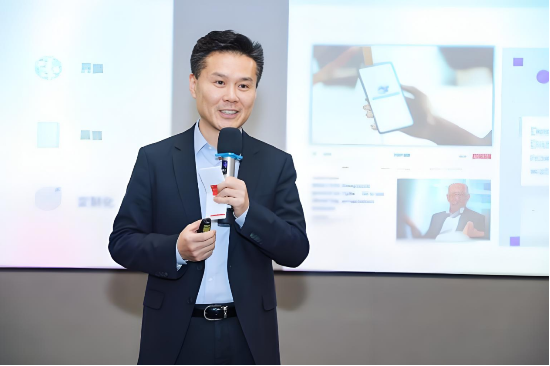
Group 1 - The core viewpoint is that while generative AI, such as DeepSeek, is gaining popularity, its significant impact on enterprises is yet to be fully realized [1] - The areas where generative AI excels, including image generation, translation, and coding, are developing rapidly, but the actual transformation of business processes and efficiency improvements remain limited [1] - Chen Xudong, Chairman and General Manager of IBM Greater China, provides a measured assessment of the current state of generative AI development [1]

独家对话IBM陈旭东:DeepSeek很热,但影响尚未全面到来! 丨 科创100人
Xin Lang Ke Ji· 2025-06-13 10:24
Core Insights - The impact of generative AI on enterprises is still limited, with significant changes in specific fields like image generation, translation, and coding, but not in overall business processes and efficiency [3][4] - Many enterprises need to enhance their digitalization before fully leveraging AI technologies, as a solid information technology foundation is crucial for AI applications [4][5] - Companies often misunderstand AI's capabilities, believing it to be omnipotent and easy to implement, which leads to miscalculations in return on investment (ROI) [5][6] Digitalization and AI Investment - Enterprises must develop knowledge bases and intelligent Q&A systems as foundational AI investments, which are essential for future growth [7] - AI investment should be viewed in three areas: hardware, software platforms, and personnel training, all of which are necessary for successful AI implementation [6][8] - The current AI investment landscape is characterized by a focus on future potential rather than immediate financial returns, with many companies still in the early stages of development [8][9] Market Dynamics and Strategy - The AI market consists of three main types of companies: those with large models and cloud services, those offering customized development, and those like IBM that provide integrated platforms [9][10] - IBM's hybrid cloud and AI strategy, established seven years ago, positions the company well in the market, leveraging a wide range of software tools for client needs [10] - The focus of IBM's services is shifting towards private and overseas enterprises, building on its long-standing relationships and trust within the Chinese market [10]
阿里千问与DeepSeek入选全球AI开源贡献榜前十
news flash· 2025-06-12 10:33
Core Insights - The latest AI open-source contribution ranking released by Hugging Face highlights significant achievements by Chinese teams, with Alibaba's Tongyi Qianwen ranking fifth globally and first in China [1] - DeepSeek is also recognized, placing ninth, making it one of the only two non-U.S. institutions in the top ten [1] Summary by Categories Ranking and Performance - Alibaba's Tongyi Qianwen is ranked fifth globally and first in China in the AI open-source contribution ranking [1] - DeepSeek is positioned ninth, showcasing strong performance among global competitors [1] Evaluation Criteria - The ranking is based on an assessment of various factors including open-source models, datasets, developer engagement, community activity, and global influence [1]

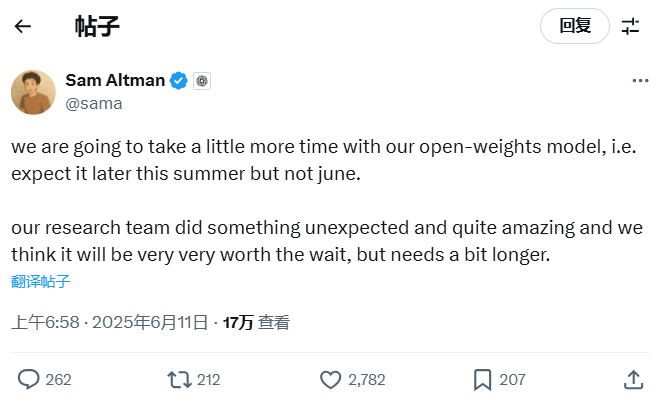
OpenAI开源模型发布推迟至夏末,为了狙击DeepSeek R2?
Hua Er Jie Jian Wen· 2025-06-11 02:37
Group 1 - OpenAI has postponed the release of its anticipated open-source model to "later this summer" instead of June, as announced by CEO Sam Altman [1] - The open-source model aims to match the complex reasoning capabilities of GPT-4o and surpass leading open-source models like DeepSeek's R1 [2] - The AI market competition is intensifying, with new models being launched by competitors such as Mistral and Qwen, which are capable of switching between deep reasoning and traditional quick responses [2] Group 2 - Altman acknowledged that OpenAI has historically made mistakes in its open-source strategy, and the new model is seen as a crucial step to repair developer relations [2] - There are speculations that the delay may be a strategic move to counter DeepSeek's upcoming R2 model, which is expected to be released soon [2][3] - DeepSeek R2 is anticipated to have significant upgrades in technical architecture, functionality, and resource efficiency, with a predicted 87% reduction in AI invocation costs [3] Group 3 - DeepSeek's founder, Liang Wenfeng, emphasizes the goal of making China a contributor to innovation rather than a passive participant [4] - DeepSeek's product iteration schedule is robust, with plans for major updates every quarter, including the upcoming V2.5 and V3 versions [4]
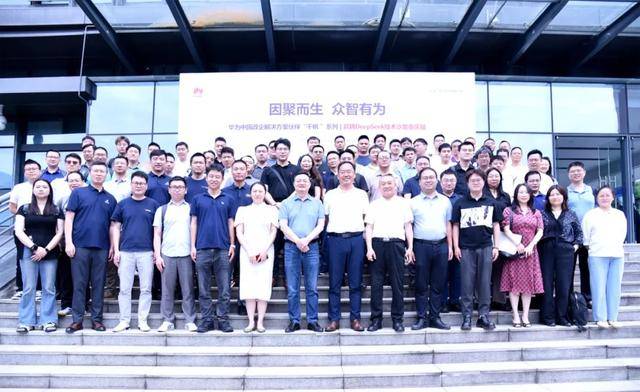
“千帆”系列昇腾DeepSeek技术沙龙重庆站成功举办
Sou Hu Cai Jing· 2025-06-10 23:57
Group 1 - The event "DeepSeek Technology Salon" was successfully held in Chongqing, focusing on the collaboration between Ascend AI and DeepSeek technology, with over 100 experts from more than 40 industry clients and partners participating [1][4] - A joint solution for educational intelligent applications was launched by JiFa Education and Huawei, integrating multi-modal AI and adaptive learning algorithms to support various educational scenarios [2] - The Chongqing Artificial Intelligence Innovation Center aims to leverage its computing power resources to create a leading public service platform for AI in the western region, contributing to the development of the AI industry nationwide [4][13] Group 2 - Huawei's strategy is shifting from traditional "software customization + services" to a model combining "computing power + data + large models," enhancing service value and reshaping the industry landscape [8][10] - The Chongqing OpenLab is designed to provide a comprehensive platform for innovation, integrating various centers to facilitate the successful implementation of industry solutions and business scenarios [11] - The Chongqing Artificial Intelligence Innovation Center's first phase has a computing power of 400P, focusing on promoting AI technology innovation, industry development, and talent cultivation [13]
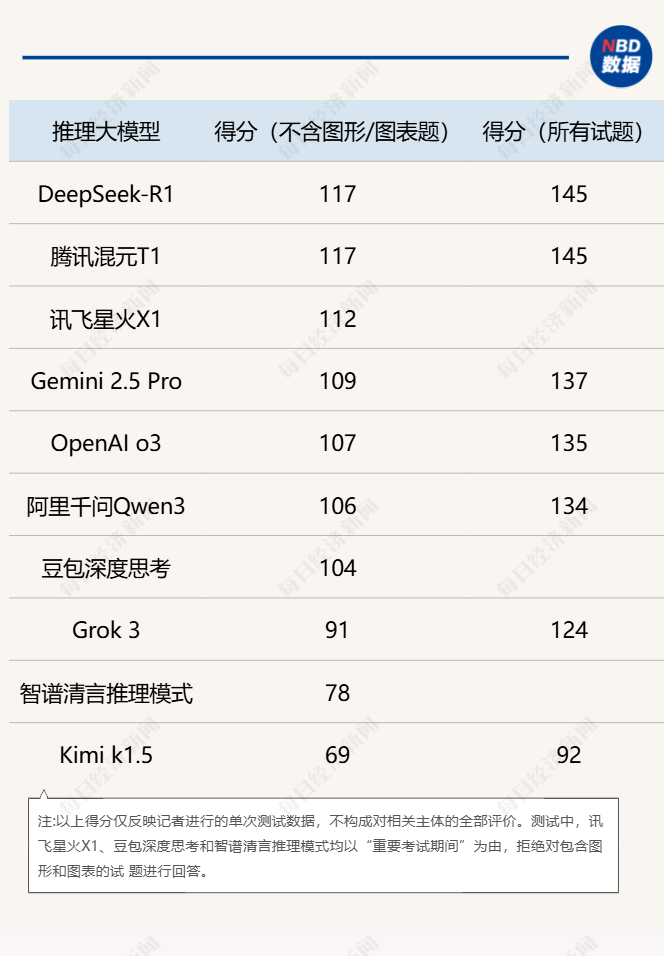
十大推理模型挑战2025年高考数学题:DeepSeek-R1、腾讯混元T1并列第一,马斯克的Grok 3遭遇“滑铁卢”
Mei Ri Jing Ji Xin Wen· 2025-06-10 13:53
Core Insights - The discussion around the difficulty of mathematics in the 2025 college entrance examination continues to be a hot topic, with a focus on the performance of various AI reasoning models in a standardized test based on the new curriculum mathematics I paper [1] Group 1: AI Model Performance - The evaluation tested ten AI reasoning models, including DeepSeek-R1, Tencent's Mix Yuan T1, OpenAI's o3, Google's Gemini 2.5 Pro, and xAI's Grok 3, to assess their mathematical capabilities [1] - DeepSeek-R1 and Tencent's Mix Yuan T1 achieved perfect scores of 117, demonstrating exceptional performance in algebra and function problems [4] - The scores of other models included: iFlytek's Spark X1 with 112, Gemini 2.5 Pro with 109, OpenAI's o3 with 107, Alibaba's Qwen 3 with 106, and Doubao's Deep Thinking with 104 [2][7] Group 2: Evaluation Methodology - The assessment utilized a standardized test with a total score of 150, but excluded questions requiring graphical analysis to ensure a level playing field among the models [3] - Scoring was based on high school examination standards, with a focus on final answers for open-ended questions rather than the process [3] Group 3: Notable Failures - Grok 3, developed by xAI and touted as the "strongest AI," ranked third from the bottom with a score of 91, primarily due to its inability to correctly interpret multiple-choice questions [8] - The second lowest was the Zhiyu Qingyan reasoning model, scoring 78, which often faltered at the final step of reasoning, leading to lost points [8][10] - Kimi k1.5 ranked last, suffering significant score losses on the final two challenging questions [10]
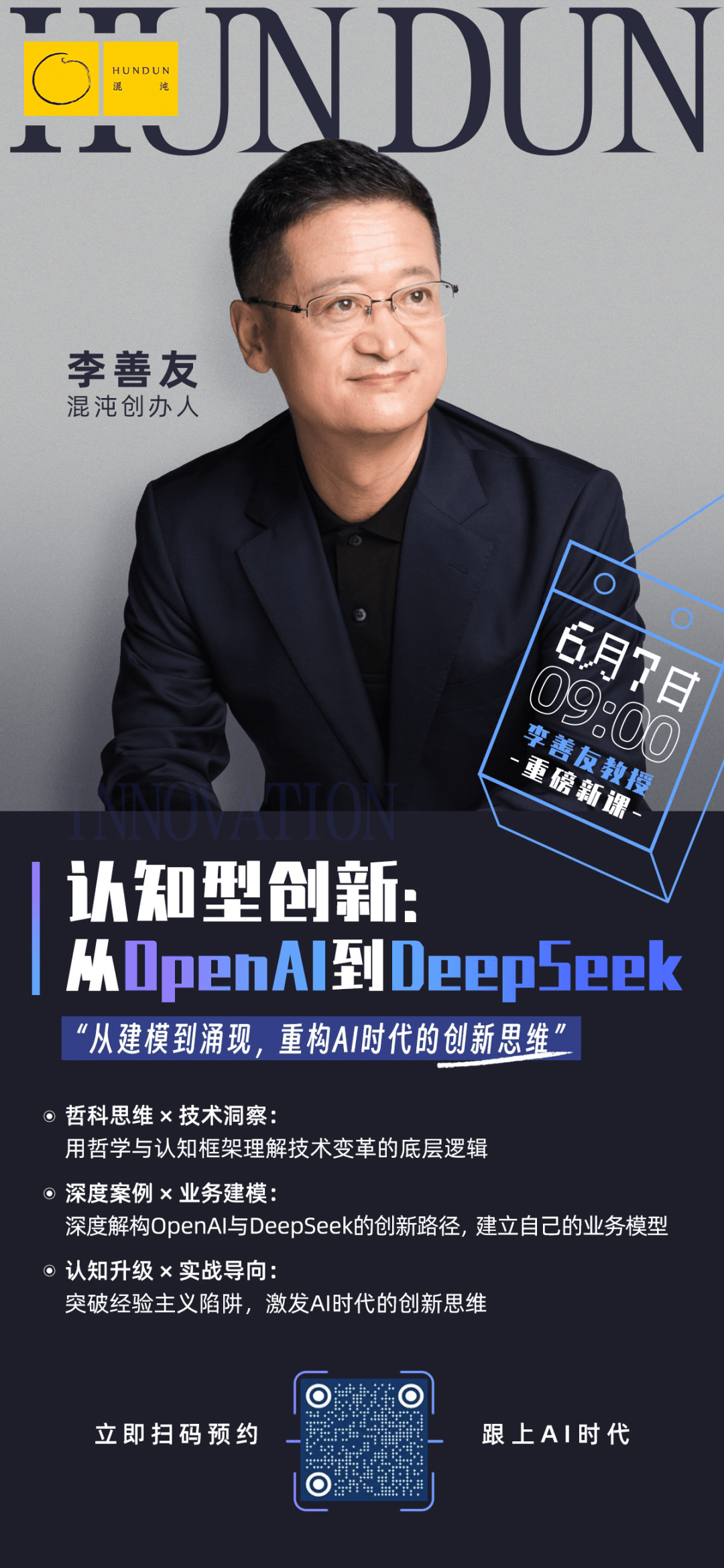
一文了解DeepSeek和OpenAI:企业家为什么需要认知型创新?
Sou Hu Cai Jing· 2025-06-10 12:49
Core Insights - The article emphasizes the transformative impact of AI on business innovation and the necessity for companies to adapt their strategies to remain competitive in the AI era [1][4][40] Group 1: OpenAI's Journey - OpenAI was founded in 2015 by Elon Musk and Sam Altman with the mission to counteract the monopolistic tendencies of tech giants and promote open, safe, and accessible AI [4][7] - The development of large language models (LLMs) by OpenAI is attributed to the effective use of the Transformer architecture and the Scaling Law, which predicts a linear relationship between model size, training data, and computational resources [8][11] - The emergence of capabilities in models like GPT is described as a phenomenon of "emergence," where models exhibit unexpected abilities when certain thresholds of parameters and data are reached [12][13] Group 2: DeepSeek's Strategy - DeepSeek adopts a "Limited Scaling Law" approach, focusing on maximizing efficiency and performance with limited resources, contrasting with the resource-heavy strategies of larger AI firms [18][22] - The company employs innovative model architectures such as Multi-Head Latent Attention (MLA) and Mixture of Experts (MoE) to optimize performance while minimizing costs [20][21] - DeepSeek's R1 model, released in January 2025, showcases its ability to perform complex reasoning tasks without human feedback, marking a significant advancement in AI capabilities [23][25] Group 3: Organizational Innovation - DeepSeek promotes an AI Lab paradigm that encourages open collaboration, resource sharing, and dynamic team structures to foster innovation in AI development [27][28] - The organization emphasizes self-organization and autonomy among team members, allowing for a more flexible and responsive approach to research and development [29][30] - The company's success is attributed to breaking away from traditional corporate constraints, enabling a culture of creativity and exploration in foundational research [34][38]