UnitedHealth(UNH)

Search documents
Is UnitedHealth Group (UNH) Trading at an Attractive Valuation?
Yahoo Finance· 2025-11-19 13:25
Market Performance - The US equity market continued its rally in Q3 2025, with the S&P 500 returning 8.1% and the Russell 1000 Value surging 5.3% [1] - The SCCM Value Equity Strategy returned 6.9% (gross) and 6.8% (net) in the same quarter, outperforming the Russell 1000 Value's 5.3% return but underperforming the S&P 500's 8.1% return [1] - Year-to-date, the strategy returned 13.0% (gross), compared to Russell 1000 Value's +11.7% and S&P 500's +14.8% [1] UnitedHealth Group Overview - UnitedHealth Group Incorporated (NYSE:UNH) is a diversified healthcare company with segments including UnitedHealthcare, Optum Health, Optum Insight, and Optum Rx [2] - The stock experienced a one-month return of -13.25% and a 52-week loss of 47.78%, closing at $313.58 with a market capitalization of $284.053 billion on November 18, 2025 [2] Investment Strategy and Challenges - UnitedHealth was purchased in the Value strategy during Q3 2025, recognized as the largest diversified managed care organization in the US [3] - The company's vertically integrated model combines insurance, pharmacy benefit management, data analytics, and provider services, providing a durable cost advantage and network effects [3] - Under previous leadership, the company faced challenges due to aggressive expansion and higher-than-expected medical costs, leading to a decline in earnings [3] - A multi-year turnaround is underway under new leadership, with a focus on cultural reform and operational discipline, aiming for at least $16 in adjusted EPS for 2025 [3] - Strategic actions include repricing for higher medical trends, exiting certain Medicare Advantage plans, narrowing networks, and a conservative approach to ACA participation [3] - Optum Health has reduced its 2025 new patient growth target to 300K and expects nearly $1 billion in cost reductions in 2026 [3]

4 No-Brainer Dividend Stocks to Buy Right Now -- and a 17% Dividend Yield to Avoid
The Motley Fool· 2025-11-19 09:20
Core Insights - In uncertain economic times, dividend-paying stocks are considered a safer investment option due to their potential for consistent payouts regardless of market fluctuations [1][2] Company Summaries UnitedHealth Group - UnitedHealth Group's share price has decreased by 36% year-to-date, primarily due to a Department of Justice investigation for alleged Medicare fraud [3][4] - The company is viewed as "too big to fail," and its valuation may become more attractive for investors believing in its recovery [3] - The growing and aging U.S. population will continue to drive demand for healthcare services [3] - Current market capitalization is $284 billion, with a recent dividend yield of 2.73%, and total yield including share buybacks is approximately 5.75% [5][6] Bank of America - Bank of America is another holding of Berkshire Hathaway, which owns about 8% of the bank [7] - The bank has been reducing its position, possibly due to decreasing interest rates affecting profitability [7] - Despite this, Bank of America has growth drivers in brokerage accounts and wealth management services, which are less impacted by interest rates [9] - The recent dividend yield is 2.15%, with total annual payout per share increasing from $0.20 in 2015 to $1.06 recently [10] Lennar - Lennar is a major American homebuilder, benefiting from the ongoing demand for affordable housing [11] - Falling interest rates could stimulate home buying, positively impacting Lennar's business [13] - The company has a backlog of nearly 17,000 homes valued at $6.6 billion and has repurchased $507 million worth of shares [14] - Recent dividend yield stands at 1.7%, with significant shareholder value enhancement through stock buybacks [14] Vanguard International High Dividend Index ETF - The Vanguard International High Dividend Index ETF focuses on dividend-paying stocks outside the U.S., appealing to investors concerned about the domestic market [15] - The ETF has a dividend yield of 3.9% and a five-year average annual return of 14% [16] FMC - FMC, a specialist in crop protection and nutrition, has a high dividend yield of 17% but has seen a stock price drop of nearly 73% year-to-date [17][18] - The company recently cut its per-share dividend by 92%, indicating financial distress [18] - FMC's challenges are linked to its India business, which is being divested, making it a riskier investment compared to other alternatives [18]



Health insurance weakness is a major opportunity for investors, says Bernstein's Lance Wilkes
CNBC Television· 2025-11-18 23:10
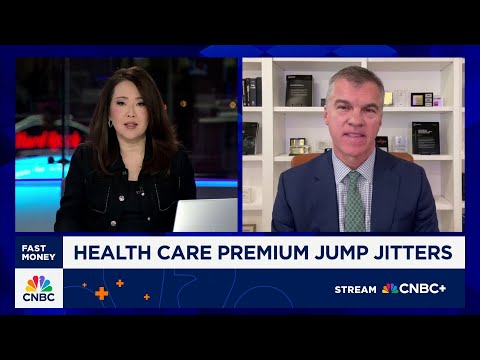
United Health and Elevance lower today amid growing worries over a spike in premiums tied to the expiration of Affordable Care Act premium tax credits. The change would affect millions of Americans. Let's bring in Lance Wilks who covers healthc care services stocks for Bernstein Research.Lance has got an outperform rating on United Health and Elevance. Lance, great to have you with us. >> Great to be here.First, I want to I want to get your take on on President Trump's truth social post earlier today basica ...

UnitedHealth Group Taps Former FDA Chief And Medicare Advisor To Board
Forbes· 2025-11-18 14:55
Core Insights - UnitedHealth Group appointed Dr. Scott Gottlieb, former FDA commissioner, to its board of directors, which is significant for the company as it faces rising costs in health insurance, particularly in Medicare Advantage plans [2][3][4] Company Overview - UnitedHealth Group operates the largest health insurer in the U.S., UnitedHealthcare, and one of the largest health services companies, Optum, which includes pharmacy benefit management and various medical care provider assets [4] Industry Context - The health insurance industry is currently challenged by the introduction of new, expensive biotechnology drugs, such as GLP-1 drugs for weight loss, which adds pressure on insurers [3][4] Leadership and Expertise - Dr. Gottlieb brings extensive experience from both public and private sectors, having served in key roles during previous administrations and is recognized for advocating integrated healthcare approaches [5][6] - His appointment is expected to enhance UnitedHealth's strategic direction in making healthcare more innovative and affordable while improving patient outcomes [7]

What Could Ignite UNH Stock's Next Major Rally?
Forbes· 2025-11-18 13:40
Core Viewpoint - UnitedHealth Group (UNH) stock has experienced a significant decline of 36% year-to-date, but historical patterns suggest a potential for a major rally in the near future, driven by strong fundamentals and strategic initiatives [3][5][12]. Financial Performance - UNH stock is down 36% year-to-date, primarily due to margin compression and broader market challenges [3]. - Despite the decline, UnitedHealth has a history of strong recoveries, with gains exceeding 30% in less than two months during critical years such as 2010, 2019, 2020, 2021, and 2025 [3]. - The company has demonstrated resilience with strong third-quarter results and an improved outlook, indicating a recovery from previous lows [5]. Strategic Initiatives - UnitedHealth is focusing on strategic leadership and proactive AI integration within its Optum division to enhance operational efficiency [5]. - The anticipated resolution of the DOJ investigation and favorable CMS MA rates for 2026 could alleviate regulatory challenges and support earnings per share (EPS) recovery [12]. - Accelerated growth in Optum, driven by the adoption of value-based care and AI investments, is expected to enhance margins and elevate overall revenue by 2027 [12]. Market Dynamics - The company has shown robust and steady revenue growth, with strong cash generation margins, emphasizing its solid business fundamentals [9]. - However, even strong stocks like UNH can experience significant declines during broader market downturns, highlighting the importance of understanding investment risks [10]. Future Outlook - Stabilization of medical costs in Medicare Advantage and effective repricing in 2026 could restore confidence in profitability and outlook for this segment [12]. - The potential for upcoming catalysts could propel UnitedHealth stock to new heights, offering significant returns for investors [4].
联合健康任命前美国FDA局长为其董事会成员
Ge Long Hui A P P· 2025-11-18 13:04
格隆汇11月18日|联合健康集团宣布,已任命前美国食品和药物管理局(FDA)局长Scott Gottlieb为其董 事会成员,立即生效。Gottlieb曾于2017年至2019年期间担任FDA局长,他在2019年突然卸任,并于当 年晚些时候加入美国制药商辉瑞的董事会。 ...
Former FDA commissioner Scott Gottlieb joins UnitedHealth board
Reuters· 2025-11-18 11:53
Core Insights - UnitedHealth Group announced that former U.S. Food and Drug Administration commissioner Scott Gottlieb has joined its board of directors [1] Company Developments - The addition of Scott Gottlieb to the board is expected to enhance UnitedHealth Group's strategic direction and governance [1]
Scott Gottlieb, M.D., Joins UnitedHealth Group Board of Directors
Businesswire· 2025-11-18 11:45
Core Insights - Dr. Scott Gottlieb, former FDA commissioner, has joined UnitedHealth Group's Board of Directors effective immediately [1] - Gottlieb served as FDA commissioner from 2017 to 2019, known for promoting transparency and patient safety [1] - His initiatives included modernizing regulations to foster medical innovation and promote competition in the pharmaceutical market [1]

Prediction: 1 Dirt Cheap Warren Buffett Stock That Will Be Worth More Than Palantir By 2030
The Motley Fool· 2025-11-18 09:50
Palantir Technologies - Palantir has experienced a significant stock rally, with shares increasing by 130% in 2025, benefiting from the surge in artificial intelligence (AI) spending [1][4] - The company's AI-powered software suite, including Foundry, Apollo, and Gotham, has seen exponential demand from both government and private sectors [4][6] - Despite strong business performance, concerns arise regarding Palantir's high valuation, with a price-to-sales (P/S) ratio of 114, which is significantly higher than its peers [10][11] - The current valuation multiples exceed those seen during the dot-com bubble, raising concerns about a potential correction in the stock price [12][13] UnitedHealth Group - UnitedHealth Group's stock has declined by 36% this year, making it the worst performer in the Dow Jones Industrial Average [2] - The decline was primarily due to a reduction in financial guidance, influenced by higher-than-expected costs and lower engagement in certain markets [14][16] - Despite the downturn, the company's price-to-earnings (P/E) ratio of 16.8 is near five-year lows, suggesting that the stock may be undervalued [14][19] - Insider buying, including purchases by Warren Buffett, indicates confidence in a potential turnaround for UnitedHealth [17][20] - The company may benefit from AI advancements, which could enhance operational efficiency and forecasting capabilities [16][20]

Final Trades: UnitedHealth, Thermo Fisher, Monster Beverage and the IYH
Youtube· 2025-11-17 18:51
Performance Overview - The Jot ETF has achieved a 69% increase since its launch five years ago [1][2] - The ETF's performance is attributed to various momentum factors and its strategic usage as a core investment [2] Market Insights - Current market conditions are characterized by volatility, leading to a cautious outlook [3] - United Healthcare is highlighted as a safer investment option amidst market uncertainty [3] - There is an expectation of government-level resolutions in the healthcare sector, which could act as a catalyst for market movements [4] Notable Stocks - Monster Beverage is mentioned as a significant player within the consumer staples sector [4]