
ExxonMobil(XOM)

Search documents
Exxon Mobil Posts Q4 Earnings and Revenue Beat on Strong Cash Flow
Financial Modeling Prep· 2026-01-30 21:23
Core Viewpoint - Exxon Mobil reported fourth-quarter earnings and revenue that surpassed Wall Street expectations, driven by strong operational performance and cash generation [1][2] Financial Performance - The company posted earnings per share of $1.71, exceeding the consensus estimate of $1.68 [1] - Revenue for the quarter was $82.31 billion, a decline from the previous year but above analyst forecasts of $81.04 billion [1] Operational Strength - CEO Darren Woods stated that ExxonMobil has become fundamentally stronger in recent years, with improved value capture from production [2] - The company generated $12.7 billion in operating cash flow during the quarter [2] - Free cash flow for the quarter totaled $5.6 billion [2] Future Outlook - ExxonMobil is developing scalable growth platforms capable of supporting profitable expansion through 2030 and beyond [2]


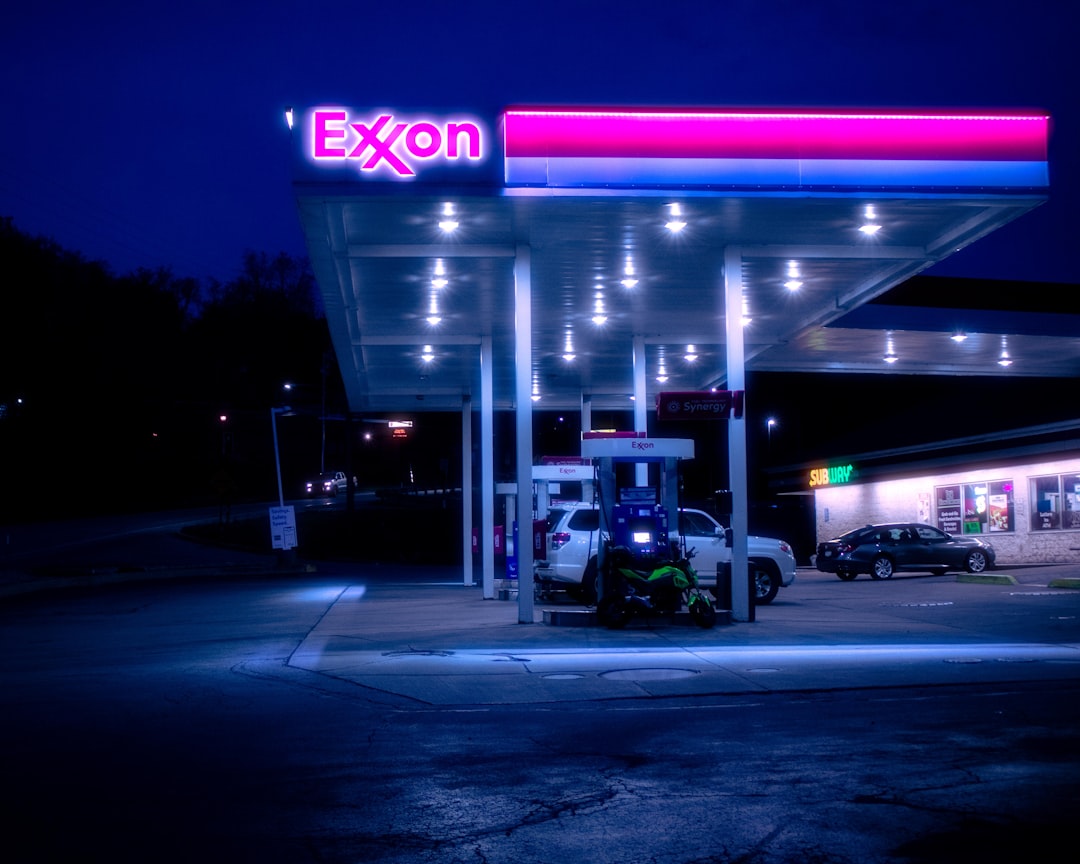
Exxon Mobil Q4 Earnings Beat Estimates on Higher Production
ZACKS· 2026-01-30 18:55
Core Insights - Exxon Mobil Corporation (XOM) reported Q4 2025 earnings per share of $1.71, exceeding the Zacks Consensus Estimate of $1.68, and showing an improvement from $1.67 in the same quarter last year [2] - Total quarterly revenues were $82.3 billion, which fell short of the Zacks Consensus Estimate of $83.2 billion and decreased from $83.4 billion year-over-year [2] Operational Performance - Upstream segment earnings (excluding identified items) were $4.41 billion, down from $6.28 billion in the previous year, primarily due to lower crude price realizations and decreased base volumes from divestments [5] - U.S. operations reported a profit of $1.22 billion, down from $1.62 billion in Q4 2024, while non-U.S. operations generated $3.19 billion, compared to $4.67 billion a year ago [6] - Production averaged 4,988 thousand barrels of oil equivalent per day (MBoe/d), an increase from 4,602 MBoe/d a year ago, driven by assets in the Permian and Guyana [6][8] - Liquids production rose to 3,531 thousand barrels per day (MBbls/d) from 3,213 MBbls/d in the prior-year quarter, attributed to higher output from the U.S. and Canada/Other Americas [7] Price Realization - Crude price realization in the U.S. was $58.57 per barrel, down from $67.58 a year ago, while non-U.S. operations saw a decrease to $57.46 per barrel from $67.58 [9] - Natural gas price in the U.S. was $1.75 per thousand cubic feet (Mcf), lower than $2.09 a year ago, and non-U.S. prices fell to $9.60 per Mcf from $10.77 [10] Segment Performance - Energy Products segment recorded a profit of $2,907 million, up from $323 million a year ago, driven by higher refining margins and record North American throughput [11] - Chemical Products segment reported a loss of $11 million, compared to a profit of $215 million in the previous year, affected by weaker margins and higher seasonal spending [12] - Specialty Products segment profit was $682 million, down from $759 million a year ago, impacted by higher seasonal spending but partially offset by improved margins [13] Financials - ExxonMobil generated $13.7 billion in cash flow from operations and asset divestments, with free cash flow of $5.6 billion and capital expenditures of $8.1 billion [14] - Total cash and cash equivalents stood at $10.7 billion, with long-term debt at $34.2 billion [14] Guidance - For 2026, cash capital expenditures are projected between $27 billion and $29 billion, with plans to repurchase $20 billion in shares under reasonable market conditions [15] - Expected Permian Basin production is projected to average 1.8 million barrels of oil equivalent per day (Moebd), contributing to total upstream production of 4.9 Moebd in 2026 [15]

Exxon, Chevron report annual profit declines as oil prices weigh on industry giants
Yahoo Finance· 2026-01-30 18:41
A multimillion-barrel oil glut weighed on results at industry giants Exxon Mobil (XOM) and Chevron (CVX) in 2025, with both companies reporting annual profit declines but talking up diversification efforts as the US AI build-out and potential regime change in Venezuela opened opportunities for the global energy sector. Exxon reported adjusted annual profits that tallied $30.1 billion, down from $33.5 billion a year ago, while Chevron reported an adjusted profit of $13.5 billion, down from $18.3 billion ...

Exxon Mobil (XOM) Commences Commercial Operations of CCS Project
Yahoo Finance· 2026-01-30 17:53
Group 1: Company Overview - Exxon Mobil Corporation (NYSE:XOM) is one of the largest integrated fuels, lubricants, and chemical companies in the world [2] - The company is included among the 10 Best American Oil and Gas Stocks to Buy [1] Group 2: Carbon Capture and Storage (CCS) Initiatives - Exxon Mobil announced the commencement of commercial operations of a carbon capture and storage project with CF Industries in Louisiana, which will transport and store up to 2 million tons per year (MTPA) of carbon dioxide [3] - The company is positioning itself as a leading operator of carbon transport and storage networks, securing agreements with AtmosClear and Lake Charles Methanol II to handle a combined 2 MTPA of CO2 from their planned facilities in Louisiana [4] - Exxon Mobil is developing multiple storage hubs across Texas and Louisiana, with three CCS projects expected to come online in 2026 [4] Group 3: Future Developments - The company is progressing plans for its first low-carbon data center, with a final investment decision (FID) expected by the end of this year [4]
These Stocks Are Today’s Movers: Apple, Verizon, SoFi, Sandisk, Western Digital, Unity Software, Exxon, and More
Barrons· 2026-01-30 21:42
Core Viewpoint - Stocks were falling on Friday following President Donald Trump's nomination of Kevin Warsh as the next chair of the Federal Reserve and the release of U.S. producer price inflation data for December, which was higher than expected [1]. Group 1: Market Movements - Major stocks mentioned include Apple, Sandisk, SoFi, Verizon, Amex, Western Digital, KLA Corp., and Exxon, indicating a broad market impact [1]. - The market reaction was influenced by macroeconomic factors, particularly the Federal Reserve chair nomination and inflation data [1].



Pre-market in Red
ZACKS· 2026-01-30 17:05
In a week of stock market newsworthiness, the hits keep coming this Friday morning. President Trump’s new Fed Chair has been announced: former Fed Governor Kevin Warsh. We also see a key wholesale inflation report hitting the tape for December, along with Big Oil companies reporting Q4 earnings results.Ahead of the opening bell, the Dow is -250 points, the S&P 500 is -35, the Nasdaq -180 and the small-cap Russell 2000 -30. This is a rather inauspicious start to the trading day, but we’re thus far flat for t ...


Exxon Mobil Is Simply The Oil & Gas Gold Standard
Seeking Alpha· 2026-01-30 16:34
Core Insights - Exxon Mobil Corporation (NYSE: XOM) has experienced a stock appreciation of over 20.5% since being rated a strong buy in mid-July [1] - The company is recognized for its strong fundamentals and good cash flows, particularly in the Oil & Gas sector [1] - Energy Transfer is highlighted as another undervalued company with potential for substantial returns [1] Investment Focus - The analysis emphasizes a focus on long-term value investing, particularly in sectors that are undervalued or disliked unjustly [1] - The analyst expresses a preference for companies with understandable business models, avoiding high-tech and certain consumer goods sectors [1] - There is a noted skepticism towards cryptocurrencies as an investment option [1]

Exxon says it has the technology needed for Venezuela's high-cost crude
Reuters· 2026-01-30 16:00
Exxon Mobil CEO Darren Woods told analysts on Friday that the company has the technology that would be needed to produce higher cost barrels from Venezuela. ...

埃克森美孚业绩超预期,尽管油价疲软
Xin Lang Cai Jing· 2026-01-30 15:40
责任编辑:张俊 SF065 埃克森美孚(XOM)周五早盘下跌0.9%课次钱该公司报告第四季度每股收益和营收均超预期,理由是 产量创纪录及强劲的炼油利润率;全年盈利为288亿美元,向股东返还了372亿美元。 埃克森美孚(XOM)周五早盘下跌0.9%课次钱该公司报告第四季度每股收益和营收均超预期,理由是 产量创纪录及强劲的炼油利润率;全年盈利为288亿美元,向股东返还了372亿美元。 责任编辑:张俊 SF065 ...
ExxonMobil reports 14% drop in Q4 net profit
Yahoo Finance· 2026-01-30 15:34
Financial Performance - ExxonMobil reported a net profit of $6.5 billion, or $1.53 per diluted share, for Q4 2025, a 14% decrease from $7.6 billion, or $1.72 per diluted share, in Q4 2024 [1] - For the full year 2025, earnings reached $28.8 billion, down from $33.7 billion in 2024, attributed to weaker crude prices, lower chemical margins, and increased depreciation costs [2] - The company generated $12.7 billion in cash flow from operating activities and recorded free cash flow of $5.6 billion in Q4 2025 [1] Shareholder Distributions - Shareholder distributions for Q4 2025 totaled $9.5 billion, comprising $4.4 billion in dividends and $5.1 billion in share repurchases [1] - For the full year 2025, total shareholder distributions amounted to $37.2 billion, including $17.2 billion in dividends and $20 billion in share repurchases [2] Operational Highlights - Upstream operations generated annual earnings of $21.4 billion, despite challenges from lower crude realizations and higher depreciation costs compared to $25.4 billion in the previous year [4] - Production reached its highest level in over four decades at 4.7 million oil-equivalent barrels per day [4] - The company achieved record refinery throughput levels, supporting substantial shareholder distributions [6] Cost Management and Savings - ExxonMobil has realized cumulative structural cost savings of $15.1 billion since 2019, surpassing all other international oil companies [3][6] - The company reported a debt-to-capital ratio of 14%, supported by an ending cash balance of $10.7 billion [3] Segment Performance - Energy Products recorded full-year earnings of $7.4 billion, driven by improved refining margins and record throughput [4] - Chemical Products reported earnings of $800 million, reflecting lower margins despite high-value product sales [4] - Specialty Products contributed $2.9 billion in earnings, although this was a reduction from the previous year due to higher development spending and unfavorable currency fluctuations [5]