CVS Health

Search documents
These outperforming stocks are still cheap heading into 2026
Invezz· 2025-11-27 19:15
Core Viewpoint - US stocks have experienced a significant uptrend, with the S&P 500 index rising over 35% since its low in April, yet certain outperforming stocks remain undervalued heading into 2026, presenting potential investment opportunities [4][6]. Group 1: CVS Health - CVS Health has seen a remarkable increase in its stock price, climbing over 78% this year, while trading at a forward earnings multiple of just 11x, which is below the S&P 500 average [7][5]. - The company reported strong Q3 financials and raised its earnings guidance, attributing this to the strength in its insurance business [7]. - Technical indicators show CVS stock is above all major moving averages, and the consensus rating is a "strong buy," with a target price suggesting nearly 20% upside potential [8]. - CVS also offers a healthy dividend yield of 3.33%, making it an attractive option for investors [9]. Group 2: Micron Technology - Micron Technology's stock has nearly tripled since the beginning of the year, yet it maintains a modest forward earnings multiple of 12x [10]. - The company is benefiting from a shortage in dynamic random-access memory (DRAM), which is driving earnings growth, and it has a consensus "buy" rating with price targets suggesting nearly 50% upside potential [11][10]. - The demand for chips related to artificial intelligence (AI) further enhances Micron's growth prospects, making it a standout candidate for investment in 2026 [11]. Group 3: Newmont Corporation - Newmont Corporation, the largest gold producer globally, has outperformed the broader market, with its stock valuation at 5x sales, which is attractive compared to peers [12]. - The stock serves as a hedge against market volatility and policy uncertainty, especially with stable gold prices anticipated heading into 2026 [12]. - Newmont offers a dividend yield of 1.1%, appealing to income-focused investors while providing defensive qualities and growth potential outside of tech and healthcare sectors [13].



Grafton Resources Announces Closing of Non-Brokered Private Placement of Units
Thenewswire· 2025-11-27 19:05
Core Points - Grafton Resources Inc. has successfully closed a non-brokered private placement, raising gross proceeds of $2,400,000 through the issuance of 4,800,000 units at a price of $0.50 per unit [1][2] - Each unit consists of one common share and one-half of a common share purchase warrant, with each whole warrant allowing the purchase of one common share at $0.80 until November 27, 2027 [1][2] - The proceeds will be used for the acquisition of the Alicahue Copper Project in Chile, exploration activities, option payments, and general corporate purposes [2] Financial Details - The company paid finder's fees totaling $133,784 in cash and issued 267,568 finder's warrants, each allowing the purchase of one common share at $0.80 until November 27, 2027 [3] - The offering is subject to acceptance by the Canadian Securities Exchange and the securities issued are under a four-month hold period expiring on March 28, 2026 [3] Related Party Transactions - Clariden Capital Ltd., owned by J. Campbell Smyth, participated in the offering by purchasing 345,400 units for $172,700, constituting a related party transaction [4][6] - The company is exempt from formal valuation and minority shareholder approval requirements due to the insider participation not exceeding 25% of the company's market capitalization [4] Ownership Changes - Prior to the offering, J. Campbell Smyth owned approximately 13.73% of the company's common shares, which decreased to approximately 11.79% post-offering [7][8] - Mr. Smyth has no current intention to dispose of or acquire further securities of the company, although he may do so depending on market conditions [9]

CVS Health Names David Joyner Chair of the Board of Directors
Prnewswire· 2025-11-20 21:05
Core Points - CVS Health has elected David Joyner as Chair of the Board effective January 1, 2026, in addition to his role as President and CEO [1][2] - The Board believes that having one leader with extensive industry experience will enhance the execution of the company's long-term strategy and create stockholder value [3] - CVS Health operates approximately 9,000 retail pharmacy locations and serves over 87 million plan members through its pharmacy benefits manager [4] Leadership Changes - David Joyner has been recognized for his leadership and operational improvements since becoming President and CEO in October 2024 [2] - Michael Mahoney will remain as the Board's Lead Independent Director, while Roger Farah continues to serve on the Board [1] Company Overview - CVS Health is a leading health solutions company with a focus on providing accessible, affordable, and coordinated health care [4] - The company serves over 37 million people through various health insurance products, including Medicare Advantage and Medicare Part D [4] - CVS Health aims to connect people to better health through personalized, technology-driven services [4]

CVS Health Posts Strong Q3 Earnings: How to Play the Stock Now?
ZACKS· 2025-11-17 13:42
Core Insights - CVS Health reported record revenues of $103 billion for Q3 2025, an 8% increase year over year, with adjusted EPS rising nearly 47% to $1.60, surpassing consensus estimates for the third consecutive quarter [1][8] - The company raised its full-year 2025 outlook, projecting adjusted EPS between $6.55-$6.65 and revenues of at least $397 billion, up from previous estimates [2] Financial Performance - CVS Health's stock has surged 73.3% year-to-date, outperforming the industry, broader Medical sector, and S&P 500 composite [3] - The stock is trading above its 90-day and 200-day moving averages, indicating a sustained bullish trend [6] Business Segments - The Aetna segment is focused on returning to target margins of 3%-5% and has improved its operational efficiency through technology and organizational realignment [9] - Aetna achieved a top position in CMS' 2026 Medicare Advantage Stars Ratings, with over 81% of members expected in plans rated 4 stars or higher [10] - The Health Care Delivery business saw approximately 25% year-over-year growth, driven by an increased patient base at Oak Street and higher volumes at Signify Health [11] Strategic Changes - CVS Health is scaling back planned Oak Street clinic openings and closing underperforming clinics, leading to a nearly $5.7 billion impairment charge [12] - The Pharmacy & Consumer Wellness segment generated over $36 billion in Q3 revenues, bolstered by increased prescription volume and the acquisition of Rite Aid and Bartell Drugs pharmacies [13] Valuation Metrics - CVS Health trades at a forward 12-month P/E ratio of 10.95, slightly above its median but lower than the industry average of 16.10 [15] Outlook and Concerns - CVS maintains a cautious outlook for the remainder of 2025 due to elevated cost trends and potential macro headwinds [16] - The company is monitoring for signs of a slowdown in the consumer environment and the impact of tariffs and vaccine sentiment on market demand [16]

Oscar Health (NYSE:OSCR) FY Conference Transcript
2025-11-14 15:52
Summary of Key Points from the Conference Call Industry Overview - The discussion revolves around the U.S. healthcare industry, focusing on consumerism in healthcare and the challenges associated with rising healthcare costs, which now approach 20% of GDP [2][3][4]. Core Insights and Arguments 1. **Consumer-Driven Healthcare**: Despite efforts to empower consumers through health savings accounts (HSAs) and transparency initiatives, healthcare spending continues to rise due to factors like aging populations and increased medical technology costs [3][4][5]. 2. **Complexity in Healthcare**: The healthcare system remains complex, making it difficult for consumers to make informed decisions. Transparency in pricing is improving, but additional tests and hidden costs complicate the shopping experience [6][8]. 3. **High-Deductible Plans**: While high-deductible plans theoretically align consumer costs with care, they often introduce more complexity and limited choices for consumers [8][9]. 4. **Policy Impact**: Federal policies aimed at price transparency and surprise billing protections are gradually improving consumer awareness, but significant barriers remain due to information asymmetry in the healthcare system [11][12][13]. 5. **Role of AI**: AI is seen as a transformative tool that can enhance consumer interactions and decision-making in healthcare, from simplifying claims processes to providing personalized recommendations [21][27][30]. 6. **Specialty Drugs**: Specialty drugs are a significant cost driver in healthcare. Innovations in benefit design and formulary management can help consumers make more informed decisions regarding these high-cost medications [37][39][40]. 7. **Individual Contribution Health Reimbursement Arrangements (ICHRA)**: ICHRA is proposed as a means to expand access to personalized health products, allowing consumers to choose plans that fit their specific needs [43][47]. 8. **Consumer Education**: There is a strong emphasis on the need for better consumer education and engagement to drive informed decision-making and improve health outcomes [60][81]. Additional Important Points - **Transparency and Trust**: Building trust with consumers is crucial, as many still prefer to seek advice from peers rather than their health insurers [19][38]. - **Preventive Care**: The discussion highlights the need for a shift towards preventive care rather than reactive treatment, which could help control costs in the long run [57][60]. - **Emotional Component**: The emotional aspect of healthcare decisions is acknowledged, emphasizing the need for empathetic communication and support from insurers [33][34]. - **Long-Term Wellness Investment**: Insurers are encouraged to invest in long-term wellness strategies, as the current model often disincentivizes such investments due to short-term consumer turnover [60]. This summary encapsulates the key discussions and insights from the conference call, highlighting the complexities and evolving dynamics within the U.S. healthcare industry.

HealthEquity (NasdaqGS:HQY) FY Conference Transcript
2025-11-14 15:52
Summary of HealthEquity FY Conference Call Industry Overview - The discussion revolves around the U.S. healthcare industry, focusing on consumer-driven healthcare and the challenges associated with rising healthcare costs, which now approach 20% of GDP [2][3][4]. Key Points and Arguments 1. **Consumer Empowerment and Healthcare Costs** - Despite efforts to empower consumers through health savings accounts (HSAs) and transparency initiatives, U.S. healthcare spending continues to rise due to factors like aging population, obesity, and advancements in medical technology [3][4]. - The healthcare system has focused more on treatment rather than prevention, leading to increased costs [3][4]. 2. **Challenges in Consumer-Driven Healthcare** - The complexity of the healthcare system makes it difficult for consumers to make informed decisions, as unexpected costs can arise from additional tests or out-of-network providers [6][7]. - High deductible plans have not significantly reduced costs but have added complexity for consumers [7][8]. 3. **Need for Price Transparency** - The federal government has introduced policies for price transparency and surprise billing protections, but the effectiveness of these measures is still evolving [11][12][13]. - Consumers often lack the ability to interpret complex data, highlighting the need for tools that convert data into actionable information [12][19]. 4. **Role of AI in Healthcare** - AI is seen as a transformative tool that can enhance consumer interactions and decision-making in healthcare [21][26][30]. - Companies are exploring AI applications to improve user experience and provide personalized recommendations based on individual health data [30][34]. 5. **Specialty Drugs and Cost Management** - Specialty drugs represent a significant portion of healthcare spending, and there are ongoing discussions about how to manage costs effectively through formulary management and site of care considerations [39][41][43]. 6. **Innovative Solutions for Consumer Engagement** - Employers are experimenting with tiered benefit designs to encourage more thoughtful healthcare utilization [25]. - The introduction of Individual Coverage Health Reimbursement Arrangements (ICHRA) is proposed as a way to allow consumers to choose more personalized and cost-effective insurance products [45][49]. 7. **Long-term Consumer Engagement** - The average tenure with health insurers is short, which disincentivizes long-term investment in preventive care [63]. - There is a call for the industry to focus on preventive health measures to reduce overall costs in the long run [88]. Other Important Insights - The panelists emphasized the importance of simplifying healthcare choices and improving consumer education to foster better decision-making [16][19]. - There is a recognition that the healthcare system must evolve to meet consumer expectations similar to other consumer markets, such as retail and technology [79]. - The discussion highlighted the need for collaboration among various stakeholders in the healthcare ecosystem to drive meaningful change [16][19][55]. This summary encapsulates the key discussions and insights from the HealthEquity FY Conference Call, focusing on the challenges and opportunities within the U.S. healthcare system.

WEX (NYSE:WEX) FY Conference Transcript
2025-11-14 15:50
Summary of WEX FY Conference Call - November 14, 2025 Industry Overview - The discussion revolves around the U.S. healthcare industry, focusing on consumer-driven healthcare and the challenges of rising healthcare costs, which now approach 20% of GDP [2][3][4]. Key Points and Arguments 1. **Consumer Empowerment in Healthcare**: - The industry has aimed to empower consumers to make cost-conscious healthcare decisions for about 20 years, yet spending continues to rise [2]. - Significant advancements in medical technology and an aging population contribute to increased healthcare costs, making it difficult for consumer-focused initiatives to keep pace [3][4]. 2. **Challenges in Consumer-Driven Healthcare**: - Despite progress in aligning consumer incentives (e.g., Health Savings Accounts), the complexity of the healthcare system remains a barrier [6][7]. - High deductible plans have been introduced to push consumerism, but they often add complexity rather than reduce costs [7][8]. 3. **Need for Transparency and Simplicity**: - The healthcare system is complex, making it hard for consumers to shop for services effectively. Simplifying choices and providing transparent pricing is essential [6][8][11]. - The federal government has introduced policies for price transparency and surprise billing protections, but the effectiveness of these measures is still evolving [11][13]. 4. **Role of Technology and AI**: - Technology, including AI, is seen as a potential game-changer in improving consumer interactions and decision-making in healthcare [21][26]. - AI can help provide personalized recommendations and facilitate better engagement with healthcare services [30][32]. 5. **Specialty Drugs and Cost Management**: - Specialty drugs are a significant driver of healthcare spending. Innovations in education and engagement are necessary to help consumers make informed decisions regarding these drugs [37][39]. - Strategies such as formulary management and site-of-care considerations can help manage costs associated with specialty drugs [40][41]. 6. **Future Innovations and Consumerism**: - The Individual Coverage Health Reimbursement Arrangement (ICHRA) is highlighted as a way to expand access to personalized healthcare products, potentially lowering costs [43][46]. - Personalization of healthcare plans is crucial for improving consumer engagement and satisfaction [47][48]. 7. **Long-term Cost Control**: - There is a need for a holistic approach to controlling healthcare costs, focusing on empowering consumers and increasing competition among insurers [49][50]. - The Affordable Care Act has reformed financing but has not addressed the actual cost of delivering care, indicating a need for further reforms [51]. 8. **Emotional and Financial Health**: - The intersection of emotional, physical, and financial health is critical in healthcare decision-making. Understanding consumer emotions and providing support is essential for effective engagement [33][34]. Additional Important Insights - The complexity of healthcare decisions often leads consumers to seek information from non-official sources, highlighting the need for better engagement strategies from insurers [38]. - The average tenure with a health insurer is short, which disincentivizes long-term investments in wellness and preventive care [59]. - There is a significant gap in consumer awareness regarding available healthcare services, such as virtual urgent care, which needs to be addressed through better marketing and education [72]. This summary encapsulates the key discussions and insights from the WEX FY Conference Call, emphasizing the ongoing challenges and potential solutions within the U.S. healthcare system.

A Look Into CVS Health Inc's Price Over Earnings - CVS Health (NYSE:CVS)
Benzinga· 2025-11-12 14:00
Core Viewpoint - CVS Health Inc. shares are currently trading at $79.86, reflecting a slight decrease of 0.01% in the current session, with a 0.99% decline over the past month, but a significant increase of 44.98% over the past year, indicating mixed short-term performance against strong long-term growth [1] Group 1: P/E Ratio Analysis - The price-to-earnings (P/E) ratio is a critical metric for long-term investors, comparing the current share price to the company's earnings per share (EPS), and is used to assess current performance against historical data and industry benchmarks [5] - CVS Health Inc. has a P/E ratio of 210.18, which is significantly higher than the industry average of 119.77 in the Health Care Providers & Services sector, suggesting that investors may expect better future performance from CVS compared to its peers, although it may also indicate potential overvaluation [6] Group 2: Limitations of P/E Ratio - While the P/E ratio is useful for market performance analysis, it has limitations; a lower P/E may suggest undervaluation or lack of expected growth, and it should not be used in isolation as other factors like industry trends and business cycles also influence stock prices [9]

Eli Lilly drops CVS drug plan for workers after Novo obesity deal, Bloomberg News reports
Reuters· 2025-11-12 02:34
Core Point - Eli Lilly is terminating its partnership with CVS Health's drug benefit plan for employees due to CVS's decision to stop covering Eli Lilly's weight-loss drug in favor of a competing product from Novo Nordisk [1] Company Impact - The decision by Eli Lilly reflects a strategic response to CVS Health's shift in drug coverage, which may impact Eli Lilly's market position and sales of its weight-loss medication [1] Industry Context - The move highlights the competitive landscape in the pharmaceutical industry, particularly in the weight-loss drug segment, where companies like Novo Nordisk are gaining traction [1]



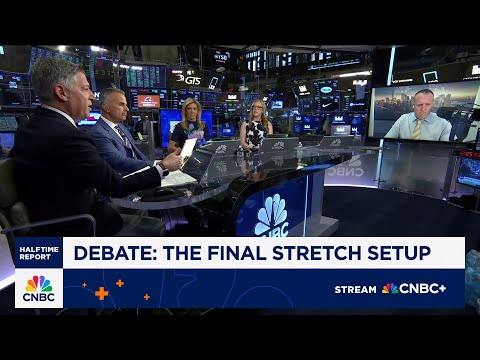
The final stretch setup: Here's what to know
CNBC Television· 2025-11-11 18:19
Market Performance & Outlook - The S&P 500 is up 36% from the April 8th lows and 16% year-to-date [2] - The economy is growing at 4% and productivity growth is running up 3% [2][3] - Earnings are growing 123%, revenues are growing 8%, both exceeding historical averages of 5% [4] - Fourth quarter growth is expected to be 8-12% cumulatively, suggesting a positive outlook [5] - The market has strong tailwinds, including accommodative global central banks and disinflationary trends [6] Technology Sector & AI - Technology is a key driver of the market, but investors are uncertain about the broadening out of the AI trade [8][12] - Mega-cap technology stocks experienced significant market cap fluctuations, adding $618 billion after losing $800 billion the previous week [10] - The market is differentiating between companies with explicable AI capex strategies and those with less clear paybacks [16] Investment Strategies & Considerations - Investors should consider whether they are overweight in technology and assess the potential for technology positions to be a source of liquidity in 2026 [9] - It's important to use stops and ride the best stocks in the market during the year-end meltup period [21] - There are opportunities beyond AI, with various stocks in uptrends and great technical setups, including commodities and energy stocks [19][20]