
Hyundai

Search documents
Hyundai, Kia to spend millions fixing anti-theft technology after cars become top targets for crime
Fox Business· 2025-12-17 23:55
Core Points - Hyundai and Kia are overhauling security features in millions of vehicles due to a multistate settlement regarding the lack of industry-standard anti-theft technology [1][3] - The automakers will provide free ignition cylinder protectors, add engine immobilizers to future U.S. vehicles, and pay up to $9 million in restitution [2][12] - Nearly 4 million Hyundai and 3.1 million Kia vehicles in the U.S. are eligible for upgrades, with installation costs potentially exceeding $500 million [2][5] Security Features Overhaul - The settlement requires Hyundai and Kia to provide zinc-reinforced ignition cylinder protectors to current eligible owners [2] - Engine immobilizers, which prevent vehicles from starting without a smart key, will be added to all future U.S. models [2][5] - In 2015, only 26% of U.S. Kia and Hyundai vehicles had immobilizers, compared to 96% for other manufacturers, contributing to a rise in auto thefts [5] Impact of Theft - The absence of immobilizers allowed thieves to easily start vehicles without keys, leading to a significant increase in auto thefts [5][6] - The rise in thefts has resulted in many stolen vehicles being used in crimes and traffic collisions [6] Settlement Details - The multistate settlement involved over 30 states, led by Connecticut, Minnesota, and New Hampshire, with several other states as co-leads [12] - Eligible consumers will receive notices starting in early 2026 and have until March 2027 to install the ignition cylinder protector at a dealership [9]

5 International ETFs to Buy for 2026
Benzinga· 2025-12-17 17:47
Core Insights - Diversification remains a successful investment strategy, with international stocks significantly outperforming U.S. equities in 2025, as evidenced by the S&P 500's 15% increase compared to Spain's 40% and South Korea's 65% gains [1] Group 1: International Stock Performance - South Korea's KOSPI Composite Index has risen over 65% YTD, driven by favorable domestic policies and a tech sector buoyed by AI advancements [3] - Spain's IBEX 35 index has increased more than 40% YTD, supported by a booming banking sector and a GDP growth of 3%, nearly tripling the overall EU GDP growth [5][7] - The Canadian stock market has seen gains exceeding 30% in 2025, with the iShares MSCI Canada Index Fund up nearly 35%, benefiting from reduced tariffs and strong performance in megacap banks [12][15] Group 2: ETFs for International Exposure - The Franklin FTSE South Korea ETF (NYSE:FLKR) offers exposure to South Korean equities with a low expense ratio of 0.09%, heavily weighted towards Samsung Electronics and SK Hynix [4] - The iShares MSCI Spain ETF (NYSE:EWP) has a 0.50% expense ratio and $1.6 billion in AUM, with over 40% of its holdings in the finance sector, including major banks like Santander and BBVA [7] - The Franklin FTSE Latin America ETF (NYSE:FLLA) provides broad exposure to Latin American markets with a 0.19% expense ratio, focusing on Brazilian and Mexican stocks [10] - The Vanguard FTSE Europe ETF (NYSE:VGK) has gained nearly 35% YTD, with a low expense ratio of 0.06% and a diverse portfolio of over 1,200 stocks [11] - The iShares MSCI Canada Index Fund (NYSE:EWC) has a 0.50% expense ratio and focuses on major banks, with top 10 holdings accounting for over 43% of its assets [15]

Washington and 35 other states reach settlement with Hyundai and Kia over lack of anti-theft tech
GeekWire· 2025-12-16 18:03
Core Viewpoint - Korean automakers are required to equip all future vehicles sold in the U.S. with advanced safety features to comply with new regulations [1] Group 1: Regulatory Changes - The new regulations mandate that all vehicles must include specific safety technologies, enhancing overall vehicle safety standards [1] - This requirement is part of a broader initiative to reduce traffic fatalities and improve road safety across the United States [1] Group 2: Industry Impact - The automotive industry will need to adapt quickly to these regulations, potentially increasing production costs due to the integration of advanced safety technologies [1] - Korean automakers may face competitive pressures as they align their vehicle offerings with these new safety standards, impacting market positioning [1]
Ford's EV pivot is a ‘head scratcher,' says former Tesla board member Steve Westly
Youtube· 2025-12-16 16:57
Core Viewpoint - The significant $19.5 billion write-down by Ford reflects a major shift in the strategy of US automakers towards electric vehicles (EVs), driven by consumer preferences and regulatory changes [1][2]. Group 1: Ford's Strategy and Market Position - Ford's CEO emphasized the necessity of remaining in the EV market to be competitive globally, despite the recent financial setback [2]. - The average sales price of the Ford Mach E is around $425,000, indicating a gap in the market for lower-cost electric utility vehicles (EUVs) that Ford has not yet addressed [2]. - Ford's current strategy focuses on larger vehicles and hybrids, suggesting a response to consumer demand for bigger cars, especially in the US market [3][4]. Group 2: Global EV Market Trends - In 2022, one out of five cars sold globally were electric, and this year, the figure is expected to rise to one out of four, with projections of 20 million electric cars sold out of 80 million total [4]. - The decreasing costs of batteries and photovoltaic systems are contributing to the growth of the electric vehicle market [4]. - The most significant market segment is in the $20,000 to $30,000 range, where competitors like BYD and Hyundai are gaining substantial market share [5]. Group 3: Regulatory Environment and Competitive Landscape - Recent reports indicate that Europe may soften its ban on combustion engine vehicles by 2035, which could benefit US automakers [5][6]. - Approximately 20% of cars sold in Europe this year are expected to be electric, with this number likely to increase as prices continue to decline [6]. - The automotive market is shifting, with China and other regions becoming the fastest-growing markets, challenging the traditional dominance of the US and Europe [7].

Hyundai, Kia agree to retrofit 4 million US vehicles to address threat concerns
Reuters· 2025-12-16 16:38
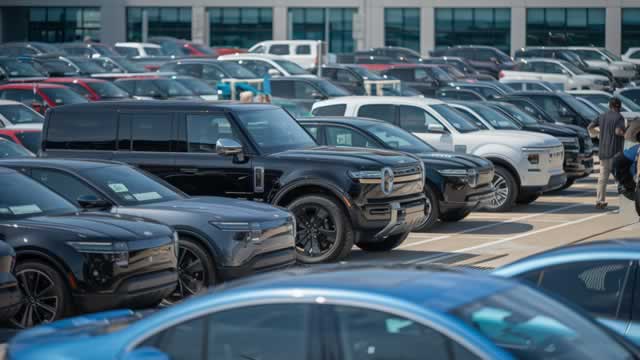
Korean automakers Hyundai and Kia on Tuesday agreed to retrofit more than 4 million U.S. vehicles to address theft concerns and install prevention equipment on all new vehicles to resolve an investiga... ...
Hyundai Palisade Hybrid Wins Prestigious Car and Driver 10Best Trucks and SUVs Award
Prnewswire· 2025-12-16 14:30
Core Insights - Hyundai's Palisade Hybrid has been recognized in Car and Driver's 10Best Trucks and SUVs list for 2026, marking the fourth consecutive year a Hyundai model has received this honor [1] Group 1: Product Features and Design - The 2026 Palisade Hybrid features a new hybrid powertrain combining a 2.5-liter turbocharged four-cylinder engine and two electric motors, delivering up to 329 horsepower and an estimated driving range of 619 miles [8][15] - The vehicle's design includes a bold and premium aesthetic, with a distinctive front featuring vertical LED daytime running lights and a commanding side profile, achieving a low drag coefficient of 0.31 [4][5] - The interior is spacious and luxurious, offering features such as Relaxation seating, a double-door center stack, and a Bose® 14-speaker surround audio system, enhancing the overall passenger experience [10][11] Group 2: Technology and Safety - The Palisade Hybrid includes advanced technology such as Hyundai Digital Key 2.0 Premium, Wi-Fi hotspot capability, and wireless Over-The-Air (OTA) update functionality, ensuring the vehicle remains up to date [13][14] - A comprehensive suite of SmartSense active safety technologies is available, including Forward Collision-Avoidance Assist, Blind-Spot Collision Warning, and Remote Smart Parking Assist, aimed at enhancing driver and passenger safety [12][17] Group 3: Market Position and Strategy - The recognition of the Palisade Hybrid reflects a shift in consumer preferences towards vehicles that offer capability, spaciousness, and advanced technology, indicating Hyundai's strategic focus on meeting diverse customer needs [3] - Hyundai's operations in the U.S. contribute significantly to the economy, with an annual impact of $20.1 billion and 190,000 jobs, showcasing the company's commitment to the market [18]

Tesla Still Has America’s No. 1 EV
Yahoo Finance· 2025-12-15 15:45
Core Insights - Tesla Inc. remains the leader in the U.S. electric vehicle (EV) market despite a 23% decline in sales, with the Model Y capturing 30% of all EV sales in Q3 [1][6] - The overall EV market is fragmented, with other manufacturers like Chevy and Hyundai gaining small market shares of about 5% each [2] - Nationwide EV sales fell 41% year over year in November, indicating significant challenges for legacy car companies entering the market [3] Tesla's Market Position - The Model Y is priced at $37,990, which is below the industry average EV price of approximately $58,000, but still may be too high for widespread adoption [4][6] - Tesla's Model 3 holds the second position in the market with a 10% share, highlighting its strong presence in the EV sector [1] Industry Challenges - The decline in EV sales suggests that financial losses for EV companies are likely to persist, even if investments in EVs are reduced [3] - The need for a more affordable price point, such as a potential $25,000 sedan from Tesla, is seen as crucial for broader EV adoption in the U.S. [4]

Prediction: Elon Musk Will Reveal Tesla Is Already Losing Money in Q4
The Motley Fool· 2025-12-15 13:30
Core Viewpoint - Tesla may be facing a net loss in Q4 2025, with indications that the company is already unprofitable due to declining automotive sales and increasing operating expenses [1][12]. Automotive Sales Performance - Tesla's automotive revenue has declined year over year in both Q1 and Q2 of 2025, marking the first time since 2012 that the company has experienced two consecutive quarters of revenue declines [3]. - Despite a record Q3 automotive revenue of $21.2 billion, this was largely driven by the expiration of the $7,500 U.S. federal electric vehicle tax credit, which incentivized purchases in that quarter [3]. Industry Trends - Other automakers have reported significant declines in EV sales for November, with Ford down 60.8%, Hyundai down 58.8%, Kia down 62%, and Honda down 88.6% [4]. - If Tesla's vehicle sales decline by 50% year over year in Q4, automotive revenue could drop to approximately $9.9 billion, contributing to an overall revenue decline of about 10% to $17.9 billion [5]. Pricing and Revenue Impact - Tesla has introduced cheaper "Standard" versions of its Model 3 and Model Y, which are priced about $5,000 lower than their counterparts, potentially reducing revenue by over $1 billion if these models dominate sales [6][7]. - Even with a conservative estimate that only half of the sales will be the Standard versions, the revenue could still decrease by $600 million, leading to a total of $17.3 billion for Q4 [7]. Margin Analysis - Tesla's gross margin has been on a decline, peaking at 29.1% in Q1 2022 and falling to 18% in Q3 2025 [8]. - If the trend continues, the Q4 gross margin could drop to 17.2%, resulting in a gross profit of just under $3 billion based on the estimated revenue [9]. Operating Expenses - Operating expenses have increased significantly, totaling $3.4 billion in Q3, driven by SG&A, AI, and R&D projects [11]. - If operating expenses remain flat at $3.4 billion in Q4, they would exceed the gross profit estimate, leading to a potential operating loss of $400 million [12]. Optimistic Scenarios - Even under optimistic assumptions, such as lower EV sales decline and stable operating expenses, Tesla appears unprofitable for Q4 [13]. - If any optimistic assumptions fail, such as a larger decline in EV sales or increased R&D spending, the net loss could be significantly higher [14]. Future Outlook - There is a possibility that Tesla could report a smaller decline in sales or unexpected growth in non-automotive revenue, but the expectation is that Elon Musk will need to acknowledge the company's unprofitability during the Q4 earnings call [15].

Major automakers say China poses 'clear and present threat' to US auto industry
Yahoo Finance· 2025-12-11 16:14
Core Viewpoint - Major automakers are urging the U.S. government to prevent Chinese government-backed automakers and battery manufacturers from establishing manufacturing plants in the U.S., citing the industry's future at stake [1][2]. Group 1: Industry Concerns - The Alliance for Automotive Innovation states that China poses a significant threat to the U.S. auto industry, urging lawmakers to maintain prohibitions on importing vehicles from Chinese manufacturers [2]. - The group emphasizes that no amount of investment by U.S. automakers can counteract China's ability to oversupply the market due to government subsidies, which could lead to dumping practices [3]. Group 2: Legislative Actions - Representative John Moolenaar advocates for Congress to codify prohibitions on Chinese-connected vehicles, which were established during the final days of the Biden administration [4]. - Moolenaar highlights that China has rapidly become the world's largest auto exporter, shipping 6 million vehicles abroad last year at prices below market rates, which U.S. and allied automakers cannot compete with [5]. Group 3: National Security Concerns - There are national security concerns regarding Chinese-imported vehicles, particularly the risk that Beijing could disable these vehicles using Chinese-made software or components during a major confrontation [6].


Compact Body Styles, Hybrids, and Value-Driven Used Models Powered 2025 Automotive Demand, According to CarGurus
Globenewswire· 2025-12-11 14:00
Core Insights - The automotive market in 2025 was characterized by a heightened focus on affordability due to rising ownership costs, tariff concerns, and a shortage of late-model used vehicles, setting the stage for 2026 [1][2] Market Trends - In 2025, consumers actively pursued affordability, influencing shopping behavior and automotive supply trends, driven by concerns over tariff costs and the expiration of the EV tax credit [2] - Key areas of value for buyers included hybrids, smaller body styles, and budget-friendly older models, with the used market expected to continue catering to budget-conscious shoppers in 2026 [3] Vehicle Performance - Smaller sedans, compact crossovers, and efficient models were the fastest-selling used vehicles, with models like the Buick LeSabre and Chevrolet Cobalt selling in approximately 25 to 30 days compared to the average of 40 days for used vehicles [4] - Following the expiration of EV tax credits, new EV retail sales dropped by 66% in the two months after the deadline compared to the two months prior, while hybrid demand increased, with new inventory rising nearly 18% year-over-year and retail sales growing by 33% [4] Ownership Costs - Rising vehicle ownership costs, including insurance, loan payments, and maintenance, have pressured consumer budgets, with the total cost of ownership for used vehicles increasing by 36% and for new models by 29% compared to 2019 [5] - The fastest-selling new vehicles in 2025 included models like the Hyundai Palisade Hybrid and Toyota's Grand Highlander Hybrid, selling in under 20 days on average [5] Future Outlook - The pricing landscape for 2026 models is expected to play a significant role in average new car pricing trends, with higher MSRPs partially offset by softer pricing and incentives on remaining 2025 models [6] - The market is anticipated to see improved availability of late-model used vehicles as the chip shortage eases, providing more "like-new" options for consumers [6] - 2026 will offer insights into EV demand without the influence of tax credits, with affordability remaining a key driver for consumers as they cross-shop across various vehicle types [7]

