Petrobras

Search documents
Brazil's Petrobras authorized to drill in the Foz do Amazonas region
Reuters· 2025-10-20 15:59
Core Insights - Brazil's environmental agency Ibama has authorized Petrobras to conduct exploratory drilling in the Foz do Amazonas region, indicating a significant step for the state-run oil company in expanding its exploration activities [1] Company Summary - Petrobras has received approval from Ibama, which allows the company to proceed with exploratory research through drilling in a new region, potentially enhancing its oil reserves and production capabilities [1] Industry Summary - The authorization from Ibama reflects ongoing developments in Brazil's oil and gas sector, particularly in exploration activities, which may impact the overall dynamics of the industry and investment opportunities [1]



Petrobras faces new environmental queries on Foz do Amazonas drilling license
Reuters· 2025-10-14 16:47
Brazil's environmental agency Ibama has requested additional information from state-run oil firm Petrobras as part of the licensing process for drilling in the Foz do Amazonas Basin, according to documents seen by Reuters on Tuesday. ...
Brazil's Petrobras wants mandate for coprocessed diesel, says CEO
Reuters· 2025-10-14 15:13
Brazil's state-run oil company Petrobras is pushing for a mandate for the use of diesel coprocessed with vegetable oil, CEO Magda Chambriard said on Tuesday, adding that the firm can produce fuel with... ...

Petrobras Resumes Output From Tupi, Boosting Oil Capacity
ZACKS· 2025-10-14 14:26
Core Insights - Petrobras has resumed operations at the Cidade de Angra dos Reis FPSO in the Tupi oil field, following safety upgrades mandated by Brazil's oil regulator ANP, signaling a revitalization of Brazil's offshore energy capabilities and potential implications for global oil supply [1][2][3] Production Resumption - The Tupi field, once Brazil's largest, is still a cornerstone of the nation's hydrocarbon output, with the Cidade de Angra dos Reis FPSO previously producing approximately 44,000 barrels of oil per day before its shutdown [2] - Petrobras has completed all required interventions and upgrades, allowing for the reinstatement of production, which is expected to contribute to a market already facing oversupply concerns [3] Strategic Developments - The Buzios oil field has overtaken Tupi as Brazil's top-producing offshore asset, with Petrobras preparing to commission its seventh FPSO at Buzios, aligning with its long-term strategy to enhance pre-salt layer exploration and production [4][5] - Petrobras aims to leverage technological innovation to unlock deeper reserves and increase flow rates while reducing per-barrel extraction costs, ensuring Brazil remains a top-tier oil exporter [5] National Output Stability - Brazil's total oil production stabilized near 4 million barrels per day, with the reactivation of Tupi's FPSO contributing to this output level, alongside additional volumes from international operators in Brazil's deepwater territories [6] - The stability of Brazil's output is crucial in a volatile market, as OPEC+ and non-OPEC nations adjust supply to influence pricing, with Petrobras signaling readiness to capitalize on favorable production economics [7] Global Market Implications - Brazil's rising oil production coincides with concerns of a global supply glut, as major producers maintain elevated output levels while demand growth appears sluggish in certain regions [11] - The reactivation of the Cidade de Angra dos Reis FPSO could intensify calls for coordinated production limits or a re-evaluation of current global output strategies [12] Strategic Positioning - Petrobras' decision to resume output from the Tupi FPSO reflects its broader strategy to optimize production while complying with regulatory frameworks, showcasing adaptability in managing complex offshore operations [13] - As Brazil expands offshore production capacity, Petrobras is positioning itself as a key player in shaping oil supply trends into 2026 and beyond, with proven operational scale and strategic reserves [14] Conclusion - Restarting the Cidade de Angra dos Reis FPSO is a significant move for Petrobras to maintain steady oil production amid uncertain market conditions, with Brazil's output potentially impacting global oil prices [15]

Petrobras: Low-Risk Energy Play
Seeking Alpha· 2025-10-14 12:09
Analyst’s Disclosure:I/we have a beneficial long position in the shares of PBR, XOM, CVX, BP either through stock ownership, options, or other derivatives. I wrote this article myself, and it expresses my own opinions. I am not receiving compensation for it (other than from Seeking Alpha). I have no business relationship with any company whose stock is mentioned in this article. Seeking Alpha's Disclosure: Past performance is no guarantee of future results. No recommendation or advice is being given as to w ...

Petrobras Aims to Supply Over 20% of Brazil's Fertilizer Needs by 2026
ZACKS· 2025-10-13 13:36
Core Insights - Petrobras is set to significantly impact Brazil's agricultural supply chain by aiming to supply approximately 20% of the country's nitrogen fertilizer demand by 2026, reducing reliance on imports [1][10] - The company is reactivating three key fertilizer plants, which will collectively contribute over 12% of Brazil's nitrogen fertilizer market, with a fourth plant in Mato Grosso do Sul expected to add an additional 15% [3][4][6] Reactivation of Key Fertilizer Plants - Petrobras is restoring operations at three nitrogen fertilizer plants under CEO Magda Chambriard's leadership, aligning with national development goals [2] - The Bahia plant is projected to supply 5% of national urea, while the Sergipe facility is expected to meet 7% of domestic demand, totaling over 12% when fully operational [3] - The Paraná facility has resumed production and is anticipated to provide 8% of the nation's urea requirements, contributing to the overall goal of 20% supply by next year [4] Future Expansion Plans - Petrobras is planning to complete and reactivate a fourth nitrogen fertilizer plant in Mato Grosso do Sul, which is expected to deliver an additional 15% of Brazil's nitrogen fertilizer demand [5][6] - This expansion would enable Petrobras to supply up to 35% of the country's total nitrogen fertilizer needs, enhancing domestic agricultural input availability [6] Strategic Importance for Brazil - The initiative addresses Brazil's historical dependency on imported fertilizers, which has exposed the country to geopolitical and logistical vulnerabilities [11] - By enhancing domestic production, Petrobras aims to improve national sovereignty over agricultural inputs, providing farmers with more predictable access to essential nutrients [12] Environmental and Economic Implications - Localized production of nitrogen fertilizers is expected to reduce the carbon footprint associated with long-distance imports and support job creation in industrial regions [13] - The revival of fertilizer production is part of Petrobras' broader industrial revitalization plan, aimed at diversifying its portfolio and stabilizing domestic markets [14][15] Alignment with National Policy - Petrobras' investment in fertilizer production aligns with President Luiz Inácio Lula da Silva's vision for a self-sufficient agricultural sector, emphasizing the strategic importance of domestic fertilizer production for food security [8][9] - The initiative is supported by public policies aimed at fostering domestic production, positioning Petrobras as a key player in Brazil's agricultural future [9]
投资者考察要点:去杠杆是普遍共识-Investor trip takeaways_ deleveraging is the universal mantra
2025-10-13 01:00
Summary of Key Takeaways from Brazilian Corporates Conference Call Industry Overview - **Investor Trip**: BofA's 12th Brazil investor trip highlighted a stark sectoral divide and a defensive corporate posture among Brazilian corporates, with a focus on deleveraging and liquidity preservation in a challenging environment [1][2][3] - **Corporate Bond Performance**: Brazilian corporate bonds (EBRZ index) have underperformed with a total return of +3.5% YTD compared to LatAm (+8.9%) and EM (+7.5%) [1] Core Themes - **Deleveraging Strategy**: Companies are prioritizing deleveraging due to increased leverage and high local interest rates (15%), leading to postponed investments and accelerated asset sales [3][4] - **Sectoral Divide**: Sectors like Oil & Gas services, protein, and logistics are performing well, while industrial sectors such as steel and petrochemicals face margin compression due to low-cost imports, particularly from China [4][11] Credit Events and Market Sentiment - **Contagion Fears**: Recent credit events at Ambipar and Braskem have heightened investor scrutiny on balance sheets, potentially leading to a broader repricing of risk [2][4] - **Investor Preferences**: There is a growing emphasis on transparent governance and conservative financial policies among investors [2] Sector-Specific Insights - **Pulp & Paper**: The sector is navigating a downturn in pulp prices, with Suzano taking a leadership role through capacity cuts and diversification into consumer tissue [10] - **Metals & Mining**: The steel market is under pressure from Chinese oversupply, impacting CSN and Gerdau, while Vale remains focused on shareholder returns [11] - **Banking**: A bifurcation in credit quality is evident, with Itaú managing risks effectively while Banco do Brasil faces challenges in its agribusiness portfolio [12][51] - **Oil & Gas**: Petrobras is balancing investments with shareholder returns amid volatile Brent prices, while companies like Acelen are experiencing operational momentum [13][26] - **Agribusiness**: Adecoagro is facing significant margin squeezes despite high production volumes, with a focus on strategic acquisitions [19][37] Financial Health and Projections - **Banco do Brasil**: NPLs in agribusiness have reached 3.5%, prompting increased provisions to R$56 billion, with government intervention expected to stabilize the situation [51][52] - **Braskem**: The company is in crisis management mode, facing a prolonged downturn and cash burn estimated at $1 billion for 2025 [55][57] - **Acelen**: The refinery reported a significant reduction in operating costs from over $12/bbl in 2022 to $7.8/bbl in 1H25, with a positive outlook for diesel prices [26][27][33] Strategic Initiatives - **Acelen Renewables**: Plans for a $3 billion refinery project to produce sustainable aviation fuel and hydrotreated vegetable oil are underway [36] - **Adecoagro's Acquisition**: The acquisition of a stake in Profertil is seen as strategically beneficial despite potential near-term credit pressures [39][40] Conclusion - The Brazilian corporate landscape is characterized by a defensive posture, aggressive deleveraging strategies, and a clear sectoral divide influenced by both domestic and global economic factors. Investors are increasingly cautious, focusing on governance and financial health as key determinants for future investments.


Petrobras: Still Brazil's Oil Pearl
Seeking Alpha· 2025-10-11 13:42
Core Insights - The focus is on identifying value companies primarily in the commodities sector, particularly those with sustained free cash flows and low leverage [1] - There is an emphasis on companies in distress with high recovery potential, especially in emerging markets [1] - A preference for companies with strong pro-shareholder policies, including consistent buyback programs and dividend distributions [1] Company Characteristics - Target companies are those that operate in underappreciated sectors such as oil & gas, metals, and mining [1] - The analysis is directed towards firms that demonstrate high margins and present good medium to long-term investment opportunities [1] - Companies are preferred if they maintain sustainable debt levels over time [1] Investment Philosophy - The investment strategy is centered around value investing, focusing on companies that are not widely covered by the market [1] - The analyst aims to share insights with the investment community to enhance individual decision-making [1] - The educational background includes a financial master's degree with a specialization in company valuation and an economic degree [1]

Brazil's Petrobras set to deliver 20% of country's total demand for nitrogen fertilizers, CEO says
Reuters· 2025-10-09 20:53
Core Insights - Brazilian oil company Petrobras is set to restart operations at three local plants, which will enable it to supply approximately 20% of the country's total nitrogen fertilizer demand [1] Company Summary - Petrobras will resume operations at three plants, enhancing its capacity to meet domestic nitrogen fertilizer needs [1] - The CEO, Magda Chambriard, highlighted the significance of this move for the company's role in the agricultural sector [1] Industry Summary - The restart of these plants is expected to have a substantial impact on the nitrogen fertilizer market in Brazil, addressing a critical demand in the agricultural industry [1] - This development aligns with broader trends in the fertilizer industry, where local production is increasingly prioritized to reduce dependency on imports [1]
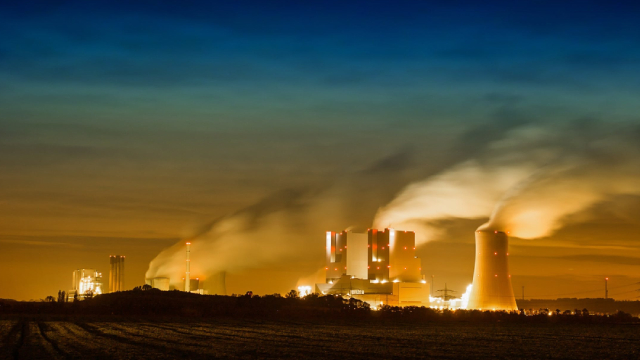
Brazil's Petrobras faces $34 million cost as drillship sits idle in Foz do Amazonas
Reuters· 2025-10-08 22:14
Core Viewpoint - Petrobras, the Brazilian state-run oil firm, has incurred costs of 180 million reais (approximately $33.7 million) to maintain a drillship on standby in the Foz do Amazonas basin [1] Company Summary - Petrobras has faced significant financial burdens due to the standby costs associated with the drillship [1] - The costs are reported by a company source and a local union, indicating potential operational challenges within Petrobras [1] Industry Summary - The situation highlights the financial implications of maintaining drilling operations in the Foz do Amazonas basin, which may affect the broader oil and gas industry in Brazil [1]