Intel

Search documents
US eyes equity stakes in defense firms following Intel investment
Proactiveinvestors NA· 2025-08-26 17:22
Company Overview - Proactive is a financial news publisher that provides fast, accessible, informative, and actionable business and finance news content to a global investment audience [2] - The company operates with a team of experienced and qualified news journalists, ensuring independent content production [2] Market Focus - Proactive specializes in medium and small-cap markets while also covering blue-chip companies, commodities, and broader investment stories [3] - The news team delivers insights across various sectors, including biotech and pharma, mining and natural resources, battery metals, oil and gas, crypto, and emerging digital and EV technologies [3] Technology Adoption - Proactive is recognized for its forward-looking approach and enthusiastic adoption of technology to enhance workflows [4] - The company utilizes automation and software tools, including generative AI, while ensuring that all content is edited and authored by humans [5]


Intel Stock: Why The Trump Call Won't Fail
Seeking Alpha· 2025-08-26 17:16
Core Insights - The White House aligns with previous assessments regarding Intel, indicating a consensus on the company's market position and strategy [1] - The author, Clem Chambers, has a notable background in financial commentary and has successfully predicted significant market movements [1] Company Analysis - Intel's stock has been a focus for investment, with the author expressing a long position in the shares, suggesting confidence in the company's future performance [2] - The article reflects a positive outlook on Intel, particularly in light of recent market conditions and government perspectives [1][2] Industry Context - The commentary highlights the broader implications of government policies on the semiconductor industry, particularly how tariffs and regulations can impact companies like Intel [1] - The financial landscape for technology stocks, especially in the semiconductor sector, remains dynamic, with potential for both opportunities and challenges [1]
Now that Trump acquired 10% of Intel, who's next?
Business Insider· 2025-08-26 16:19
Group 1 - The United States now owns a 10% stake in Intel, which is seen as a strategic move to reduce dependence on foreign chip manufacturers, particularly TSMC in Taiwan, which is vulnerable to China [1][2] - Analyst Ben Thompson argues that while there are issues with US ownership in Intel, it is better than the alternative of Intel not existing, emphasizing the importance of chips for AI and other technologies [1][2] - There is speculation that similar equity stakes may be pursued by the Trump administration in other critical industries, such as defense contractors like Lockheed Martin, as part of a broader strategy [2][3] Group 2 - The Intel deal has been likened to a real estate transaction, where the US government may require companies to pay for amendments to existing agreements [7][8] - Intel CEO Lip-Bu Tan's request for Trump to stop calling for his resignation highlights the potential for other CEOs to negotiate different terms with the administration [9] - The Trump administration's recent actions, including a 15% export tax on Nvidia and AMD, indicate a trend towards taking direct stakes in companies rather than just imposing fees [10][11]

Intel Stock Is An Option For Growth
Seeking Alpha· 2025-08-26 14:59
Intel (NASDAQ: INTC ) is in a very difficult situation right now. The company is building new factories using 18A and 14A technology (1.8 and 1.4 nm), and is suffering huge losses due to this. In 2021, the company hadI started trading on the Moscow Exchange in 2005 as a private trader. Since 2010, I have been a financial markets analyst. I worked as an analyst in several brokerage companies in Russia and then in Ukraine since 2018. I also worked for a leading financial media outlet in Ukraine, covering glob ...
Former House Speaker Kevin McCarthy: I don't like the Fed being politicized
CNBC Television· 2025-08-26 11:36
Federal Reserve & Politics - The potential firing of Fed Governor Lisa Cook by President Trump is viewed as a test case, with the legality of the action likely to be decided in court [2][3][4] - There is speculation about whether this action is a prelude to potentially removing Jay Powell as Fed Chair [4][5] - Concerns are raised about the increasing politicization of the Federal Reserve, questioning whether decisions are being made for political purposes [8][9] - The discussion touches upon whether Fed appointees are independent or loyalists to the appointing president, and the potential impact on the Fed's objectivity [10][11][12][13] - Historically, Fed appointments have been based on economic expertise, but there's a shift towards appointing politicians [14][15] Government Investment & China - The government's stake in Intel and potential future investments in other US enterprises are discussed, raising questions about government ownership of businesses [1][18][19][20] - The need for government intervention in areas like rare earth minerals and chip manufacturing to counter China's dominance is highlighted [21][23] - China controls 90% of the minerals and 95% of the processing [23] - The sale of lower power Nvidia and AMD chips to China is debated in the context of competition and potential cold war scenarios [22][24][25][26] TikTok & National Security - The inconsistencies between the approach to TikTok (a perceived national security threat) and the approach to Nvidia and AMD chip sales are noted [27][28][29] - The discussion includes the potential for TikTok's data to be managed by an American entity like Oracle to address security concerns [30][31]

Here are the risks involved with the US-Intel deal, according to the company
Business Insider· 2025-08-26 03:00
Core Viewpoint - The US government's investment of $8.9 billion for a 9.9% stake in Intel presents both opportunities and significant risks for the company, particularly regarding shareholder interests and future business operations [1][2]. Group 1: Investment Details - The deal reflects the US Administration's confidence in Intel's role in advancing national priorities and the domestic semiconductor industry [2]. - Intel is issuing stock to the government at a discount, which will dilute the shares of existing stockholders [3]. - The US government could become Intel's largest stockholder, reducing the voting rights and power of existing shareholders [4]. Group 2: Risks to Shareholders - The investment may limit Intel's ability to pursue future transactions that could benefit shareholders, potentially deterring third parties from engaging with the company [5]. - The deal could negatively impact Intel's international business, as 76% of its sales come from outside the US, exposing the company to additional regulations and restrictions [6]. - The conversion of government grants into equity stakes could limit Intel's ability to secure future government funding [7][12]. Group 3: Uncertainties and Legal Risks - The timing of the deal's completion is uncertain, with potential changes in laws or federal administration affecting the outcome [13]. - Financial, tax, and accounting impacts of the deal remain unclear due to its complexity [14]. - The deal could lead to adverse reactions from various stakeholders, including investors and foreign governments, and may result in lawsuits or increased scrutiny of Intel [14][15].
华创证券:AI算力需求激增 先进封装产业加速成长
智通财经网· 2025-08-26 02:15
Group 1 - The core viewpoint is that the advanced packaging market is expanding due to the rapid development of AI servers and smart vehicles, leading to increased demand for high-integration packaging solutions like Chiplet and 2.5D/3D [1][2] - Advanced packaging is becoming a key technology in the high-performance computing cycle, overcoming the limitations of Moore's Law, as traditional processes struggle with bandwidth, power consumption, and integration density challenges [1][2] - The global advanced packaging market is projected to reach $45 billion in 2024, accounting for over 55% of the overall packaging market, with a forecasted CAGR of 9.4% from 2024 to 2030 [2] Group 2 - The Chinese advanced packaging market is expected to grow rapidly, reaching a market size of 69.8 billion yuan in 2024, with a compound annual growth rate (CAGR) of 18.7% from 2020 to 2024, although its penetration rate remains at 40% [3] - Major players like TSMC are leading the AI packaging ecosystem with their CoWoS technology, while domestic manufacturers are accelerating their layouts to capture market opportunities [4] - Companies such as Longi Technology, Tongfu Microelectronics, and Huatian Technology are making significant advancements in various packaging technologies, positioning themselves competitively in the high-end process breakthrough and market share enhancement [4]
Intel shares extend rally despite warning of risks from US government stake
Proactiveinvestors NA· 2025-08-25 15:42
About this content About Emily Jarvie Emily began her career as a political journalist for Australian Community Media in Hobart, Tasmania. After she relocated to Toronto, Canada, she reported on business, legal, and scientific developments in the emerging psychedelics sector before joining Proactive in 2022. She brings a strong journalism background with her work featured in newspapers, magazines, and digital publications across Australia, Europe, and North America, including The Examiner, The Advocate, ...
Intel says Trump deal has risks for shareholders, international sales
CNBC· 2025-08-25 14:49
Core Viewpoint - Intel has expressed concerns regarding potential adverse reactions from various stakeholders due to the Trump administration's acquisition of a 10% stake in the company, highlighting risks associated with the deal [1][2]. Group 1: Financial Impact - Intel reported a revenue of $53.1 billion for fiscal year 2024, which represents a 2% decrease from the previous year [1]. - The deal involves the Department of Commerce acquiring up to 433.3 million shares of Intel, which is expected to be dilutive to existing shareholders [3]. Group 2: International Sales and Political Risks - A significant portion of Intel's revenue, 76%, was generated from international sales in the last fiscal year, making the company vulnerable to changes in tariff and trade policies [1]. - The company anticipates potential adverse reactions from investors, employees, customers, suppliers, and foreign governments due to the political landscape and trade policies associated with the Trump administration [2]. Group 3: Legal and Regulatory Concerns - Intel has indicated that there may be litigation related to the transaction and increased scrutiny from the public and political entities [2]. - The changing political environment in Washington could pose challenges to the deal and create risks for current and future shareholders [2].
Trump says he ‘paid zero' for the US Government's 10% stake in Intel
Finbold· 2025-08-25 13:40
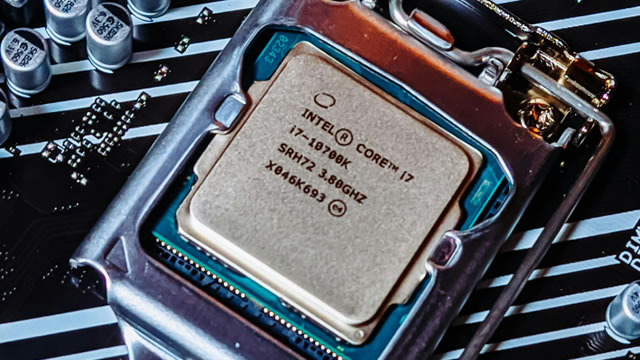
Core Insights - The U.S. government acquired approximately a 10% equity stake in Intel, valued at about $11 billion, through the conversion of existing subsidies and grants rather than new taxpayer funds [1][2] - The equity stake is part of a broader initiative to enhance domestic chip manufacturing and secure semiconductor supply chains [2][4] - The transaction represents a significant shift from direct subsidies to ownership models, allowing taxpayers to benefit from corporate performance [3] Group 1: Government Involvement - The equity stake includes approximately $5.7 billion from CHIPS Act allocations, $3.2 billion from the Secure Enclave program, and $2.2 billion in prior federal support [2] - This move is framed as a "great deal" for the U.S., supporting job creation and national competitiveness [3] Group 2: Intel's Market Position - Intel is a key beneficiary of U.S. efforts to reshore semiconductor capacity amid competition from Asian rivals and supply chain disruptions [4] - The company's stock has recently rallied due to optimism surrounding AI-driven demand, CHIPS Act funding, and government-backed equity support [4]