Geely

Search documents
拓普集团-首次评级为买入 -借助特斯拉和智能电动汽车供应链发展势头
2025-03-25 06:35
Summary of Ningbo Tuopu Group Co Ltd (601689 CH) Equity Research Report Company Overview - **Company**: Ningbo Tuopu Group Co Ltd - **Industry**: Auto Components - **Position**: Leading auto and EV parts supplier in China, expanding from noise, vibration, and harshness (NVH) to a comprehensive range of components including air suspension systems and humanoid robot actuators [2][20] Core Insights - **Growth Forecast**: Earnings are expected to grow at a 30% CAGR from 2024 to 2026, driven by: - Expansion of the EV customer base, including domestic clients like Seres, Li Auto, and Xiaomi, which are gaining market share [3][34] - Increasing content value per vehicle due to a platform-based business model [3][45] - **Market Performance**: Tuopu's shares have increased by 22% year-to-date, outperforming the CSI300 index, attributed to its focus on autonomous driving and robotics [4][66] - **Valuation**: Initiated with a Buy rating and a target price of RMB79.00, indicating a potential upside of approximately 32% from the current share price [5][66] Financial Highlights - **Revenue Growth**: Projected revenue growth from RMB19.7 billion in 2023 to RMB42.8 billion by 2026, with significant contributions from key customers [12][51] - **Earnings Estimates**: EPS expected to rise from RMB1.95 in 2023 to RMB2.98 in 2026, with a notable decline in 2024 due to Tesla's product cycle [8][66] - **Key Ratios**: - PE ratio expected to decrease from 30.7x in 2023 to 20.1x in 2026 [14][71] - ROE projected to remain stable around 19% [13][14] Customer Base and Market Dynamics - **Major Customers**: Tesla is the largest customer, contributing over 30% of revenue in 2024, followed by local brands like Seres, Li Auto, and Xiaomi [21][34] - **Customer Expansion**: Tuopu plans to acquire Wuhu Changpeng to deepen collaboration with Chery and LeapMotor, enhancing its local brand customer base [36][34] Competitive Advantages - **Diversified Product Portfolio**: Transition from NVH components to high-value segments like thermal management and air suspension systems [20][45] - **Platform-Based Business Model**: Enables cross-selling opportunities and increases unit content value per vehicle, enhancing customer relationships [47][49] Risks and Challenges - **Volume Growth Risks**: Potential slower-than-expected volume growth for auto and robot components, particularly if Tesla's product cycle does not accelerate [5][66] - **Operational Risks**: Possible operational issues at overseas plants and intensifying competition could impact margins [5][66] Future Outlook - **Humanoid Robot Market**: Tuopu is positioned to benefit from the humanoid robot market, although revenue contributions are expected to be limited in the near term [55][57] - **Investment in Robotics**: Plans to invest RMB5 billion in a new facility for robotic components, indicating a long-term growth strategy [56][66] Conclusion - **Investment Thesis**: Tuopu is well-positioned to capitalize on the growing demand for EV components and robotics, supported by a diversified customer base and a strong platform-based business model. The company is expected to deliver robust earnings growth, making it a compelling investment opportunity [66][67]

Investor Presentation_ 中国汽车行业概览
2025-03-23 15:39
Summary of China Autos Overview Industry Overview - The report focuses on the **China automotive industry**, particularly the **passenger vehicle (PV)** and **new energy vehicle (NEV)** segments [11][15]. - The overall industry view is categorized as **In-Line** by Morgan Stanley [3]. Key Forecasts - **Passenger Vehicle Sales**: Estimated at **28.3 million units** in 2025, reflecting a **3% year-over-year (YoY)** growth [11][15]. - **New Energy Vehicle Sales**: Projected at **14.9 million units** in 2025, indicating a **21% YoY** increase [11][15]. - **Wholesale NEV penetration** is expected to recover to **46%** in February 2025 [22]. Market Dynamics - The **NEV market** is expected to see a significant increase in penetration, with **PHEVs (including EREVs)** accounting for approximately **40%** of NEV sales [28]. - The **L2+ autonomous driving penetration** forecast has been raised to **25%** in 2025, up from a previous estimate of **15%** [17][19]. Competitive Landscape - The report highlights **intensifying competition** in the China EV market, with local brands gaining market share from foreign brands [37][43]. - **Tech heavyweights** are entering the market, partnering with local OEMs to develop smart EVs and autonomous driving solutions [40][39]. Export and Trade Barriers - **Asia and Europe** accounted for over **70%** of China's vehicle exports in 2024 [48]. - Recent trade barriers have been raised, including a **102.5% tariff on Chinese EVs** in the USA and increased tariffs in the EU [50]. Company Insights - **BYD** is expanding its offshore production capacity with plans for new facilities in **Thailand, Brazil, Uzbekistan, Hungary, Indonesia, and Turkey** [54]. - The report indicates that **local brands** continue to gain share from foreign brands, with **BYD** leading in NEV market share [34][43]. Pricing and Discounts - Retail discounts and price cuts in the automotive sector have stabilized but remain steep, indicating ongoing competitive pressures [25]. Conclusion - The China automotive industry is poised for growth, particularly in the NEV segment, despite challenges from trade barriers and increasing competition. Local brands are expected to continue gaining market share, supported by strategic partnerships and technological advancements.

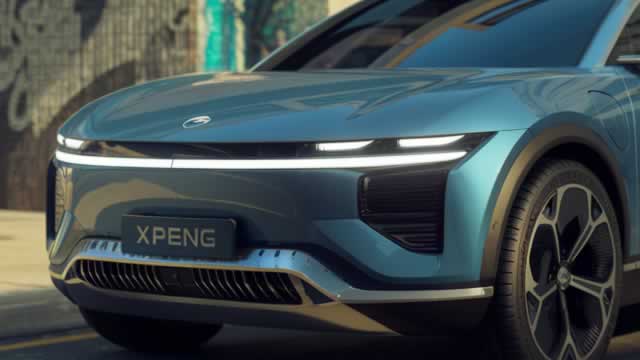
EU tariffs not a deterrent, says Chinese EV maker XPeng
TechXplore· 2025-03-21 14:12
Core Viewpoint - XPeng, a Chinese electric vehicle maker, acknowledges the significant economic impact of EU tariffs on Chinese EVs but remains committed to expanding in European markets [2][3]. Group 1: EU Tariffs and Market Strategy - The European Union has imposed tariffs of up to 35.3% on imports of Chinese electric cars, citing unfair subsidies as the reason [2]. - Despite the tariffs, XPeng's vice chairman Brian Gu stated that the company will continue to pursue opportunities in Europe, emphasizing the importance of the market [3]. - Gu mentioned that establishing a local presence is a strategy to mitigate the effects of tariffs and protectionism [3]. Group 2: Global Expansion Plans - XPeng aims to double its presence to 60 countries and regions in 2025, reflecting a broader trend of globalization among Chinese EV manufacturers [3]. - The company recently opened its second flagship store in Hong Kong, indicating its commitment to expanding its footprint in international markets [1][5]. Group 3: Technological Advancements - The competition among Chinese EV manufacturers is intensifying, particularly in self-driving technology, with advancements in AI and chip technology driving rapid progress [5]. - Gu indicated that Level 4 (L4) autonomous vehicles could enter mass production as early as next year, showcasing the company's focus on innovation [5]. Group 4: Competitive Landscape - XPeng faces stiff competition in Hong Kong from both local Chinese brands and established players like Tesla, with nearly 500 XPeng vehicles registered in the region last year [6]. - The company plans to introduce its luxury seven-seater X9 model to the Hong Kong market, aiming to enhance its competitive position [7].


ECARX(ECX) - 2024 Q4 - Earnings Call Transcript
2025-03-11 20:29
Financial Data and Key Metrics Changes - Revenue for Q4 2024 was RMB1.9 billion, an increase of 4% year-over-year and 36% sequentially [29] - Full year total revenue reached RMB5.6 billion, up 18% year-over-year; gross profit was RMB1.2 billion, down 9% year-over-year, with gross margins at 20.8% [34] - The company achieved breakeven at the EBITDA level during Q4 2024, with adjusted EBITDA gains of RMB74 million, a significant improvement from a loss of RMB236 million in the same period last year [33][34] Business Line Data and Key Metrics Changes - Sales of goods revenue for Q4 2024 was RMB1.5 billion, up 16% year-over-year, driven by demand for computing platforms like Antora and Makalu, which accounted for approximately 29% of sales of goods revenue [29] - Software license revenue was RMB90 million, a decrease of 3% year-over-year, while service revenue was RMB326 million, down 31% year-over-year but up 102% sequentially [30] Market Data and Key Metrics Changes - Global vehicle sales grew by approximately 2% in 2024 to 91 million, with China’s passenger vehicle sales increasing 6% to 28 million, primarily driven by NEVs [8] - ECARX technology was incorporated in over 8.1 million vehicles on the road by the end of 2024, with total shipments reaching a record high of 2 million, up 33% year-over-year [11] Company Strategy and Development Direction - The company aims to strengthen its position as a leading provider of intelligent solutions for automakers, focusing on software-defined vehicles and expanding its portfolio of cost-effective solutions [7] - A USD 20 million share repurchase program was announced, reflecting confidence in future growth prospects [15] - The company plans to further improve operational efficiency and product costs, focusing on procurement, supply chain, and manufacturing strategies [36] Management's Comments on Operating Environment and Future Outlook - Management expressed optimism about achieving positive EBITDA for the full year 2025, emphasizing the importance of cash flow and financial health for global expansion [53] - The company is aware of pricing pressures in the industry but is focused on optimizing costs and improving operational efficiency to maintain margins [32][60] Other Important Information - The company secured a new project with Volkswagen Group, expanding its global customer base to 18 automakers across 28 brands [12] - The company has a robust intellectual property portfolio with 692 registered patents and 723 patent pending applications globally as of December 31, 2024 [24] Q&A Session Summary Question: Could you share the company's global production capacity layout and how you expect to pace the implementation of global orders in the coming years - The company ramped up manufacturing capabilities in China and plans to use contract manufacturing partners globally to expand production capacity [44] Question: What's your current plan for ADAS or AD products, which clients are you working with - The company is investing in the Skyline Pro product and working with various clients, including Geely, to enhance its ADAS offerings [45][46] Question: Can the management share some color or guidance for revenue, gross margin, and also the breakeven point of 2025 - The main priority for 2025 is achieving breakeven, with revenue growth being secondary [52][53] Question: Can you provide a revenue breakdown by clients for '24, and maybe share your outlook for your current mix for the next 5 years to 10 years - In 2024, nearly 80% of revenue came from Geely and related businesses, with plans to diversify further in the coming years [83] Question: Do we see any impact on our business with Lincoln Co, given their merger into Zeker - The company does not expect significant impact and continues to maintain a strong partnership with Lincoln Co [86] Question: Is the Galaxy E8 using our Pikes computing platform - The Galaxy E8 uses the Flyme Auto software, but the hardware is from another supplier; however, the company provided the Skyline ADAS system for the vehicle [88]

ECARX(ECX) - 2024 Q4 - Earnings Call Transcript
2025-03-11 17:08
Financial Data and Key Metrics Changes - Revenue for Q4 2024 was RMB1.9 billion, up 4% year-over-year and 36% sequentially [29] - Full year revenue reached RMB5.6 billion, an 18% increase year-over-year [34] - Gross margin for Q4 was 21.2%, while the full year gross margin was 20.8% [31][34] - Adjusted EBITDA for Q4 was RMB74 million, a significant improvement from a loss of RMB236 million in the same period last year [33] Business Line Data and Key Metrics Changes - Sales of goods revenue for Q4 was RMB1.5 billion, up 16% year-over-year, driven by demand for Antora and Makalu platforms [29] - Software license revenue decreased by 3% year-over-year to RMB90 million, while service revenue dropped 31% year-over-year to RMB326 million [30] - Total shipments reached 2 million units for the year, a 33% increase year-over-year [11] Market Data and Key Metrics Changes - Global vehicle sales grew by approximately 2% in 2024 to 91 million, with China’s passenger vehicle sales increasing by 6% to 28 million [8] - NEV sales in China surged to 30 million, up 36%, accounting for over 40% of total sales [8] Company Strategy and Development Direction - The company aims to achieve positive EBITDA for the full year 2025, focusing on breakeven as a top priority [52][53] - Plans to expand global customer base and deepen relationships with existing customers, including a new project with Volkswagen [12][16] - Emphasis on technological innovation and diversifying the customer base globally [28] Management's Comments on Operating Environment and Future Outlook - Management noted the automotive market is growing slowly but remains competitive, highlighting the importance of differentiation [7][9] - The company is optimistic about future growth prospects, particularly in the software-defined vehicle segment [14] - Management acknowledged challenges in maintaining margins due to industry-wide pricing pressures but plans to optimize costs [32][60] Other Important Information - The company has a robust intellectual property portfolio with 692 registered patents and 723 pending applications [24] - A USD 20 million share repurchase program was announced, reflecting management's confidence in future growth [15] Q&A Session Summary Question: Global production capacity layout and implementation of global orders - Management discussed ramping up manufacturing capabilities in China and plans to use contract manufacturing partners for global expansion [42][44] Question: Current plan for ADAS products and growth opportunities with Geely - Management highlighted ongoing investments in ADAS and the importance of the Skyline Pro product in their roadmap [45][55] Question: Guidance for 2025 regarding revenue and gross margin - Management emphasized breakeven as the main priority for 2025, with revenue growth as a secondary focus [52][53] Question: Revenue breakdown by clients and outlook for Geely's supply chain consolidation - Management indicated that approximately 80% of revenue in 2024 came from Geely, with plans to diversify further [83] Question: Impact of Lincoln Co merger into Zeker and Galaxy E8's computing platform - Management stated that there would be minimal impact on business with Lincoln Co and clarified that Galaxy E8 uses a different hardware supplier but incorporates their ADAS system [87][88]
Tesla shares plunge 14%, head for worst day in five years
CNBC· 2025-03-10 18:30
Core Viewpoint - Tesla's stock has experienced significant declines, with a 14% drop on a recent Monday, marking its worst day since September 2020, and a total loss of over 50% in value since December 2022, resulting in a market cap reduction of over $800 billion [1][2]. Group 1: Stock Performance - Tesla has concluded a seventh consecutive week of losses, the longest losing streak since its Nasdaq debut in 2010 [2]. - The stock peaked at $479.86 on December 17, 2022, but has since lost over 50% of its value [2]. - The Nasdaq index also fell 4.4%, its steepest decline since 2022, indicating a broader market slump [2]. Group 2: External Factors - Uncertainty regarding President Trump's tariff plans is contributing to the decline, as increased tariffs could impact production and lead to higher prices for automotive suppliers in key markets like Canada and Mexico [3]. - Musk's political involvement and rhetoric have led to brand erosion, as he is now the public face of the Trump administration's efforts to reduce government size and spending [4]. Group 3: Brand Image and Sales - Activism against Musk has resulted in protests and vandalism at Tesla facilities, which could negatively affect demand for Tesla vehicles [6]. - Analysts have reported a 50% drop in Tesla's new vehicle sales in Europe in January compared to the previous year, partly due to growing distaste for the brand [7]. - Despite the decline in Tesla's sales, the Model Y remains the best-selling battery electric vehicle globally, with overall electric vehicle sales increasing by 21% in January [8].


【汽车】两会聚焦汽车智能化, 新车密集发布潮开启——汽车和汽车零部件行业周报(20250303-20250307)(倪昱婧)
光大证券研究· 2025-03-10 09:08
Core Viewpoint - The automotive sector has shown strong performance, particularly in the context of new energy vehicles (NEVs), which are expected to benefit from supportive government policies and increasing consumer demand [3][4][5]. Group 1: Automotive Sector Performance - The automotive sector outperformed the market this week, with the CITIC automotive industry index rising by 3.4%, compared to a 1.4% increase in the CSI 300 index, ranking 6th among 30 CITIC primary industries [3]. - In February, domestic retail sales of new energy passenger vehicles increased by 85% year-on-year, reaching 720,000 units, with a penetration rate of approximately 51.54% [4]. Group 2: Government Policy and Market Trends - The 2025 Government Work Report emphasizes support for the intelligent transformation of new energy vehicles, including the development of smart connected vehicles and related infrastructure [5]. - The report indicates that the market for new energy vehicles is expected to see a dual optimization of supply and demand, driven by declining raw material prices and competitive pressures among automakers [5]. Group 3: New Vehicle Launches and Market Dynamics - A wave of new vehicle launches is anticipated, with several models recently introduced, which may stimulate consumer demand and sales growth [6]. - The potential escalation of tariffs on Chinese products by the U.S. could impact the export of automotive components, necessitating close monitoring of trade relations [6].
科技的未来 - 低空经济起飞
2025-03-10 03:11
Summary of Key Points from the Conference Call Industry Overview - The low-altitude economy is expected to take off in 2025 with the issuance of the first operating licenses, leading to a new era in transportation [1] - The Global Urban Air Mobility (UAM) market is projected to grow from US$5 billion to US$24 billion by 2030, driven by commercial services [2] - The low-altitude economy encompasses various sectors including transport, logistics, agriculture, and emergency services [2] Market Dynamics - The cumulative order backlog for Electric Vertical Takeoff and Landing (EVTOL) aircraft has surpassed 18,000 units as of the end of 2024, reflecting a 27% year-over-year increase [2] - The global helicopter market has a Total Addressable Market (TAM) of US$40 billion, with EVTOL expected to be several times larger due to lower costs [2] Regulatory Environment - Regulatory support has been crucial, with favorable regulations and accelerated certification processes emerging since the second half of 2023 [3] - EHang is the only company to have received type, production, and airworthiness certificates from the Civil Aviation Administration of China (CAAC) [3][39] - In the US, companies like Joby and Archer are making significant progress in the certification process [3] Technological Advancements - Advances in battery technology, particularly in energy density and power density, have been key enablers for EVTOL development [4] - Current battery technology allows EVTOLs to carry 2-4 passengers over distances of 300 km, with future advancements expected to support ranges of 2,000-3,000 km [4] Cost Structure and Market Potential - EVTOLs are expected to significantly reduce travel costs compared to helicopters, with potential trip costs of US$0.5-1.5 per seat-km [5] - The initial use case for EVTOLs is anticipated to be tourism, expanding to mass transportation in congested areas over time [5] Competitive Landscape - Chinese companies benefit from regulatory support and lower costs, while US companies focus on long-haul transport [6] - EHang, with a market cap exceeding US$5 billion, is a leader in the EVTOL space, having achieved commercial deliveries [6] Investment Implications - The low-altitude economy is positioned as a disruptive technology, with the potential to open air travel to the masses [9] - The market for urban air mobility could grow to over US$40 billion by 2035, with EHang leading in regulatory approvals in Asia [9] Infrastructure and Support - The low-altitude economy requires critical infrastructure such as flight command-and-control centers, communication networks, and takeoff/landing platforms [20] - Local governments in China are providing substantial funding and subsidies to support the development of the low-altitude economy [52] Future Outlook - The integration of autonomous flight technology and AI is expected to enhance the efficiency and safety of low-altitude operations [26] - The market for EVTOLs is projected to grow significantly, with estimates of cumulative units in service ranging from 5,000 to 50,000 by 2030 [27] Conclusion - The low-altitude economy is on the verge of commercialization, driven by regulatory support, technological advancements, and significant market potential [9][20]



2 Artificial Intelligence (AI) Stocks to Buy Before They Soar 124% and 136%, According to Certain Wall Street Analysts
The Motley Fool· 2025-03-07 08:15
Group 1: Tesla - Tesla has experienced a disappointing fourth quarter, with a 2% revenue increase to $27.5 billion and a decline in annual deliveries for the first time [2] - Unit sales dropped significantly across major markets: 45% in Europe, 15% in China, and 13% in the U.S. [3] - Analysts suggest that CEO Elon Musk's political involvement may have negatively impacted demand, but some believe it could expedite regulatory approvals for autonomous driving technology, which is seen as a $1 trillion opportunity [4][6] - Tesla plans to launch an autonomous ride-sharing service in Austin in June 2025 and aims to produce 10,000 humanoid robots for internal use by 2025 [5] - Wall Street anticipates a 16% increase in Tesla's adjusted earnings in 2025, but the current valuation of 115 times earnings is considered expensive [6] - The investment outlook for Tesla is binary, with potential for significant value increase if it successfully disrupts mobility and labor markets with AI products [7] - Analysts project a target price of $650 per share for Tesla, indicating a 136% upside from the current price of $275 [11] Group 2: The Trade Desk - The Trade Desk operates a leading independent ad tech platform, enhancing its services with AI tools [9] - The company has a strong presence in connected TV and retail advertising, with projected annual spending increases of 13% and 17% through 2028 [10] - The Trade Desk reported a 22% revenue increase to $741 million in the fourth quarter, missing its guidance for the first time in 33 quarters, but non-GAAP earnings rose 44% to $0.59 per diluted share [12] - CEO Jeff Green emphasized the company's focus on AI investments to improve client outcomes and product offerings [13] - Wall Street expects an 8% growth in adjusted earnings for The Trade Desk in 2025, with a current valuation of 40 times adjusted earnings considered expensive [13] - Analysts have set a target price of $148 per share for The Trade Desk, suggesting a 124% upside from its current price of $66 [11]