Tencent

Search documents
云半导体:中国云市场需求保持强劲-Greater China Semiconductors-Cloud Semis Cloud remains robust in China
2025-12-01 00:49
Summary of Conference Call on Greater China Semiconductors Industry Overview - The conference call focused on the Greater China Semiconductors industry, particularly the cloud and AI segments within the technology sector [1][2]. Key Insights - **Positive CIO Survey Results**: The China CIO Survey for the second half of 2025 indicates overall positive results, with a year-over-year growth of external IT spending on hardware, communication, and network equipment at 3.4% in 2025, up from 1.7% expected in the first half of 2025. This growth is projected to accelerate to 8.1% in 2026 [3][16][18]. - **CIO Spending Priorities**: AI/ML/PA is the top priority for CIOs, followed by digital transformation and data center build-out. The focus on AI is expected to increase its share of IT spending to 13% in 2026, despite a reduction in the 2025 estimate from 11.2% to 7.7% [3][22][25]. - **Public Cloud Migration**: There is an anticipated acceleration in public cloud migration, with 38% of CIOs planning to speed up their adoption in 2026, a 9 percentage point increase from the previous survey [3][32]. Company-Specific Insights - **Capital Expenditure Trends**: The three major Chinese cloud service providers (CSPs) reported a combined capital expenditure of RMB 47.9 billion in the third quarter of 2025, reflecting a 34% year-over-year increase but a 22% decrease quarter-over-quarter. Alibaba (BABA) reported a significant increase in capex of 86% year-over-year, while Tencent's capex decreased by 24% year-over-year [4][10]. - **AI and Cloud Demand**: Despite varying capex trends, all major CSPs remain optimistic about AI and cloud demand. Alibaba's management noted that current capex guidance may not meet customer demand, while Tencent attributed its lower capex to GPU supply chain constraints [4][10]. - **Server Demand Projections**: Aspeed Technology has revised its total addressable market (TAM) for general servers to a compound annual growth rate (CAGR) of 6-8%, up from the previous expectation of 4-5%, driven by a replacement cycle and AI demand [5]. Additional Noteworthy Points - **AI Infrastructure Investment**: Baidu has invested over RMB 100 billion in AI since launching its ERNIE model in March 2023, indicating a strong commitment to AI infrastructure development [11]. - **AI Cloud Revenue Growth**: Baidu's AI Cloud revenue reached RMB 6.2 billion, marking a 21% year-over-year growth, with subscription-based revenue from AI accelerator infrastructure surging by 128% year-over-year [11]. - **Long-term AI Demand Confidence**: GDS expressed confidence in the long-term growth of AI infrastructure, with 65% of new bookings this year being AI-related, primarily focused on AI inferencing [11]. Conclusion - The Greater China Semiconductors industry, particularly in the cloud and AI sectors, is experiencing robust growth and investment. Companies are adapting to changing market demands and are optimistic about future developments, despite some challenges in capital expenditure and supply chain constraints. The focus on AI and cloud migration is expected to drive significant growth in the coming years [2][10][11].
全球主题- 人工智能日益增长的水资源需求:回应投资者疑问-Global Thematics and Sustainability-AI's Growing Thirst for Water Answering Investor Questions
2025-11-27 02:17
Summary of Key Points from the Conference Call on AI's Growing Thirst for Water Industry Overview - The conference call focuses on the intersection of artificial intelligence (AI) and water consumption, particularly in the context of data centers and their operational risks related to water usage [2][8]. Core Insights and Arguments 1. **Water Constraints in Risk Frameworks** - Investors are beginning to assess water constraints as potential bottlenecks for scaling AI and data centers, alongside traditional risks like energy and chip shortages. Localized water risks have been highlighted, such as the rejection of Amazon's Project Blue in Tucson, Arizona, due to water and electricity demands [8][9]. 2. **Breakdown of Water Consumption** - AI's water footprint is categorized into three main areas: - Direct on-site cooling (Scope 1) - Off-site electricity generation (Scope 2) - Semiconductor manufacturing (Scope 3) - Scope 2 (electricity generation) accounts for the largest share of water use, followed by cooling (Scope 1) and chip manufacturing (Scope 3). Investors perceive Scope 1 and Scope 3 as the primary bottlenecks due to operational risks associated with data center siting and semiconductor manufacturing [9][10]. 3. **Emerging Cooling Technologies** - Investors are interested in new cooling technologies that can reduce water consumption. Examples include microchannel cold plates and Google's seawater cooling system in Finland, which minimizes potable water use while enhancing energy efficiency [14][15]. 4. **Investment Implications** - Key investment areas include: - Companies providing desalination and water recycling solutions, which may benefit from increased demand as hyperscalers aim for Water Positive targets by 2030. Relevant stocks mentioned include Ecolab, Toray Industries, Veolia, and DuPont de Nemours [19]. - Engagement with value chain players on water stewardship practices, including adherence to standards like the International Water Stewardship Standard and CDP Water Disclosure [19][16]. 5. **Regulatory Developments in APAC** - Regulatory frameworks are evolving in the Asia-Pacific region, with Singapore and Malaysia targeting water use standards for data centers. China's National Green Data Center Evaluation Indicator System includes water use efficiency (WUE) as a criterion for green ratings [17][18]. 6. **Chinese Data Centers' Water Consumption** - Chinese data centers are subject to water use regulations, with leading players scoring well on WUE metrics. Companies like Tencent and Baidu are implementing water-saving projects, and emerging data centers in Northern China may leverage cooler climates for free cooling options [18][19]. Additional Important Insights - The discussion emphasizes the need for investors to consider water risks in their investment strategies, particularly as AI and data centers continue to expand and face increasing scrutiny over their environmental impact [8][9][17].
SaltLight Capital Q3 2025 Co-Investor Letter
Seeking Alpha· 2025-11-26 23:05
Core Insights - The letter discusses the ongoing exploration of intriguing investment opportunities for the upcoming year, emphasizing a proactive and opportunistic investment approach [2][3] - The firm expresses a long-standing bullish stance on AI, particularly in companies like Nvidia, while acknowledging a more selective investment strategy due to recent market developments [6][7] Investment Performance - The fund's annualized return since inception in November 2020 stands at +21.30%, significantly outperforming the South African Consumer Price Index (CPI) of +10.44% [4] - The fund's performance over the years shows fluctuations, with a notable recovery in 2023 at +30.82% after a decline of -34.25% in 2022 [4] AI Infrastructure and Market Dynamics - There is a growing skepticism regarding the AI infrastructure investments, particularly concerning the balance between capital expenditure and actual returns, leading to questions about over-capacity and potential market bubbles [5][7] - The current profit pool in the AI industry is unevenly distributed, with companies like TSMC and Nvidia capturing most of the value, while the overall industry returns on capital remain respectable [8][9] Credit Market Insights - Credit markets are seen as a crucial source of capital for AI infrastructure development, with major tech platforms tapping into these markets, indicating that the cycle is still in its early stages [14][15] - The firm notes that despite equity investor skepticism, credit investors remain optimistic, which may signal a favorable environment for continued investment in AI infrastructure [15][16] Currency Impact - A strong South African Rand is identified as a headwind for reported returns, as the fund has approximately 80% of its assets offshore, which could negatively impact returns when converted back to local currency [17] Administrative Changes - The fund administrator has undergone consolidation, but the investment strategy and philosophy remain unchanged, with only operational adjustments being made [18][19]



Alibaba Group Holding Limited (NYSE:BABA) Maintains "Buy" Rating from Citigroup
Financial Modeling Prep· 2025-11-26 17:00
Core Viewpoint - Citigroup maintains a "Buy" rating for Alibaba and raises the price target from $218 to $225, indicating confidence in the company's future performance [2][5]. Company Overview - Alibaba Group Holding Limited is a leading e-commerce and technology company based in China, competing with tech giants like Amazon and Tencent [1]. - The company's market capitalization is approximately $364.06 billion, reflecting its significant presence in the tech industry [4][5]. - Alibaba has a trading volume of 27.06 million shares on the NYSE, highlighting its active market participation [4][5]. Stock Performance - Despite a recent decrease of 2.31% or $3.72, Alibaba's stock has shown resilience, trading between $156.15 and $166.37 [2]. - Over the past year, the stock has fluctuated between a high of $192.67 and a low of $80.06 [2]. Strategic Initiatives - Alibaba's CEO, Eddie Wu, expresses optimism about the AI market, noting that demand for AI is outpacing the global supply of chips [3]. - In response to the growing AI demand, Alibaba plans to invest aggressively in AI, which aligns with Citigroup's positive outlook and increased price target [3][5].

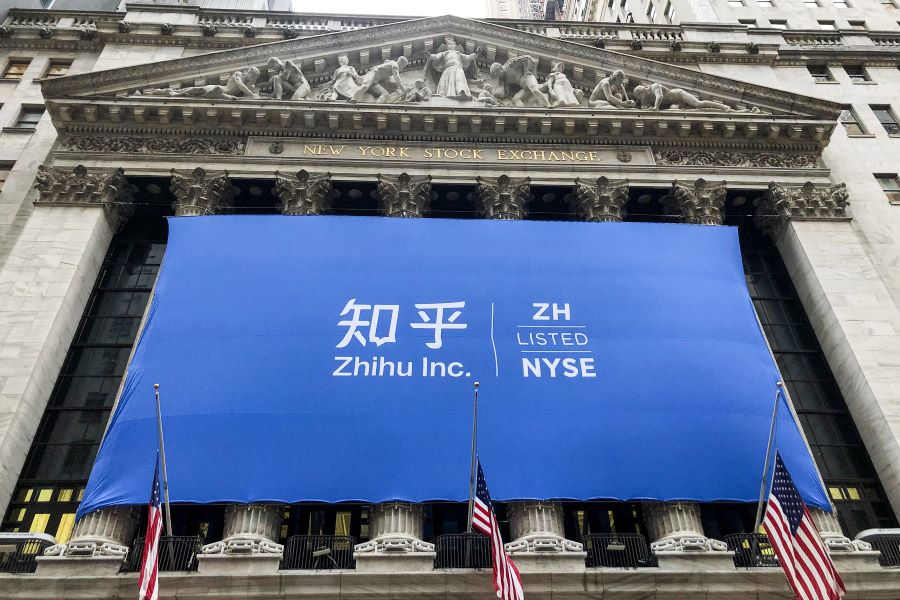
Zhihu Inc. (NYSE:ZH) Faces Financial Challenges Amidst Strong Competition
Financial Modeling Prep· 2025-11-26 11:03
Core Insights - Zhihu Inc. is a leading online content community in China, similar to Quora, providing a platform for knowledge sharing despite facing competition from Baidu and Tencent [1] Financial Performance - Zhihu reported an earnings per share (EPS) of -$0.08 for Q3 2025, missing the estimated EPS of $0.18 [2][6] - The actual revenue for Q3 2025 was $92.53 million, significantly below expectations and down from $116 million in the same period of 2024 [3][6] - The gross margin decreased to 61.3% from 63.9% year-over-year [3] - The company experienced a net loss of $6.6 million, an increase from the $1.2 million loss in Q3 2024, with an adjusted net loss of $3 million compared to $1.8 million last year [3][6] Management Outlook - CEO Yuan Zhou expressed optimism about achieving a full-year non-GAAP breakeven, citing solid progress during the quarter [4] - The average number of monthly subscribing members reached 14.3 million, indicating a strong user base [4][6] Financial Metrics - Zhihu has a price-to-sales ratio of 0.66 and a negative enterprise value to sales ratio of -0.28, indicating a unique financial situation [5] - The debt-to-equity ratio is low at 0.055, suggesting conservative debt use [5] - The company maintains a strong liquidity position with a current ratio of 3.48 [5]

Alibaba's cloud business revenue soars 34% driven by AI boom
Yahoo Finance· 2025-11-25 14:23
Core Insights - Alibaba Group's cloud business revenue surged by 34% in the latest quarter, driven by the growth in artificial intelligence [1][3] - Overall revenue for the July-September quarter increased by only 5% year-on-year to 247.8 billion yuan ($35 billion), while profit fell by 52% due to intense price competition in the e-commerce sector [2] - The company plans to invest at least 380 billion yuan ($53 billion) over three years to enhance its cloud computing and AI infrastructure, with potential for increased investment to meet rising AI demand [3][4] Financial Performance - Alibaba's total revenue for the quarter was 247.8 billion yuan ($35 billion), reflecting a 5% year-on-year increase [2] - The company's profit experienced a significant decline of 52% compared to the previous year [2] - The cloud revenue growth of 34% outpaced the 26% increase seen in the previous quarter [3] Market Position and Competitors - Alibaba's upgraded AI chatbot Qwen achieved 10 million downloads within the first week of its public launch, indicating strong market interest [4] - Competitor JD.com reported a 55% net profit drop in the same quarter, highlighting the competitive pressures in the e-commerce landscape [2] - Tencent reported a 15% year-on-year revenue increase, while Baidu experienced a 7% revenue decline, showcasing mixed results among Chinese tech firms [6] Stock Performance - Alibaba's shares rose by 2% on Tuesday and 2.4% before the opening of the New York Stock Exchange, with a year-to-date increase of over 90% driven by optimism regarding AI advancements [5]
Baidu Inc. (NASDAQ:BIDU) Stock Upgrade and Analyst Optimism
Financial Modeling Prep· 2025-11-24 11:05
Core Insights - Baidu Inc. has been upgraded to "Outperform" by National Bank, with the current stock price at $110.95 [1][5] - Analysts show strong optimism towards Baidu, reflected in an average brokerage recommendation (ABR) of 1.68, indicating a position between Strong Buy and Buy [2][5] - Baidu's market capitalization is approximately $37.63 billion, indicating its significant market position [4][5] Analyst Sentiment - Out of 22 brokerage firms, 14 have rated Baidu as a Strong Buy, representing 63.6% of recommendations, while one rated it as a Buy, accounting for 4.6% [2] - The positive analyst sentiment is likely to influence Baidu's stock price [3] Stock Performance - Baidu's stock is currently priced at $110.95, reflecting a slight increase of 0.45%, or $0.50 [3] - The stock has fluctuated between $108.98 and $112.99 during the day, with a yearly high of $149.51 and a low of $74.71 [3] Market Metrics - Baidu's trading volume stands at 2,758,078 shares, indicating investor interest and liquidity in the stock [4]


X @Bloomberg
Bloomberg· 2025-11-24 09:06
Tencent now holds a 26% economic interest in Vantage Studios https://t.co/XD9kLHk1B4 ...
X @Bloomberg
Bloomberg· 2025-11-24 07:44
Financial Performance - Prosus reports a rise in profit [1] - Profit increase is attributed to higher revenue from its e-commerce business [1] - Profit increase is attributed to the sale of some of its stake in China's Tencent [1]
Ubisoft: Tencent Sale Resolves Pesky Covenant Issue
Seeking Alpha· 2025-11-22 13:00
Group 1 - The article discusses a concrete deal between Ubisoft and Tencent aimed at helping Ubisoft deleverage and address debt issues, including breached covenants [2] - The Valkyrie Trading Society is highlighted as a team of analysts focusing on high conviction and obscure developed market ideas, targeting downside-limited investments with potential for outsized returns [2] - The Value Lab is mentioned as a long-only investment group that provides members with a portfolio, real-time updates, and various market insights [2] Group 2 - The article emphasizes the importance of international markets for value investors, suggesting that engaging with these markets can lead to better investment opportunities [1] - The Value Lab aims for a portfolio yield of about 4%, indicating a focus on generating consistent returns for its members [1]