Intel

Search documents
Alphabet's AI Fightback: A Long-Term Bet At A Discount
Seeking Alpha· 2025-07-26 04:32
Core Viewpoint - The article discusses the potential decline of major companies like Alphabet (Google) and compares it to the historical collapses of companies such as Nokia, Blackberry, Teva, and Intel, suggesting that Alphabet may face similar challenges in the future [1]. Group 1: Company Analysis - Alphabet is being scrutinized for its market position and the sustainability of its business model, raising concerns about its future performance [1]. - The article highlights the importance of innovation, scalability, and market disruptiveness as key factors for growth stocks, which are essential for Alphabet to maintain its competitive edge [1]. Group 2: Industry Context - The technology sector is characterized by rapid changes and the need for companies to adapt quickly to avoid decline, as evidenced by the historical examples of failed companies [1]. - The focus on macroeconomic trends and their impact on tech stocks is emphasized, indicating that external economic factors play a significant role in the performance of companies like Alphabet [1].



Intel Q2: Fragile Foundry Ambitions Collide With A Strategic About-Face
Seeking Alpha· 2025-07-25 18:15
Core Insights - The article discusses the current market trends and potential investment opportunities within specific sectors, highlighting the importance of thorough analysis in making informed investment decisions [1][2]. Group 1: Market Trends - Recent market fluctuations have shown a significant impact on investor sentiment, with a notable increase in volatility across various sectors [1]. - The technology sector has been particularly resilient, demonstrating strong growth potential despite broader market challenges [2]. Group 2: Investment Opportunities - Companies within the renewable energy sector are poised for substantial growth, driven by increasing demand for sustainable solutions and government incentives [1]. - The healthcare industry is also highlighted as a promising area for investment, with advancements in biotechnology and pharmaceuticals leading to innovative treatments and therapies [2]. Group 3: Risk Factors - Potential risks include regulatory changes and economic uncertainties that could affect market stability and investor confidence [1]. - Companies must navigate these challenges while capitalizing on emerging trends to maintain competitive advantages [2].

Intel: Back To 30Y Lows - Its Legacy Pain Continues
Seeking Alpha· 2025-07-25 16:58
I am a full-time analyst interested in a wide range of stocks. With my unique insights and knowledge, I hope to provide other investors with a contrasting view of my portfolio, given my particular background.If you have any questions, feel free to reach out to me via a direct message on Seeking Alpha or leave a comment on one of my articles.Analyst’s Disclosure:I/we have a beneficial long position in the shares of NVDA, AVGO, TSM, ARM, QCOM either through stock ownership, options, or other derivatives. I wr ...
Intel Q2 Earnings Fall Short of Estimates, Revenues Remain Flat Y/Y
ZACKS· 2025-07-25 16:11
Core Insights - Intel Corporation (INTC) reported mixed second-quarter 2025 results, with revenues exceeding the Zacks Consensus Estimate but adjusted earnings falling short [1][9] - The company is experiencing solid growth in artificial intelligence (AI) PCs, although margins are impacted by operational efficiency initiatives and cost-cutting measures [1][9] Financial Performance - Intel incurred a GAAP loss of $2.9 billion, or 67 cents per share, compared to a net loss of $1.6 billion, or 38 cents per share, in the same quarter last year [2] - Excluding non-recurring items, the non-GAAP loss was $400 million, or 10 cents per share, down from a net income of $100 million, or 2 cents per share, a year ago [3] - GAAP revenues were flat year over year at $12.85 billion, surpassing company guidance and consensus estimates of $12.05 billion [4][9] Segment Performance - Client Computing Group revenues decreased by 3% year over year to $7.9 billion, affected by customers reducing inventory levels due to macroeconomic challenges [5] - Datacenter and AI Group revenues improved by 4% year over year to $3.9 billion, driven by strong demand for AI server CPUs and Xeon 6 processors [6] - Total product revenues were $11.8 billion, down 1% year over year, while Intel Foundry revenues increased to $4.4 billion from $4.3 billion [7] Operating Margins - Non-GAAP gross margin declined to 29.7% from 38.7% a year ago, with a non-GAAP operating margin loss of 3.9% compared to a gain of 0.2% in the previous year [8] - Margins were negatively impacted by impairment charges and restructuring costs associated with operational realignment [8] Cash Flow and Liquidity - As of June 30, 2025, Intel had cash and cash equivalents of $9.64 billion and long-term debt of $44.02 billion [10] - The company generated $2.05 billion in cash from operating activities in the second quarter, down from $2.29 billion a year ago [10] Outlook - For the third quarter of 2025, Intel expects GAAP revenues to be between $12.6 billion and $13.6 billion, with a non-GAAP gross margin projected at 36% [11]
Intel drops 9% as chipmaker's foundry business axes projects, struggles to find customers
CNBC· 2025-07-25 16:02
Core Viewpoint - Intel's stock fell 9% following the announcement of significant cuts to foundry costs, overshadowing a better-than-expected earnings report, raising concerns about the future of its chip manufacturing business [1][4]. Financial Performance - Intel reported adjusted earnings of 10 cents per share, exceeding the average analyst estimate of 1 cent, and provided a sales forecast for Q3 that also surpassed expectations [1]. - The company's net loss widened to $2.9 billion, or 67 cents per share, compared to a loss of $1.61 billion, or 38 cents per share in the same period last year [6]. Strategic Decisions - CEO Lip-Bu Tan indicated that the upcoming chip manufacturing process, 14A, will be developed based on confirmed customer commitments, stating there will be "no more blank checks" [2]. - Intel may "pause or discontinue" its foundry business if it fails to secure a customer for its next technology cycle [2][3]. - The company is halting chip facility projects in Germany and Poland and is slowing production at its Ohio plant, indicating a strategic shift in operations [4]. Market Position and Challenges - Intel's stock has lost 60% of its value in 2024, marking its worst year on record, largely due to its struggles in the artificial intelligence market, which is currently dominated by Nvidia [4]. - Analysts expressed concerns about the uncertainty surrounding Intel's product roadmaps and customer adoption due to the lack of external foundry commitments [5]. Workforce and Operational Changes - The company has implemented layoffs that will reduce its workforce by 15%, resulting in approximately 75,000 employees by the end of the year [6]. - CEO Tan acknowledged that previous investments were made without adequate demand, leading to a fragmented and underutilized factory footprint [6].
ETFs in Focus on Intel's Disappointing Q2 Results, Upbeat View
ZACKS· 2025-07-25 16:01
Core Insights - Intel reported mixed second-quarter 2025 results, missing earnings estimates with a loss per share of 10 cents compared to the Zacks Consensus Estimate of earnings of 1 cent and year-ago earnings of 2 cents. Revenues were flat year over year at $12.9 billion, slightly exceeding the estimated $11.87 billion [1][3] - The company provided an optimistic revenue outlook for the current quarter, projecting revenues between $12.6 billion and $13.6 billion, with the Zacks Consensus Estimate at $12.66 billion [4] - Intel is undergoing a restructuring process, cutting approximately 24,000 core jobs (15% of workforce) to streamline operations and focus on AI-centered products, aiming for $17 billion in cost savings for 2025 [4] ETF Focus - Investors are encouraged to monitor ETFs with significant allocations to Intel, including REX FANG & Innovation Equity Premium Income ETF (FEPI), iShares Edge MSCI USA Value Factor ETF (VLUE), Themes Generative Artificial Intelligence ETF (WISE), iShares Semiconductor ETF (SOXX), and Invesco PHLX Semiconductor ETF (SOXQ) [2] - FEPI holds Intel in the seventh position with a 6.7% share, has an asset base of $490.8 million, and charges 65 bps in annual fees [5] - VLUE features Intel as the second-largest holding at 4.2% of assets, with an asset base of $6.8 billion and charges 15 bps in annual fees [6] - WISE includes Intel as the tenth largest holding at 3.9%, with an asset base of $32.8 million and charges 35 bps in annual fees [7] - SOXX lists Intel as the ninth firm with a 4% share, has an asset base of $13.7 billion, and charges 35 bps in annual fees [8][9] - SOXQ ranks Intel seventh with a 4.04% share, has an asset base of $505.2 million, and charges 19 bps in annual fees [10]
Intel Post Q2 Sales Beat, Analysts Expect Turnaround To Take Years
Benzinga· 2025-07-25 15:31
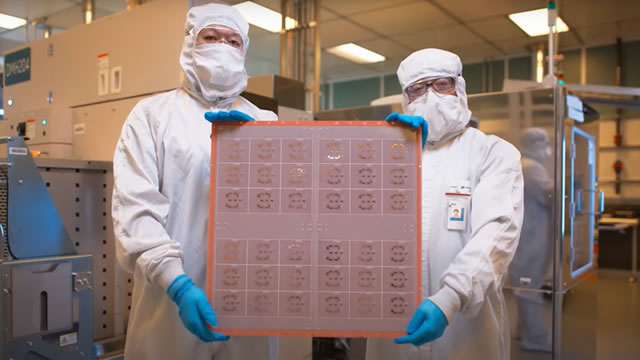
Shares of Intel Corp INTC tanked in early trading on Friday, after the company on Thursday reported disappointing earnings for the second quarter.Here are some key analyst takeaways.BofA Securities analyst Vivek Arya reiterated a Neutral rating and price target of $25.Rosenblatt Securities analyst Kevin Cassidy reaffirmed a Sell rating and price target of $14.Benchmark analyst Cody Acree maintained a Hold rating on the stock.Needham analyst Quinn Bolton reiterated a Hold rating.Check out other analyst stock ...
Only One Thing Matters For Intel
Seeking Alpha· 2025-07-25 14:44
Retirement is complicated and you only get once chance to do it right. Don't miss out because you didn't know what was out there.The Retirement Forum provides actionable ideals, a high-yield safe retirement portfolio, and macroeconomic outlooks, all to help you maximize your capital and your income. We search the entire market to help you maximize returns.Intel Corporation (NASDAQ: INTC ) recently announced its Q2 earnings , falling back below a $100 billion market capitalization. The company recorded its w ...
Intel's Turnaround Gains Credibility With Strong Q2 Report
MarketBeat· 2025-07-25 14:25
Core Viewpoint - Intel's second-quarter earnings report reflects a complex but ultimately positive narrative, indicating that the company's restructuring strategy is on track despite significant short-term costs [2][9]. Financial Performance - Q2 revenue reached $12.9 billion, flat year-over-year, but exceeded both Intel's guidance and Wall Street expectations [3]. - The Data Center and AI Group (DCAI) segment saw a 4% year-over-year revenue increase, while the Client Computing Group (CCG) experienced a slight 3% decline [4]. - The non-GAAP loss of $0.10 per share was primarily due to planned one-time charges, including $1.9 billion in restructuring costs and $800 million in asset impairments, viewed as investments for future efficiency [5]. Forward-Looking Guidance - The forecast for Q3 non-GAAP gross margin is approximately 36.0%, a significant improvement of over 600 basis points from Q2's 29.7% [6][7]. - This guidance indicates that cost-cutting measures are beginning to positively impact profitability, with gross margin serving as a key measure of manufacturing efficiency and pricing power [7]. Strategic Execution - The earnings report serves as a scorecard for management's execution, demonstrating that Intel is delivering on its strategic promises [8]. - The company has completed most of its planned 15% workforce reduction and is on track to meet long-term operating expense targets for 2025 and 2026 [11]. - Intel is halting planned factory projects in Germany and Poland and slowing construction in Ohio to align spending with market demand, part of its Smart Capital strategy [11]. Balance Sheet and Technology - In July, Intel strengthened its balance sheet by selling 57.5 million Mobileye shares, adding $922 million in cash [11]. - Key product milestones were achieved, including the start of production for the advanced Intel 18A process and confirmation of the first Panther Lake processors for shipment this year [11].
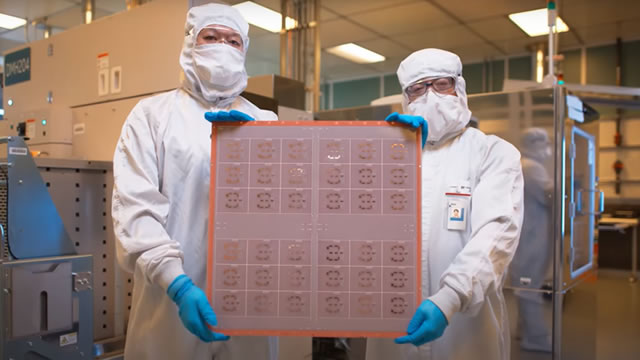
Intel Q2: Learning The Hard Way
Seeking Alpha· 2025-07-25 14:04
Core Insights - The article emphasizes the importance of building robust and diversified investment portfolios to preserve and increase wealth over time [1]. Group 1: Company and Industry Focus - The Pragmatic Investor is designed to guide investors of all levels through global macro, international equities, commodities, tech, and cryptocurrencies [1]. - The investment group is led by James Foord, an economist with a decade of experience analyzing global markets [1]. - The features of The Pragmatic Investor include a portfolio, weekly market updates, actionable trades, technical analysis, and a chat room for discussions [1].