Berkshire Hathaway

Search documents
3 Billionaires Have One Key Stock As Their Largest Holding. You'll Be Surprised to Know What It Is.
247Wallst· 2026-02-16 16:14
Core Insights - Three billionaires, Warren Buffett, Ken Fisher, and Chris Davis, have Costco as a significant holding, highlighting its appeal among top investors [1] Group 1: Investment Performance - Warren Buffett purchased Costco in 2000 at under $29 per share and sold it in 2020 after achieving approximately 900% returns [1] - Ken Fisher bought Costco shares in 2012 at a price range of $45 to $65 per share, with the stock's value significantly increasing since then [1] - Chris Davis acquired Costco shares around $27 per share in mid-2000, emphasizing its long-term investment potential [1] Group 2: Competitive Advantage - Costco's business model relies heavily on membership fees, which account for about 70% of its revenue, providing a durable competitive moat [1] - The company has demonstrated consistent same-store sales even during economic downturns, reinforcing its stability and attractiveness to investors [1] Group 3: Investment Strategies - Buffett's investment in Costco aligns with his criteria for long-term holdings, showcasing the stock's resilience through various market crises [1] - Fisher's strategy mirrors Buffett's, focusing on long-term value and customer loyalty, which he believes can drive future growth [1] - Davis views Costco as one of the best quality compounders in the retail sector, indicating strong confidence in its business model [1]



Bruker's Q4 Earnings Lag Estimates, Margins Contract, Stock Down
ZACKS· 2026-02-16 16:05
Core Insights - Bruker Corporation (BRKR) reported adjusted earnings per share (EPS) of 59 cents for Q4 2025, a decline of 22.4% year over year, and missed the Zacks Consensus Estimate by 9.2% [1][7] - The company’s total revenues for Q4 were $977.2 million, a slight decrease of 0.2% year over year, but exceeded the Zacks Consensus Estimate by 1.12% [3][10] - For the full year 2025, adjusted EPS was $1.83, down 24.1% from the previous year [2] Revenue Analysis - Q4 revenues by geography showed a 13.8% decline in the U.S. to $225 million, while Europe saw a 1% increase to $377 million, and Asia Pacific revenues rose 8.3% to $301.2 million [4] - The BSI BioSpin segment revenues fell 2% to $267 million, while BSI CALID revenues increased by 3.4% to $331.6 million [4] - Total revenues for 2025 reached $3.44 billion, reflecting a 2.1% increase from the previous year [3] Margin Performance - Gross profit decreased by 8.9% to $449.2 million, with gross margin contracting by 439 basis points to 46% due to an 8.6% rise in the cost of revenues [5][10] - Adjusted operating profit was $102.4 million, down 27.7% year over year, with adjusted operating margin contracting by 398 basis points to 10.5% [5] Financial Position - At the end of Q4 2025, Bruker had cash and cash equivalents of $298.8 million, an increase from $183.4 million at the end of 2024 [6] - Long-term debt at the end of Q4 2025 was $1.87 billion, down from $2.09 billion at the end of Q4 2024 [8] 2026 Guidance - Bruker provided guidance for 2026, expecting revenues between $3.57 billion and $3.60 billion, indicating a year-over-year growth of 4% to 5% [9] - Adjusted EPS for 2026 is projected to be in the range of $2.10 to $2.15, representing an increase of 15% to 17% year over year [9] Overall Assessment - The company ended Q4 2025 with mixed results, as earnings missed estimates while revenues surpassed them [10] - Margins were negatively impacted by lower volume, unfavorable mix, tariffs, and currency headwinds [10] - Despite challenges, Bruker’s innovation efforts showed promise, with expectations for improved contributions from the BEST segment in 2026 [11]


Warren Buffett’s 2013 Stock-Buying Test Is More Relevant Than Ever in 2026
Yahoo Finance· 2026-02-16 11:21
Core Insights - Warren Buffett's stock-buying test remains relevant in 2026, emphasizing the importance of evaluating a company's earnings potential [1] - The U.S. stock markets have experienced a record-setting run for over three years, continuing into 2026 due to a positive earnings environment [2] - Total S&P 500 earnings are projected to grow by 12.9% in 2026, with a 9.3% growth rate when excluding the tech sector [3] Earnings Outlook - An improving corporate earnings outlook is indicated by steadily rising estimates, as reported by Zacks Investment Research [3] - Despite geopolitical tensions, investors are largely ignoring these factors and focusing on stock purchases, aligning with Buffett's advice [4] Market Performance - As of February 12, 2026, the S&P 500 increased by approximately 1.35% for the year, while the Dow gained 3.96%, despite early-year market volatility [5] - The market's reaction to significant news, such as the Justice Department's investigation into the Federal Reserve, shows resilience, with the S&P 500 recovering to an all-time high [7] Investment Strategy - Investors are encouraged to estimate a company's earnings range for the next five-plus years and to buy stocks at reasonable prices if they can do so [8] - It is advised not to let macroeconomic or political environments deter investment decisions or good buying opportunities [8]
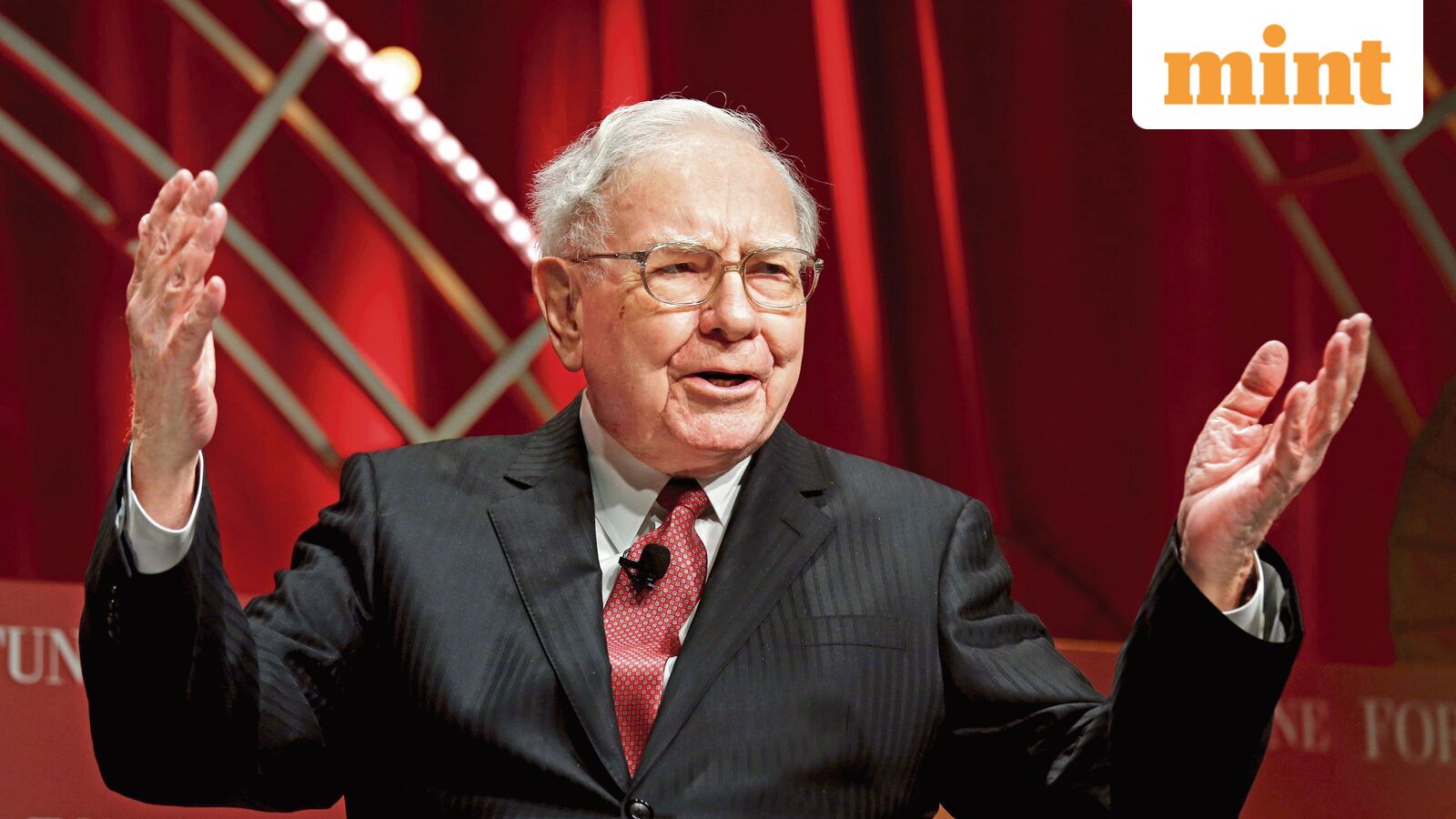
Quote of the day by Warren Buffett: ‘Until you can manage your emotions, don't expect to manage money'
MINT· 2026-02-16 06:04
Core Insights - Warren Buffett emphasizes the importance of emotional management in investing, stating that one should not expect to manage money effectively without managing emotions [2] - He advocates for a long-term investment strategy, suggesting that holding stocks reduces risk over time and that selling during price drops is unwise [2][3] - Buffett's investment philosophy includes a focus on fundamental analysis and the significance of seizing big opportunities when they arise [6][7] Investment Philosophy - Buffett believes that stock price fluctuations are insignificant compared to the long-term earnings potential of businesses, which can yield returns of 12% on equity [3] - He warns that some individuals may not be psychologically suited for stock ownership due to emotional reactions to market volatility [4][5] - Education on the nature of investments is crucial for investors to become more comfortable with market fluctuations [5] Opportunity Seizing - Buffett uses the "20-slot punch card" analogy to illustrate the limited number of significant investment opportunities one has in a lifetime, encouraging careful consideration of each decision [6][8] - He stresses that failing to act on substantial opportunities is nearly as detrimental as making poor investment choices [7][8] Company Overview - Berkshire Hathaway, under Buffett's leadership, transformed from a struggling textile company into a $1.2 trillion empire over nearly 60 years, achieving over 55,000,000% returns [10] - Buffett's investment strategy has led to a portfolio where major holdings like Apple and Coca-Cola account for 70% of Berkshire's $263 billion stock portfolio [11] - As of now, Buffett's net worth is estimated at $152 billion, ranking him as the 10th richest person globally [12]
India’s biggest risk is not the macro, it’s investor expectations: Kalpen Parekh, MD & CEO, DSP Mutual Fund
The Economic Times· 2026-02-16 01:00
He also delves into DSP Mutual Fund’s counter-cyclical investment philosophy, explaining why discipline, valuation awareness, and patience matter more than prediction. The discussion spans India’s improving macro balance sheet, global investing opportunities, the role of multiasset strategies, and why some popular market narratives, particularly around gold and silver, deserve closer scrutiny. Edited excerpts:What are your views on the India–US trade deal, and how will it impact India’s macro outlook and ma ...

Here's the Surprising ETF Trouncing the S&P 500 in 2026
247Wallst· 2026-02-15 17:30
Core Viewpoint - The iShares Russell 2000 ETF (IWM) has outperformed the S&P 500 in 2026, gaining 6.8% year-to-date compared to a 0.1% decline in the S&P 500, and achieving a 17.6% return over the past year versus the S&P 500's 14.9% [1] Performance Comparison - The iShares Russell 2000 ETF has shown a significant performance advantage over the S&P 500, with a year-to-date gain of 6.8% and a one-year return of 17.6% compared to the S&P 500's 0.1% decline and 14.9% gain respectively [1] - The Russell 2000 Index, which the iShares ETF tracks, returned only 2.2% annually from 2020 to 2024, while the S&P 500 averaged 15.1% during the same period [1] Economic Context - Small-cap stocks, represented by the Russell 2000, faced challenges during the pandemic, including higher debt loads and inflation pressures, which led to underperformance compared to large caps [1] - The Federal Reserve's rate cuts in 2025, reducing the federal funds rate to 3.50%-3.75%, provided relief to small businesses, allowing for a rebound in earnings, which grew by 12% in late 2025 [1] Investment Characteristics - The iShares Russell 2000 ETF manages $76.2 billion in assets and has an expense ratio of 0.19%, making it a cost-effective option for investors seeking exposure to small-cap stocks [1] - The ETF's holdings are diversified across sectors such as industrials (19%), financials (17%), and healthcare (17%), with no single stock exceeding 1% of assets [1] Future Outlook - Economists project that the Federal Reserve may implement two to three more rate cuts in 2026, potentially lowering rates to 2.75%-3.00%, which could further benefit small-cap stocks [1] - Historically, small-cap stocks have outperformed large caps over long periods, delivering a 2% to 3% annual premium since 1926, except during periods of high interest rates [1]

Here’s the Surprising ETF Trouncing the S&P 500 in 2026
Yahoo Finance· 2026-02-15 17:30
Core Viewpoint - The iShares Russell 2000 ETF is outperforming the S&P 500 in 2026, challenging the traditional investment narrative that favors large-cap stocks [3][4]. Performance Comparison - The iShares Russell 2000 ETF is up 6.8% year-to-date in 2026, while the S&P 500 has declined by 0.1% [3][8]. - Over the past year, the iShares ETF has gained 17.6%, surpassing the S&P 500's 14.9% increase [3][8]. Small-Cap Dynamics - The iShares Russell 2000 ETF benefits from small-cap stocks, which have shown resilience and growth potential despite previous struggles [4]. - Small-cap stocks faced significant challenges during the pandemic, leading to underperformance compared to larger companies [5][6]. Economic Context - Small caps have higher debt loads, approximately 1.5 times that of large caps, making them more vulnerable to economic downturns [5]. - Inflation and rising interest rates have further pressured small businesses, limiting their growth potential [6]. Historical Performance - From 2020 to 2024, the Russell 2000 Index returned only 2.2% annually, in stark contrast to the S&P 500's 15.1% average return [7]. - By late 2024, small caps were trading at a 20% valuation discount compared to large caps [7]. Recent Developments - The Federal Reserve's rate cuts in 2025 to a range of 3.50%-3.75% have reduced borrowing costs for small-cap companies [8]. - Russell 2000 earnings grew by 12% in late 2025, marking the first time they outpaced large caps since 2021 [8].
Warren Buffett once said this US investment was ‘terrible long-term.’ Now he has $381 billion of it. Should you get in?
Yahoo Finance· 2026-02-15 14:07
Group 1 - Berkshire Hathaway's cash reserves have reached $381.7 billion by November 2025, despite an 8% decline in the purchasing power of the U.S. dollar and an annual inflation rate of 2.7% from December 2024 to December 2025 [2][4][5] - Analysts interpret Berkshire's cash hoarding as a "risk-off" mindset, raising questions about whether the company believes stocks are overvalued or if an economic downturn is imminent [1][5] - Warren Buffett has expressed a cautious approach to cash management, stating that the company only invests when it finds favorable opportunities, emphasizing the importance of being prepared for future complexities in the market [5][6] Group 2 - Buffett's investment philosophy includes focusing on equities, particularly U.S. stocks, which he believes will appreciate over time, as evidenced by Berkshire's overall gain of 4,384,748% from 1964 to 2023 [6][7] - The article discusses various investment strategies to combat inflation, including investing in stocks, real estate, and gold, highlighting their potential to preserve and grow wealth [11][19] - Real estate is noted as a reliable hedge against inflation, with property values and rental income typically increasing during inflationary periods [12][14]
Charlie Munger once said finfluencers ‘mislead you on purpose’ — here’s the wealth-building plan he recommended instead
Yahoo Finance· 2026-02-15 14:05
Core Viewpoint - The article emphasizes the importance of financial literacy and the risks associated with following dubious financial advice from social media influencers, advocating for a more traditional, passive investment approach as promoted by Warren Buffett and Charlie Munger [3][4][6]. Financial Literacy and Advice - A significant portion of young Americans, specifically 42% of those aged 18 to 29, seek financial advice on social media, highlighting a concerning trend in financial literacy [4]. - Only 48% of adults could correctly answer more than half of the financial questions in the 2025 TIAA Institute-GFLEC Personal Finance Index, indicating a widespread lack of financial knowledge [3]. Investment Strategies - Buffett and Munger argue that most investors struggle to outperform the market, making index funds a suitable choice for average investors, with the S&P 500 delivering an average annual return of over 14% in the past decade [6][7]. - From 2003 to 2023, 98.6% of actively managed domestic equity funds underperformed the S&P 500 Equal Weight Index, reinforcing the case for passive investing [7]. Real Estate Investment - Berkshire Hathaway has invested nearly $1 billion in homebuilding companies, indicating a belief in the growing demand for U.S. housing [13]. - Platforms like Arrived allow investors to buy shares in rental properties without the responsibilities of homeownership, making real estate investment more accessible [14][15]. - Lightstone DIRECT offers accredited investors direct access to multifamily real estate opportunities, with a historical net IRR of 27.6% and a 2.54x historical net equity multiple since 2004 [21].
The SPYT Income ETF Pays Monthly but Caps Your Gains When Markets Rally
247Wallst· 2026-02-15 13:00
Core Insights - The Defiance S&P 500 Income Target ETF (SPYT) provides steady monthly income but underperforms the S&P 500 due to capped gains during market rallies [1] Group 1: ETF Performance - SPYT launched in March 2024, promising high monthly income through daily call options on the S&P 500 while holding the index itself [1] - Monthly distributions have averaged around $0.31 per share, but the ETF has lagged behind the S&P 500 by several percentage points over the past year [1] - Analysts have noted that SPYT's call spread strategy may not be as effective as competing income ETFs, raising concerns about its risk-adjusted returns since launch [1] Group 2: Market Conditions - SPYT performs well in sideways, range-bound markets where stocks oscillate without significant movement, allowing for income generation without sacrificing much upside [1] - In strong trending markets, particularly tech-driven rallies, SPYT's strategy limits gains when investors seek exposure to rising stocks [1] - The fund's core position includes the iShares Core S&P 500 ETF, with a significant portion in tech stocks, which are the most volatile and highest-premium names in the index [1] Group 3: Distribution Trends - Monthly payouts have compressed from early highs due to tighter option markets, indicating weaker call demand and lower implied volatility [1] - This compression raises questions about the sustainability of the covered call strategy, as continued declines in payouts could weaken the high-yield thesis [1] - Monitoring distribution trends is crucial; stabilization or increases in payouts would indicate a successful strategy, while ongoing declines could suggest better risk-adjusted returns may be found elsewhere [1]