Tesla

Search documents
Tesla has ‘lots of irons in the fire' — but its stock is unusually calm
MarketWatch· 2026-03-19 19:29
Core Insights - Tesla shares have exhibited lower volatility as investors await initial outcomes from Elon Musk's ventures into robotaxis and chip manufacturing [1] Company Analysis - Investors are closely monitoring Tesla's developments in the robotaxi sector and chip production, which are seen as potential growth areas for the company [1]


Volvo Scraps EX30 U.S. Sales Amid Broader EV Strategy Reset
ZACKS· 2026-03-19 18:32
Core Insights - Volvo is discontinuing the EX30 subcompact electric SUV in the United States after the 2026 model year, while continuing sales in global markets due to tariffs and a slowing U.S. EV market [1][2][3] Group 1: Volvo's EX30 Discontinuation - The EX30 was introduced in the U.S. for the 2025 model year and will have its final model year in 2026, remaining available in markets like Canada and Mexico [2] - Production for the U.S. market shifted from China to Belgium to avoid tariffs, but rising import tariffs and the removal of federal EV tax credits led to increased cost pressures and declining sales [3][4] - In 2025, Volvo sold approximately 5,400 EX30 units, significantly lower than competitors like Hyundai's Ioniq 5 and Tesla's Model 3 [4] Group 2: Industry Trends - The decision to discontinue the EX30 aligns with broader industry trends, as automakers reassess their electric vehicle programs amid changing consumer demand and regulatory environments [5][10] - Other automakers, such as Honda and General Motors, are also scaling back their EV plans due to declining demand and shifting priorities towards gasoline and hybrid models [8][9][10] - Honda announced the cancellation of three planned battery-electric models for the U.S. market, while GM is shifting its Michigan plant from EV production to internal combustion engine models [8][9]
Tesla Fades: Three Big Stories Are Moving the Stock Today and They're Pulling in Different Directions
247Wallst· 2026-03-19 18:06
Core Viewpoint - Tesla's stock is facing downward pressure due to regulatory scrutiny, capital-intensive semiconductor production, and the strategic sharing of its Supercharger network with competitors, leading to mixed investor sentiment [2][3][5]. Regulatory Scrutiny - The National Highway Traffic Safety Administration (NHTSA) has intensified its investigation into Tesla's Full Self-Driving (FSD) system, covering approximately 3.2 million vehicles after nine crashes, including one fatality [6][7]. - The investigation is now at the engineering analysis stage, focusing on FSD's ability to detect degraded road conditions and provide timely warnings to drivers [6]. - The heightened scrutiny adds friction and delays to Tesla's long-term plans for autonomous driving and robotaxi services, which are critical to its growth narrative [7][8]. Semiconductor Production - Tesla has launched its Terafab semiconductor unit, aiming to produce hundreds of billions of custom chips annually, which is a significant move towards vertical integration for AI and autonomous systems [9][10]. - This initiative could reduce dependency on third-party suppliers and potentially enhance profit margins, but chip fabrication is highly capital-intensive [11]. - The market may discount this long-term strategy due to immediate pressures on delivery numbers [11]. Supercharger Network Strategy - Tesla is expanding access to its Supercharger network for Stellantis vehicles, which could generate additional revenue from charging fees, contributing to a reported $3.37 billion in services and other revenue in Q4 2025, up 18% year-over-year [13][14]. - However, sharing the Supercharger network with competitors diminishes Tesla's competitive advantage, transforming it from a unique selling point to an industry utility [14]. - The strategic implications of this move could affect Tesla's market positioning as more automakers gain access to its once-exclusive charging infrastructure [12][14].
Gordon Johnson Warns Tesla's Potential Recall Could Derail 'Robotaxi Story'
Benzinga· 2026-03-19 17:37
Core Viewpoint - Tesla Inc. is facing significant regulatory challenges as the NHTSA escalates its investigation into the Full Self-Driving (FSD) system, impacting approximately 2.4 million vehicles [1]. Regulatory Developments - The NHTSA has moved its investigation from a Preliminary Evaluation (PE) to an Engineering Analysis (EA), indicating a more in-depth examination of the FSD system [1][2]. - The EA signifies confirmed patterns and active vehicle testing, with the potential for a mandatory recall looming [2]. Analyst Insights - Analyst Gordon Johnson warns that the situation is critical for Tesla's valuation, stating that a forced recall could jeopardize the company's robotaxi narrative, which is not currently reflected in its market pricing [3]. - Johnson emphasizes that building a $1.2 trillion robotaxi company on software that may soon be deemed unsafe is unsustainable [3]. Safety Concerns - The NHTSA is particularly focused on FSD collisions that occur under reduced roadway visibility, assessing whether Tesla's degradation detection system adequately alerts drivers during adverse conditions [3]. - Current data suggests that Tesla's vision-based system may fail to warn drivers effectively, with reports of FSD losing track of lead vehicles [4]. Hardware and Software Issues - CEO Elon Musk has promoted the upcoming AI5 chip, claiming it will significantly enhance performance, but there are criticisms regarding the need for hardware upgrades to achieve true unsupervised driving [5]. Legal Challenges - The regulatory scrutiny follows a $1 million lawsuit in Texas related to a Cybertruck incident, where the Autopilot system allegedly failed to navigate a curve [6]. - The NHTSA investigation raises broader concerns about Tesla's camera-only "Tesla Vision" approach, highlighting systemic issues within the company's safety protocols [6].
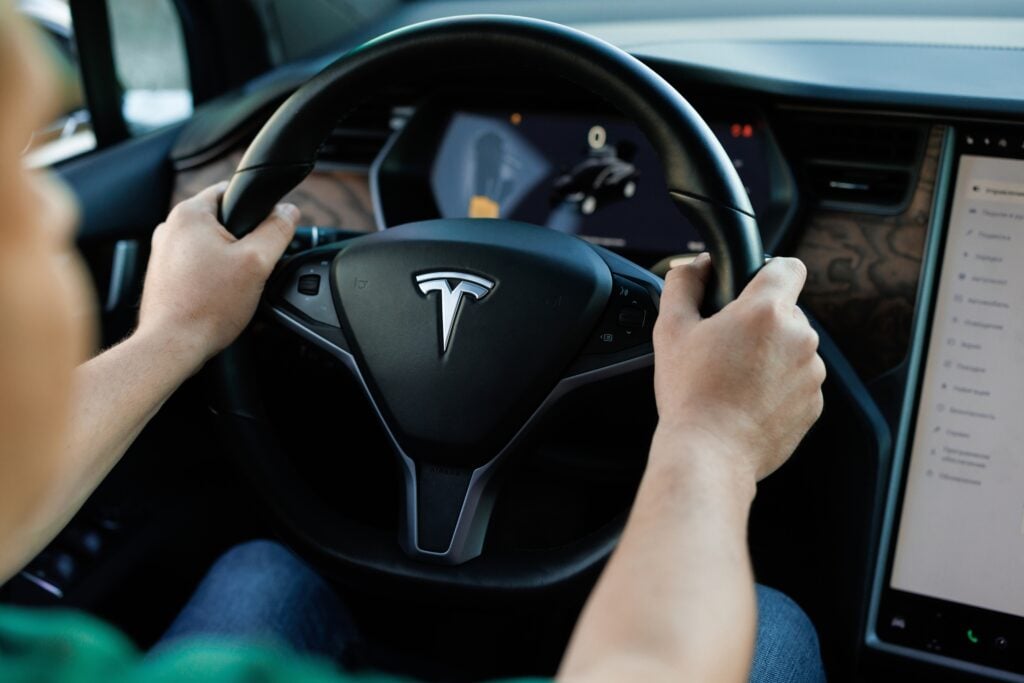
Tesla targets December 2026 for next-generation AI6 chip tape-out
Proactiveinvestors NA· 2026-03-19 16:42
Company Overview - Proactive is a financial news publisher that provides fast, accessible, informative, and actionable business and finance news content to a global investment audience [2] - The company operates with a team of experienced and qualified news journalists, ensuring independent content production [2] Market Focus - Proactive specializes in medium and small-cap markets while also covering blue-chip companies, commodities, and broader investment stories [3] - The news team delivers insights across various sectors, including biotech and pharma, mining and natural resources, battery metals, oil and gas, crypto, and emerging digital and EV technologies [3] Technology Adoption - Proactive is recognized for its forward-looking approach and enthusiastic adoption of technology to enhance workflows [4] - The company utilizes automation and software tools, including generative AI, while ensuring that all content is edited and authored by humans [5]
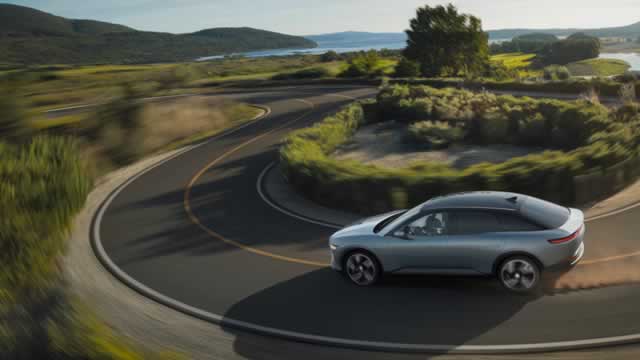
Tesla faces intensifying NHTSA probe of 'Full Self-Driving' in reduced visibility
CNBC· 2026-03-19 15:58
Core Viewpoint - The National Highway Traffic Safety Administration (NHTSA) has escalated its investigation into Tesla's Full Self-Driving (FSD) systems due to potential safety defects that may pose risks under certain visibility conditions [1][2]. Group 1: Investigation Details - The investigation involves approximately 3.2 million Tesla vehicles, including Model S, X, 3, Y, and Cybertruck, which are equipped with FSD driver assistance systems [1]. - The probe has been elevated to an "engineering analysis" following multiple complaints regarding collisions that occurred while FSD was active, including a fatal incident involving a pedestrian [2]. Group 2: Safety Concerns - The NHTSA noted that Tesla's FSD may fail to detect and warn drivers appropriately in conditions of reduced visibility, such as glare and airborne obscurants [2]. - In reviewed crash incidents, the FSD system did not recognize common roadway conditions that impaired camera visibility or provide alerts until just before the crash occurred [2].
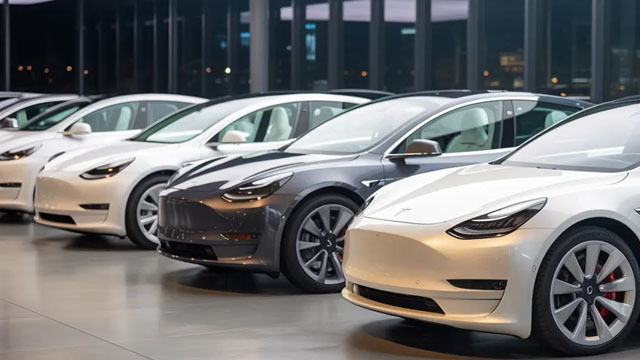
Why Tesla is falling around 2% on Thursday
Invezz· 2026-03-19 15:16
Core Viewpoint - Tesla's stock is experiencing a decline due to increased scrutiny from US safety regulators regarding its driver-assistance technology, specifically the Full Self-Driving system [1][2]. Regulatory Scrutiny - The National Highway Traffic Safety Administration (NHTSA) is advancing its investigation into Tesla's Full Self-Driving system to an "engineering analysis," which could lead to a recall or other enforcement actions [2][5]. - The investigation, which began in 2024, has raised concerns about the system's ability to alert drivers in low-visibility conditions, following several crashes, including a fatal incident [5][6]. Market Conditions - Broader US equity markets are under pressure due to rising geopolitical tensions and surging oil prices, with the Dow Jones Industrial Average falling 344 points (0.7%) and the S&P 500 and Nasdaq Composite declining by 0.5% and 0.6%, respectively [3]. - Brent crude oil prices surged by 3% to $111 per barrel, influenced by escalating conflicts in the Middle East [4]. Delivery Estimates - Wall Street's expectations for Tesla's near-term performance are mixed, with UBS analyst Joseph Spak estimating deliveries of around 345,000 vehicles in Q1, a 2% increase from the previous year, but below broader expectations of approximately 380,000 [10]. - The delivery outlook reflects a challenging environment for electric vehicle demand, particularly in the US and China, where market conditions have matured [11]. Future Prospects - The ongoing regulatory probe adds uncertainty for Tesla as it prepares to launch its fully autonomous robotaxi, the Cybercab, which is designed to operate without traditional controls [8]. - Tesla's transition from an electric vehicle manufacturer to a broader artificial intelligence and robotics company may be influenced by increased regulatory scrutiny [9].
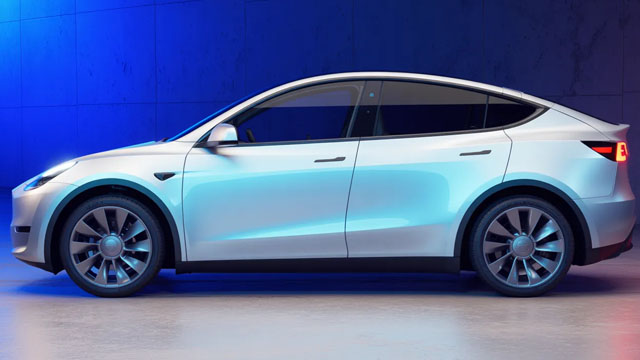
Tesla's Terafab Could Be the Game-Changer That Recharges the Stock
247Wallst· 2026-03-19 14:47
Core Viewpoint - Tesla is launching Terafab, a semiconductor fabrication business, to secure custom chip supply for robotics and AI applications, reducing reliance on Taiwan Semiconductor [1][2][4]. Group 1: Business Strategy - Tesla is expanding its focus beyond electric vehicles into robotics and physical AI, where controlling chip production is crucial to avoid supply delays as competitors develop autonomous systems [2][4]. - The move into semiconductor fabrication is seen as a bold strategy to address supply chain challenges and enhance Tesla's competitive edge in the rapidly evolving AI landscape [9][10]. Group 2: Financial Implications - The investment in Terafab is estimated at $25 billion, which could lead to significant returns if successful, despite the high initial capital expenditure [10][12]. - Analysts suggest that while entering the semiconductor business may increase capital expenditures, it also presents an opportunity for substantial long-term gains as the demand for AI technologies grows [8][12]. Group 3: Market Context - Tesla's stock has recently entered a bear market, influenced by broader tech sector weaknesses, but the launch of Terafab could be a pivotal factor in reversing this trend [4][8]. - The semiconductor industry is currently facing capacity constraints, particularly with Taiwan Semiconductor, making Tesla's move into chip production timely and strategically advantageous [10][11].
Chamath Palihapitiya Plans Robotaxi Fleets Nationwide — Expects Positive Cash Flow In Under 2 Years
Yahoo Finance· 2026-03-19 14:46
Billionaire tech investor Chamath Palihapitiya says he plans to deploy Tesla Inc.'s (NASDAQ:TSLA) robotaxi Cybercab vehicles nationwide—and believes the investment could turn cash-flow positive faster than expected. "I plan to buy and deploy large fleets around the country when possible. Should pay back and be positive FCF < 2 years…" he wrote on X on March 7 in response to a post analyzing the business case for Tesla's Cybercab robotaxi network. In this context, "positive FCF," or free cash flow, means ...

China's Xiaomi unveils upgraded SU7 prices, challenging Tesla
Reuters· 2026-03-19 12:45
Core Viewpoint - Xiaomi has launched its updated SU7 electric vehicle, pricing it competitively to challenge Tesla's Model 3, with a starting price of 219,900 yuan ($31,870) [1][2]. Group 1: Pricing and Competition - The updated SU7 is priced lower than its pre-sale price of 229,900 yuan [2]. - Xiaomi's CEO Lei Jun emphasized that the new SU7 offers a longer range compared to Tesla's Model 3 while being less expensive [2]. Group 2: Vehicle Features - The updated SU7 features mechanical door handles instead of hidden ones and includes a dedicated backup power supply that complies with upcoming Chinese safety standards [3]. - The Max SU7 variant will be priced from 303,900 yuan [3].