Rivian Automotive

Search documents
Rivian发布定制芯片+AI模型 为新一代自驾铺路
Xin Lang Cai Jing· 2025-12-11 20:38
Core Insights - Rivian Automotive held its first "Autonomous Driving and AI Day," revealing advancements in custom chips, onboard computers, and AI models to support autonomous driving features in new models [1][5] - The company's stock fell approximately 3% during the event and further declined by up to 9% after OpenAI announced its latest AI model [1][5] - Rivian plans to launch the "Autonomy+" subscription service in early 2026, offering two pricing models: a one-time payment of $2,500 or a monthly fee starting at $49.99, which is lower than Tesla's pricing for its Full Self-Driving (FSD) service [1][5] Technology Developments - The new Advanced Driver Assistance System (ADAS) will continuously optimize performance through reinforcement learning as driving mileage accumulates [2][6] - Unlike Tesla, Rivian's upcoming R2 series will include LiDAR and radar sensors, aiming for Level 4 (L4) autonomous driving capabilities as defined by SAE [2][6] - Rivian's self-developed chip, set to launch in 2026, will feature multi-chip module packaging with a memory bandwidth of 205 GB/s, crucial for AI applications [3][8] Market Position and Challenges - Rivian is under pressure due to slowing sales growth in the U.S. electric vehicle market and the need to demonstrate future growth potential to investors [4][8] - The termination of the $7,500 federal tax credit for electric vehicle consumers has contributed to a decline in U.S. EV sales [4][8] - Despite a 25% increase in stock price this year, Rivian's stock is down over 80% compared to its IPO price in 2021 [4][8]
Why Rivian Stock Sank After Its AI Event Today
The Motley Fool· 2025-12-11 20:28
Core Viewpoint - Rivian Automotive announced the introduction of an in-house "autonomy computer" aimed at enhancing self-driving capabilities, but the market reaction was negative, with shares dropping significantly after the announcement [1]. Group 1: Company Developments - Rivian held its first "Autonomy and AI Day" in Palo Alto, CA, where CEO R.J. Scaringe unveiled the company's first in-house autonomy processor [1]. - The core of Rivian's autonomy platform will be based on AI processors developed internally, which will improve through data collected from the company's fleet of vehicles [4]. - Starting in late 2026, Rivian's third-generation platform for R2 vehicles will feature advanced technologies including cameras, radar, and lidar [5]. Group 2: Market Reaction - Following the announcement, Rivian's stock initially fell by as much as 10% but later rebounded slightly, closing down by 4.5% [2]. - The current stock price is $16.65, with a market capitalization of $21 billion [6][7]. - Investors expressed disappointment over the lack of immediate advancements in hands-free driving capabilities, despite the announcement of an over-the-air update for existing R1 customers [7]. Group 3: Future Plans - Rivian plans to introduce an Autonomy+ subscription service that will provide continuous updates and improvements to its autonomy features [8]. - The company aims to allow vehicles to drive point-to-point by 2026, but investors were looking for more specific timelines regarding hands-free driving capabilities [7].


Rivian CEO RJ Scaringe on new AI tech, autonomous driving and more
Youtube· 2025-12-11 19:17
Core Insights - Rivian is unveiling its autonomous driving system and launching its own chip during its AI day in Palo Alto, indicating a strategic shift towards vertical integration in technology development [1][4][10] Company Strategy - The decision to design its own chip for autonomous vehicles (AV) and artificial intelligence (AI) is driven by the need for efficiency and performance, allowing Rivian to control hardware at the compute level [3][4] - Rivian emphasizes long-term investment in self-driving technology, with a significant portion of its R&D budget allocated to autonomy, showcasing confidence in its technological advancements [6][7] Product Development - The new R2 vehicle, starting at $45,000, represents Rivian's focus on lower-priced vehicles while maintaining a commitment to leading technology [8][9] - Rivian's current technology demonstrates point-to-point full self-driving capabilities, with plans for further advancements over time [7][8] Market Positioning - Rivian acknowledges skepticism regarding its ability to keep pace with the autonomous vehicle hype cycle, but maintains a long-term perspective on market movements [5][6] - The company is currently focused on personal level four autonomy, which could eventually extend to ride-sharing opportunities, although initial efforts will prioritize personal vehicle technology [11][12]
Rivian teases its AI future, but its stock drop shows Wall Street isn't impressed
MarketWatch· 2025-12-11 18:33
Core Insights - Rivian Automotive executives have focused on their vision for artificial intelligence and self-driving vehicles, but this has not yet translated into positive stock performance [1] Company Focus - The company is emphasizing its commitment to artificial intelligence and self-driving technology as part of its long-term strategy [1] - Despite the ambitious vision, the current market reaction has not been favorable, as indicated by the stock's decline of 8.14% [1]
Rivian Automotive (NasdaqGS:RIVN) Investor Day Transcript
2025-12-11 18:02
Rivian Automotive Investor Day Summary Company Overview - **Company**: Rivian Automotive (NasdaqGS:RIVN) - **Event**: Investor Day held on December 11, 2025 Key Industry Insights - **Technology Inflection Point**: The automotive industry is experiencing a significant shift due to advancements in artificial intelligence (AI) and autonomy, making AI as essential as utilities like water and electricity [2][3] - **Autonomous Driving**: The focus on autonomous driving is highlighted as a transformative aspect of vehicle ownership, changing how consumers interact with their vehicles [4][9] Core Technological Developments - **AI Integration**: Rivian is leveraging AI across its vehicles and business operations, enhancing customer experiences and operational efficiency [11][21] - **Gen 2 and Gen 3 Platforms**: The introduction of Gen 2 vehicles with a 10x improvement in inference capabilities over Gen 1, and the upcoming Gen 3 platform featuring 65 megapixels of cameras and advanced sensors [14][16] - **Data Flywheel**: Rivian's approach to autonomy is built on a data flywheel model, where data collected from vehicles continuously improves the AI models, enhancing driving capabilities [15][46] Autonomy Features - **Hands-Free Driving**: An over-the-air update will expand hands-free driving capabilities from 150,000 miles to over 3.5 million miles of roads in North America [18][63] - **Future Capabilities**: Plans for point-to-point driving and "Eyes-off" features, allowing users to disengage from actively driving [20][63] Hardware Innovations - **Vertical Integration**: Rivian emphasizes vertical integration in its hardware development, including in-house silicon and autonomy systems [23][31] - **RAP1 Chip**: The Rivian Autonomy Processor (RAP1) is designed for high performance in AI applications, achieving 800 TOPS (trillion operations per second) [34][44] - **Sensor Suite**: The R2 platform will feature a multi-modal sensor strategy, including cameras, radars, and lidar, to enhance perception and safety [25][26] Software and AI Enhancements - **Rivian Unified Intelligence**: A comprehensive AI platform that integrates various systems within Rivian's operations, enhancing diagnostics, service, and customer interactions [65][67] - **Rivian Assistant**: An AI-driven assistant that integrates with user calendars and vehicle systems, improving user experience and operational efficiency [68][70] Market Position and Future Outlook - **Competitive Edge**: Rivian's focus on in-house development and AI integration positions it as a leader in the electric vehicle market, particularly in autonomy [12][21] - **Growth Potential**: The expansion of the vehicle fleet and adoption of new features are expected to enhance Rivian's data capabilities, driving further improvements in autonomy and customer experience [64][63] Conclusion Rivian Automotive is at the forefront of integrating AI and autonomy into its vehicles, with significant advancements in hardware and software that promise to reshape the driving experience. The company's commitment to vertical integration and a robust data-driven approach positions it well for future growth in the electric vehicle market.
Rivian Bets Big on Autonomy With New AI Chip and Lidar
Youtube· 2025-12-11 17:38
Core Insights - Rivian is developing its own artificial intelligence chip to enable fully autonomous driving, diverging from the trend of robo-taxis and emphasizing personal car ownership [1][2][10] - The company aims to enhance its vehicles' capabilities with a custom AI chip and next-generation lidar sensors, marking a significant shift in its approach to autonomy [3][5][8] Technology Development - Rivian's custom AI chip, known as the RAP1 chip, is a multi-chip module designed to improve performance and reduce costs, allowing for quicker market entry [4][5] - The next-generation Rivian R2 will feature advanced lidar sensors, enabling the vehicle to process 5 billion pixels per second and enhancing its ability to operate autonomously [6][7] Market Position and Challenges - Rivian's decision to move away from Nvidia chips to its own silicon represents a strategic cost-saving measure and aims to transition from driver assistance to true autonomy [8][10] - Despite its innovative technology, Rivian is currently facing production challenges, with projections indicating it may not reach 50,000 units by 2025, significantly below its plant's capacity of 250,000 units per year [10]
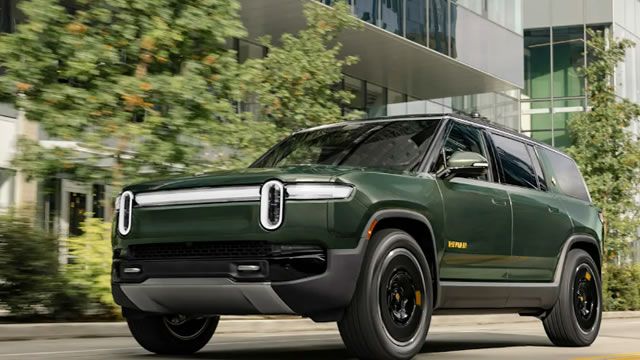
Rivian Unveils Plans For Autonomous Driving
Youtube· 2025-12-11 17:32
Core Insights - Rivian is advancing its autonomous vehicle technology with a focus on in-house developed hardware and software, aiming for significant improvements in vehicle autonomy capabilities [2][4][36] Group 1: Vehicle Development and Technology - Rivian launched its first vehicles at the end of 2021 and has since been designing an autonomy platform that integrates across business sets [2] - The Gen two fleet represents a tenfold improvement in compute capabilities, enhancing the camera platform and establishing a data flywheel for training [2][3] - The upcoming Gen three architecture will feature an in-house processor, improved camera systems, and LiDAR integration, significantly enhancing compute capabilities [4][10] Group 2: Autonomous Features and Updates - Rivian plans to expand hands-free driving capabilities from 150,000 miles to over 3.5 million miles in North America through an over-the-air update [8] - By 2026, Rivian aims to introduce point-to-point navigation, allowing vehicles to drive autonomously to specified addresses with supervision [9] - Future developments include "Eyes Off" driving capabilities on highways by 2027, leading to personal level four autonomy where vehicles can operate without anyone in the driver's seat [12][13] Group 3: Cost Management and Economic Strategy - The cost of LiDAR sensors has significantly decreased, making them a smaller percentage of vehicle production costs, while in-house custom silicon is expected to provide cost savings and performance improvements [21][22] - Rivian's strategy involves vertically integrating its software and electronics to enhance product differentiation and reduce costs, which is essential for scaling production beyond 50,000 vehicles annually [34][36] - The company has established a strong relationship with TSMC to support its semiconductor needs, which is crucial for its high-volume product strategy [30][22] Group 4: Market Position and Future Outlook - Rivian's self-driving technology is distinct from its joint ventures, focusing on proprietary capabilities that may eventually be licensed to other OEMs [37][39] - The pricing strategy for Rivian's autonomy features is competitive, with options for subscription or upfront payment, reflecting the company's commitment to R&D in self-driving technology [40][43] - Rivian's focus on self-driving technology is central to its business model, with significant investments aimed at building a robust infrastructure for future growth [44][45]
Rivian debuts custom self-driving chip, $2,500 driver-assistance package
Reuters· 2025-12-11 17:23
Core Insights - Rivian Automotive has introduced its first custom computer chip designed for self-driving capabilities, marking a significant step in its technological advancement in the electric vehicle sector [1] - The company also launched a new paid driver-assistance package named Autonomy+, which aims to enhance the driving experience and leverage artificial intelligence [1] Company Developments - The introduction of the custom chip is expected to improve Rivian's self-driving technology, positioning the company competitively within the electric vehicle market [1] - The Autonomy+ package represents Rivian's commitment to integrating advanced driver-assistance systems, potentially increasing revenue through subscription services [1]
Rivian announces new AI tech, in-house chip and robotaxi ambitions
CNBC· 2025-12-11 17:21
Core Insights - Rivian Automotive has introduced new technology aimed at enhancing self-driving capabilities, including a custom chip, car computer, and AI models during its first "Autonomy and AI Day" in Palo Alto, California [1] Group 1: Technology Development - The company has developed a custom chip and car computer to support self-driving features in upcoming vehicles [1] - Rivian plans to implement lidar and radar sensors in its vehicles to achieve "level 4" fully automated driving, differentiating itself from competitors like Tesla [3] Group 2: Subscription Model - Rivian will launch an Autonomy+ subscription service in early 2026, offering continuously expanding capabilities for $2,500 upfront or $49.99 per month [2] - This pricing strategy positions Rivian competitively against Tesla's premium FSD option, which costs $8,000 upfront or $99 per month [2] Group 3: Future Applications - The company aims to enable hands-free driving on over 3.5 million miles of roads in North America, covering most marked roads in the US [3] - Rivian's CEO indicated that the self-driving vehicles will allow the company to explore opportunities in the rideshare and robotaxi markets [4]
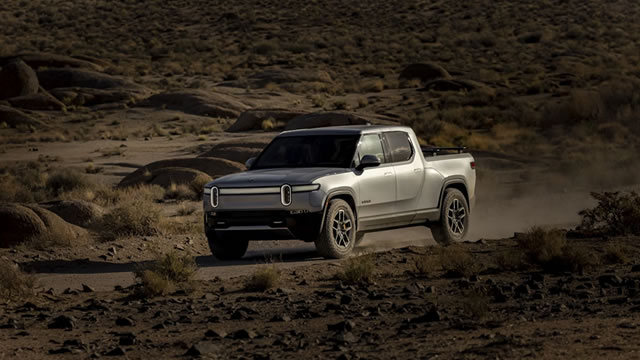
Here are 4 ways Rivian just stepped deeper into Tesla's turf
Business Insider· 2025-12-11 17:20
Core Insights - Rivian is intensifying its focus on autonomous driving, unveiling a roadmap for developing self-driving capabilities for its upcoming R2 vehicle, Rivian's most affordable model to date [1][4] Group 1: Autonomous Driving Development - Rivian plans to introduce a new in-house silicon chip to power its next-generation autonomous driving hardware, expected to ship with the R2 by the end of 2026 [2][5] - The company aims to achieve Level 4 autonomy, similar to Alphabet's Waymo, where driver supervision is not required [8][10] - Rivian's "Gen 3 Autonomy" hardware is currently under validation and is set to be integrated into the R2 vehicle [7] Group 2: Competitive Landscape - Rivian's announcement heightens competition with Tesla, as both companies aim for fully autonomous driving and software licensing opportunities [4] - Rivian's partnership with Volkswagen is a strategic move towards its licensing ambitions, contrasting with Tesla's reluctance to license its Full Self-Driving (FSD) technology [4] Group 3: Technology and Features - Rivian plans to incorporate lidar technology into the R2 vehicle, which is positioned above the windshield, enhancing safety and redundancy in self-driving capabilities [10] - The company will update its advanced driver assistance system (ADAS) to include hands-free assisted driving, operational on over 3.5 million miles of roads in the USA and Canada [11] Group 4: Subscription Model and AI Integration - Rivian is adopting a subscription model for its autonomous driving software, named "Autonomy+," priced at $49.99 per month or $2,500 for a one-time purchase, launching in early 2026 [12][13] - An AI voice assistant, "Rivian Assistant," will be introduced, allowing drivers to control vehicle features through voice commands and integrate with third-party apps like Google Calendar [14][15]