Fannie Mae

Search documents
Trump Unveils New Strategy to Slash Mortgage Rates. What It Could Mean for Homebuyers.
Investopedia· 2026-01-10 01:00
Core Insights - President Trump has ordered Fannie Mae and Freddie Mac to purchase $200 billion in mortgage bonds to lower mortgage rates and make homeownership more affordable [1][8] - The Federal Housing Finance Agency confirmed that Fannie Mae and Freddie Mac will proceed with the bond purchases, leading to a drop in the 30-year mortgage rate to near 6%, the lowest since early 2023 [2][6] Group 1: Impact on Mortgage Rates - Lower mortgage rates are expected to enhance affordability for homebuyers and influence housing prices, consumer spending, and overall economic growth [3] - The mortgage-backed securities market is valued at approximately $11 trillion, making the $200 billion purchase significant but unlikely to cause a major shift in the market on its own [5][8] - Fannie Mae and Freddie Mac have already increased their mortgage-backed securities holdings by over 25% since June, reaching nearly $234 billion by October [5] Group 2: Market Reactions and Skepticism - Analysts express skepticism regarding the long-term impact of Trump's directive, with some suggesting that any relief from lower rates may be short-lived due to potential increases in home prices as more buyers enter the market [7] - The administration is also considering ending government control of Fannie Mae and Freddie Mac, which could lead to higher mortgage rates due to the loss of government backing [9] Group 3: Additional Housing Initiatives - Trump's directive is part of a broader strategy to improve housing affordability, which includes a recent announcement to ban large investors from purchasing single-family homes [10]


S&P 500 Rallies to a New Record High on US Economic Optimism
Yahoo Finance· 2026-01-09 21:38
Economic Indicators - US housing starts unexpectedly fell by 4.6% month-over-month to a 5.5-year low of 1.246 million, weaker than expectations of 1.330 million [1] - US building permits fell by 0.2% to 1.412 million, which was stronger than expectations of 1.350 million [1] - US nonfarm payrolls rose by 50,000 in December, weaker than expectations of 70,000, while November's payrolls were revised lower to 56,000 from 64,000 [2] - The December unemployment rate fell by 0.1% to 4.4%, better than expectations of 4.5% [2] Stock Market Performance - The S&P 500 Index closed up by 0.65%, reaching a new all-time high, supported by a resilient US labor market [5][6] - Chipmakers and data storage companies saw significant gains, with Sandisk closing up more than 12% and Intel up more than 10% [15] - Home builders and suppliers rallied after President Trump announced plans for Fannie Mae and Freddie Mac to purchase $200 billion in mortgage bonds, with Builders FirstSource closing up more than 12% [16] - Power producers also experienced gains, with Vistra closing up more than 10% following electricity deals with Meta Platforms [17] Consumer Sentiment and Inflation Expectations - The University of Michigan's US January consumer sentiment index rose by 1.1 to 54.0, stronger than expectations of 53.5 [6] - January 1-year inflation expectations remained unchanged at 4.2%, while 5-10 year inflation expectations rose to 3.4% from 3.2% in December [7] Interest Rates and Federal Reserve Commentary - The 10-year T-note yield rose to a 4-week high of 4.203%, influenced by rising inflation expectations and hawkish comments from Atlanta Fed President Raphael Bostic [10][11] - The markets are currently discounting a 5% chance of a 25 basis point rate cut at the upcoming FOMC meeting [8] International Market Trends - European stock markets, including the Euro Stoxx 50, reached new record highs, with a 1.58% increase [9] - China's Shanghai Composite climbed to a 10.5-year high, closing up by 0.92% [9]
Trump wants to buy mortgage bonds. Why experts are puzzled.
Yahoo Finance· 2026-01-09 21:28
Core Viewpoint - President Trump's suggestion for Fannie Mae and Freddie Mac to purchase $200 billion in mortgage bonds may not effectively assist average Americans in affording homeownership and could potentially harm financial markets [1][2]. Group 1: Policy Intervention - Trump directed representatives to buy $200 billion in mortgage bonds, likely referring to Fannie Mae and Freddie Mac [2] - This was the second instance in a week where Trump suggested policy intervention in the housing market, following his call to ban institutional investors from purchasing single-family homes [2]. Group 2: Role of Fannie Mae and Freddie Mac - Fannie Mae and Freddie Mac play a crucial role in the housing market by buying mortgages from banks, enabling lenders to extend more credit to borrowers [3] - They package these loans into bonds, which helps mitigate risk and provides a steady income stream for investors like pension funds and insurance companies [4]. Group 3: Mortgage Market Dynamics - The mortgage market has approximately $13.5 trillion in outstanding debt, which is supported by the activities of Fannie Mae and Freddie Mac [4]. - Mortgage rates typically follow the trends of the 10-year U.S. Treasury note, influenced by the average age of outstanding home loans being 6.3 years [5]. Group 4: Impact of Government Debt - Elevated Treasury yields are partly due to the U.S. government's significant deficit, worsened by Trump's tax and spending bill [5]. - The increase in debt and deficits is projected to drive up interest rates, with the 10-year Treasury yield expected to be 1.4 percentage points higher by 2054 due to the bill [6].
Housing market affordability is so strained that Trump directs Fannie and Freddie to buy $200B mortgage bonds
Fastcompany· 2026-01-09 21:21
Core Viewpoint - President Trump announced that Fannie Mae and Freddie Mac will purchase an additional $200 billion in mortgage bonds to lower mortgage rates and make home ownership more affordable [1]. Group 1: Government Sponsored Enterprises (GSEs) Actions - Fannie Mae and Freddie Mac are instructed to buy $200 billion in mortgage bonds, which is expected to drive down mortgage rates and monthly payments [1]. - The GSEs have already increased their retained mortgage holdings by approximately $69 billion in the second half of 2025 [6]. - If the GSEs add another $200 billion in mortgage bond holdings in 2026, they would approach their legal limit of $450 billion, with $225 billion for each [7]. Group 2: Market Dynamics - Long-term yields, such as the 10-year Treasury yield and the average 30-year fixed mortgage rate, are influenced by the demand for underlying bonds, with yields moving inversely to bond prices [1]. - The "mortgage spread," which is the difference between the 10-year Treasury yield and the average 30-year fixed mortgage rate, peaked at 2.96 percentage points in June 2023, significantly above the historical average of 1.76 percentage points since 1972 [5]. - The goal of the $200 billion purchase is to accelerate the compression of the "mortgage spread," which has already decreased to 2.05 percentage points by December 2025 [6]. Group 3: Historical Context and Federal Reserve Actions - Prior to the Great Financial Crisis, Fannie Mae and Freddie Mac were significant buyers of mortgage-backed securities (MBS), providing stability to the market [9]. - The Federal Reserve took on the role of market stabilizer after the GSEs went into conservatorship, purchasing $1.25 trillion in agency MBS between January 2009 and March 2010 [9]. - The Federal Reserve's pivot to quantitative tightening in March 2022 removed a major buyer from the MBS market, leading to increased volatility and higher mortgage rates [11].


Stock market today: Dow, S&P 500 jump to records, Nasdaq surges as stocks end 2026's first week with big gains
Yahoo Finance· 2026-01-09 21:00
US stocks rose to all-time highs on Friday as investors assessed the December jobs report to end a jam-packed first full trading week of 2026. The S&P 500 (^GSPC) gained 0.6%, notching a new record. The Dow Jones Industrial Average (^DJI) rose around 0.5% to also post an all-time high close. The Nasdaq Composite (^IXIC) jumped 0.8%, marking a winning week for all three major averages. Markets on Friday were focused on two potential catalysts: the December jobs report and the chance of a decision from th ...
How Trump’s $200 billion mortgage bond-buying move could reshape housing market and what it means for mortgage rates
The Economic Times· 2026-01-09 20:15
Core Viewpoint - The U.S. President Donald Trump has directed Fannie Mae and Freddie Mac to purchase $200 billion in mortgage bonds to lower mortgage rates and make homeownership more affordable [1][15]. Group 1: Impact on Mortgage Rates - The bond purchases are expected to lower mortgage rates and monthly payments, thereby enhancing home affordability [2][15]. - The strategy aims to narrow the mortgage spreads, which have been wider than normal due to various factors, including market volatility and economic conditions [3][15]. - Mortgage rates typically run about 1.8 percentage points above Treasury yields, but recent spreads have been wider, prompting the need for increased bond purchases [3][15]. Group 2: Current Market Conditions - The U.S. is facing a significant housing supply shortage, estimated between 1.5 million and 5.5 million homes, with JPMorgan estimating a shortfall of 2.8 million homes [6][15]. - Fannie Mae and Freddie Mac hold a combined $247 billion in mortgage bonds, which is relatively small compared to the $9 trillion mortgage-backed securities market [7][15]. - Over the past year, mortgage rates have decreased from the high-6% range to just under 6.2%, with spreads narrowing from about 2.65 percentage points to just under 2 percentage points [8][15]. Group 3: Market Reactions and Predictions - Following Trump's announcement, the average 30-year mortgage rate dropped 22 basis points to 5.99% [8][15]. - Analysts suggest that if the market tightens by 50-70 basis points, primary mortgage rates could fall into the mid-5% range, potentially increasing refinancing and purchase activity [10][15]. - There are concerns that lower mortgage rates could lead to higher home prices if housing supply remains constrained, as increased demand may allow borrowers to bid up prices [11][15].

Mortgage rates projected to drop, but not enough to justify refinancing. How homeowners can tap equity for added cash
Yahoo Finance· 2026-01-09 20:00
Core Insights - The average 30-year fixed refinancing rate is currently at 6.54%, while the 15-year term rate is at 5.65% [1] - Fannie Mae projects that the average 30-year fixed mortgage rates will decrease to 6.2% in Q1 2026 and further to 5.9% by the end of the year [2] Mortgage Rates and Trends - Interest rates remain higher than those in 2020 and 2021, with the average 30-year fixed mortgage rate exceeding 6% since 2022 [3] - More than half of U.S. mortgage holders have rates of 4% or lower, and 80% have rates under 6%, making current refinancing rates unattractive for many homeowners [4] Home Prices - The average home value increased from $246,326 at the beginning of 2020 to $359,241 by November 2025 [3] Home Equity Options - Homeowners seeking to access their home equity have alternatives to cash-out refinancing, which may involve higher interest rates [5] - A home equity loan (HEL) allows homeowners to borrow against their home equity, typically at lower interest rates compared to unsecured loans [6] - HELs generally allow borrowing up to 80% of the home's equity, calculated as the home's value minus the remaining mortgage balance [7]
Trump's $200 Billion Plan Lower Mortgage Rates, Explained
Business Insider· 2026-01-09 18:25
Core Viewpoint - President Trump's proposal to purchase $200 billion in mortgage-backed securities (MBS) aims to address housing affordability, but its long-term effectiveness remains uncertain according to economists and analysts [1][2]. Mortgage Bond Purchasing Plan - The plan is expected to have a quantitative easing-like effect, potentially increasing liquidity in the mortgage market and encouraging borrowing [2]. - The average 30-year fixed mortgage rate has already decreased from 6.21% to 5.99%, the lowest in about three years, with expectations for further declines [3]. - Analysts estimate that the purchasing plan could lower mortgage rates by as much as 50 basis points, although this may only result in a temporary reduction [4]. Market Impact and Mechanism - The specifics of how the $200 billion purchase will be executed remain unclear, including the timing and mechanism of the bond purchases [5]. - The impact of $200 billion in the $9 trillion MBS market may be minimal, as it represents only about 2% of the total outstanding value [6][7]. - Fannie Mae and Freddie Mac's existing holdings in mortgage-backed securities could influence yields and, consequently, mortgage rates [8]. Housing Supply Issues - The primary challenge in the housing market is the lack of available homes, with an estimated shortfall of 5 million homes, or 3.7% of current supply [10]. - A decrease in mortgage rates without an increase in housing inventory could exacerbate affordability issues by intensifying competition and driving up home prices [11]. - Even marginal reductions in mortgage rates may not significantly alleviate high home prices and affordability concerns [12]. Political Context - The MBS purchasing plan, alongside other initiatives like banning large investors from buying single-family homes, reflects the administration's awareness of housing affordability as a political issue [13]. - The urgency of addressing housing costs appears to have increased as the midterm elections approach, with various strategies being employed to tackle the issue [14].

Mortgage rates just fell below 6% for the first time in years
NBC News· 2026-01-09 18:15
Core Insights - Mortgage rates have fallen below 6% for the first time in years due to President Trump's directive to purchase $200 billion in mortgage bonds, aimed at reducing costs for Americans facing high living expenses [1][3] - The average interest rate for a 30-year fixed mortgage dropped to 5.99%, down from 6.21%, marking the lowest rate since February 2023 [1][2] Mortgage Rate Trends - The average 30-year mortgage rate has decreased by more than 1% over the past year, with the 15-year fixed rate mortgage also seeing a significant drop to 5.55% [2] - The recent changes in mortgage rates are unusual, as they typically fluctuate slowly [2] Government Actions - Trump's announcement led to an immediate reduction in mortgage rates, with the Federal Housing Finance Authority indicating that Fannie Mae and Freddie Mac would execute the bond purchases [3][5] - Fannie Mae and Freddie Mac currently hold over $230 billion in mortgage securities, and an additional $200 billion purchase would nearly double their holdings [4] Market Dynamics - The purchase of bonds by Fannie Mae and Freddie Mac increases the liquidity for lenders, allowing them to lend more to homebuyers, which generally leads to lower mortgage rates [5] - Analysts at UBS suggest that Trump's bond buying plan could reduce 30-year fixed mortgage rates by more than 0.2%, potentially boosting new construction and existing home sales [6] Limitations of the Plan - The average interest rate for existing residential mortgages is 4.4%, which may limit the impact of the bond buying plan on homeowners reluctant to sell due to lower rates [7] - JPMorgan Chase analysts noted that $200 billion in mortgages represents only about 1.4% of the $14.5 trillion mortgage market, suggesting limited overall market impact [8]
Banning Wall Street From Owning Houses Won't Lower Prices, Experts Say
Business Insider· 2026-01-09 18:10
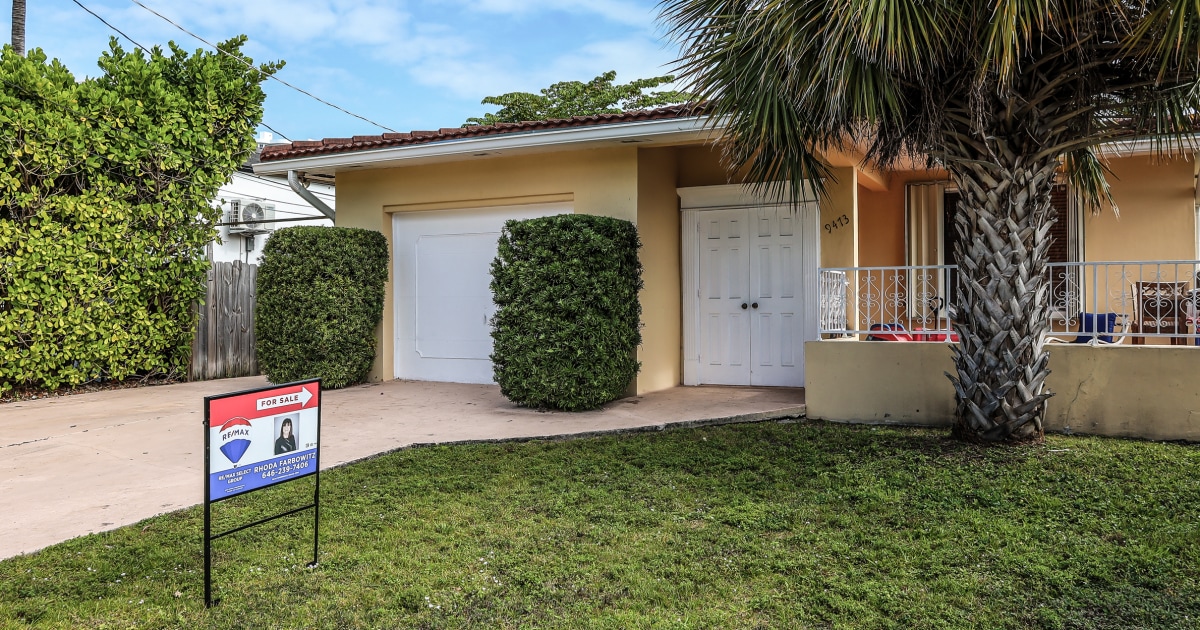
Core Viewpoint - President Trump's goal of banning "large institutional investors" from purchasing single-family homes is seen as ineffective in addressing the fundamental issue of high home prices, which is primarily due to a shortage of homes [1][16][18]. Group 1: Impact of Institutional Investors - Major investors, including hedge funds and private equity firms, own hundreds of thousands of single-family homes, raising concerns about their competition with individual homebuyers, particularly first-time buyers [2][5]. - Institutional investors control about 2% of the single-family rental housing stock, but they have a significant presence in certain markets, owning 25% of single-family rental homes in Atlanta and 21% in Jacksonville [9][11]. - Studies indicate that institutional investment may lead to increased rents and home prices, especially in areas with high rates of institutional ownership [12][19]. Group 2: Market Dynamics and Responses - Following the 2008 financial crisis and during the pandemic, large investors purchased thousands of homes, predicting future increases in home values and rents due to population growth [4][5]. - Since 2022, large investors have reduced their purchasing activities as interest rates have risen and home prices have remained high, with some shifting to bulk purchases from homebuilders [9][10]. - Economists argue that the real issue driving rising prices is the undersupply of homes, rather than the actions of institutional investors [18][20]. Group 3: Proposed Solutions and Challenges - Experts suggest that simply banning large investors from buying homes will not significantly improve affordability, as it does not address underlying market conditions [16][17]. - Alternative solutions, such as raising property taxes on homes owned by institutional investors, could discourage their purchasing behavior while generating tax revenue for affordable housing initiatives [23][24]. - The enforcement of any ban on large investors could be complicated, as they might create smaller entities to circumvent restrictions [23][24].