ICICI Bank

Search documents
Mcap boost: 7 of top-10 firms gain ₹96,201 cr; Reliance, Bajaj Finance lead chart
BusinessLine· 2025-11-30 05:04
Market Valuation Overview - The combined market valuation of seven of the top-10 most valued firms increased by ₹96,200.95 crore last week, driven by Reliance Industries and Bajaj Finance amid a positive equity market trend [1] - The BSE benchmark rose by 474.75 points or 0.55%, with the Sensex reaching a record high of 86,055.86 [1] Gainers and Losers - Among the top-10 firms, Reliance Industries, HDFC Bank, ICICI Bank, State Bank of India, Infosys, Bajaj Finance, and Hindustan Unilever saw increases in their valuations, while Bharti Airtel, Tata Consultancy Services (TCS), and Life Insurance Corporation of India (LIC) experienced declines [2] - Reliance Industries' market valuation increased by ₹28,282.86 crore, reaching ₹21,20,335.47 crore [2] Individual Firm Valuations - Bajaj Finance's valuation rose by ₹20,347.52 crore to ₹6,45,676.11 crore [4] - HDFC Bank's valuation increased by ₹13,611.11 crore to ₹15,48,743.67 crore [4] - ICICI Bank's valuation surged by ₹13,599.62 crore to ₹9,92,725.97 crore [4] - Hindustan Unilever's market capitalization edged up by ₹7,671.41 crore to ₹5,79,644.16 crore [4] - State Bank of India's valuation increased by ₹6,415.28 crore to ₹9,04,185.15 crore [4] - Infosys' valuation climbed by ₹6,273.15 crore to ₹6,47,961.98 crore [5] Declines in Valuation - Bharti Airtel's market capitalization fell by ₹35,239.01 crore to ₹11,98,040.84 crore [6] - LIC's market capitalization decreased by ₹4,996.75 crore to ₹5,65,581.29 crore [6] - TCS's valuation dipped by ₹3,762.81 crore to ₹11,35,952.85 crore [6] Ranking of Top-10 Firms - The ranking of the top-10 firms is led by Reliance Industries, followed by HDFC Bank, Bharti Airtel, TCS, ICICI Bank, State Bank of India, Infosys, Bajaj Finance, Hindustan Unilever, and LIC [6]

Capital Gains Account Scheme Deposits: Old rules, new updates
BusinessLine· 2025-11-29 14:41
Investing in properties is among the most preferred options across age groups in India. It is also common for holders of old or ancestral properties to sell their residence and use the proceeds to buy an apartment or a villa in gated communities. Many would also want to use the money to construct their own property. The sharp appreciation in real estate assets has given many the affordability to deploy the gains for moving to newer acquired residences.However, on the operational front it is not always easy ...

Active banking funds fail to capitalise on PSU rally: Value Research data
Rediff· 2025-11-29 09:22
Core Insights - Sectoral funds focused on public sector banks (PSBs) have outperformed other domestic mutual fund categories, achieving nearly a 28% rise in the Nifty PSU Bank index over the past six months [1][3] - Active banking and financial services funds have lagged behind, with median returns of only 9.2% during the same period, primarily due to their heavy investment in private sector lenders [3][4] Investment Composition - Most active banking and financial services (BFSI) funds allocate over 50% of their investments to the top 4-5 private sector banks, which dominate the banking sector's profit pool [4][6] - HDFC Bank, ICICI Bank, Axis Bank, and Kotak Mahindra Bank collectively account for 66% of the Nifty Financial Services index, while State Bank of India (SBI) is the only PSB with over 5% weight in the index [4][5] Performance Analysis - Despite the flexibility of active funds to build independent portfolios, their performance is still benchmarked against indices, leading to a performance gap with PSB indices [5][6] - Direct plans of BFSI schemes have generally outperformed the Nifty Financial Services total return index, which increased by 7.17% in the last six months [5] Market Outlook - Experts suggest that the performance gap between PSU and private sector banks may narrow in the near term, with private banks expected to outperform in the medium term due to their superior deposit franchises and operational efficiencies [7][8] - The rally in PSU banks may have peaked, with a potential sector rotation anticipated in 2026, as the Nifty PSU Bank index appears overextended after a multi-year rally [9]

These 7 top banks offer interest up to 7.2% on fixed deposits for senior citizens
MINT· 2025-11-29 08:50
Core Insights - The article emphasizes the importance of comparing fixed deposit (FD) interest rates across different banks, particularly for senior citizens who receive an additional 50 basis points on their deposits [1] Bank Interest Rates Summary - **HDFC Bank**: Offers the highest interest rate of 7.1% for senior citizens on a tenor of 18-21 months, with rates ranging from 6.75% to 6.9% for tenors between 1-5 years [2] - **ICICI Bank**: Provides an interest rate of 7.2% for tenors of 2 to 5 years, starting from 6.75% for a 1-year tenor for senior citizens [2] - **Kotak Mahindra Bank**: Offers 7.2% interest on FDs with tenors between 391 days to less than 2 years, and 6.75% for a 1-year deposit [3] - **Federal Bank**: Provides a competitive interest rate of 7.2% on a 36-month FD for senior citizens, with a 1-year tenor offering 6.75% [4] - **State Bank of India (SBI)**: The largest bank in India offers 7.05% interest for tenors between 5 to 10 years, including a 50 basis points premium under the SBI We Care program [5] - **Canara Bank**: Offers 7% interest on a 444-day FD for senior citizens, with a 1-year tenor also providing 6.75% [5] - **Union Bank of India**: Provides 7.1% interest on a 3-year FD for senior citizens, with a 1-year tenor offering 6.9% [6]

Jaiprakash Gaur’s lifetime of building has ended in a legacy of bankruptcy
MINT· 2025-11-29 01:30
Core Insights - Jaiprakash Gaur's flagship company, Jaiprakash Associates Ltd, has been admitted into insolvency due to overwhelming debt of ₹57,000 crore, marking a significant downfall for the once-prominent entrepreneur [1][2]. Company Background - Jaiprakash Gaur, born in 1931, transitioned from a government job to entrepreneurship in 1958, establishing Jaiprakash Associates and gaining a reputation through major projects like the Tehri Dam and Vishnuprayag Hydel Project [3][4]. - The liberalization of the Indian economy in 1991 allowed Jaiprakash Associates to expand into various sectors, including cement and real estate, with revenues reaching over ₹20,000 crore [5][6]. Growth and Challenges - The company’s rapid growth was fueled by heavy borrowing, relying on future cash flows and asset sales for repayment, which was sustainable during periods of high economic growth [6]. - However, the company faced a downward spiral due to slowing growth, project delays, regulatory issues, and a changing real estate market, leading to significant financial distress [7][8]. Recent Developments - Despite attempts to sell assets to reduce debt, including cement plants and hydropower projects, the financial situation worsened, culminating in insolvency petitions filed by major banks in June 2024 [9]. - The Noida real estate market, which had previously contributed to the company's decline, is now experiencing a boom due to the upcoming Jewar Airport, highlighting a stark contrast to the company's struggles [10]. Leadership Transition - Gaur stepped back from daily operations in 2010, passing leadership to his son, Manoj Gaur, who now faces scrutiny over financial irregularities linked to stalled projects [11]. Conclusion - In October, creditors accepted a bid from Adani Enterprises for Jaiprakash Associates' assets, marking a bitter end to Gaur's legacy as his empire transitions to new ownership [12].

Sensex, Nifty scale record highs on rate cut hopes
Rediff· 2025-11-27 10:50
Market Performance - Benchmark stock indices Sensex and Nifty reached new lifetime highs during intra-day trade, closing slightly higher due to positive global trends and expectations of a US Fed rate cut [1][6] - The BSE Sensex increased by 110.87 points or 0.13% to close at 85,720.38, hitting a record high of 86,055.86 during the day, which is a rise of 446.35 points or 0.52% [2] - The NSE Nifty ended up by 10.25 points or 0.04% at 26,215.55, with an intra-day peak of 26,310.45, reflecting a gain of 105.15 points or 0.40% [3] Sector Performance - Major gainers among Sensex firms included Bajaj Finance, ICICI Bank, Hindustan Unilever, Bajaj Finserv, HCL Tech, and HDFC Bank [3] - Conversely, Maruti, Eternal, UltraTech Cement, and State Bank of India were identified as laggards [4] Foreign and Domestic Investment - Foreign Institutional Investors (FIIs) purchased equities worth ₹4,778.03 crore on Wednesday, while Domestic Institutional Investors (DIIs) bought stocks worth ₹6,247.93 crore in the previous trade [4] Global Market Influence - The Indian markets were buoyed by improved global risk appetite, driven by rising expectations of an interest-rate cut by the US Federal Reserve, which provided a strong tailwind for domestic markets [6] - Brent crude oil prices slightly decreased by 0.05% to $63.10 per barrel [6]

印度股票策略 2026 年展望:在复苏中把握机遇-India Equity Strategy_ 2026 Outlook_ Seizing opportunities in the turnaround. Wed Nov 26 2025
2025-11-27 05:43
Summary of J.P. Morgan India Equity Strategy Conference Call Industry Overview - **Industry**: Indian Equities - **Current Situation**: Indian equities have faced significant pressure due to weak earnings growth, lower beta, and limited AI exposure. However, supportive fiscal and monetary policies, recovering domestic demand, and sectoral growth are expected to lead to a rebound in corporate earnings. [1][4][25] Core Insights and Arguments - **Earnings Growth Forecast**: J.P. Morgan forecasts MSCI India earnings to grow by 13% in CY26 and 14% in CY27, which is lower than the consensus estimates of 16% and 14.3% respectively. [1][4][27] - **Valuation Context**: Despite premium valuations, the gap with emerging markets (EM) has compressed to below historical averages, indicating potential for a re-rating of Indian equities. [1][5][42] - **Market Dynamics**: The India Quant Macro Indicator (QMI) suggests a potential market catch-up as India transitions from 'Early' to 'Mid' cycle, with cyclical dynamics favoring renewed momentum strategies. [1][9] - **Nifty 50 Target**: The base case target for Nifty 50 is raised to 30,000 by the end of 2026. [1][12] Key Drivers for Growth 1. **Policy Easing**: Both fiscal and monetary policies have shifted to support domestic demand, with expectations of further rate cuts. [4][48] 2. **Regulatory Reforms**: Ongoing reforms are aimed at simplifying compliance, attracting foreign investment, and enhancing economic resilience. [4][55] 3. **Improving India-US Relations**: Enhanced trade relations could lead to tariff resolutions, positively impacting market sentiment. [4][48] 4. **Consumption Recovery**: Factors such as premiumization, rural recovery, and social welfare initiatives are driving consumption growth. [4][48] 5. **Capex Expansion**: Capital expenditure is expanding into strategic sectors like energy transition and semiconductors, supported by targeted policies. [4][48] Sector Allocation Insights - **Overweight Sectors**: Materials, Financials, Consumer Discretionary, Consumer Staples, Hospitals, Real Estate, Defense, and Power. [1][9] - **Underweight Sectors**: IT and Pharma. [1][9] Important but Overlooked Content - **Earnings Cycle**: The earnings cycle is turning positive, with a better-than-expected quarter showing high single-digit earnings growth despite global headwinds. [25][26] - **Domestic Institutional Investors (DIIs)**: DIIs have been a key support for equities, investing significantly through systematic investment plans (SIPs). [18][23] - **Key Events to Watch**: Upcoming events include the India-US BTA progress, festive season demand, and key elections, which could influence market dynamics. [9][4] Conclusion - The Indian equity market is poised for a rebound driven by supportive policies, improving macroeconomic conditions, and sectoral growth. The focus on domestic consumption and strategic investments in key sectors presents a favorable outlook for investors. [1][4][27]
Prabhudas Lilladher hikes Nifty's 12-month target to 29,094 on 5 tailwinds. Picks HAL, ICICI and 16 more stocks to buy
The Economic Times· 2025-11-26 11:14
Core Viewpoint - Prabhudas Lilladher (PL) remains bullish on large-cap stocks, selecting 11 stocks to buy, while also identifying 7 mid and small-cap stocks, totaling 18 preferred picks [1][12]. Market Performance - Nifty has shown resilience over the past three months, trading at 26,175 with a gain of 290 points, needing to cover 90 points to surpass its lifetime high of 26,277 [2][14]. - The ongoing rally is attributed to strong corporate performance in 2QFY26, with sales, EBIDTA, and PAT growth of 8.1%, 16.3%, and 16.4% respectively, alongside an EPS upgrade for Nifty [3][14]. Economic Drivers - Economic momentum is expected to be driven by domestic demand, influenced by several factors: 1. Income tax rate cuts benefiting over 80% of individual taxpayers [6][14]. 2. Anticipated 100 basis points rate cut by the RBI to stimulate growth [6][7]. 3. Healthy rural incomes supported by a strong monsoon and robust harvests [9][14]. 4. Low inflation rates, with CPI at 1.7% for September and projected at 1% for the December quarter, enhancing real purchasing power [10][14]. 5. GST rationalization contributing to demand revival [11][14]. Banking Sector Outlook - Improvement in bank performance is expected, with Net Interest Margins (NIMs) having bottomed out and credit growth recovering from 9% to a projected 11-13% in the second half of the year [8][14]. - Benefits from lower interest rates are anticipated to reflect in liability repricing from 3Q26, with potential for an additional 25 basis points rate cut in FY26 [8][14]. Stock Recommendations - Preferred large-cap stocks include ITC, Larsen & Toubro (L&T), Mahindra & Mahindra (M&M), and others [12][14]. - Broader market picks include Ajanta Pharma, Fine Organic Industries, and Voltamp Transformers [12][14]. Government Capex Concerns - There is a potential cool-off in government capital expenditure, which has increased significantly since COVID, with a 40% rise in 1H capex possibly leading to a 10% year-over-year decline in 2H26 unless the government exceeds its capex allocation [12][14].

M&A financing the new frontier for banks, but RBI's watching
Rediff· 2025-11-26 06:39
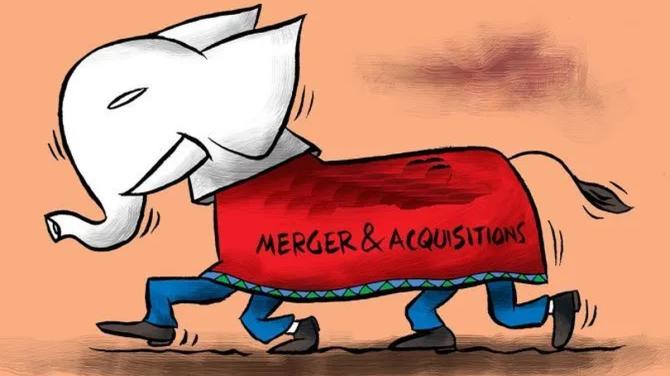
Core Viewpoint - The Reserve Bank of India's cautious proposals on M&A funding for banks aim to balance risk management with the growing opportunities in the M&A space, which is expected to exceed $100 billion annually in India [4][5][16]. Group 1: M&A Market Dynamics - Domestic banks are now entering the M&A advisory space, traditionally dominated by foreign banks and shadow banks, indicating a shift in the competitive landscape [4][5]. - The aggregate acquisition finance exposure for banks is capped at 10% of their Tier-I capital, and financing can only cover up to 70% of the acquisition value [5][6][14]. - The net worth of the banking sector was over ₹27 trillion, allowing for available funds exceeding $30 billion for M&A financing under the proposed regulations [16]. Group 2: Regulatory Framework - The draft regulations propose a fixed debt-to-equity (D/E) ratio of 3:1, which some industry experts argue may not adequately reflect sector-specific nuances [8][13]. - There is a call for more flexibility in underwriting judgments based on individual deal characteristics rather than strict regulatory limits [9][12]. - The proposed regulations signal a cautious approach from the RBI, reflecting concerns about market risks and the need for robust governance in M&A transactions [12][22]. Group 3: Industry Perspectives - Industry leaders express a desire for more liberal financing norms to facilitate M&A activities, while also acknowledging the need for improved governance and oversight within banks [22][23]. - The potential for partnerships between state-run banks and established financial institutions is highlighted as a way to enhance M&A capabilities [19][21]. - Compensation structures for M&A professionals are expected to be significant, reflecting the specialized nature of the business and the competitive landscape for talent [18][20].
Attention pensioners! Submit life certificate by November 30 or miss pension payments
MINT· 2025-11-25 14:50
All pensioners in India need to annually submit their Life Certificate (LC) or Jeevan Pramaan Patra to pension disbursing agencies on or before the November 30 deadline in order to keep receiving their pension payments.Pension receiving central and state government employees can submit the document either in person at the relevant authorities or now have the option to submit a Digital LC within the deadline.With the deadline fast approaching and as the government has not announced an extension on the same, ...