
Equinor ASA

Search documents
油价追踪_欧佩克 + 会议前,俄罗斯关税威胁引发油价上涨-Oil Tracker_ Prices Rally on Russia Tariffs Threat Ahead of OPEC+ Meeting
2025-08-05 03:20
Summary of Key Points from the Conference Call Industry Overview - The conference call primarily discusses the **oil industry**, focusing on the dynamics of **Brent oil prices**, **OPEC+ production quotas**, and the impact of geopolitical events on oil supply and demand. Core Insights and Arguments 1. **Brent Oil Price Increase**: The Brent oil price has increased by **7% week-on-week** due to geopolitical tensions, particularly the potential for a **100% tariff on Russian oil imports** by the US, affecting major importers like **China and India**, which account for **3.3 million barrels per day (mb/d)** or **45%** of Russian oil exports year-to-date [1][2][3]. 2. **OPEC+ Production Decisions**: OPEC+ is expected to announce a **0.55 mb/d quota increase** for September, completing the return of **2.2 mb/d** of voluntary cuts. This increase is anticipated to result in a **1.7 mb/d** rise in actual OPEC+ crude production from March to September, with **Saudi Arabia** and **UAE** contributing **60%** and **20%** respectively [2][3]. 3. **Future Production Quotas**: It is assumed that OPEC+ will maintain its production quota unchanged after September due to anticipated growth from new non-OPEC projects, which could add nearly **0.9 mb/d** in production [3]. 4. **Global Oil Inventory Trends**: Global visible stocks have been increasing, particularly in the **OECD**, with **China** absorbing **40%** of global visible builds. China's crude storage utilization remains below historical highs, indicating potential for further storage growth [6][12]. 5. **Russia's Oil Production Decline**: The net supply from Russia has decreased by **0.3 mb/d**, attributed to a stronger Ruble and compensation cuts. Meanwhile, production in the Americas, particularly from **Canada** and **Brazil**, has shown positive growth [7][15]. 6. **OECD Stock Levels**: OECD commercial stocks have increased by **5 mb** and now stand at **2,791 mb**, which is **22 mb** above previous forecasts. This increase is expected to continue, especially post-summer peak demand [15][18]. 7. **Demand Forecasts**: Global oil demand is projected to be **0.3 mb/d** above last year's levels, with specific increases noted in **China** and **OECD Europe** [39][42][45]. Additional Important Insights 1. **Geopolitical Risks**: The perceived probability of additional sanctions on Russia has surged, contributing to the recent rally in crude prices [8]. 2. **Market Dynamics**: The gap between the Brent 1M/36M timespread and its fair value has narrowed, indicating tighter market conditions [48]. 3. **Refining Margins**: Early signs of moderation in refining margins have been observed, particularly in **Northwest Europe**, while diesel margins in Europe and the US have retreated from recent highs [57][58]. 4. **Investment Considerations**: Investors are advised to consider this report as one of several factors in their investment decisions, highlighting the importance of comprehensive analysis [4]. This summary encapsulates the key points discussed in the conference call, providing insights into the current state and future outlook of the oil industry.
油价追踪_在欧佩克 + 会议前,因俄罗斯关税威胁油价上涨-Oil Tracker_ Prices Rally on Russia Tariffs Threat Ahead of OPEC+ Meeting
2025-08-05 03:16
Summary of Key Points from the Conference Call Industry Overview - The conference call primarily discusses the oil industry, focusing on the implications of geopolitical events, OPEC+ production decisions, and global oil supply and demand dynamics. Core Insights and Arguments 1. **Oil Price Movements**: Brent oil prices increased by 7% week-on-week due to geopolitical tensions, particularly the potential for a 100% tariff on countries importing Russian oil, notably China and India, which account for 45% of Russian oil exports year-to-date [1][1][1]. 2. **OPEC+ Production Decisions**: OPEC8+ is expected to announce a 0.55 million barrels per day (mb/d) quota increase for September, completing the return of 2.2 mb/d of voluntary cuts [2][2][2]. 3. **Future Production Quotas**: It is anticipated that OPEC+ will maintain its production quota unchanged after September due to expected production growth from non-OPEC projects, contributing nearly 0.9 mb/d [3][3][3]. 4. **Global Oil Stocks**: Global visible stocks have been increasing, particularly in the OECD, with China absorbing 40% of global visible builds, indicating a potential for further price impacts if China continues to build its crude stocks [6][6][6]. 5. **Supply Dynamics**: The net supply of oil decreased by 0.3 mb/d last week, primarily due to a decline in Russian production, while production in Canada and Brazil showed positive growth [7][7][7]. 6. **OECD Inventories**: OECD commercial stocks increased by 5 million barrels (mb) and are now 22 mb above previous forecasts, indicating a potential oversupply situation [15][15][15]. 7. **Demand Forecasts**: Global oil demand is projected to be 0.3 mb/d above the previous year's level, with specific increases noted in China and OECD Europe [39][39][39][42][42][42]. Additional Important Insights 1. **Geopolitical Risks**: The perceived probability of additional sanctions on Russia has surged, contributing to the recent rally in crude prices [8][8][8]. 2. **Market Sentiment**: The long-to-short oil ratio indicates a strong market sentiment, standing at the 63rd percentile for total oil and the 99th percentile for diesel [15][15][15]. 3. **Refining Margins**: Early signs of moderation in refining margins were noted, particularly in Northwest Europe, while diesel margins in Europe and the US have retreated from recent highs [57][57][57][58][58][58]. 4. **Volatility Trends**: The gap between Brent implied volatility and modeled fair value has narrowed, reflecting changing market conditions and perceptions of risk [59][59][59]. This summary encapsulates the key points discussed in the conference call, providing insights into the current state and future outlook of the oil industry.
ProPetro Q2 Earnings and Revenues Miss Estimates, Expenses Down
ZACKS· 2025-08-01 13:50
Core Insights - ProPetro Holding Corp. (PUMP) reported a second-quarter 2025 adjusted loss per share of 7 cents, missing the Zacks Consensus Estimate of a profit of 3 cents, primarily due to weak pricing and reduced activity [1] - Revenues totaled $326.2 million, slightly below the consensus mark of $327 million, and down 8.6% from the prior-year quarter's $357 million, attributed to lower service revenues in the Cementing segment [2] - Adjusted EBITDA was $49.6 million, down 31.8% from $72.7 million in the previous quarter, and also missed the model estimate of $61.1 million [3] Revenue and Segment Performance - The Pressure Pumping segment contributed 100% to total revenues, with service revenues decreasing 8.6% to $326.2 million from the prior-year quarter, but slightly above the estimate of $325.4 million [6] - The Cementing segment's service revenues totaled $32.4 million, down 3% from the consensus estimate [2] Costs and Financial Position - Total costs and expenses were $329.3 million, down 7.9% from the prior-year quarter but exceeding the prediction of $322.2 million [7] - Cash and cash equivalents stood at $74.8 million, with total liquidity of $178 million, including $103 million in available credit [8] Capital Expenditures and Investments - The company spent $73 million on capital projects in Q2, with $43 million allocated to PROPWR equipment development [9][10] - Full-year 2025 capital expenditures are expected to be between $270 million and $310 million, indicating a reduction at the midpoint compared to previous guidance [12] Operational Outlook - The company anticipates operating 10 to 11 hydraulic fracturing fleets in Q3, down from 13 to 14 due to market conditions [10][13] - ProPetro expects to secure long-term agreements for all currently ordered PROPWR equipment (220 megawatts) by the end of 2025 [14]


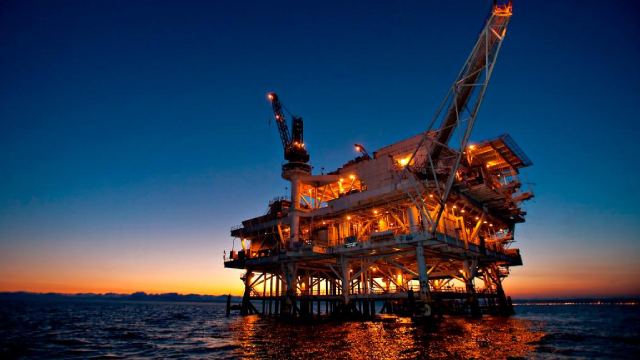
Nabors Q2 Loss Wider Than Expected, Revenues Increase Y/Y
ZACKS· 2025-07-31 13:31
Core Insights - Nabors Industries Ltd. (NBR) reported a second-quarter 2025 adjusted loss of $2.71 per share, which was wider than the Zacks Consensus Estimate of a loss of $2.05, but narrower than the prior-year loss of $4.29 per share [2][8] - The company's operating revenues reached $832.8 million, slightly exceeding the Zacks Consensus Estimate of $831 million and up from $734.8 million in the previous year [3][8] - Adjusted EBITDA increased to $248.5 million from $218.1 million year-over-year, although it fell short of the model estimate of $306.5 million [3] Segment Performance - U.S. Drilling generated operating revenues of $255.4 million, down 1.6% from $259.7 million a year ago, and missed the estimated $312.7 million [4] - International Drilling's operational revenues rose to $385 million from $356.7 million year-over-year, but also missed the estimate of $394.8 million [5] - Revenues from the Drilling Solutions segment surged 105.3% to $170.3 million from $83 million in the prior-year quarter, exceeding the estimate of $91.1 million [5] Financial Position - Total costs and expenses increased to $818 million from $740.5 million in the previous year, slightly above the prediction of $816.1 million [7] - As of June 30, 2025, the company had $387.4 million in cash and short-term investments, with long-term debt around $2.7 billion and a total debt-to-total capital ratio of 80.7% [9] Guidance - For Q3 2025, NBR anticipates a lower average rig count in U.S. Drilling, ranging between 57 and 59 rigs, with a daily adjusted gross margin of approximately $13,300 [10] - The company expects an average rig count of 87 to 88 rigs in its International operations, with a daily adjusted gross margin estimated at approximately $17,900 [11] - Capital expenditures for Q3 are projected to be between $200 million and $210 million, with a total expected for the year ranging from $700 million to $710 million [12]

NOV Q2 Earnings Miss, Revenues Beat Estimates, Both Decrease Y/Y
ZACKS· 2025-07-30 13:05
Core Insights - NOV Inc. reported second-quarter 2025 adjusted earnings of 29 cents per share, slightly missing the Zacks Consensus Estimate of 30 cents, and down from 57 cents in the same quarter last year, primarily due to margin pressures in the Energy Equipment segment [1][9] - Total revenues reached $2.2 billion, exceeding the Zacks Consensus Estimate by 1.9%, driven by strong performance in the Energy Equipment and Energy Products and Services segments, although revenues declined 1.3% year-over-year [2][9] Financial Performance - The Energy Products and Services segment generated revenues of $1.1 billion, surpassing predictions of $966 million but down 2.4% from the prior year due to reduced worldwide drilling operations [4] - Adjusted EBITDA for the quarter was $146 million, below the estimate of $150.5 million and down from $184 million in Q2 2024 [5] - The Energy Equipment segment reported revenues of $1.2 billion, a 0.2% year-over-year decrease, and adjusted EBITDA of $158 million, which increased from $142 million a year ago but missed the estimate of $171.2 million [5] Shareholder Returns - In Q2 2025, NOV repurchased approximately 5.5 million shares for $69 million and returned a total of $176 million to shareholders through dividends and stock buybacks [3][9] Order and Backlog Insights - The Energy Equipment segment secured $420 million in new orders, a significant decrease from $977 million in Q2 2024, with a book-to-bill ratio of 66 compared to 177 in the previous year [6] - As of June 30, 2025, the backlog for Energy Equipment capital orders stood at $4.3 billion, reflecting a $31 million decline from the previous year [7] Balance Sheet Overview - As of June 30, 2025, NOV had cash and cash equivalents of $1.1 billion and long-term debt of $1.7 billion, resulting in a debt-to-capitalization ratio of 20.5% [8] Strategic Developments - NOV secured multi-year contracts for digital services and automation for drilling rigs, and advanced offshore wind capabilities, enhancing operational efficiency and safety [11] - The company introduced innovative drilling technologies that set new performance records in major shale plays, demonstrating a commitment to innovation across energy sectors [12] Future Outlook - For Q3 2025, NOV anticipates a 1% to 3% decrease in consolidated revenues year-over-year, with adjusted EBITDA expected between $230 million and $250 million [13] - The company plans to return at least 50% of excess free cash flow to shareholders through dividends and stock repurchases [14] - NOV expects tariff costs to rise and anticipates a drop in drilling equipment aftermarket revenues by the mid-teens in 2025, while projecting an acceleration in offshore activity by 2026 [15][16][17]


2025 年 7 月 25 日全球石油与天然气估值-Global Oil and Gas_ Global Oil & Gas Valuation 25 July 2025
2025-07-30 02:32
Summary of Global Oil and Gas Valuation Report Industry Overview - The report focuses on the **Global Oil and Gas** industry, providing insights into major companies and their valuations as of **July 25, 2025** [1][2]. Key Companies Mentioned - **India**: Bharat Petroleum, Hindustan Petroleum, Indian Oil, ONGC, Reliance Industries - **Europe**: BP, BW LPG, Ceres Power, ENI, Fuchs Petrolub, Galp, Industrie De Nora, ITM Power, MOL, Motor Oil - **North America**: Aemetis, Antero Resources, APA Corp, Arc Resources, Baker Hughes, Chevron, ExxonMobil, and many others - **China**: CNOOC, Petrochina, Sinopec - **Saudi Arabia**: Saudi Aramco - **UAE**: Adnoc Dist, Adnoc Drilling [2]. Core Insights and Arguments - **Valuation Metrics**: The report includes various valuation metrics such as **EV/DACF**, **FCF Yield**, and **P/E ratios** for major oil companies, indicating their financial health and market performance [9]. - **Company Ratings**: Companies are rated based on their performance and potential upside, with ratings such as **Buy**, **Neutral**, and **Sell** provided for major players like Chevron, ExxonMobil, and Shell [9]. - **Growth Projections**: The report outlines projected **CAGR** (Compound Annual Growth Rate) for earnings per share (EPS) from **2024 to 2027**, indicating expected growth trajectories for different companies [9]. Important Financial Data - **BP**: Current price at **397.8**, target price **375**, with a downside of **-6%** and a **P/E ratio** of **13.1x** for 2026E [9]. - **Chevron**: Current price **155.83**, target price **177**, with an upside of **14%** and a **P/E ratio** of **19.0x** for 2026E [9]. - **ExxonMobil**: Current price **110.79**, target price **130**, with an upside of **17%** and a **P/E ratio** of **18.0x** for 2026E [9]. - **Shell**: Current price **2,663**, target price **2,950**, with an upside of **11%** and a **P/E ratio** of **11.0x** for 2026E [9]. Additional Insights - **Market Trends**: The report highlights ongoing trends in the oil and gas sector, including shifts towards renewable energy and the impact of geopolitical factors on oil prices [6]. - **Analyst Team**: The report is prepared by a team of analysts specializing in various regions and sectors within the oil and gas industry, ensuring comprehensive coverage and insights [3][6]. Conclusion - The **Global Oil and Gas Valuation Report** provides a detailed analysis of major companies in the sector, their financial metrics, and growth projections, serving as a valuable resource for investors looking to navigate the complexities of the oil and gas market [1][2][9].
Ovintiv Q2 Earnings Miss Estimates, Revenues Increase Y/Y
ZACKS· 2025-07-28 13:06
Core Insights - Ovintiv Inc. reported second-quarter 2025 adjusted earnings per share of $1.02, missing the Zacks Consensus Estimate of $1.04 and down from $1.24 year-over-year due to weaker oil price realizations and increased expenses [1][9] - Total revenues reached $2.3 billion, a 1.3% increase from the previous year, exceeding estimates by 18.8%, driven by higher sales of purchased products and strong hedging gains [2][9] - The company declared a quarterly dividend of 30 cents per share, payable on September 30, 2025, to shareholders of record as of September 15, 2025 [2] Production and Prices - Total production for the second quarter was 615,300 barrels of oil equivalent per day (BOE/d), surpassing the prior year's 593,800 BOE/d and exceeding predictions [4][9] - Natural gas production increased to 1,851 million cubic feet per day (MMcf/d) from 1,740 MMcf/d year-over-year, also beating estimates [4] - Realized natural gas prices rose to $2.38 per thousand cubic feet from $1.86, while realized oil prices fell to $65.23 per barrel from $76.58 [6] Costs, Capital Expenditures, and Balance Sheet - Total expenses increased to $1.8 billion from $1.7 billion year-over-year, but were lower than projections of $2.3 billion [7] - Capital investments were $521 million, down from $622 million in the previous year, with a non-GAAP free cash flow of $913 million generated in the quarter [8] - As of June 30, 2025, the company had cash and cash equivalents of $20 million and long-term debt of $4.4 billion, resulting in a debt-to-capitalization ratio of 29.7% [8] Asset Performance - Average production from the Permian Basin was approximately 215 MBOE/d, with liquids comprising 80% of the total, and 23 net wells were brought online [10] - From the Montney play, output averaged 300 MBOE/d, with liquids contributing about 26%, and 39 net wells were turned in [11] - In the Anadarko Basin, production was 100 MBOE/d, with a liquid mix of 59%, and 11 net wells were brought into production [12] Guidance - Ovintiv plans to allocate at least 50% of its non-GAAP free cash flow to shareholders through stock buybacks and/or variable dividends, expecting a total shareholder return of $235 million in Q3 2025 [13] - The company anticipates total production for Q3 2025 to be between 610 MBOE/d and 630 MBOE/d, with capital investment projected between $525 million and $575 million [14] - For the full year 2025, total production is expected to average between 600 MBOE/d and 620 MBOE/d, with capital investment estimated between $2.1 billion and $2.2 billion [15]


Oceaneering Q2 Earnings Beat Estimates, Revenues Increase Y/Y
ZACKS· 2025-07-25 13:06
Core Insights - Oceaneering International, Inc. (OII) reported an adjusted profit of 49 cents per share for Q2 2025, exceeding the Zacks Consensus Estimate of 42 cents and up from 28 cents in the same quarter last year, driven by strong operating income across its segments [1][9] - Total revenues reached $698.2 million, aligning with the Zacks Consensus Estimate and reflecting a 4.4% increase from $668.8 million in the prior year, attributed to robust revenue contributions from various segments [2][9] - Adjusted EBITDA for the quarter was $103.3 million, marking a 20.3% year-over-year increase, indicating strong operational execution [2][9] Revenue Breakdown by Segment - **Subsea Robotics**: Revenues were $218.8 million, slightly up from $215 million year-over-year, but missed the estimate of $242.8 million. Operating income increased to $64.5 million from $61.8 million, surpassing the estimate of $63.1 million, with an EBITDA margin of 35% and ROV fleet utilization at 67% [4] - **Manufactured Products**: This segment reported revenues of $145.1 million, up from $139.3 million a year ago, exceeding the estimate of $139.4 million. Operating profit rose to $18.8 million from $14.4 million, also beating the estimate of $15.3 million [5] - **Offshore Projects Group**: Revenues increased by 3.6% to $149.3 million from $144.1 million year-over-year, but fell short of the estimate of $144.6 million. Operating income improved to $21.7 million from $13.2 million, exceeding the estimate of $21.4 million [6][7] - **Integrity Management & Digital Solutions**: Revenues were $75.4 million, up from $73.5 million year-over-year, beating the estimate of $73.8 million [8] - **Aerospace and Defense Technologies**: Revenues totaled $109.6 million, an increase from $97 million in the prior year, surpassing the estimate of $98 million. Operating income rose to $16.3 million from $7.2 million, exceeding the estimate of $10 million [10][11] Financial Position - As of June 30, 2025, OII had cash and cash equivalents of $434 million and long-term debt of approximately $484.6 million, resulting in a debt-to-total capital ratio of 36.4% [12] Future Outlook - For Q3 2025, OII anticipates an increase in consolidated revenues compared to Q3 2024, with EBITDA expected to range between $100 million and $110 million. Growth is expected in Subsea Robotics and Manufactured Products, while Offshore Projects Group may see a decline in operating profitability [13][14] - For the full year 2025, consolidated revenues are projected to grow at a mid-single-digit percentage rate, with adjusted EBITDA anticipated to be between $390 million and $420 million [15]


Patterson-UTI Energy Q2 Earnings Miss, Sales Beat Estimates, Fall Y/Y
ZACKS· 2025-07-25 13:06
Core Insights - Patterson-UTI Energy, Inc. (PTEN) reported a second-quarter 2025 adjusted net loss of $0.06 per share, which was wider than the Zacks Consensus Estimate of a $0.04 loss, and a decline from a profit of $0.05 in the same quarter last year [1][9] - Total revenues reached $1.2 billion, exceeding the Zacks Consensus Estimate by 0.3%, but decreased by 9.6% year over year due to weaker contributions from various segments [2][9] Financial Performance - **Drilling Services**: Revenues totaled $403.8 million, down 8.3% from $440.3 million in the prior year, but exceeded the estimate of $365.1 million. Operating income was $40.6 million, down from $76.1 million year over year, yet above the estimate of $24.1 million [4] - **Completion Services**: Revenues were $719.3 million, a drop of 10.7% from $805.4 million year over year, and missed the estimate of $762.4 million. The operating loss was $29.2 million compared to a profit of $10.7 million in the previous year, but was narrower than the estimated loss of $43.4 million [5] - **Drilling Products**: Revenues increased by 2.7% to $88.4 million from $86.1 million year over year, beating the estimate of $85.8 million. Operating profit was $6.8 million, down 21.1% from the previous year, and missed the estimate of $20.6 million [6] - **Other Services**: Revenues fell 52.7% to $7.8 million from $16.5 million year over year, but exceeded the estimate of $5.6 million. The operating loss was $2 million compared to a profit of $0.4 million in the prior year, missing the estimated operating income of $0.1 million [7] Capital Expenditure & Financial Position - PTEN spent $144.2 million on capital programs in the reported quarter, up from $130.5 million in the prior year [8] - As of June 30, 2025, the company had cash and cash equivalents of $185.9 million and long-term debt of $1.2 billion, with a debt-to-capitalization ratio of 26.7% [8] Shareholder Returns - The board declared a quarterly dividend of $0.08 per share, unchanged from the previous quarter, to be paid on September 15, 2025 [3][9] - The company returned $56 million to shareholders in Q2 2025, including $20 million in share repurchases [10] Q3 Outlook - PTEN anticipates an average rig count of approximately 90 for its Drilling Services segment in Q3 2025, with expected adjusted gross profit of around $130 million [11] - The company expects adjusted gross profit for Completion Services to remain steady, while Drilling Products is anticipated to improve slightly [12] - Total depreciation, depletion, amortization, and impairment expense is expected to be approximately $230 million for Q3 [13] - Net capital expenditures for full-year 2025 are anticipated to be less than $600 million, with a reduction in maintenance capital expenditures due to lower activity [14]


氢能,有的向左,有的向右
Zhong Guo Qi Che Bao Wang· 2025-07-24 02:35
Core Insights - The hydrogen energy sector is experiencing significant fluctuations, with major companies like Stellantis halting hydrogen fuel cell technology development, raising concerns about the future of hydrogen initiatives globally [1][2][3] Policy and Project Developments - The hydrogen energy concept has faced ups and downs since its inception in the 1970s, with several companies and countries pausing or terminating their hydrogen projects due to economic and technical challenges [2] - India's SECI terminated a $23.3 million green hydrogen center project due to doubts about subsidy fairness and profitability [2] - Australia's CQ-H2 green hydrogen project was halted due to soaring costs and market uncertainties, leading to significant job cuts at Fortescue [2] - Repsol and Hydric Power's green hydrogen project in Spain was shelved due to economic infeasibility, despite its initial importance to Spain's hydrogen strategy [3] - Major companies like Shell and Equinor withdrew from Norwegian hydrogen projects, resulting in a loss of 10 GW potential capacity due to insufficient market demand [3] - BP suspended its HyGreen and H2Teesside projects, citing policy uncertainties and competitive pricing challenges [3][4] Investment and Economic Viability - ExxonMobil's $330 million clean hydrogen project in Texas was shelved due to the withdrawal of federal funding, impacting its economic viability [4] - Cleveland-Cliffs halted a $500 million hydrogen metallurgy project, finding it economically uncompetitive even with lower hydrogen prices [4] - Air Products canceled plans for a £2 billion hydrogen import terminal due to policy uncertainties and insufficient government support [4] - BNEF data indicates that only 13% of global hydrogen contracts have confirmed buyers, with over 20% of tracked hydrogen-related companies having gone bankrupt or transformed [4] Persistence in Hydrogen Development - Despite setbacks, several countries and companies remain committed to hydrogen energy, with France planning to deploy 4.5 GW of electrolysis capacity by 2030 [5] - China is rapidly growing its hydrogen industry, with a projected production and consumption scale exceeding 36.5 million tons by 2024, supported by strong policy initiatives [6] - Middle Eastern countries like Saudi Arabia and the UAE are prioritizing hydrogen energy, with ambitious local production and export goals [6] Long-term Perspective on Hydrogen - The hydrogen industry is capital-intensive, requiring substantial investment across all stages from R&D to market deployment, which can deter short-term-focused investors [8] - The differing treatment of companies by capital markets contributes to the withdrawal of many European and American firms from hydrogen projects, as traditional energy companies face pressure for immediate profitability [9] - The lack of infrastructure for hydrogen production, storage, and distribution in Europe and the U.S. hampers the growth of hydrogen fuel cell vehicles and overall market demand [10]